Where Do Peanuts Grow Naturally? 6 Top Regions and Climates
Peanuts grow naturally in warm, sandy regions with long frost-free seasons, and their wild origin traces back to South America. This guide explains where peanuts come from, the climate and soil they prefer, the countries and U.S. states that grow them, and the natural conditions that help peanuts thrive each year.
Peanuts (Arachis hypogaea) grow naturally in warm, tropical, and subtropical climates with sandy, well-drained soil. The plant originated in South America, in the foothills of the Andes near present-day Bolivia, Paraguay, and northern Argentina. Today peanuts grow in over 100 countries, with China, India, and the United States leading global production.
What Is the Natural Origin of Peanuts?
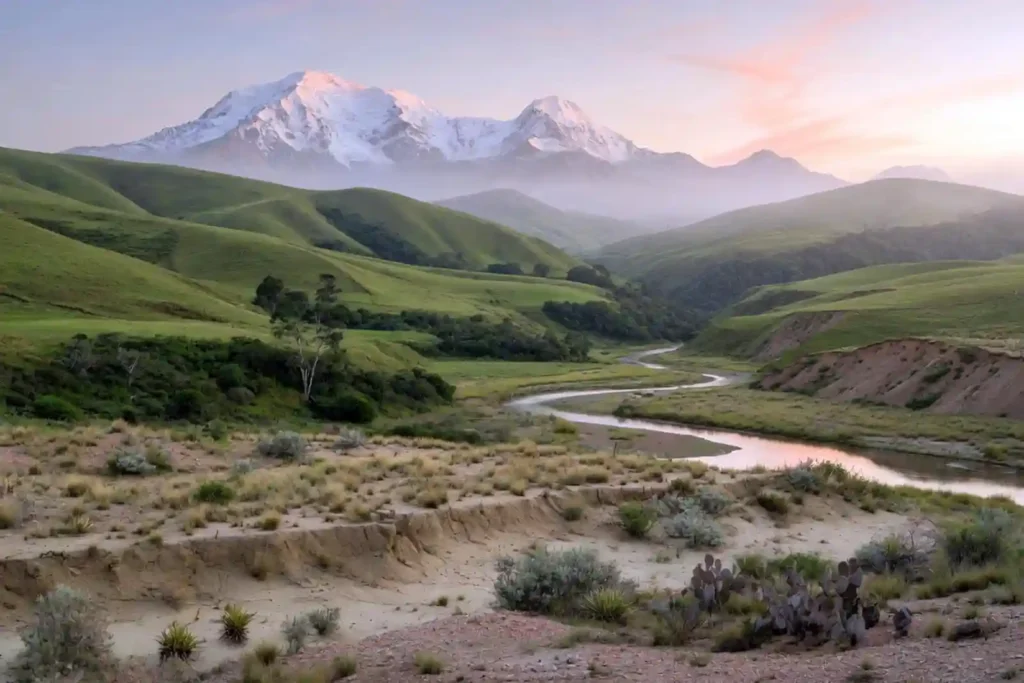
Peanuts are native to South America. Wild ancestors of the modern peanut grew across the lowlands of Bolivia, Paraguay, and northern Argentina more than 7,600 years ago. Indigenous farmers in the Andes domesticated the plant long before European contact.
Archaeological digs in coastal Peru have turned up peanut remains dating back over 7,000 years. Spanish and Portuguese traders carried peanuts out of South America in the 1500s, spreading the crop to Africa, Asia, and the southern United States.
The peanut you grow today still holds the genetic markers of those wild Andean ancestors. That is why the plant still prefers the same warm, sandy soils it evolved in.
Learn more: Cups of Peanuts in a Pound
Where Do Peanuts Grow Naturally Around the World?
Peanuts grow naturally between 40° N and 40° S latitude. This band wraps the warm, frost-free belt of the planet. Outside this range, the season is too short and too cool for the pods to mature underground.
Wild peanut species still grow in parts of:
- Bolivia (the original center of diversity)
- Paraguay and northern Argentina
- Southern Brazil
- Uruguay
Cultivated peanuts now grow across Africa, Asia, and the Americas. The crop fits naturally into farms with hot summers and well-drained soil. Our guide on covers the legal weight side of the harvestin-shell peanut bushel standards for growers who sell by bushel.
Learn more: Are Tree Nuts the Same as Peanuts? 7 Key Facts
What Climate Do Peanuts Need?
Peanuts need a warm, frost-free climate to complete their life cycle. The plant takes 120 to 160 days from planting to harvest, depending on the variety.
Key natural climate needs:
- Temperature: 70°F to 95°F daytime, with soil at 65°F or warmer for germination
- Frost-free season: at least 120 days
- Rainfall: 20 to 40 inches over the season, with the heaviest needs during pegging and pod fill
- Sunlight: full sun, at least 8 hours per day
Peanuts handle short dry spells once established. They struggle in cold, wet, or shaded ground. The USDA Economic Research Service peanut overview tracks how regional climate ties into U.S. production patterns.
What Soil Do Peanuts Grow in Naturally?
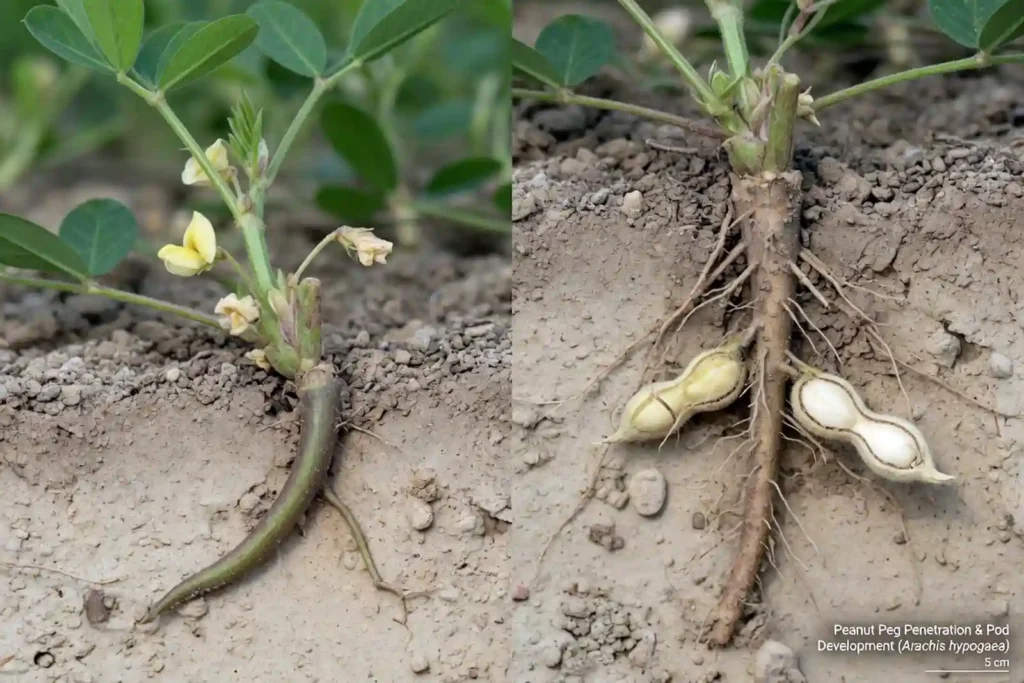
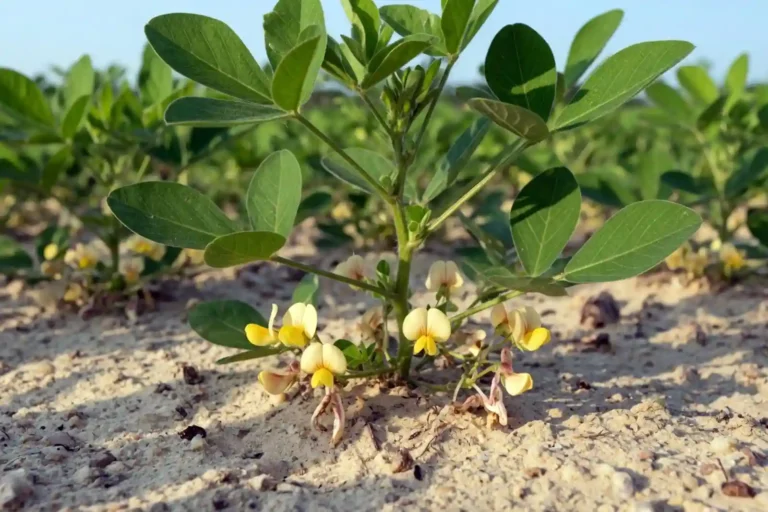
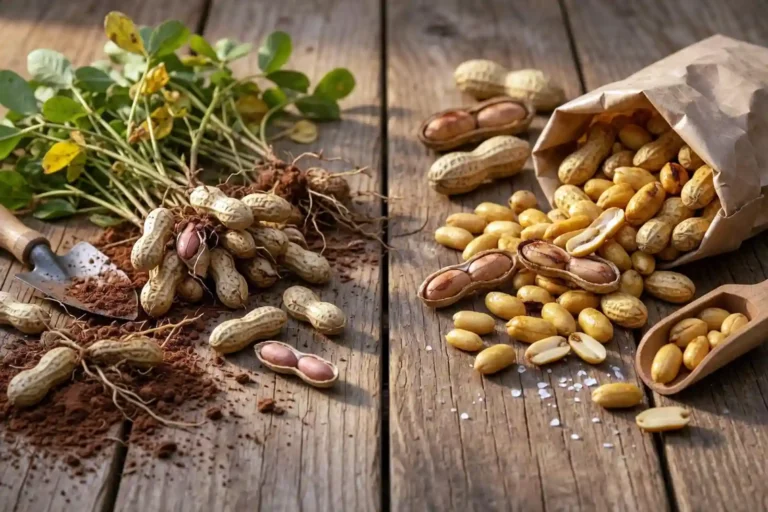
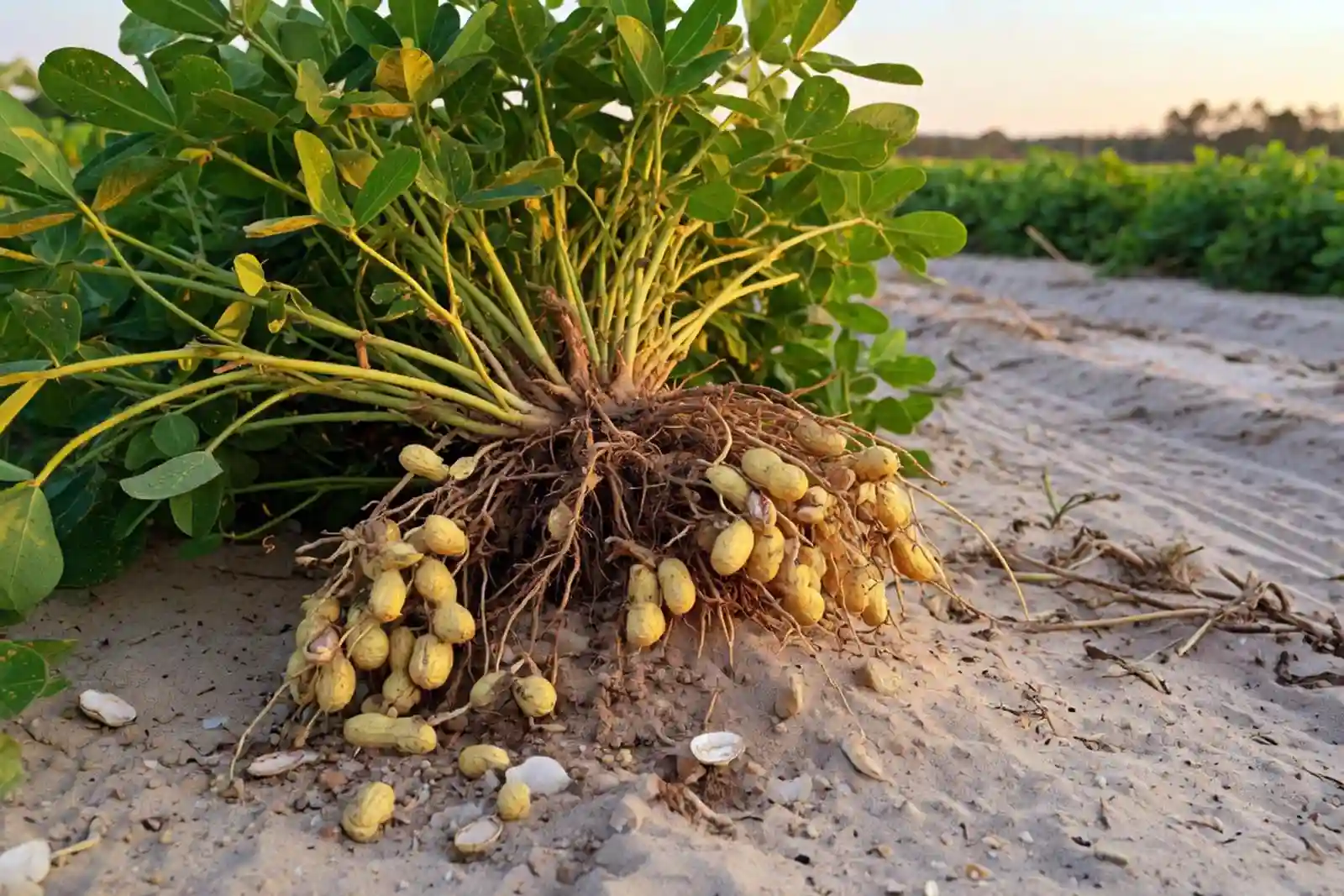
Peanuts grow best in light, sandy, well-drained soil with a pH of 5.8 to 6.2. The plant flowers above ground, then pushes a peg into the soil where the pod forms underground. Heavy clay blocks that peg, so pods rot or fail to set.
Natural soil needs:
- Sandy loam or loamy sand texture
- Loose top 6 to 8 inches for peg penetration
- Good drainage, no standing water
- Calcium-rich (gypsum is often added during pegging)
- Free of nematodes and root rot pathogens
This is one reason the U.S. peanut belt sits across the sandy coastal plain of the Southeast. The soil profile there matches what the plant evolved for.
Know more: Details about Blanched Peanuts
Top Countries Where Peanuts Grow Naturally
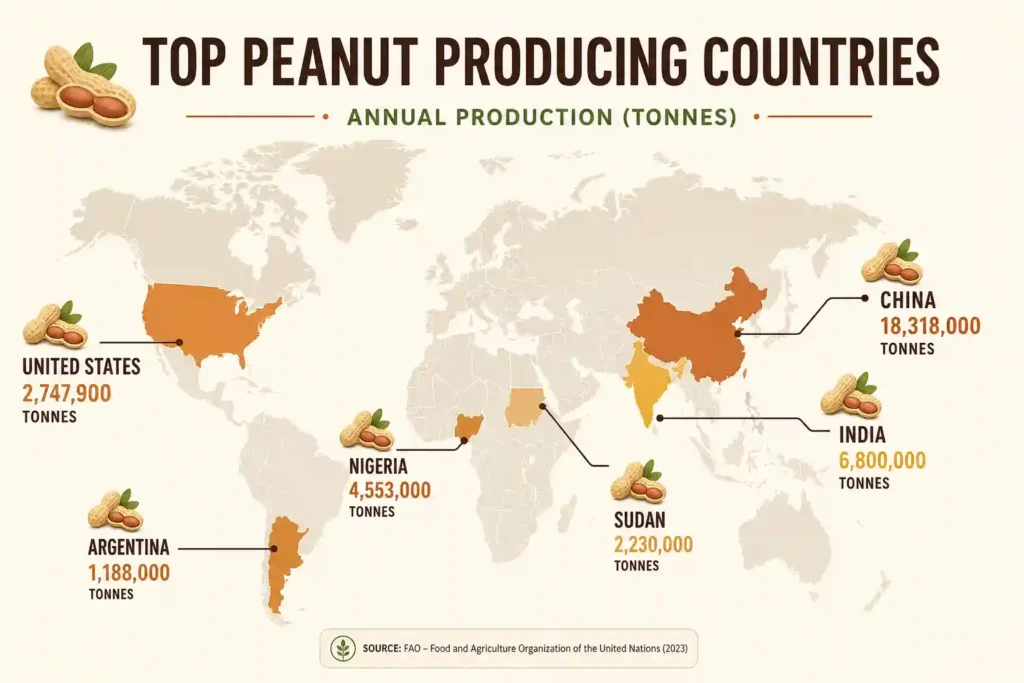
These countries lead global peanut production by volume.
| Country | Approx. Annual Production | Main Growing Regions |
|---|---|---|
| China | 18 million metric tons | Shandong, Henan, Hebei |
| India | 6.7 million metric tons | Gujarat, Andhra Pradesh, Tamil Nadu |
| Nigeria | 4.5 million metric tons | Northern Nigeria savanna |
| United States | 2.5 million metric tons | Georgia, Alabama, Florida, Texas |
| Sudan | 2.3 million metric tons | Kordofan and Darfur |
| Argentina | 1.3 million metric tons | Córdoba province |
China and India together grow more than half the world’s peanuts. Africa supplies a large share of the rest, mostly through smallholder farms.
U.S. States Where Peanuts Grow Naturally
The U.S. peanut belt covers the Southeast, the Southwest, and the Mid-Atlantic coast. Georgia produces about half of the entire U.S. peanut crop.
Top peanut-producing states:
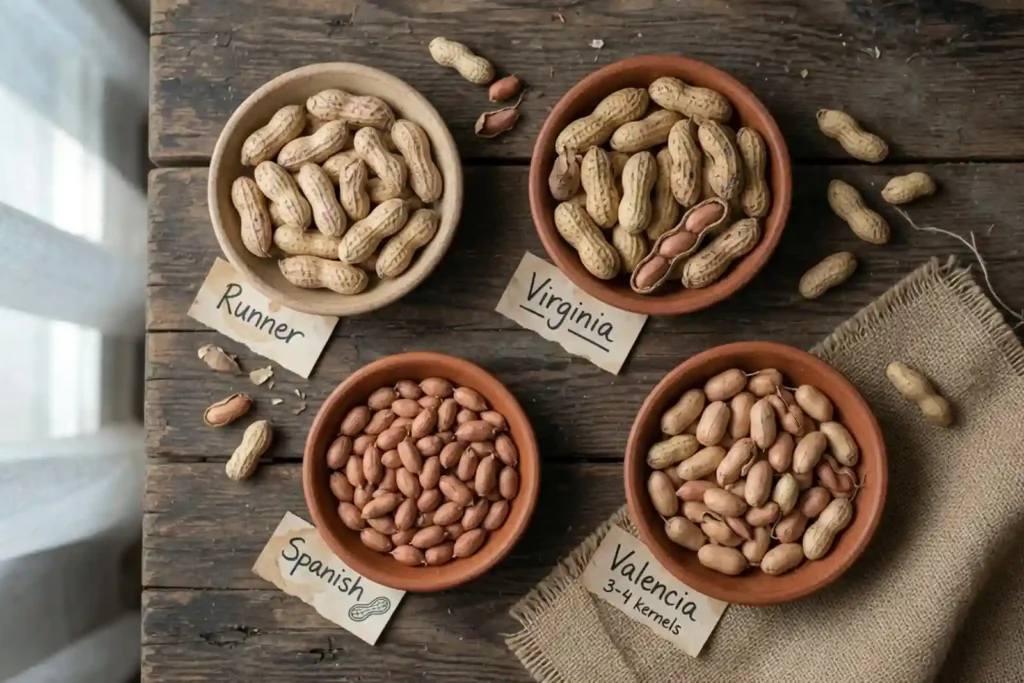
- Georgia (Runner-type, dominant)
- Alabama (Runner-type)
- Florida (Runner and Spanish)
- Texas (Runner, Spanish, and Valencia)
- North Carolina (Virginia-type)
- South Carolina (Runner and Virginia)
- Mississippi (Runner-type)
- Virginia (Virginia-type, large kernel)
- Oklahoma (Runner and Spanish)
The sandy coastal plain of Georgia, Alabama, and Florida hits every natural requirement for peanuts. Long summers, warm nights, sandy soil, and steady rainfall match what the plant needs.
How Peanuts Spread From Their Native Region
Peanuts left South America through three main trade routes:
- Portuguese ships carried peanuts from Brazil to West Africa in the 1500s.
- Spanish traders brought peanuts across the Pacific to the Philippines, then to China and India.
- The transatlantic slave trade carried peanuts from West Africa into the southern United States in the 1700s.
Once peanuts reached new soils, the plant adapted fast. African farmers added peanuts to staple cropping systems. Southern U.S. growers expanded peanut acreage sharply after the Civil War, and again after George Washington Carver’s research at Tuskegee Institute in the early 1900s.
For yield-side guidance that crosses over to peanuts, this is touched on in this piece on crop yield management.
Common Myths About Where Peanuts Grow
A few wrong ideas stick around about peanuts.
- Peanuts grow on trees. False. Peanuts are a legume that grows on a low bush, with pods forming underground.
- Peanuts only grow in the tropics. False. Most U.S. peanuts grow in subtropical and warm-temperate zones.
- Peanuts are nuts. False. Peanuts belong to the legume family, alongside beans, peas, and lentils.
- Peanuts grow naturally in cold climates. False. The plant cannot finish its life cycle without a long warm season.
The NC State Extension peanut program covers the biology and growing conditions in detail for growers who want a deeper read.
FAQs
Where did peanuts originally come from?
Do peanuts grow naturally in the United States?
Can peanuts grow in cold climates?
What soil is best for growing peanuts naturally?
Which country grows the most peanuts in the world?
Conclusion
Peanuts grow naturally in warm, sandy regions with long frost-free seasons. The plant traces back to South America, where Andean farmers first domesticated it thousands of years ago. Today the same natural conditions, hot summers, sandy soil, and steady rainfall, drive peanut production across China, India, the U.S. Southeast, and parts of Africa. If your farm sits in that climate band, peanuts will fit your rotation well.