When to Harvest Peanuts: 7 Proven Signs of Ripeness
Peanuts are ready to harvest 120 to 160 days after planting, once 70 to 75 percent of pods show dark hull color inside. This guide walks through maturity checks, digging, drying, and threshing, so you can pull a clean crop without yield loss on the farm.
Most peanuts hit peak maturity 130 to 150 days after planting. Use the hull-scrape method to confirm: pull 150 to 200 pods, scrape the outer skin, and check inner color against a maturity profile board. Dig when 70 to 75 percent of pods are brown, orange, or black.
For a wider look at timing across crops, this page on knowing when to harvest crops covers the broader signals worth watching every season.
What Does a Harvest-Ready Peanut Look Like?
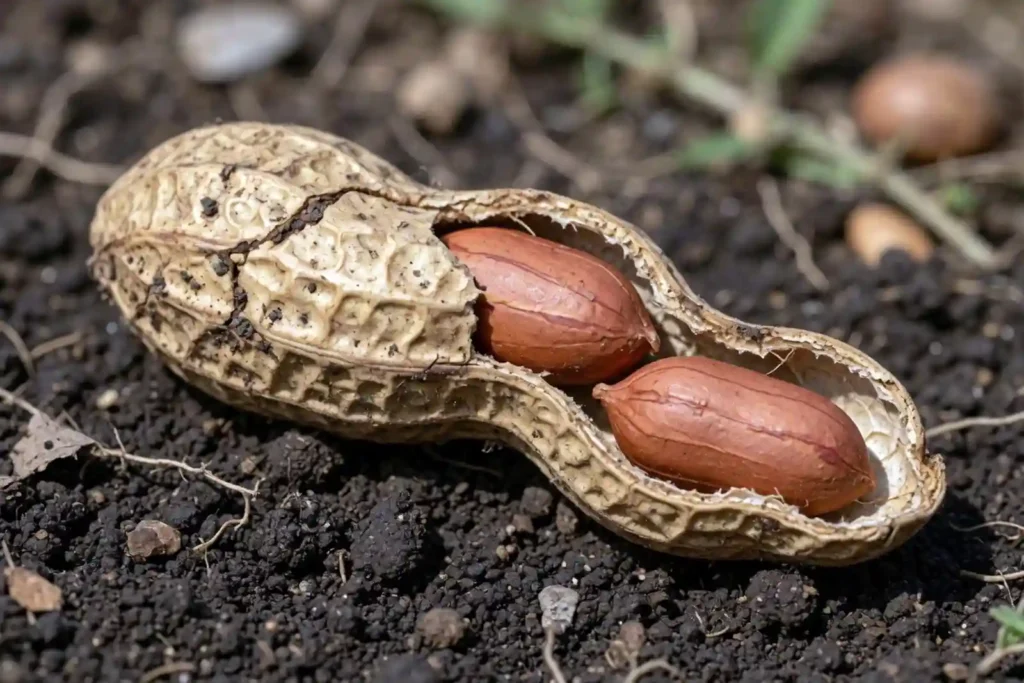
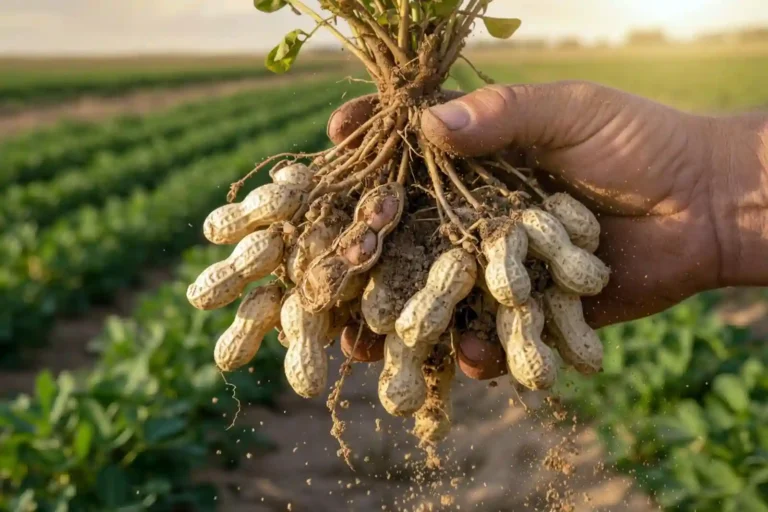
A mature peanut pod has a dark, veiny outer shell and a firm kernel inside the hull. When you scrape the outer skin, the mesocarp underneath turns from white to yellow, orange, brown, then black as the pod ages. Mature kernels feel plump, the seed coat shows full color, and the pod separates cleanly from the peg.
Read more: How to Grow Peanuts in Ohio
When to Harvest Peanuts by Variety
Harvest timing depends on the type. Here is the general window each variety reaches full maturity:
- Runner peanuts: 130 to 150 days after planting
- Virginia peanuts: 130 to 150 days after planting
- Spanish peanuts: 110 to 130 days after planting
- Valencia peanuts: 110 to 130 days after planting
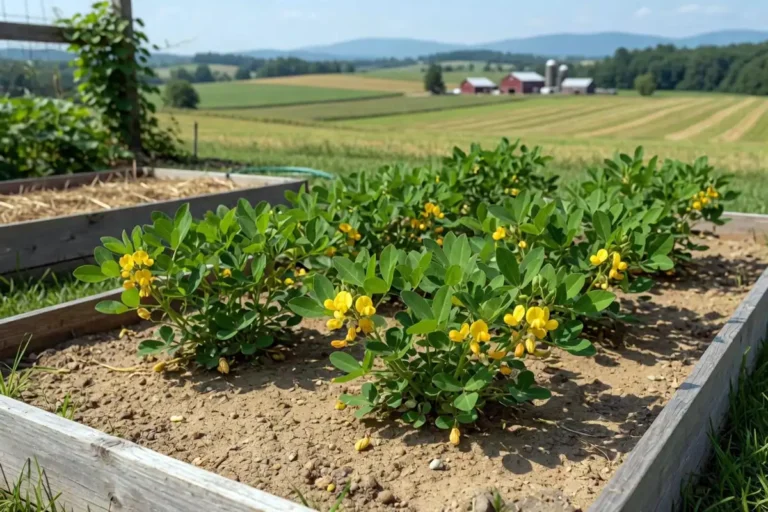
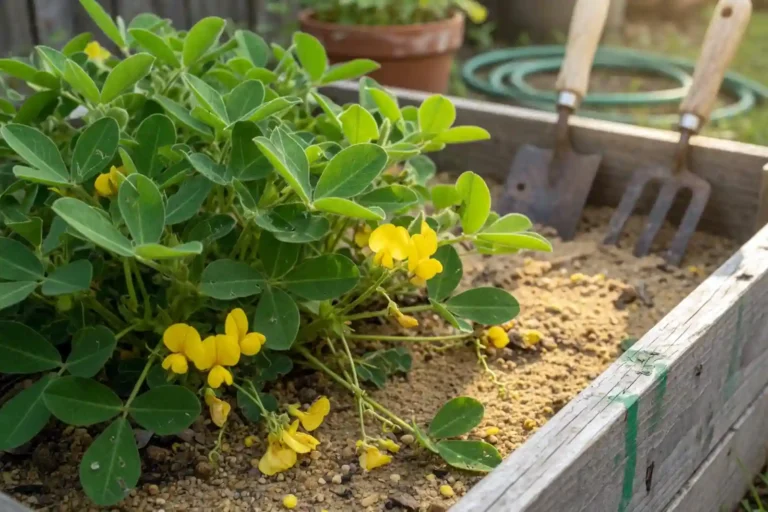
These ranges shift with weather, soil moisture, and planting date. A cool, wet summer pushes maturity back a week or two. A hot, dry stretch speeds it up but can shrink kernels. Since peanuts grow on a low bush with pegs that push pods underground, ripeness cannot be eyeballed from above the canopy. You have to dig and check.
Learn more: How to Grow Peanuts in Indiana
Where Maturity Differs by Region
Across the regions where peanuts grow, digging dates shift with the first fall cool-down. In Georgia and Alabama, runner peanuts come out late September through October. Virginia and North Carolina growers often dig from late September to mid-October. Texas and Oklahoma fields sit in a similar window. Kansas growers planting Spanish or Valencia types usually finish before the first hard frost, often by mid-October.
Read next: Guide to Grow Peanuts in Pennsylvania
How to Check Peanut Maturity: The Hull-Scrape Method
The hull-scrape method, developed by University of Georgia researchers, is the field standard. Here is the workflow:
- Walk the field and dig 5 to 10 plants from random spots.
- Pull 150 to 200 pods off the plants. Skip very small or rotted pods.
- Use a pressure washer or wire brush to remove the outer skin (exocarp).
- Lay scraped pods on a peanut maturity profile board by inner hull color: white, yellow, orange, brown, black.
- Count pods in the orange, brown, and black columns.
- If 70 to 75 percent of pods fall into those three columns, the field is ready.
Spanish and Valencia types use a slightly different read because their hulls do not darken as deeply. Talk with your local extension office for variety-specific charts.
How to Harvest Peanuts: Step by Step
Peanut harvest runs in two stages. Get either step wrong and you lose pods, quality, or both.
Step 1: Dig and Invert
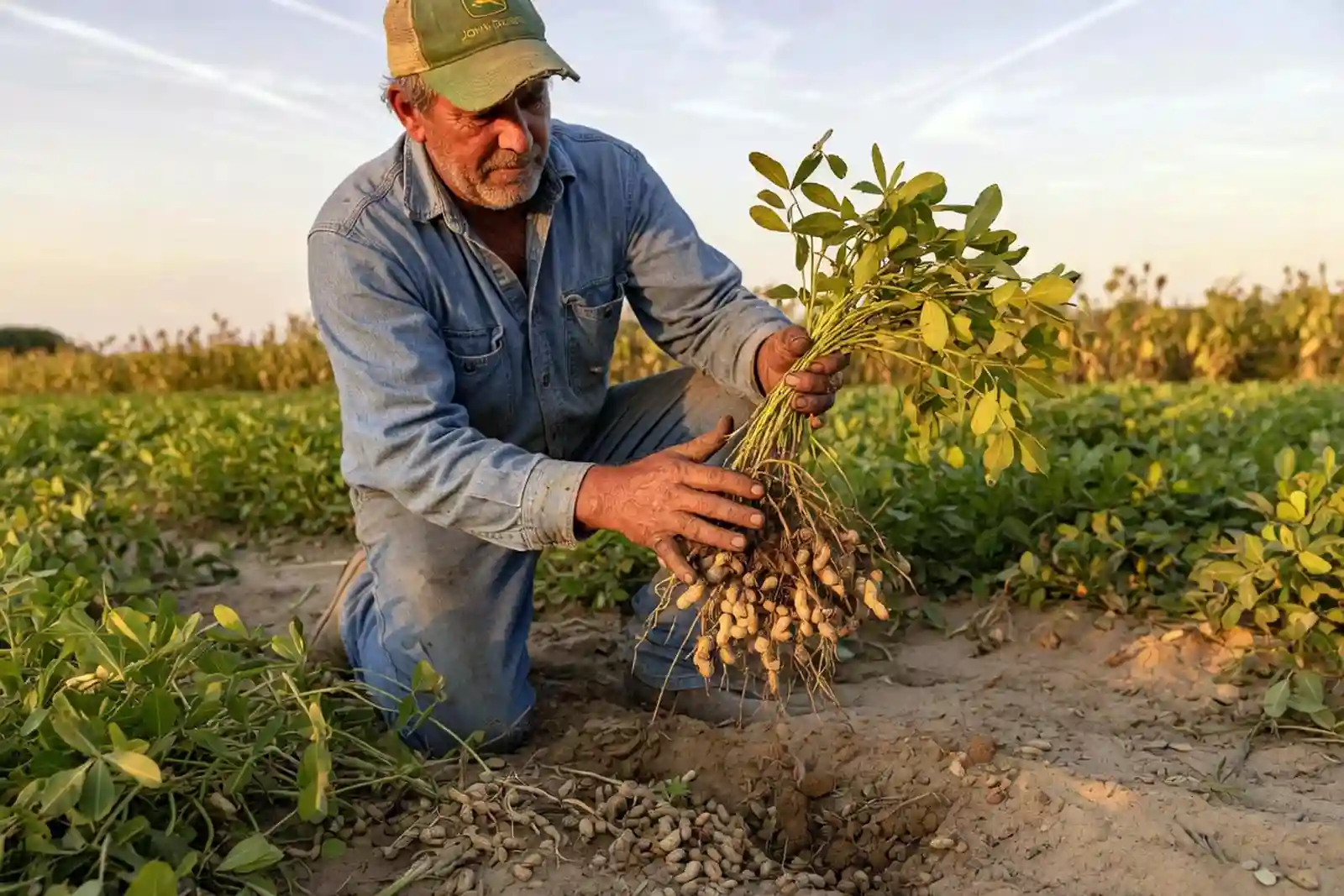
Use a peanut digger-inverter pulled behind a tractor. The blade slices roots about 4 to 6 inches deep, lifts the plant, shakes off soil, and flips the vine so pods face the sun. Dig in the morning when soil holds moisture but is not wet. Pod moisture at digging usually sits between 35 and 50 percent.
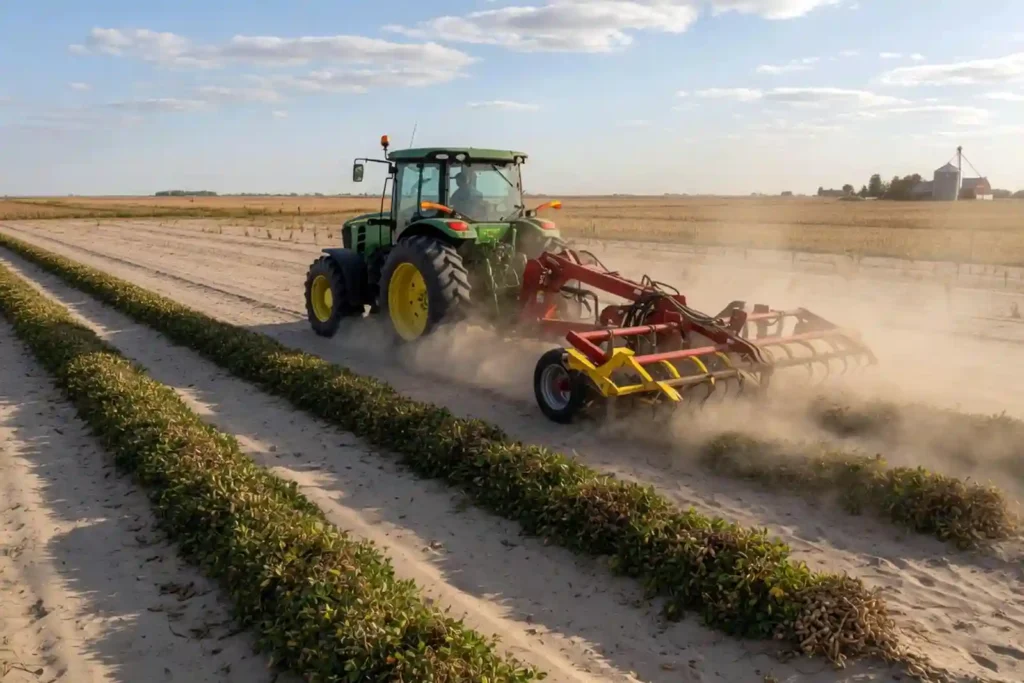
Step 2: Field-Dry the Windrows
Leave inverted plants in the field for 3 to 7 days. Dry weather speeds this up; humidity slows it down. The target is roughly 18 to 24 percent pod moisture before threshing.
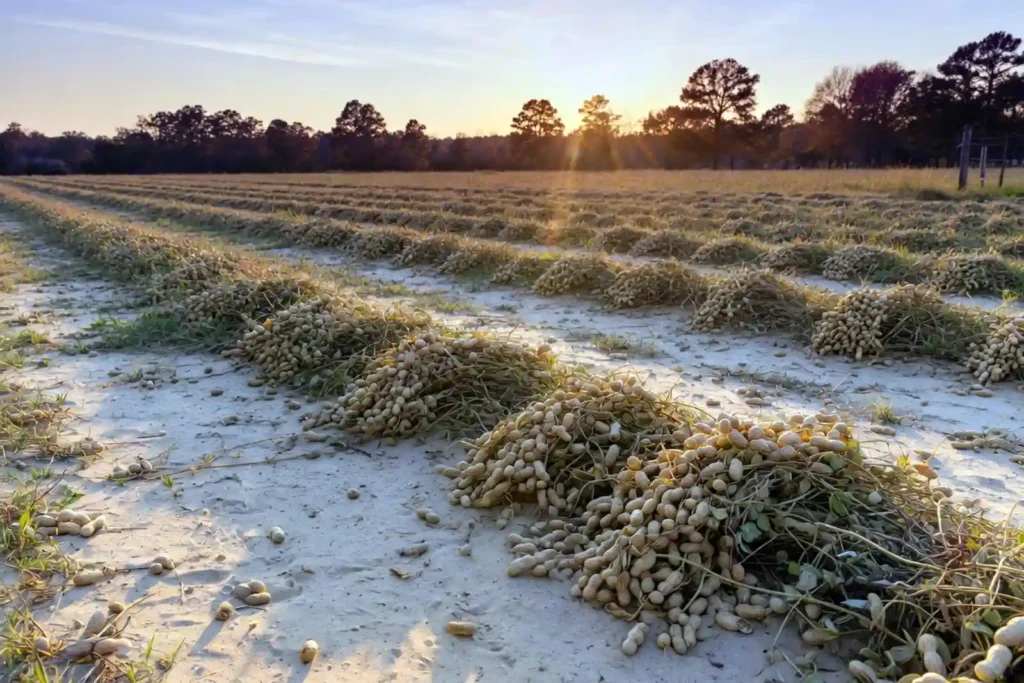
Step 3: Combine (Thresh)
Run a peanut combine over the windrows. The machine separates pods from vines and loads them into a wagon or trailer. Threshing too wet causes mold; threshing too dry causes shelling losses and split kernels.
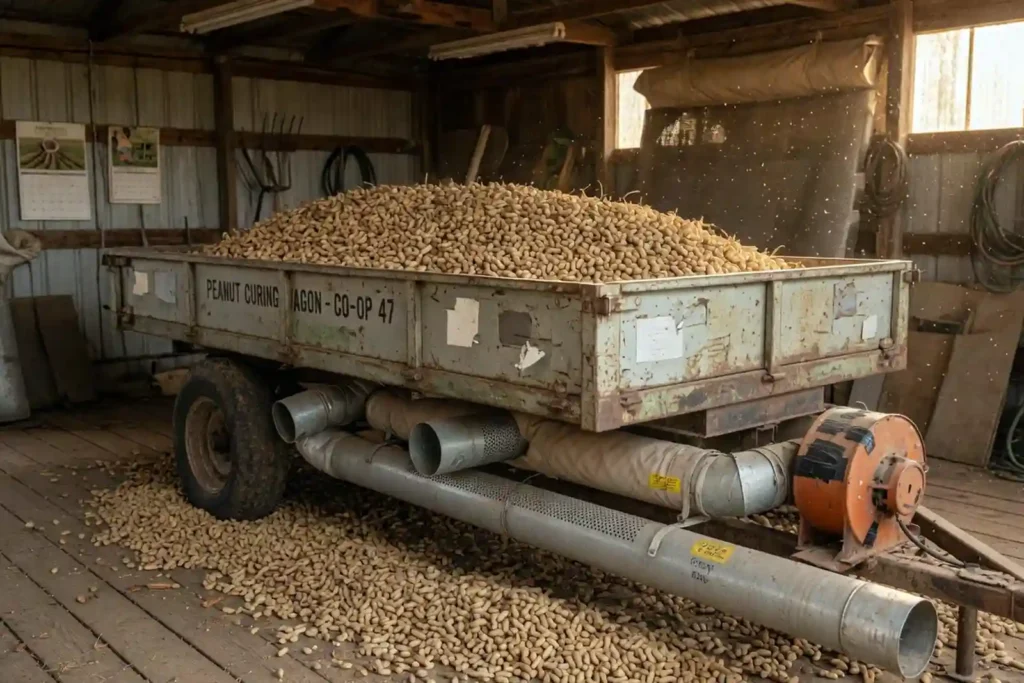
Step 4: Cure to Storage Moisture
Move pods to a curing wagon with forced-air drying. The USDA-recommended storage moisture for farmer stock peanuts is 7 to 10 percent. Drying air should not exceed 95°F to protect flavor and prevent skin slip.
For longer-term holding, our notes on post-harvest handling and crop storage methods line up with peanut needs.
Common Mistakes to Avoid
- Digging too early. Immature pods give low yield and weak flavor. Confirm with a profile board, not the calendar alone.
- Digging too late. Overripe pegs snap off in the soil and pods stay buried. Yield loss can hit 15 to 20 percent.
- Skipping the maturity check on each field. Soil type and planting date push maturity off by a week between fields.
- Threshing wet vines. Pod moisture above 25 percent at threshing leads to mold, aflatoxin risk, and grade dockage.
- Drying with hot air. Curing temperatures above 95°F cause off-flavors and split skins.
Troubleshooting Harvest Problems
Pods stay attached to the soil: Pegs are weak. Check soil moisture and adjust digger depth. Wet ground holds pods; dust-dry ground snaps pegs.
Lots of immature white pods on the board: The crop is not ready. Wait 5 to 10 days and recheck.
Frost in the forecast before maturity: Frost kills vines and stops pod development. If 65 to 70 percent of pods are mature, dig before the frost rather than lose the whole field.
High aflatoxin risk: Drought-stressed peanuts are most at risk. Dig on schedule, dry quickly, and store below 10 percent moisture.
Safety Notes for Peanut Harvest
Wear safety glasses near the digger and combine, since rocks and pods get thrown back. Keep PTO shields in place. Watch for grain dust and peanut dust in curing barns; an N95 respirator helps. Park combines away from buildings during the cool-down period to reduce fire risk from hot bearings and dry trash.
FAQs on Harvest Peanuts
How do I know peanuts are ready without a profile board?
Can I harvest peanuts after a frost?
How long do peanuts cure after digging?
What time of day should I dig peanuts?
How many pounds per acre should I expect?
Conclusion
Timing peanut harvest is part calendar, part field check, part weather read. Use the hull-scrape method on every field, dig when soil moisture is right, leave windrows to cure 3 to 7 days, and thresh at 18 to 24 percent pod moisture. Get those four right and your crop comes off the field clean, mature, and storage-ready.