How Many Pounds in a Bushel of Peanuts? 7 Key Facts
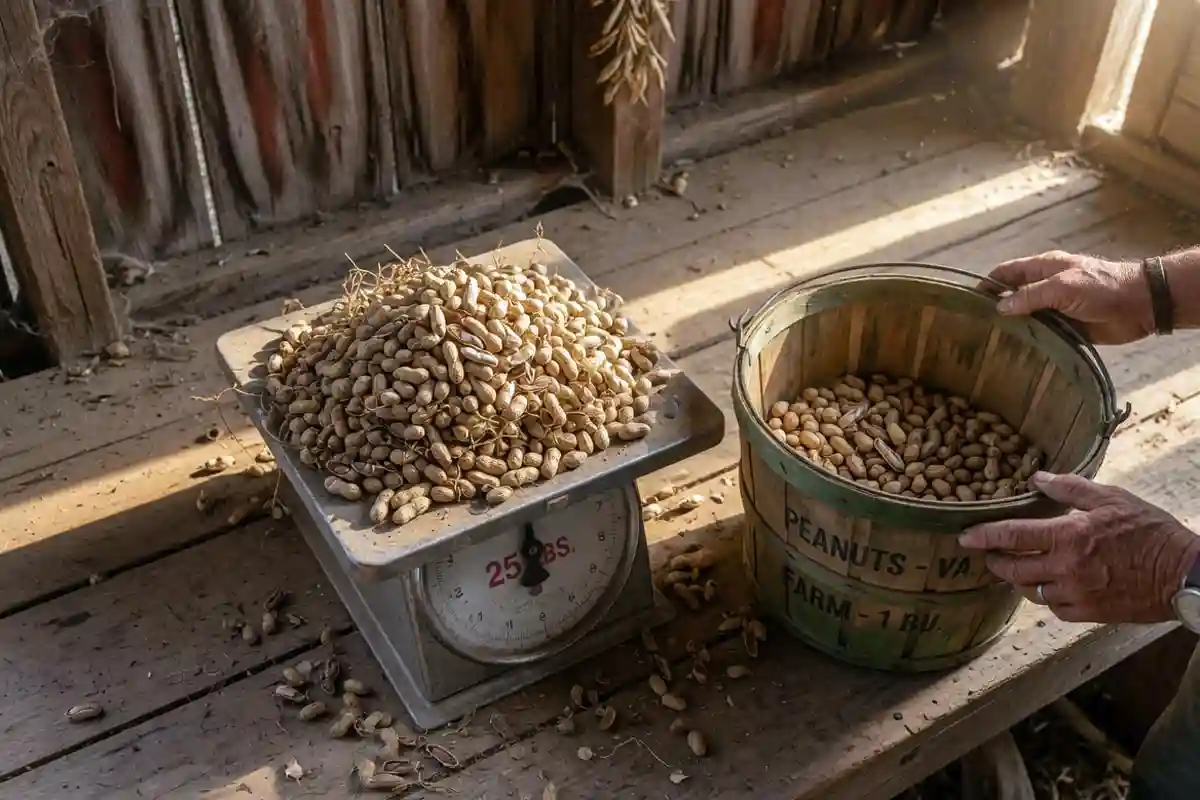
A bushel of in-shell peanuts weighs about 25 pounds under the standard used in Georgia, Florida, and most top peanut states. This guide breaks down bushel weights by peanut type, explains state-by-state differences, covers how moisture changes the number, and walks through the right way to weigh peanuts after harvest.
A standard bushel of in-shell (farmer stock) peanuts weighs 25 pounds in Georgia, Florida, Alabama, and most southern peanut states. Virginia uses 17 pounds per bushel for Virginia-type peanuts. Shelled peanuts get sold by straight pound weight instead of bushel. Moisture level, peanut type, and shell density all shift the final weight.
What Is a Bushel of Peanuts?
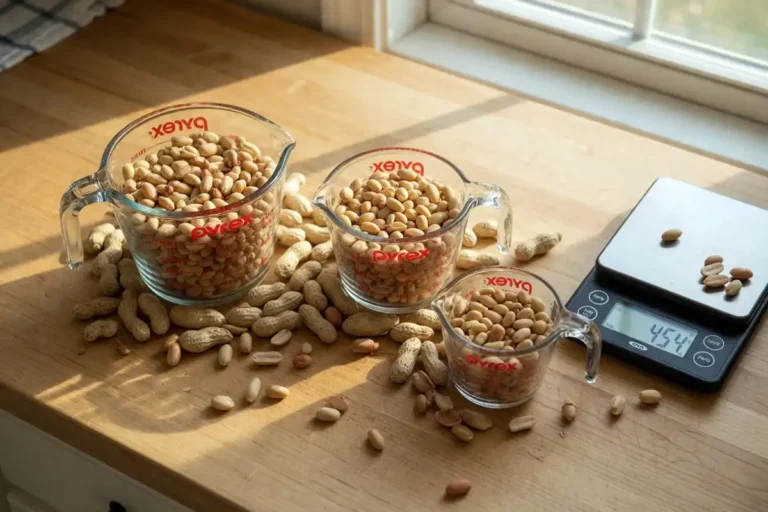
A bushel is a dry volume measurement, but the peanut trade uses pounds per bushel as the working weight. One bushel equals 8 dry gallons, or about 2,150 cubic inches. Since peanuts ship by weight, each state sets a legal pounds-per-bushel figure so farmers, buyers, and state ag departments share one yardstick.
Today, buyers quote in pounds. Elevators quote in pounds. The bushel is more of a historical trade unit than something you scoop on the farm. For background on where peanuts fit into the broader legume family, that is covered in a separate guide.
How Many Pounds Are in a Bushel of Peanuts?
One bushel of in-shell peanuts weighs 25 pounds by the common legal standard in the top-producing states. That figure covers farmer stock peanuts at market moisture, which sits around 10%. If the load is wetter, the same volume weighs more. If the peanuts are drier or lighter in shell fill, the number drops.
The USDA Agricultural Marketing Service publishes standard weights per bushel for field crops used in trade, and peanut weights fall under state-adopted tables that pull from this same framework.
Bushel Weights by Peanut Type
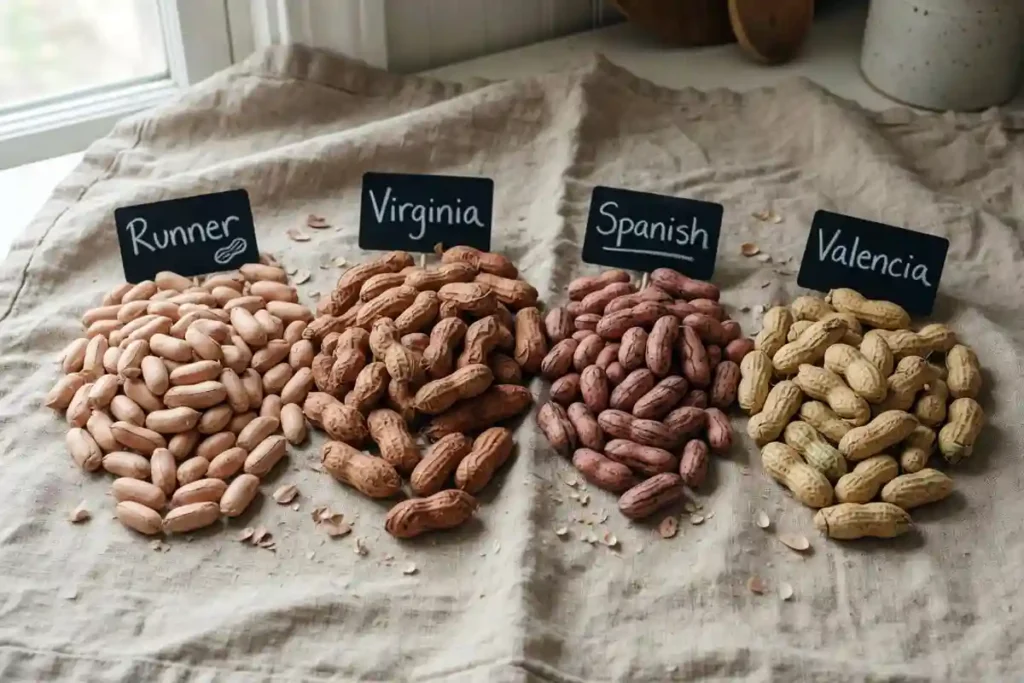
Not every peanut variety fills the hull the same way. Here is how the main U.S. types compare at market moisture.
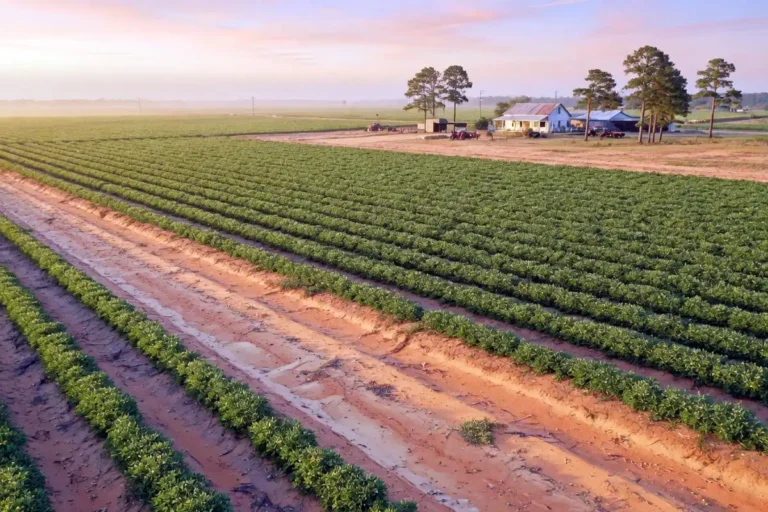
- Runner peanuts: 25 pounds per bushel. Runners account for about 80% of U.S. peanut production and dominate the Southeast.
- Virginia peanuts: 17 pounds per bushel in Virginia and parts of North Carolina. Larger shells, lower fill density.
- Spanish peanuts: 25 pounds per bushel in most state tables. Smaller kernels, tighter hulls.
- Valencia peanuts: 25 pounds per bushel, common in New Mexico and Texas.
The weight gap between Virginia-type and Runner-type peanuts comes from shell size, not kernel density. Virginia peanuts grow big, airy hulls, so the same bushel holds less total mass.
How State Standards Differ
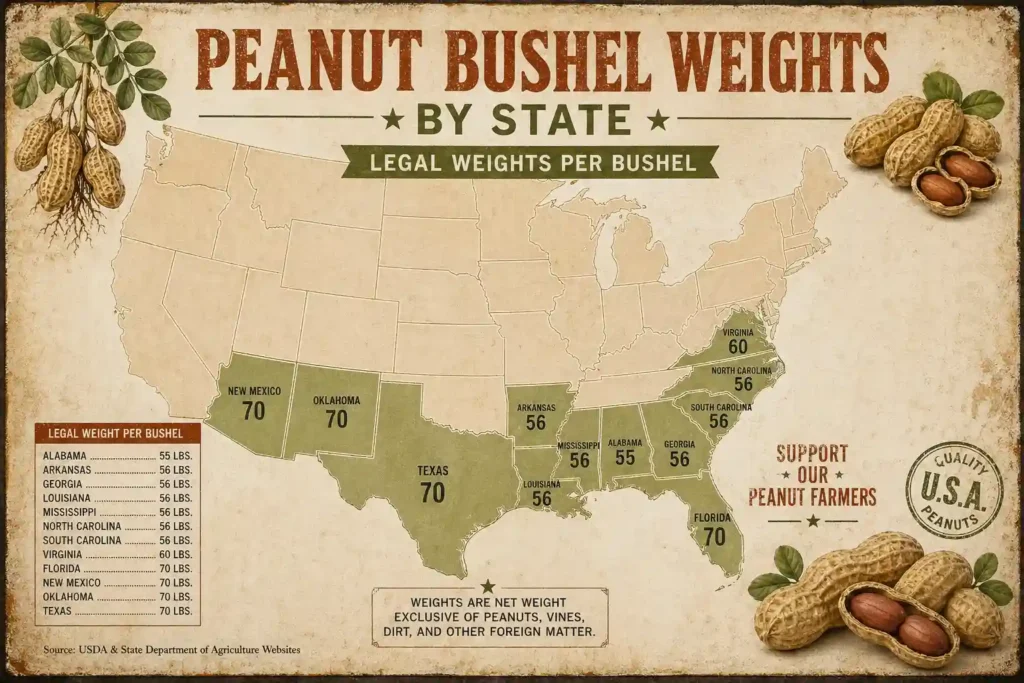
Each state sets its own legal bushel weight. These numbers appear in state weights-and-measures handbooks and get used at elevators and state inspection points.
- Georgia, Florida, Alabama: 25 pounds per bushel, unshelled
- Virginia: 17 pounds per bushel, unshelled (Virginia type)
- North Carolina: 17 pounds per bushel for Virginia type, 25 pounds for Runners
- Texas, Oklahoma, New Mexico: 25 pounds per bushel, unshelled
If you sell across state lines, check the receiving elevator’s standard before you load. A price quoted at one state’s bushel weight settles differently at the next.
Shelled vs In-Shell Peanut Weight
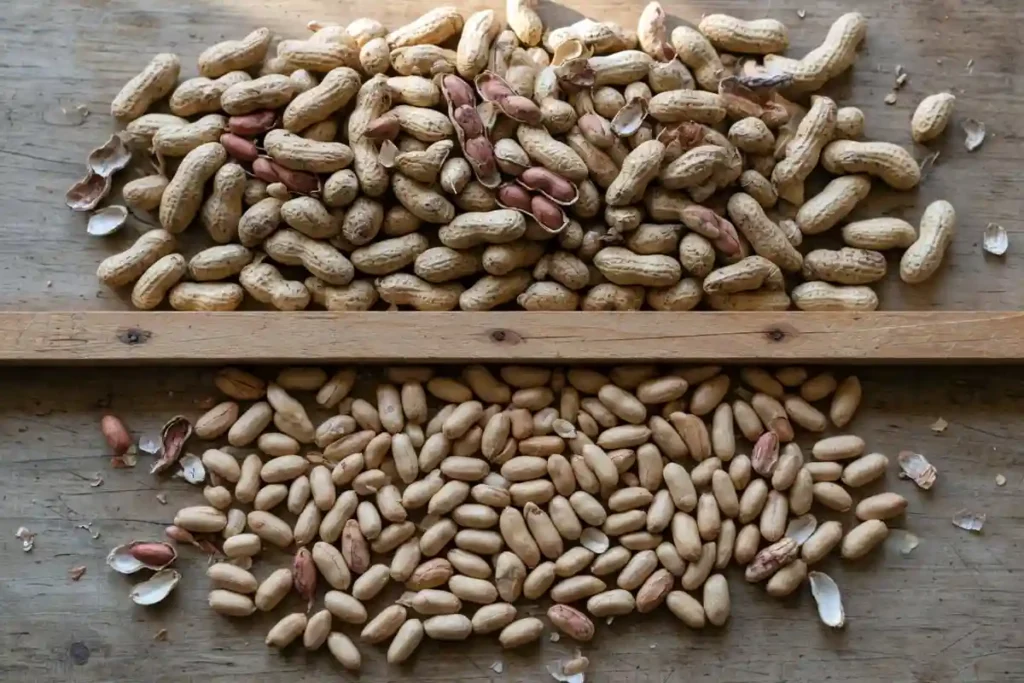
Shelling removes the hull, and most shelled peanuts trade by straight pound weight instead of bushel. About 70 to 75 pounds of in-shell peanuts yields 50 pounds of shelled kernels, a meat-to-hull ratio near 72%. A 25-pound bushel of in-shell Runners produces roughly 17 to 19 pounds of shelled peanut kernels after cleaning.
Home growers sometimes weigh their crop shelled, which throws off the bushel math. Stick with in-shell weight at harvest and convert later if you sell to a sheller.
How Moisture Affects Bushel Weight
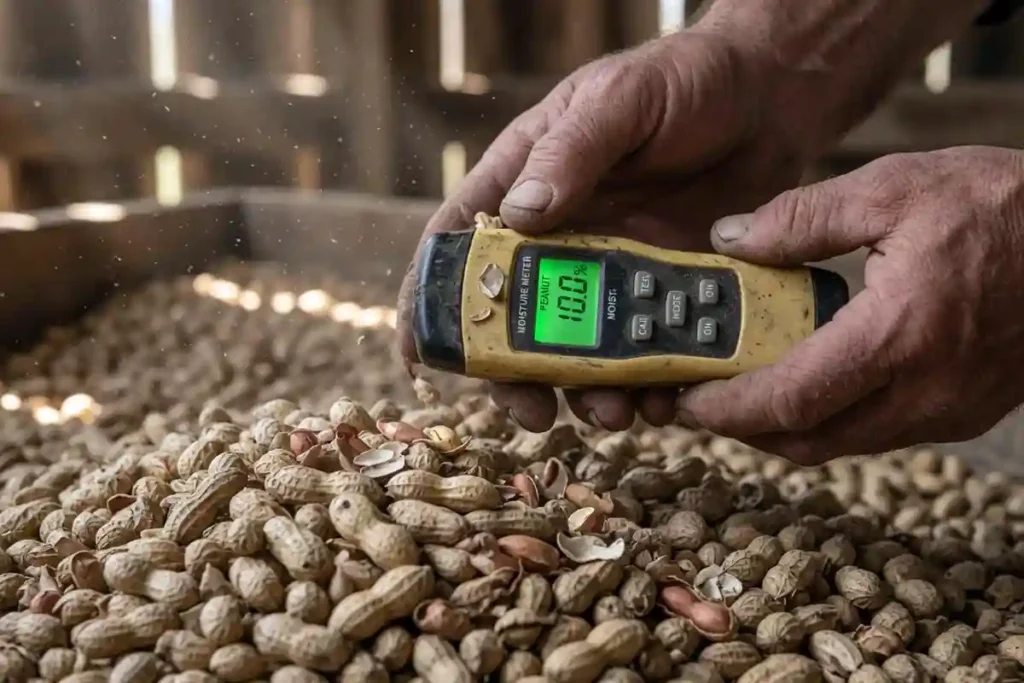
Moisture changes peanut weight more than any other single factor. Freshly dug peanuts carry 35% to 50% moisture. Market-ready peanuts sit at 10% moisture or lower.
A wet bushel weighs far more than a dry bushel of the same volume. Elevators deduct for moisture above 10.49% and can reject loads above 18%. A reliable grain moisture tester pays for itself by the second load if you sell on contract.
How to Weigh Peanuts Correctly After Harvest
Here is the workflow that keeps your weight numbers honest:
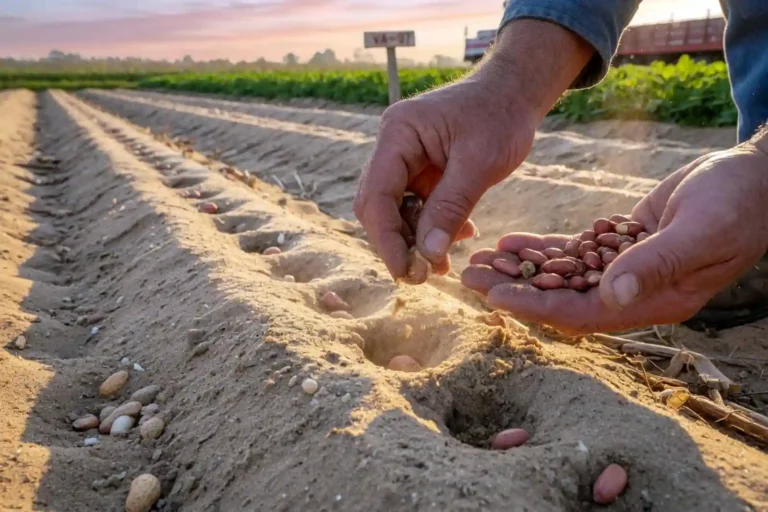
- Cure the peanuts on the inverted vine or in a dryer until they hit 10% moisture.
- Run a moisture test with a handheld tester before bagging.
- Weigh in-shell peanuts on a calibrated platform scale in pounds, not bushels.
- Divide total pounds by 25 (or your state’s legal weight) to get the bushel equivalent.
- Record moisture and weight on each load ticket for your farm records.
The curing step in more detail is covered in our guide on post-harvest handling, which applies to peanuts along with other field crops.
Common Mistakes When Measuring Peanut Bushels
Small errors stack up fast at settlement time.
- Using the wrong state weight. A Virginia grower selling into Georgia can get paid wrong if the scale ticket uses the 17-pound figure.
- Weighing wet peanuts as market weight. Wet peanuts always weigh more. The buyer deducts for moisture, so your real check comes in lower.
- Mixing shelled and in-shell figures. These are different products with different standards.
- Skipping the scale. Volume guesses from a wagon or bin can miss by 20% or more.
For general guidance on yield tracking and bulk handling, see the guide on how to increase crop yield.
Storage and Safety After Weighing
Once you know the weight, get the crop into dry storage. Peanuts hold best at 7% to 10% moisture, 40°F to 50°F, and 55% to 70% relative humidity. Above these ranges, aflatoxin risk climbs. Aflatoxin is a fungal toxin produced by Aspergillus flavus that makes peanuts unsafe to eat or sell.
The NC State Extension peanut program publishes current storage and safety guidelines by region.
FAQs about Pounds in a Bushel of Peanuts
How many pounds are in a bushel of unshelled peanuts?
How many pounds of peanuts make a ton?
How many bushels of peanuts per acre?
Do shelled and in-shell peanut bushels weigh the same?
Why does a Virginia bushel weigh less than a Georgia bushel?
Final Thoughts
Most U.S. in-shell peanut bushels weigh 25 pounds at market moisture, but Virginia-type growers work with a 17-pound standard. Always match your scale ticket to the receiving state’s legal weight, test moisture before you bag, and keep shelled and in-shell figures separate. Those three habits keep settlement honest and your harvest records clean.