Can You Leave Potatoes in the Ground Too Long? 5 Warning Signs
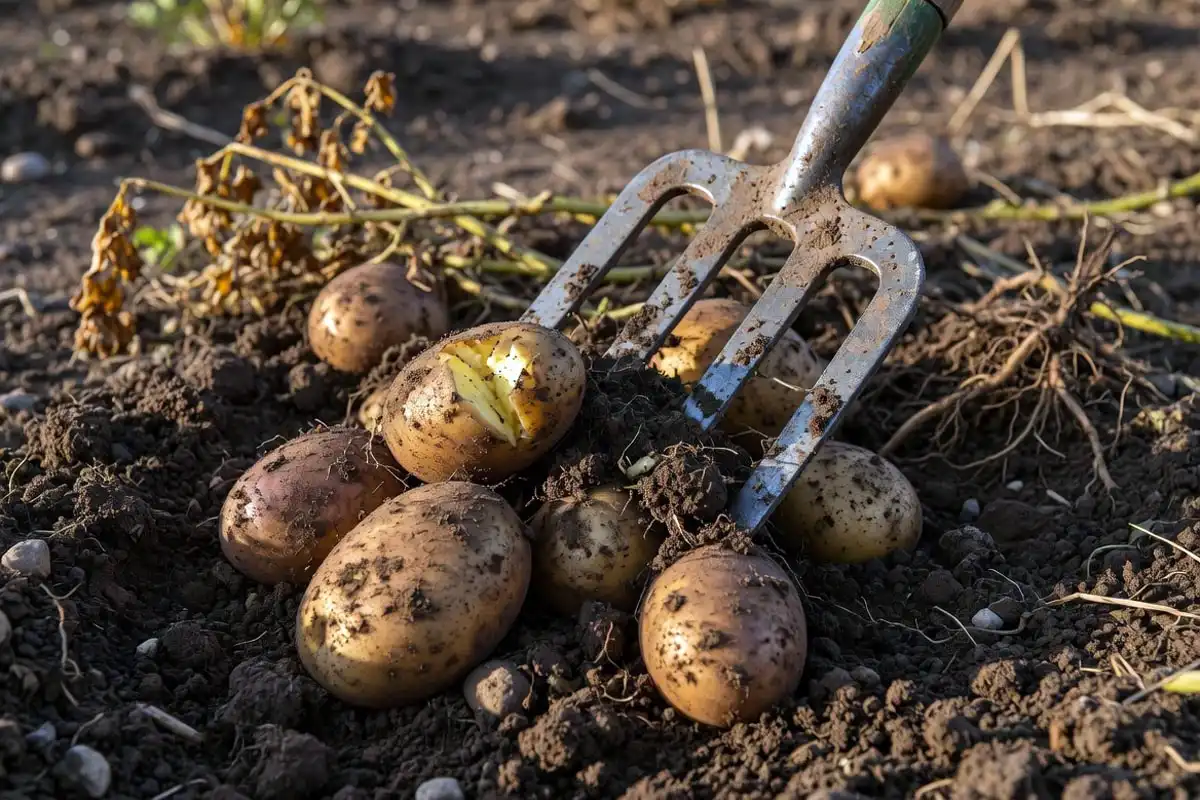
Yes, potatoes can stay in the ground too long, and the risks grow fast once the vines die back. This guide walks through how long tubers can safely sit, what goes wrong with extra time, and how to decide when to lift each row.
Potatoes can stay in the ground for 2 to 3 weeks after the vines die, but longer waits invite rot, greening, pest damage, and frost injury. Lift them before the first hard frost or once soil temperatures drop below 45°F (7°C).
What Happens When Potatoes Stay in the Ground Too Long
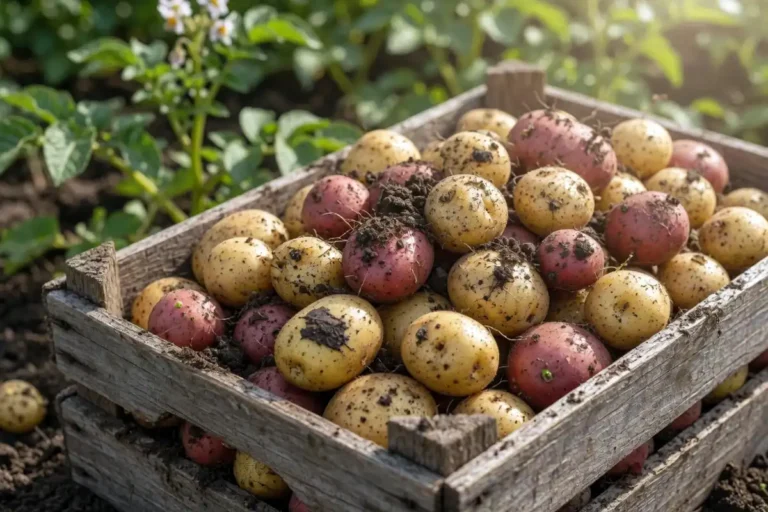
Once potato vines die, the tubers stop growing and the skins begin to set. A short wait of 10 to 14 days helps cure the skin and improves storage life. Past that window, the soil starts working against you. Warm, wet soil triggers rot. Dry soil lets wireworms and voles find the tubers. If sunlight reaches a shallow potato, it turns green and builds up solanine, a natural toxin that makes the flesh unsafe to eat.
More on reading the signs that tubers are ready to lift is covered in an earlier post, and that timing sets the clock for everything that comes next.
How Long Can Potatoes Stay in the Ground Safely
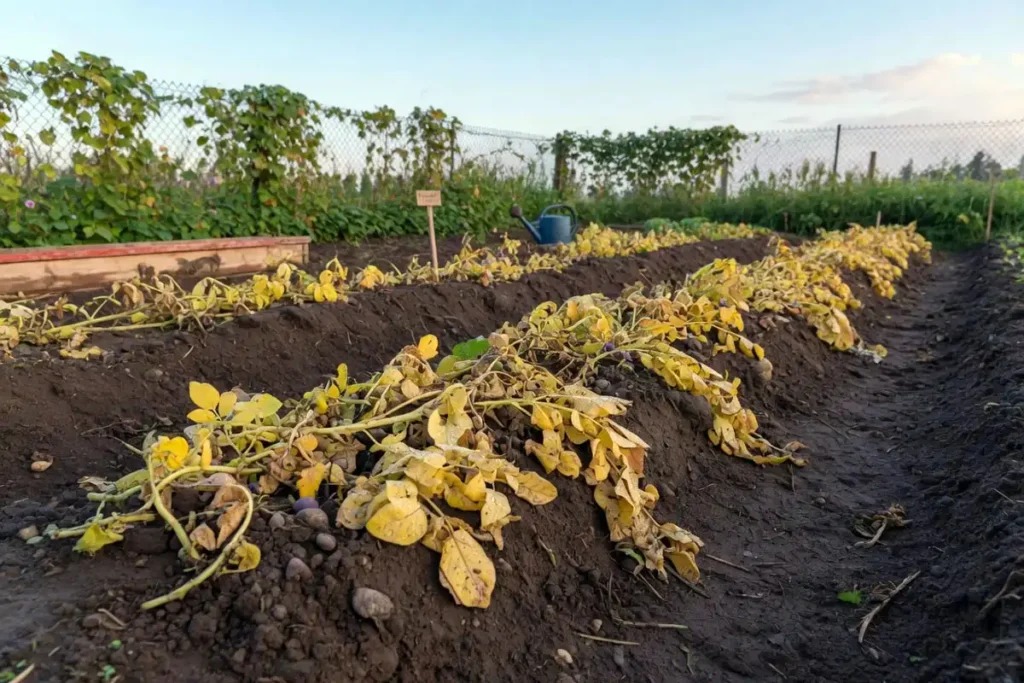
Most varieties hold well for 2 to 3 weeks after the tops die, assuming the soil stays cool and dry. Aim to dig within 14 days of full vine death. Shorter holds work during hot spells. Longer holds work if nights drop near 50°F (10°C) and the soil stays dry.
Keep these limits in mind:
- 2 weeks after vine death: ideal window for skin set.
- 3 weeks: acceptable in cool, dry soil.
- 4+ weeks: rot, greening, and pest damage climb fast.
- First hard frost: pull every tuber before the ground freezes.
When to Dig Potatoes Before Problems Start
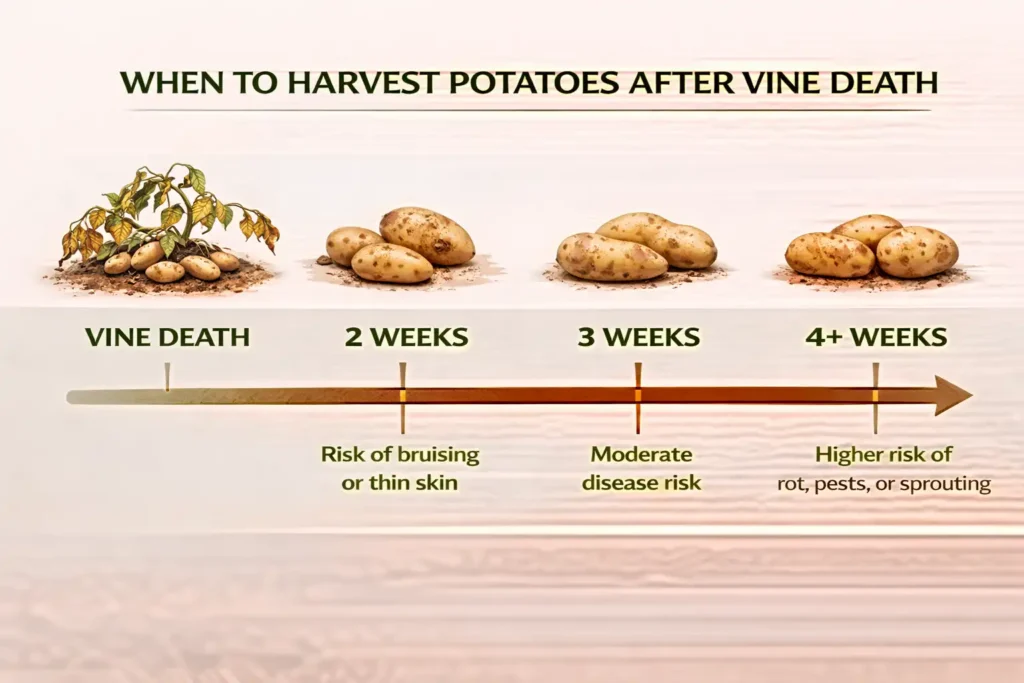
Dig potatoes when the vines have been dead for 10 to 14 days and the soil is dry enough to crumble. Watch your local forecast for the first fall frost. According to the USDA Plant Hardiness Zone Map, frost dates shift each year, so soil temperature and weather matter more than the calendar.
Pull the crop if any of these happen:
- Soil temperature drops below 45°F (7°C).
- A frost of 28°F (-2°C) or lower is forecast.
- Heavy rain is expected for more than 3 days.
- You see cracked soil or pest tunnels near the hills.
Risks of Leaving Potatoes in the Ground Too Long
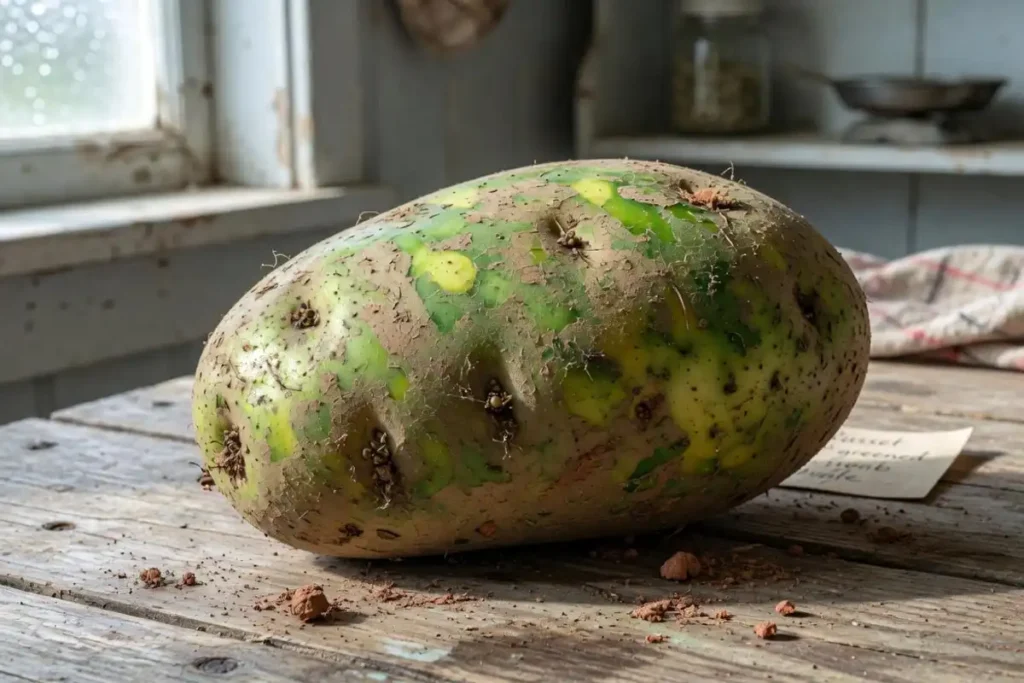
Leaving tubers past their window creates five main problems.
Rot. Warm, wet soil spreads soft rot and late blight. Tubers turn slimy and smell sour. The University of Minnesota Extension reports that wet soil and bruising drive most storage losses.
Greening. Shallow tubers exposed to sun build up solanine. Green flesh tastes bitter and can cause stomach upset.
Pest damage. Wireworms, slugs, and voles find tubers left in the ground for extra weeks. Small holes turn into rotten cavities during storage.
Frost injury. A hard freeze damages cell walls. Frozen potatoes turn black, mushy, and sweet after a few days indoors.
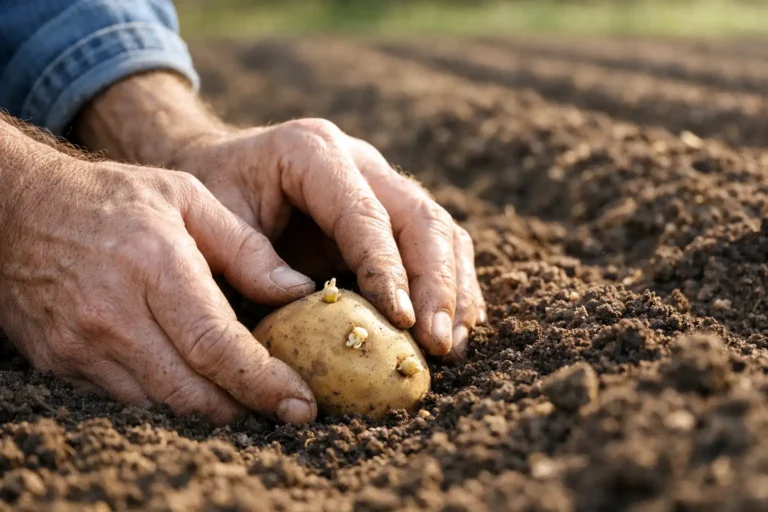
Sprouting. Warm, moist fall soil can push tubers into early sprouting, which drains their starch and shortens shelf life.
Several of these issues is covered in the guide to common crop diseases if you want the full picture.
How to Tell if Your Potatoes Stayed Too Long
Check each tuber at harvest. Toss or eat quickly any that look off.
Warning signs:
- Soft spots or wrinkled skin.
- Green patches on the skin.
- Small tunnels or pinholes from pests.
- Sour or musty smell.
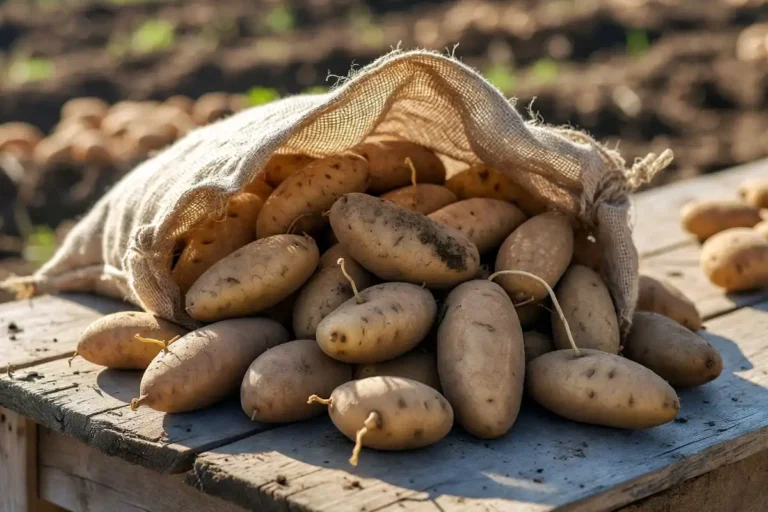
- Long white or purple sprouts.
What to Do if You Left Potatoes in the Ground Too Long
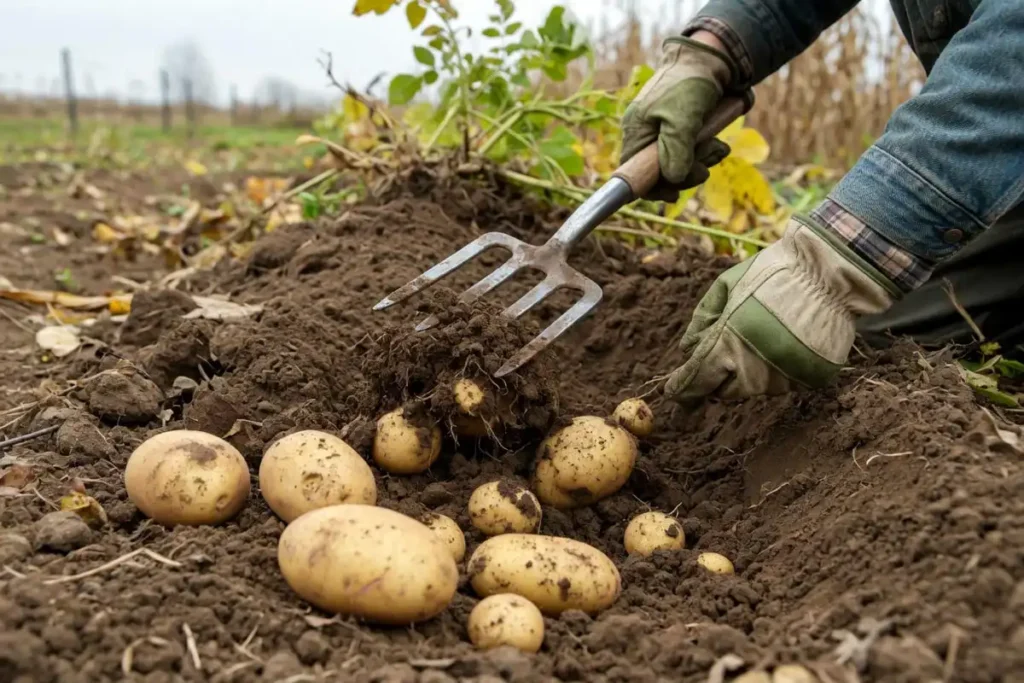
First, dig gently with a fork 8 to 10 inches from the stem. Bruising ruins storage, so work slow. Next, sort into three piles: clean tubers for storage, damaged ones for quick use, and rotten ones for the compost or trash.
Follow these steps for the keepers:
- Brush off loose soil. Do not wash wet tubers before curing.
- Cure in a dark, humid space at 50 to 60°F (10 to 16°C) for 10 to 14 days.
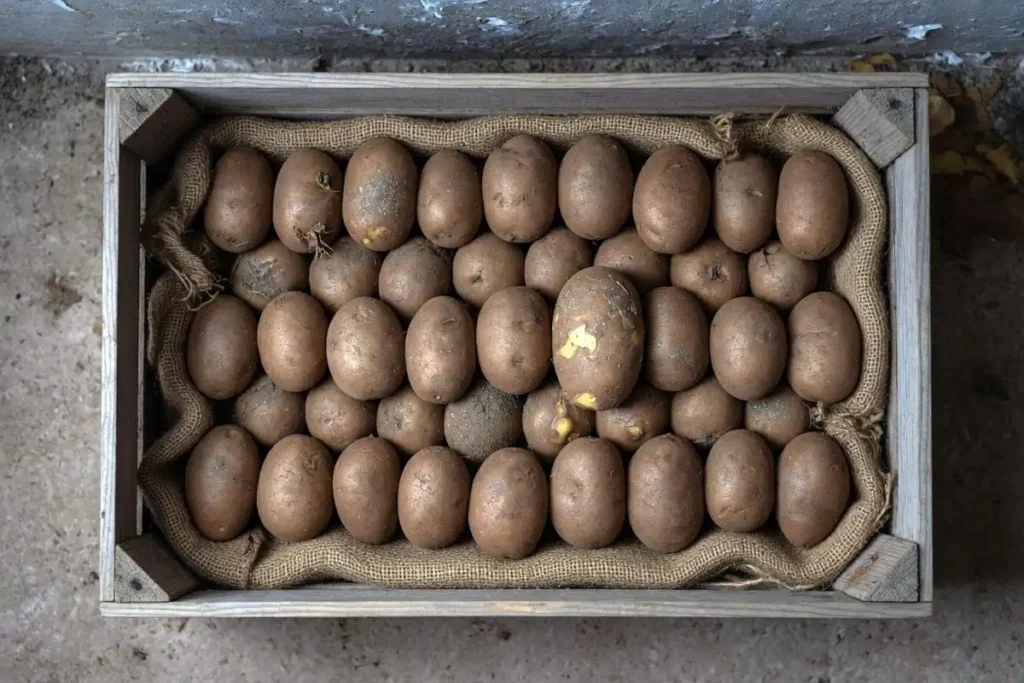
- Store in a cool, dark room at 38 to 45°F (3 to 7°C) with good airflow.
- Check weekly for soft or sprouting tubers and remove them.
Our notes on handling crops after harvest and storing the harvest right go deeper if you want the full routine.
Mistakes to Avoid
New growers often trip on the same few points. Skip these.
- Digging in wet soil. Mud sticks to tubers, spreads disease, and bruises skin.
- Skipping the curing step. Fresh tubers need skin set before storage.
- Storing bruised or pest-damaged tubers with clean ones. One bad potato rots the bin.
- Eating green potatoes. Cut green parts out or throw the tuber away.
- Leaving tubers in the sun after digging. Light greens them in hours.
Safety Notes
Green potatoes contain solanine. Trim green patches deeply or discard the tuber. Frost-damaged tubers taste sweet and off. Do not store them, since they rot fast and can leak onto healthy potatoes. Wash hands after handling rotten tubers, because soft rot bacteria spread by touch to nearby beds.
FAQs about Leave Potatoes in the Ground Too Long
How long can potatoes stay in the ground after the plant dies?
Can potatoes survive a frost in the ground?
Do potatoes keep growing if left in the ground?
Can you leave potatoes in the ground over winter?
Will potatoes rot if left in the ground too long?
Final Words
Potatoes give you a short grace period after the vines die, and holding them past 2 to 3 weeks turns a good crop into a risky one. Watch the soil temperature, track the frost forecast, and lift tubers once the skins feel firm. A careful dig and clean cure protect every pound you worked to grow.