How Long Does It Take for Winter Wheat to Germinate? (2026 Guide)
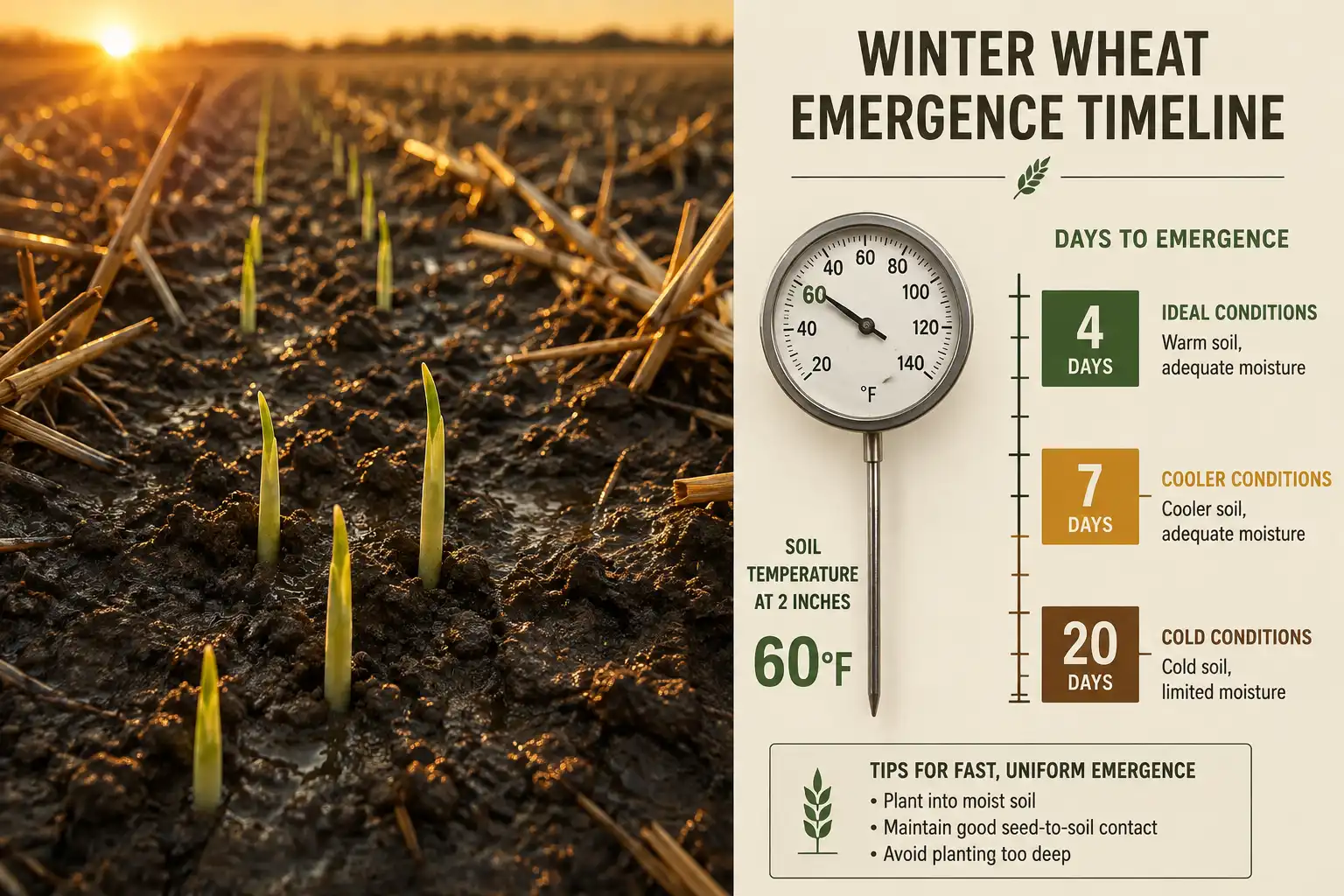
Winter wheat germination speed decides how much fall growth you bank before dormancy. So how long does it take for winter wheat to germinate? Soil temperature and seed zone moisture set the answer. You can measure both before the drill leaves the shed.
Winter wheat germinates in 4 to 7 days when soil at seed depth holds 54°F to 77°F with adequate moisture. At 45°F, expect 13 to 16 days. Deeper seeding adds more.
How Long Does It Take for Winter Wheat to Germinate by Soil Temperature
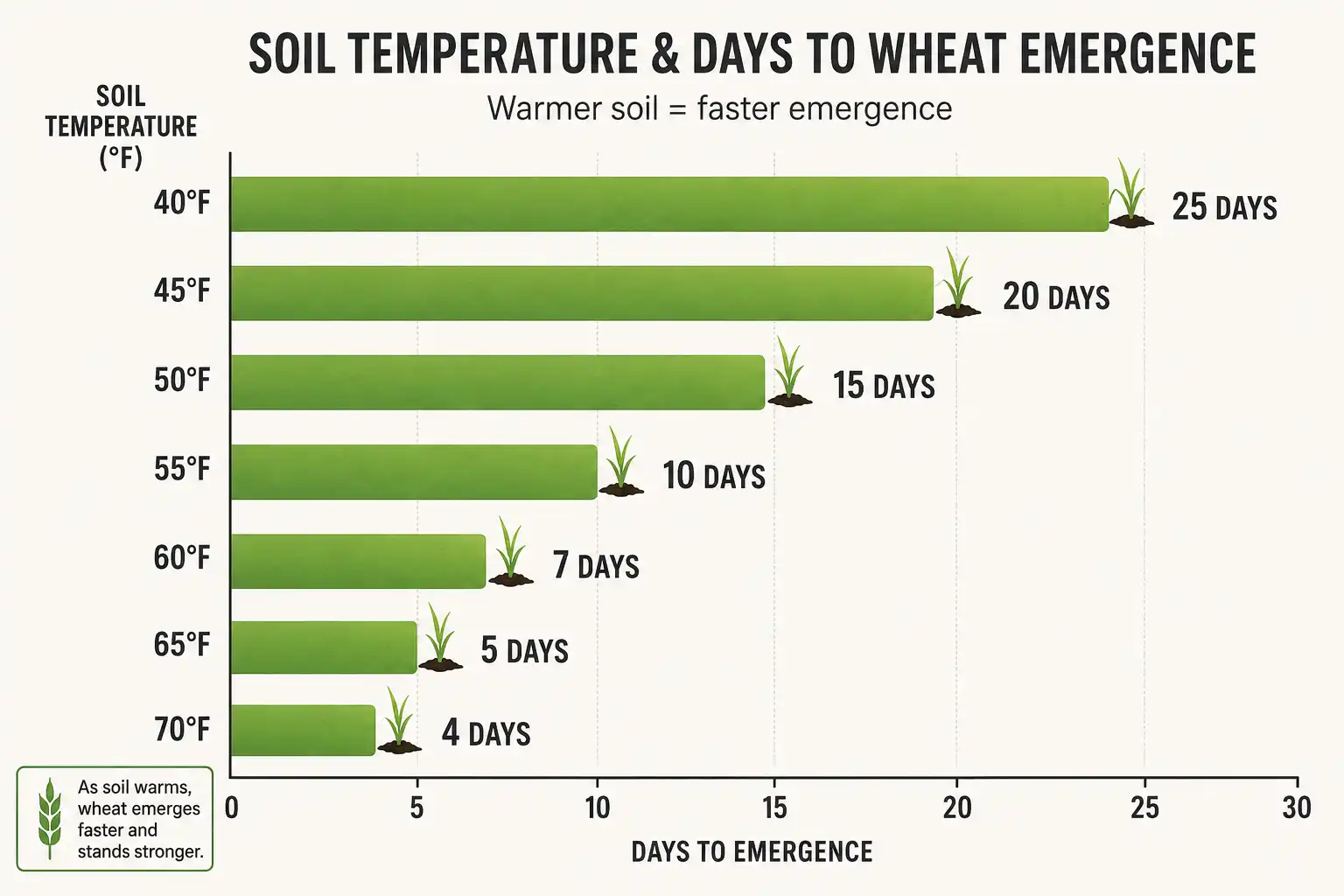
Winter wheat germinates fastest between 54°F and 77°F at seed depth, which puts emergence at 4 to 7 days. Below that band the clock stretches quickly. Above it, germination turns unreliable.
Wheat runs on heat units, not calendar days. NDSU sets emergence at roughly 180 growing degree days, base 32°F. That figure assumes seed 1.5 inches deep in moist bare soil. So divide 180 by the heat units your soil makes each day and you get a working estimate.
| Average soil temp at seed depth | Daily heat units (base 32°F) | Days to emergence |
|---|---|---|
| 40°F | 8 | 20 to 25 |
| 45°F | 13 | 13 to 16 |
| 50°F | 18 | 9 to 11 |
| 55°F | 23 | 7 to 9 |
| 60°F | 28 | 6 to 7 |
| 65°F | 33 | 5 to 6 |
| 70°F | 38 | 4 to 5 |
| 85°F and higher | Not reliable | Dormancy and heat sensitivity stall the stand |
Residue changes the math. NDSU reports that surface residue delays emergence 1 to 2 days at the same depth. Trash keeps the seed zone cooler and shades it all afternoon. On no-till acres, the slow end of every range above is the safer planning assumption.
Read more: Guide to Plant Wheat
Germination and Emergence Are Not the Same Thing
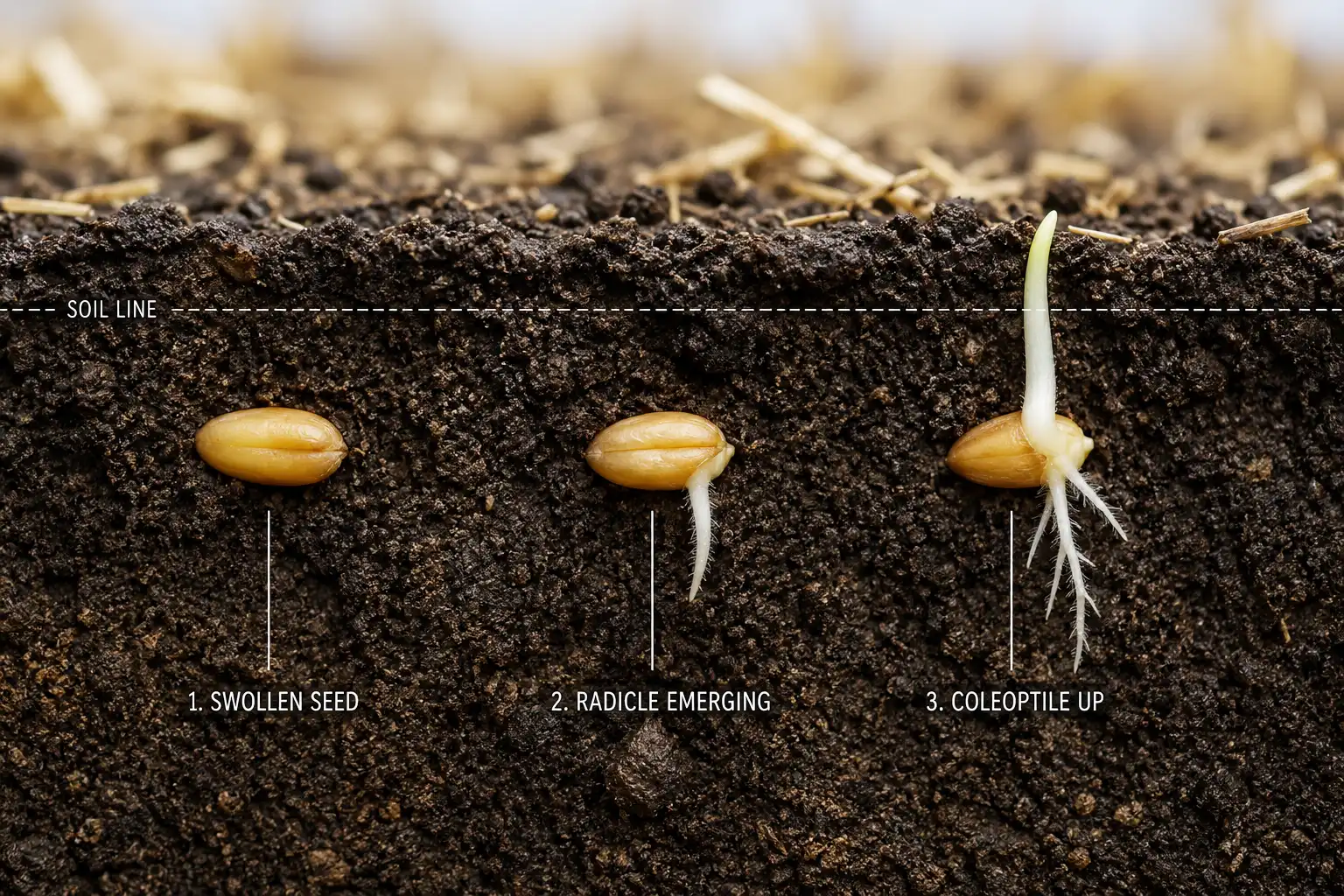
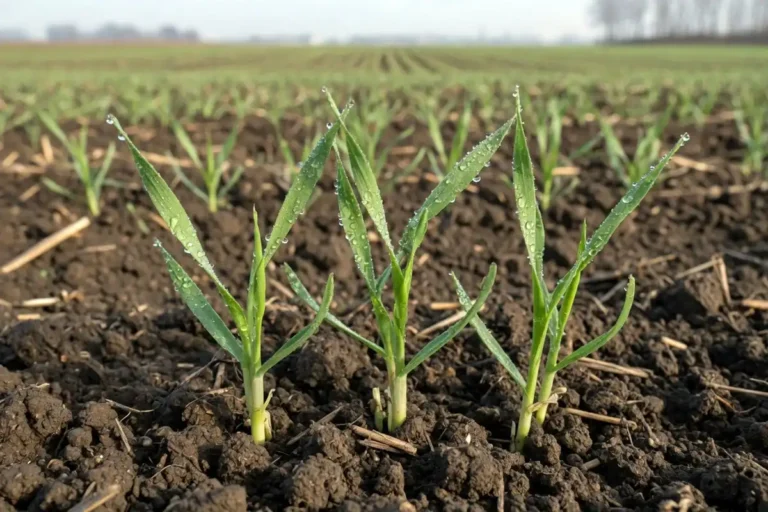
Germination happens underground and finishes when the radicle breaks the seed coat. Emergence happens later, when the coleoptile punches through the soil surface. Farmers count emergence because it is what you can see, but the two events are days apart.
Oklahoma State breaks germination into three phases. First the seed absorbs water. Then the seed coat ruptures and the embryo activates. Finally the radicle appears, followed by the seminal roots and the coleoptile.
That first phase matters more than most people expect. Germination alone takes about 80 heat units. Everything past that is the coleoptile stretching toward daylight, and depth controls how long the stretch takes.
Here is the part worth remembering. If the soil dries out after the seed swells but before the radicle shows, germination pauses instead of failing. The seed stays viable and picks up where it stopped once moisture returns. Wheat can sit two weeks in dusty ground, catch a half inch of rain, and still come up evenly.
The Soil Temperature Range That Runs the Clock
Wheat germinates anywhere from 40°F to 99°F, but Oklahoma State puts the optimum at 54°F to 77°F. Inside that band the seed uses heat efficiently. Outside it, you are trading days for nothing.
Take your reading at seed depth, not at the surface. Morning readings are the honest ones, since afternoon sun inflates the top two inches. Check three mornings running before committing the drill. Pull readings from the highest and the lowest ground in the field. Sandy ridges can sit 8°F warmer than a bottom.
Pick up a decent soil thermometer for accurate seed depth readings if you are still guessing from the forecast. Air temperature and soil temperature part ways badly in September, especially under stubble.
Soil temperature also drives your calendar. Most of the Central Plains hits that 54°F to 77°F window from mid September into early October. That is why winter wheat planting dates cluster where they do. Farther south, growers wait for soils to cool instead of warm.
How Much Moisture the Seed Needs Before It Starts
A wheat seed must take up 35 to 45 percent of its dry weight in water before germination begins. Michigan State and Oklahoma State both use that figure. Below it, nothing happens, no matter how good the soil temperature looks.
Free water is not the only source. Oklahoma State notes that dry soil can still hold 99 percent relative humidity in the pore space. That alone supplies enough moisture for germination. The process just runs slower and less evenly.
That explains what dryland growers call dusting in. You place seed into dry topsoil, accept a delay, and wait for rain. It works, but the risk is real. Partial moisture starts germination in some seeds and not others. The stand then emerges across two weeks.
Before drilling, check moisture at seed depth with a probe rather than by eye. A soil moisture meter reading tells you whether the seed zone can actually deliver. Sometimes the moisture sits four inches down, where a 1.5 inch placement never reaches it.
How Seeding Depth Adds Days to Emergence
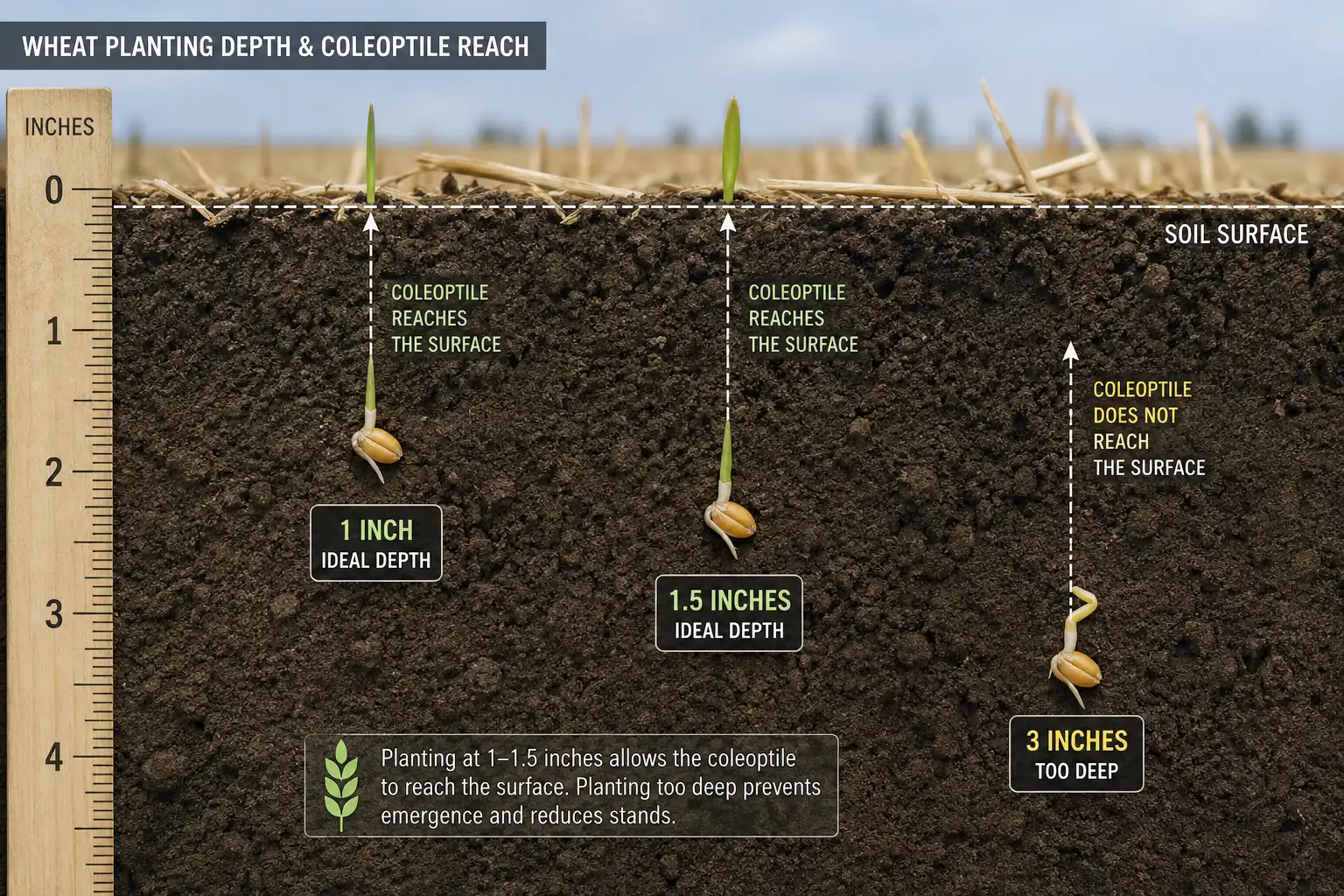
Every extra inch of seeding depth adds roughly 50 heat units to emergence. At 55°F soil, that is about two extra days per inch. At 65°F, closer to a day and a half.
Target 1 to 1.5 inches. Shallower than 1 inch puts the crown too close to the surface and raises winterkill risk. Deeper than 2 inches costs you days and, in some varieties, costs you the stand entirely.
The limit is coleoptile length. Never seed deeper than the coleoptile your variety can produce. K-State reports that hot soil shortens coleoptiles by as much as 60 percent. A variety measuring 2 7/8 inches at 60°F can drop to 1 5/8 inches at 80°F soil.
When the coleoptile runs out of length underground, the first true leaf tries to unfurl below the surface. It kinks into an accordion shape, turns yellow, and the plant dies. You will not spot the gap in the row until three weeks later. By then it is too late to fix cheaply.
Check your drill depth in the field, not in the shop. Firm ground, loose ground, and residue all move the seed off your setting.
Why Wheat Sown Into Hot Soil Comes Up Late or Not at All
Three separate problems stack up in hot soil. Oklahoma State reports that seed drilled into soils above 85°F often shows delayed germination or fails to emerge at all.
Post-harvest seed dormancy. Dormancy peaks right before harvest and fades with time in the bin. It is a useful trait, since it prevents sprouting in the head. But seed harvested in June and drilled in August may still carry enough dormancy to sit tight.
High temperature germination sensitivity. Varieties differ, and the difference is dramatic. Oklahoma State documented sensitive varieties producing full stands in 90°F soil one year. The same conditions gave 10 percent stands the next. Duster and Gallagher rate low on sensitivity. Check the variety guide before you plant early.
Shortened coleoptile. Covered above, and it compounds the first two. Hot soil shortens the shoot at the exact moment you need it longest.
Southern Plains soils generally cool below the trouble zone around September 20. Plant the low sensitivity varieties first and hold the sensitive ones until soil temperatures come down. That ordering costs nothing and protects the stand.
What Else Slows Winter Wheat Germination in the Field
| Field condition | Effect on timing | What to do about it |
|---|---|---|
| Heavy surface residue | Adds 1 to 2 days, cooler seed zone | Set row cleaners, raise seeding rate about 15 percent |
| Cloddy seedbed, poor seed to soil contact | Emergence spreads across 10 to 14 days | Firm the seedbed, check press wheel down pressure |
| Crusting after a hard rain | Coleoptile cannot break through | Seed on the shallow end, rotary hoe if the crust is thin |
| Dry topsoil with moisture below | Germination pauses until rain | Seed to moisture inside the coleoptile limit, or dust in and wait |
| Low germ or weather damaged seed | Slower, thinner, uneven | Run a germination test, then adjust the rate |
| Seeding past 2 inches | Adds 2 to 4 days, risks total failure | Verify depth with a spade in three spots per field |
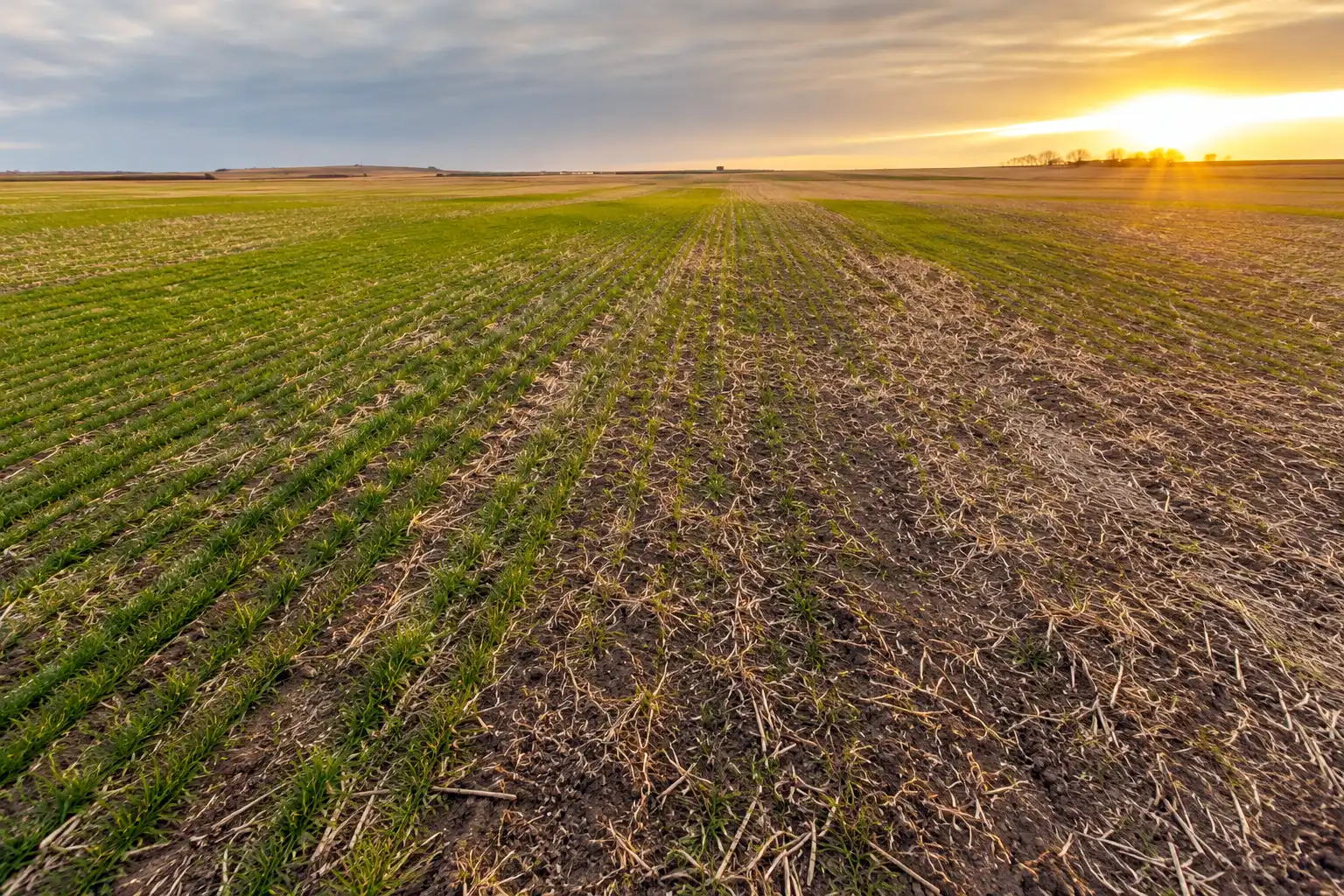
Uneven moisture is the single biggest cause of ragged stands here. K-State points out what patchy topsoil moisture does. Some seed germinates and emerges, some starts and dies, and some never begins. The result is a field that looks striped and stages unevenly all season, which fouls up herbicide timing later.
Will Late Planted Winter Wheat Still Germinate?
Yes. Cold soil slows germination but does not stop it. The seed zone just has to stay above about 40°F and hold moisture. The seed simply banks heat units at a slower rate.
Michigan State reports that wheat drilled in early November may not emerge until spring in northern regions. The seed germinates underground, sits through winter, and pushes up at green-up. Yield potential drops, but the crop is not lost.
Vernalization does not require emergence either. Once the seed imbibes that 35 to 45 percent moisture, the cold clock starts running below ground. That is why late seeded wheat can still head out normally the following summer.
Two adjustments matter when you are behind. Seed shallower, around 1 inch, so the coleoptile has less distance to cover in cold soil. Then raise the seeding rate, since cool soil slows emergence and favors seedling disease. K-State suggests 60 to 75 pounds per acre for November seeding in western Kansas. Central Kansas runs 75 to 90 pounds.
Push the date far enough and yield falls off by the week. Knowing how late you can plant winter wheat changes the rate you drop. Miss fall entirely and seeding winter wheat in spring behaves nothing like a fall crop, since vernalization never happens.
How to Test Wheat Seed Germination Before You Drill
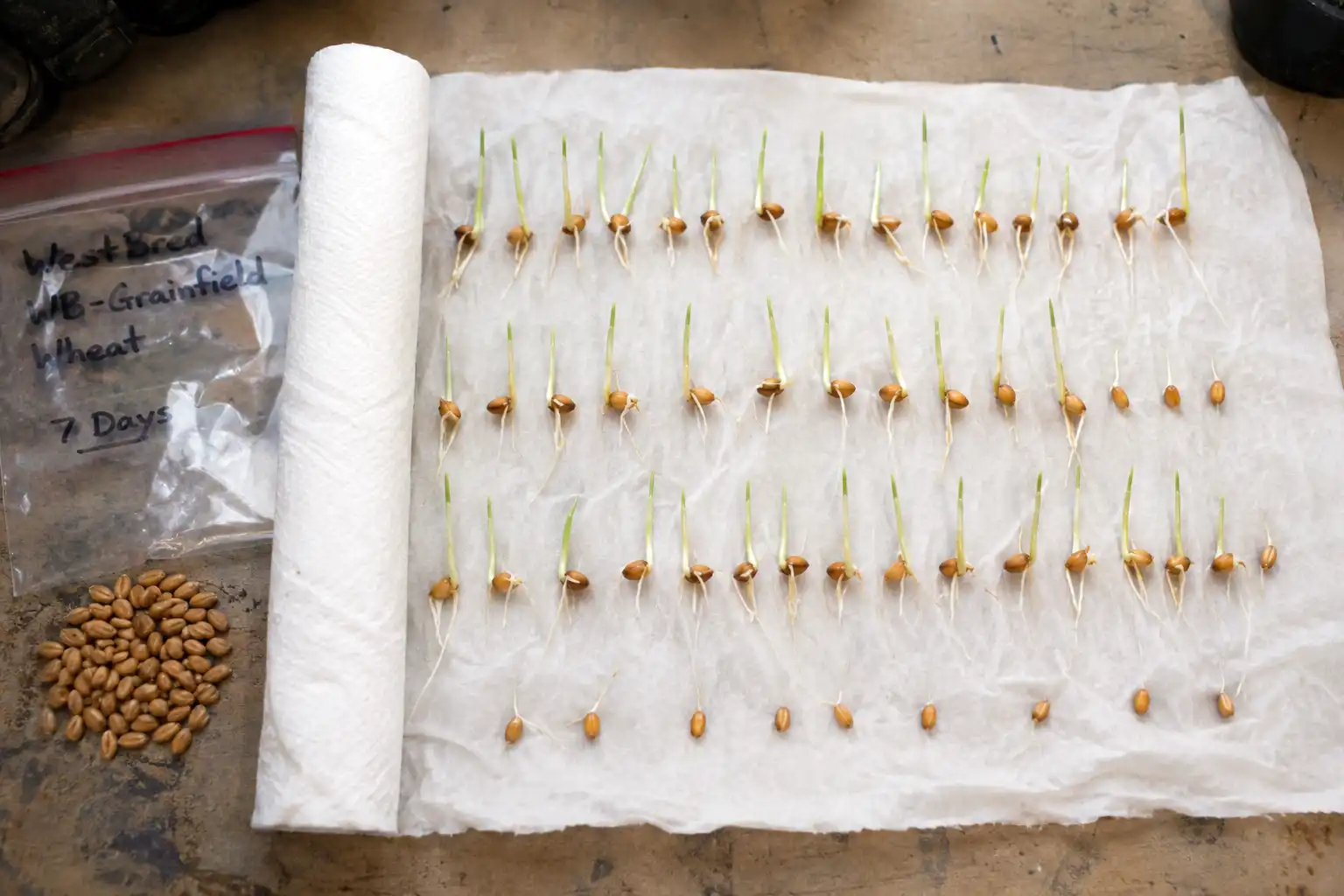
Run a rag doll test two weeks before planting. It takes ten minutes and tells you whether your seeding rate math is real.
- Pull seed from several spots in the bin or from three different bags. Count out exactly 100 seeds.
- Lay a paper towel flat and dampen it. Space the seeds across it, an inch apart, leaving a dry margin.
- Roll the towel loosely, slide it into a plastic bag, and leave the bag open.
- Hold it at 65°F to 70°F. A shop shelf works fine.
- Check at day 4 and again at day 7. Keep the towel damp, never soaked.
- Count only normal seedlings, meaning both a root and a shoot. That count is your germination percentage.
Then adjust. Divide your target seeds per acre by the germination decimal. Targeting 1.2 million seeds per acre with 85 percent germ means you need to drop 1.41 million.
A rag doll test measures warm germ only. Bin-run seed, or seed off a wet harvest, deserves a lab cold test too. Warm germ can read 92 percent while cold germ reads 70. Your September field conditions decide which number you get.
When to Start Digging After You Plant
Start checking at day 4 in soil above 65°F, and at day 10 in soil below 50°F. Digging earlier than that tells you nothing useful.
Take a spade to five spots per field. Include a high spot and a low spot. Then look at three things.
- The radicle. A white, firm root means germination is running. Brown or soft means the seed rotted.
- Coleoptile color and length. White and firm is fine. Brown tips signal soil crusting or disease pressure.
- Depth. Measure it. Drills wander, and inconsistent depth explains most uneven emergence.
Once the crop is up, count plants per foot of row in several spots. Uniformity matters more than the raw number. A thin but even stand tillers and compensates. A stand with 20 foot gaps will not.
K-State advises that stands under 30 percent of normal call for a replant decision. Replanting after early November also needs higher rates than the original pass. Check your crop insurance cutoff before you make that call, since the deadline usually arrives before the agronomy does.
Final Words
Do not track germination by calendar days anymore. Track soil temperature at seed depth and moisture in the seed zone, then estimate emergence from heat units. That gets me within a day or two most falls.
Get the seed 1 to 1.5 inches deep into moisture with soil between 54°F and 77°F. Winter wheat will be up in under a week. Miss on moisture and you wait for rain. Miss on depth and you may never see some of that seed at all.