Is Sorghum Wheat? 7 Key Differences Every Farmer Should Know
No, sorghum is not wheat. Both belong to the grass family, but they come from different genera with separate botanical names, growing habits, and end uses. This guide explains how sorghum and wheat compare, where each crop fits on the farm, and why mixing them up costs farmers and bakers money.
Sorghum (Sorghum bicolor) and wheat (Triticum aestivum) are two distinct cereal grains. Sorghum is gluten-free, drought-tolerant, and grown for grain, forage, and syrup. Wheat contains gluten and grows best in cooler climates. They share the grass family but are not the same crop.
Contents
- 1 What is sorghum?
- 2 What is wheat?
- 3 Are sorghum and wheat related?
- 4 What about Egyptian wheat?
- 5 How does sorghum differ from wheat?
- 6 Where does sorghum grow?
- 7 When do farmers plant sorghum vs. wheat?
- 8 Is sorghum gluten-free?
- 9 Common uses of sorghum and wheat
- 10 Mistakes to avoid when comparing sorghum and wheat
- 11 Safety notes
- 12 Frequently Asked Questions
- 13 Conclusion
What is sorghum?
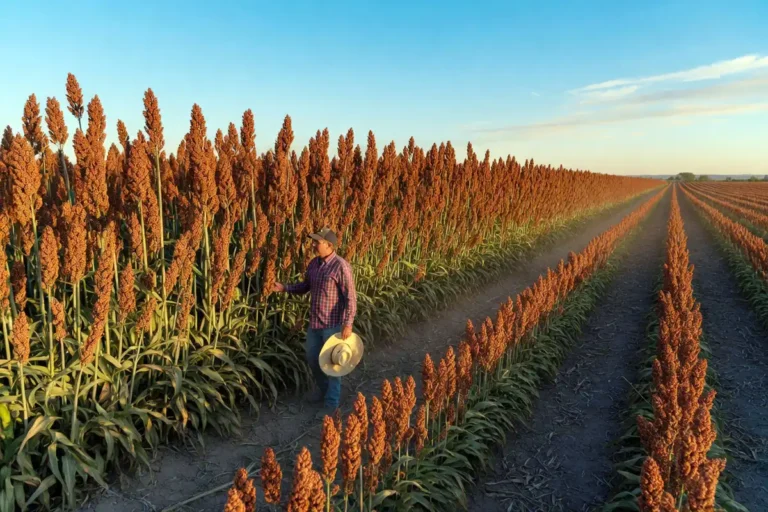
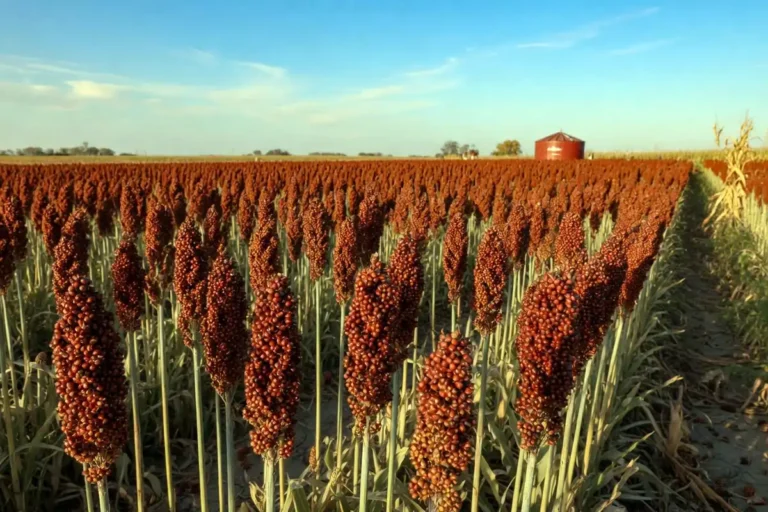
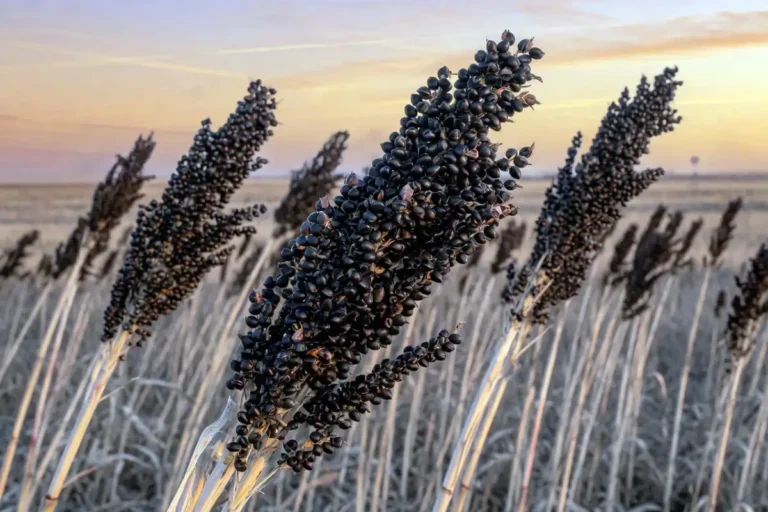
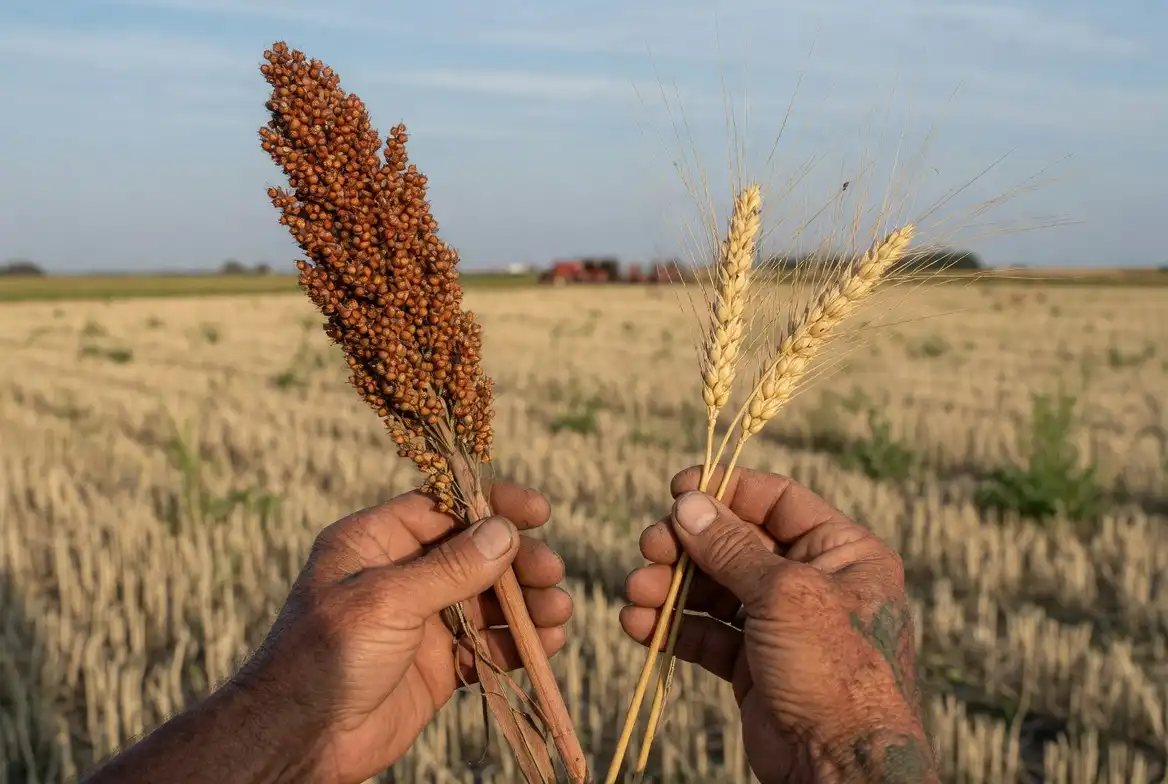
Sorghum is a cereal grass in the genus Sorghum, with Sorghum bicolor as the main grain species. I grow it on drier ground here in Kansas because it handles heat and dry spells better than corn or wheat. The plant carries seeds in an open panicle at the top, not on a spike like wheat. Grain ranges from white to red to bronze, with hard, round kernels.
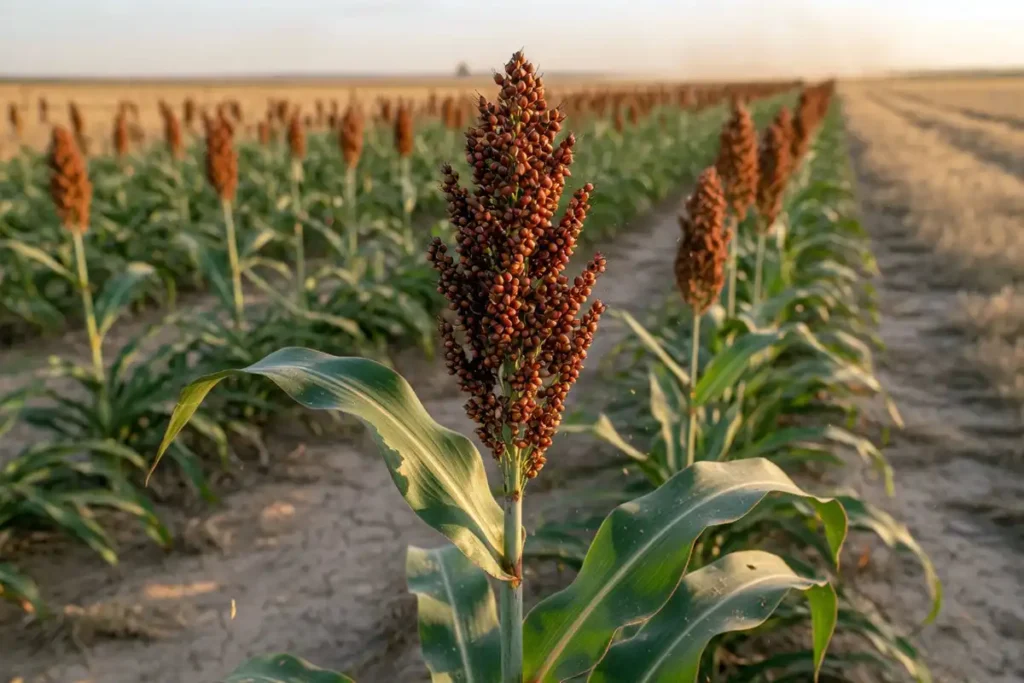
Farmers raise four main types: grain sorghum (milo), sweet sorghum (for syrup), forage sorghum (for hay and silage), and biomass sorghum (for biofuel).
What is wheat?
Wheat is a cereal grass in the genus Triticum. Common bread wheat is Triticum aestivum. It produces elongated kernels in a tight spike with awns. Wheat contains gluten proteins (glutenin and gliadin) that give bread dough its stretch.
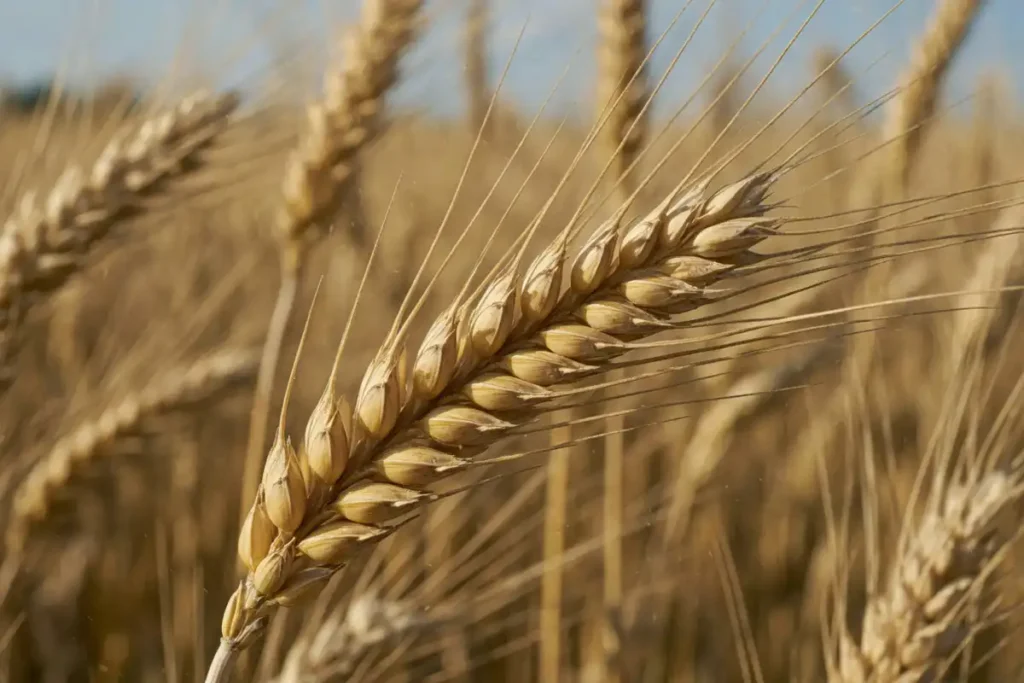
Wheat handles cool weather. Winter wheat goes in during fall and finishes in early summer, while spring wheat plants in early spring. My winter wheat planting guide covers timing season by season.
They share a family (Poaceae, the grass family) but sit in different genera. That makes them cousins, not the same plant. Corn, oats, rice, and rye also live in this family. Calling sorghum a type of wheat is like calling a cat a dog because both are mammals.
What about Egyptian wheat?
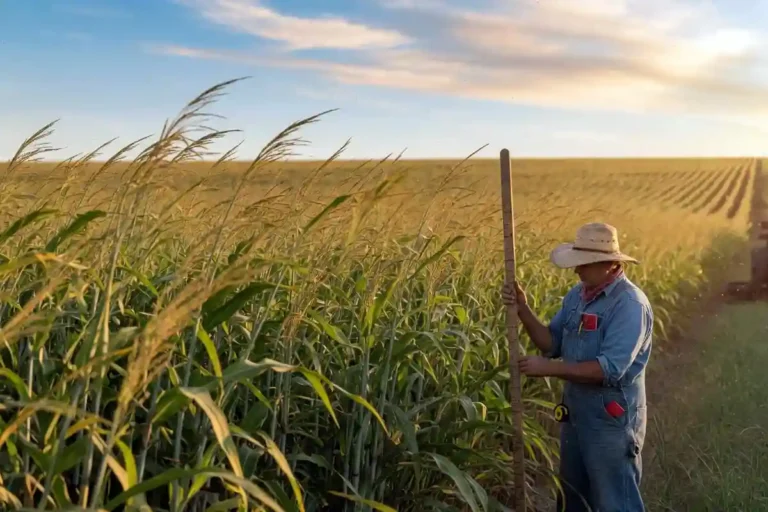
Egyptian wheat is not actually wheat. It’s a tall variety of Sorghum bicolor used mostly as a forage and wildlife screen. The name causes constant confusion at feed stores and seed counters. For planting details, see my notes on Egyptian wheat timing.
How does sorghum differ from wheat?
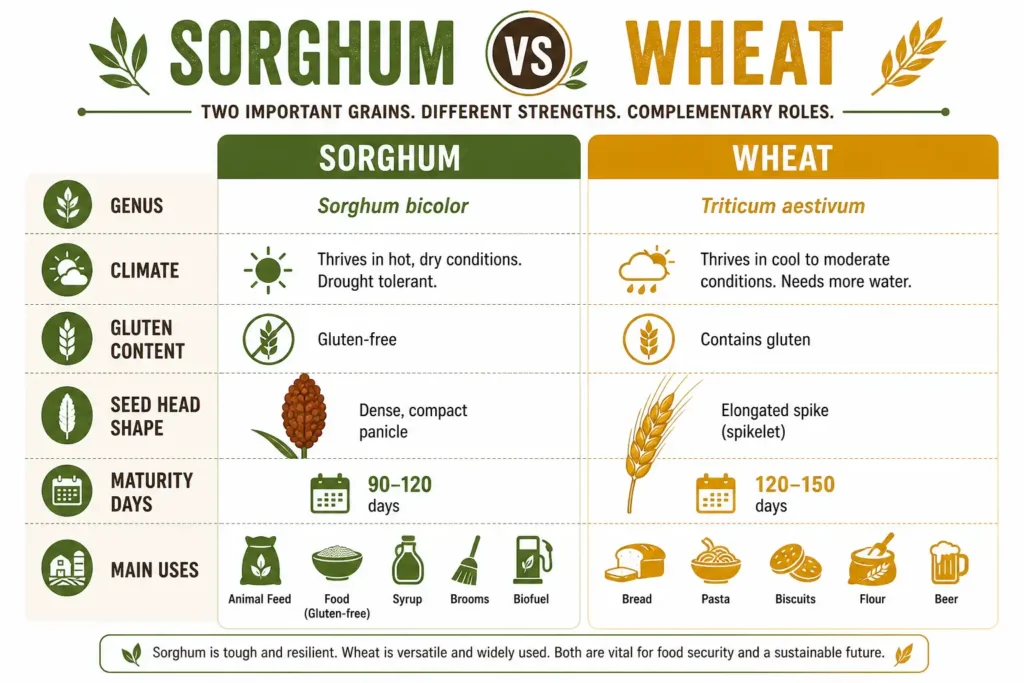
The two crops separate in nearly every category that matters on the farm.
| Feature | Sorghum | Wheat |
|---|---|---|
| Genus | Sorghum | Triticum |
| Climate | Hot, drought-tolerant | Cool, moisture-loving |
| Seed head | Open panicle | Tight spike with awns |
| Gluten | None | Contains gluten |
| Maturity | 95–120 days | 120–240 days (winter wheat longer) |
| Main uses | Feed, syrup, forage, ethanol | Bread, pasta, cereal |
| U.S. lead state | Kansas | Kansas, North Dakota |
For a similar comparison between two other grains, my piece on whether wheat or oats serves growers better covers parallel ground.
Where does sorghum grow?
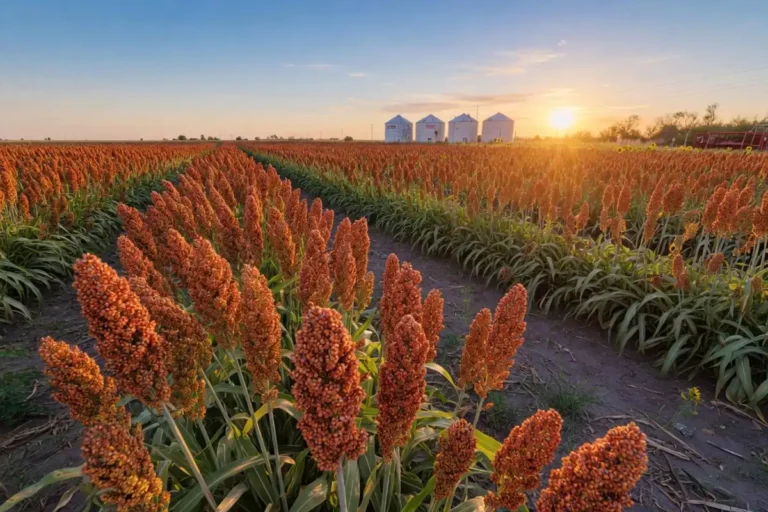
Sorghum grows mainly across the central and southern Plains. Kansas leads U.S. grain sorghum production, followed by Texas, Oklahoma, and Nebraska, per USDA agricultural data. The crop thrives in hot, semi-arid conditions where wheat or corn often fail.
Wheat covers a wider footprint. Winter wheat dominates the southern Great Plains. Spring wheat anchors the northern Plains and Pacific Northwest.
When do farmers plant sorghum vs. wheat?
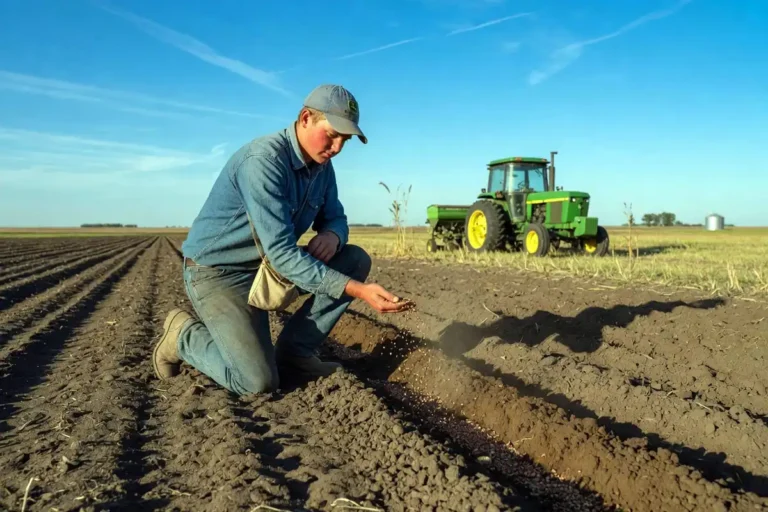
Sorghum planting waits for warm soil, usually late May through June, once soil temperatures reach 60 to 65°F at planting depth. Wheat splits into two windows. Winter wheat goes in during September and October. Spring wheat plants once soils thaw, as I cover in my spring wheat timing notes. General wheat scheduling lives in my wheat planting calendar.
Is sorghum gluten-free?
Yes. Sorghum contains no gluten, which makes it safe for people with celiac disease according to NIH celiac disease information. Wheat, by contrast, contains gluten and is the primary grain people with celiac avoid. Sorghum flour shows up in gluten-free baking, craft beer, and traditional porridges across Africa and India.
Common uses of sorghum and wheat
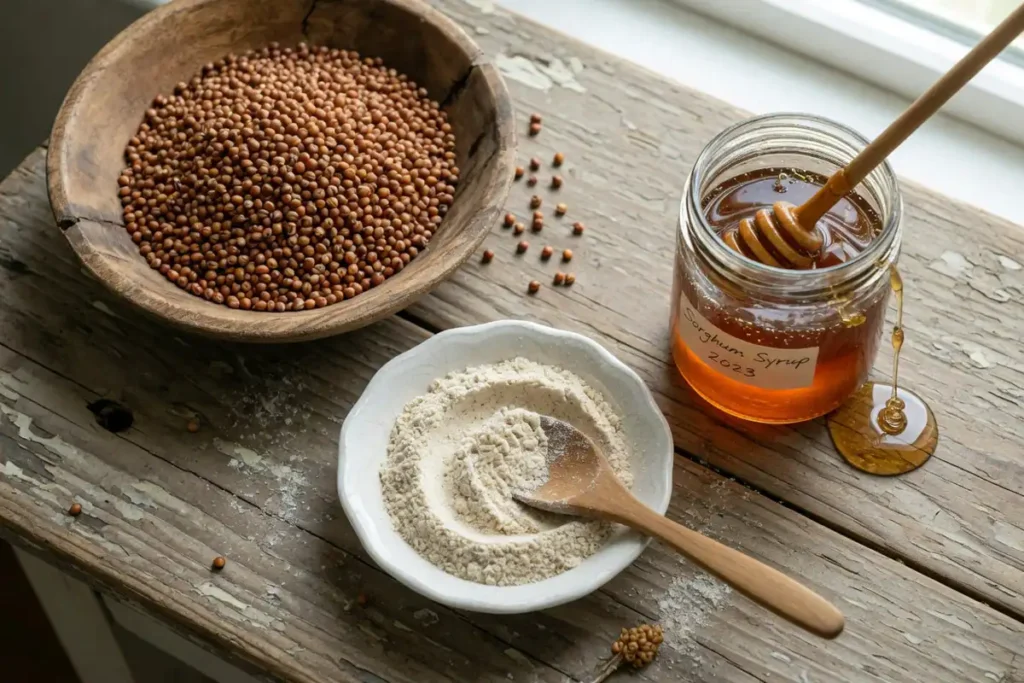
Sorghum: grain feed for cattle, poultry, and hogs; sweet sorghum syrup; forage hay and silage; ethanol; gluten-free flour and beverages.
Wheat: bread, rolls, and pasta; breakfast cereal and crackers; beer and other beverages; lower-grade wheat for livestock feed.
Mistakes to avoid when comparing sorghum and wheat
I’ve seen folks treat sorghum and wheat the same in rotation, fertility, or marketing. That gets costly fast.
- Do not assume the same nitrogen rate. Sorghum needs less N per bushel than wheat in most cases.
- Do not plant sorghum in cool soil. Cold ground stalls germination and invites seedling disease.
- Do not market grain sorghum as wheat. They are separate commodities with separate prices.
- Do not expect sorghum bread to rise like wheat bread. Without gluten, it needs binders like xanthan gum or eggs.
Safety notes
Young, drought-stressed, or frosted sorghum builds up prussic acid (hydrogen cyanide), which kills livestock. Wheat does not carry this risk. Test forage or wait the recommended interval (usually 7 days after frost or until plants reach 24 inches) before grazing or cutting stressed sorghum. My sorghum-sudan hay timing notes walk through cutting safely for hay.
Frequently Asked Questions

Is sorghum a type of wheat?
Can sorghum replace wheat in baking?
Does sorghum taste like wheat?
Which yields more, sorghum or wheat?
Is sorghum healthier than wheat?
Conclusion
Sorghum and wheat are distinct cereal grains with different biology, climates, and end uses. Sorghum fits hot, dry ground and gluten-free diets. Wheat fits cooler climates and bread-making. Knowing the difference helps growers plan rotations, market grain accurately, and meet buyer demand without costly mix-ups.