Do Peanuts Grow on a Bush? 8 Key Facts on Pods, Pegs, and Soil
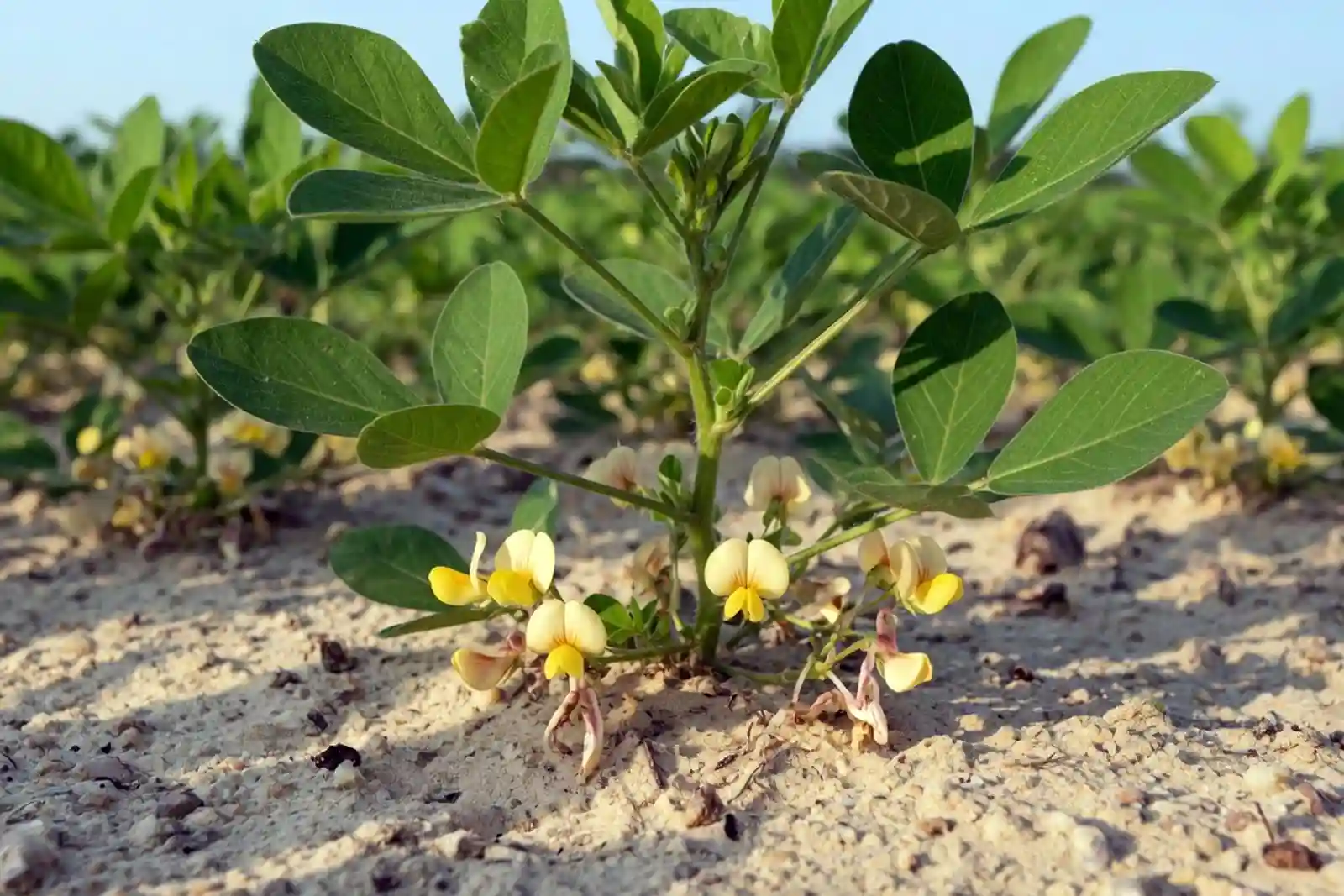
Peanuts grow on a low, leafy bush, though the pods form underground rather than on the branches. This guide explains the peanut bush itself, the two main growth habits, how the plant pushes pods into the soil, and the conditions that help bush type peanuts produce a strong, healthy crop.
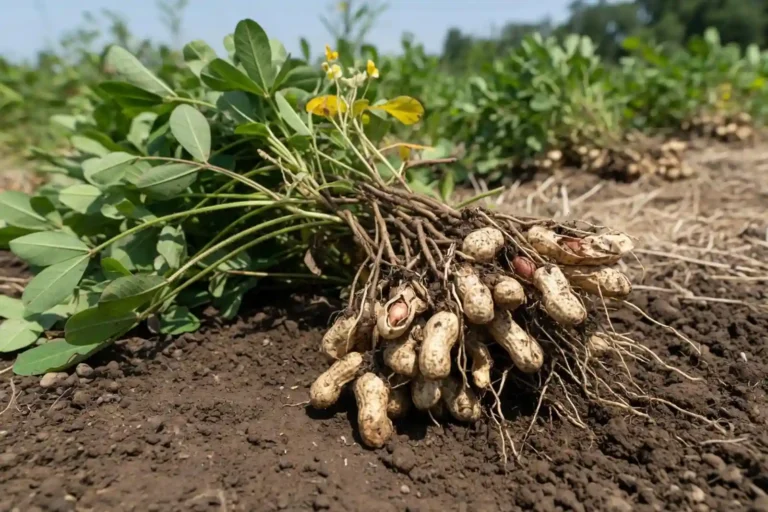
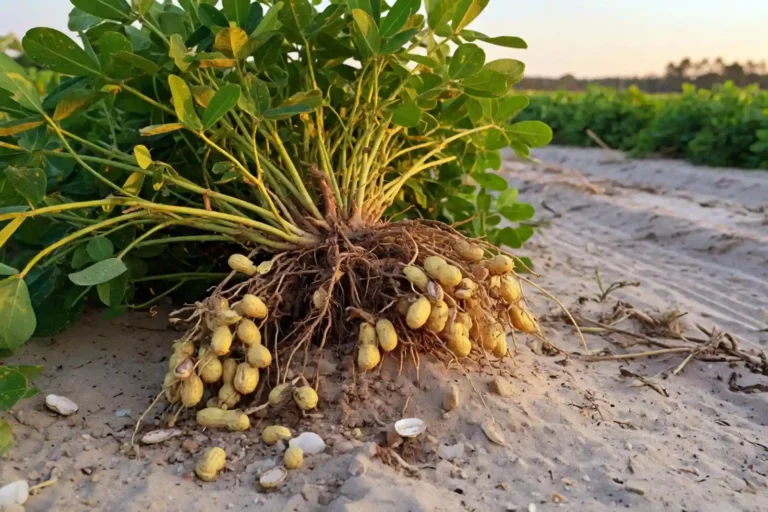
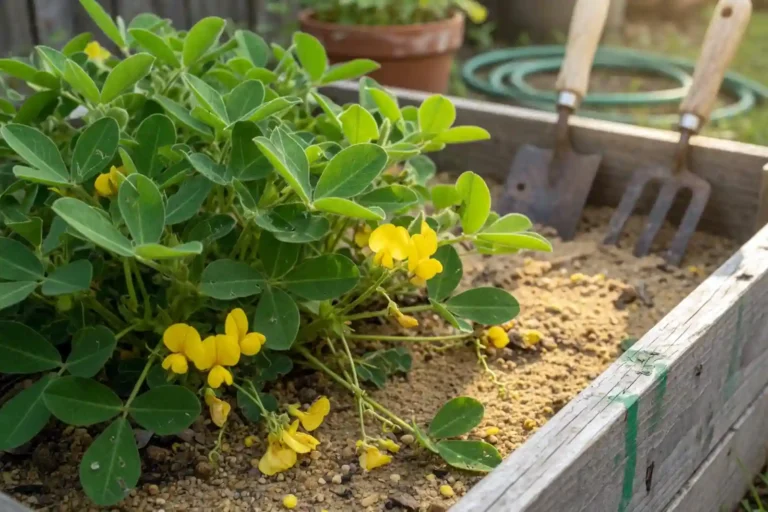
Yes and no. The peanut plant looks and grows like a small bush, standing about 18 to 24 inches tall with green compound leaves and yellow flowers. But the peanut pods do not hang on the branches. The pods form underground, several inches below the soil surface, after a special stalk called a peg pushes down into the dirt.
So peanuts grow on a bushy plant, but the harvest comes from beneath the bush.
Contents
- 1 What Kind of Plant Is a Peanut?
- 2 Bunch Type vs. Runner Type: The Two Peanut Growth Habits
- 3 How Does the Peanut Bush Push Pods Underground?
- 4 How Tall Does a Peanut Bush Grow?
- 5 Where Do Bush Type Peanuts Grow Best?
- 6 Common Bush Type Peanut Varieties
- 7 Why People Think Peanuts Grow on a Bush Like a Coffee Plant
- 8 Common Mistakes With Peanut Bush Growing
- 9 FAQs about Peanuts grow on a bush
- 10 Conclusion
What Kind of Plant Is a Peanut?
The peanut (Arachis hypogaea) is a legume, not a true nut and not a shrub in the woody sense. The plant belongs to the family Fabaceae, the same group as beans, peas, lentils, and clover.
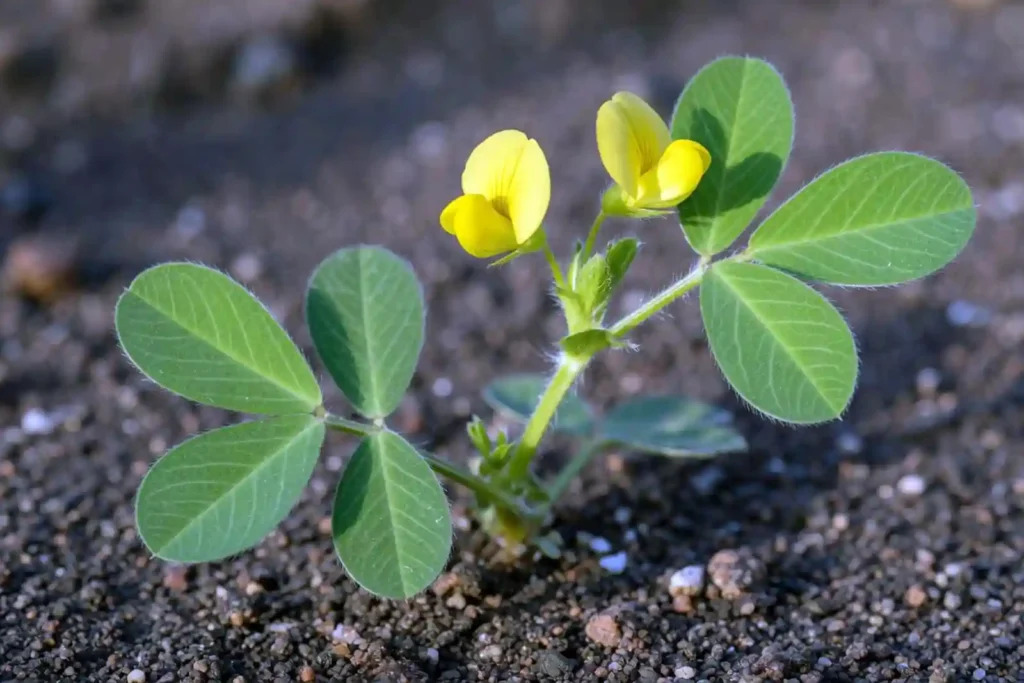
A peanut plant grows from a single seed each spring and finishes its life cycle in about 120 to 160 days. The plant has soft green stems, four-leaflet leaves, and small yellow pea-shaped flowers. It dies back at the end of the season, so it does not return year after year like a true bush or tree.
I covered the tree question in detail in my piece on whether peanuts grow on trees, and the short answer is no.
Bunch Type vs. Runner Type: The Two Peanut Growth Habits
Peanut plants come in two main growth habits, and only one of them looks clearly bush-shaped:
- Bunch type (also called erect or upright): The plant grows in an upright, compact bush form. Stems stay close to the central crown. Spanish, Valencia, and some Virginia peanuts grow this way.
- Runner type (prostrate): The stems sprawl flat along the ground in long horizontal runners. Most Runner peanuts grown in Georgia, Alabama, and Florida fall into this group.
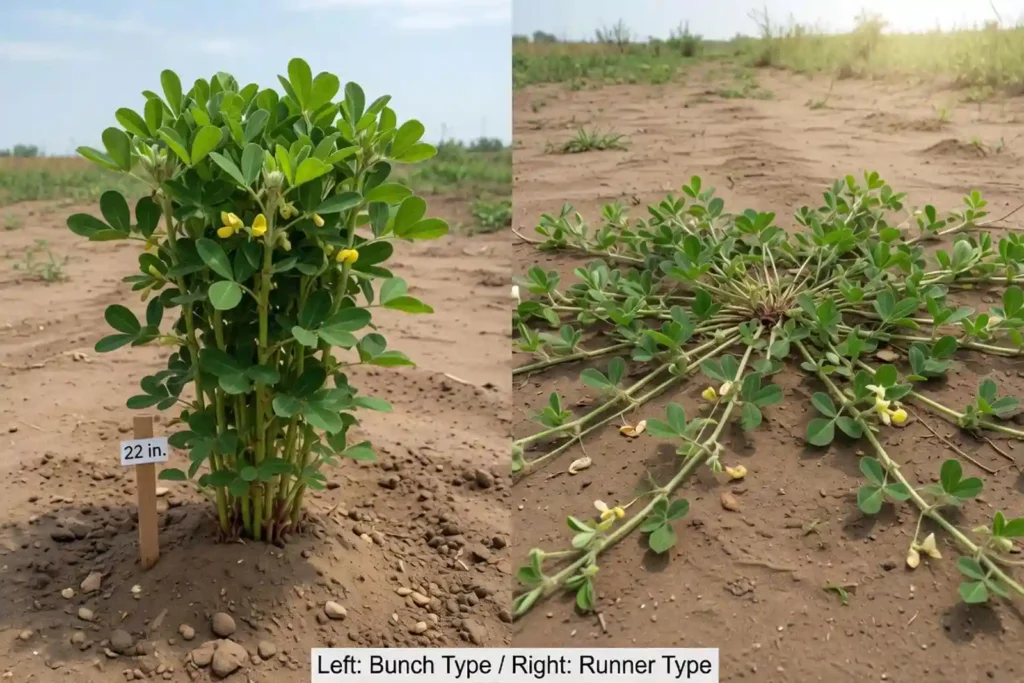
A bunch type plant looks like a small green bush in the field. A runner type plant looks more like a low ground cover. Both produce peanuts the same way: through pegs that push pods into the soil.
How Does the Peanut Bush Push Pods Underground?
The peanut bush forms pods through a process called geocarpy, which means “fruit in the earth.” Few crops do this. Here is how the cycle works:
- Flowering: Yellow flowers open above ground about 30 to 40 days after planting.
- Self-pollination: Each flower pollinates itself within a single day.
- Peg formation: After fertilization, a stalk called a peg grows down from the flower base.
- Soil entry: The peg drives 1 to 3 inches into the soil.
- Pod development: The tip of the peg swells underground and forms the peanut shell.
- Maturation: The pods need 60 to 90 more days to fill out before harvest.
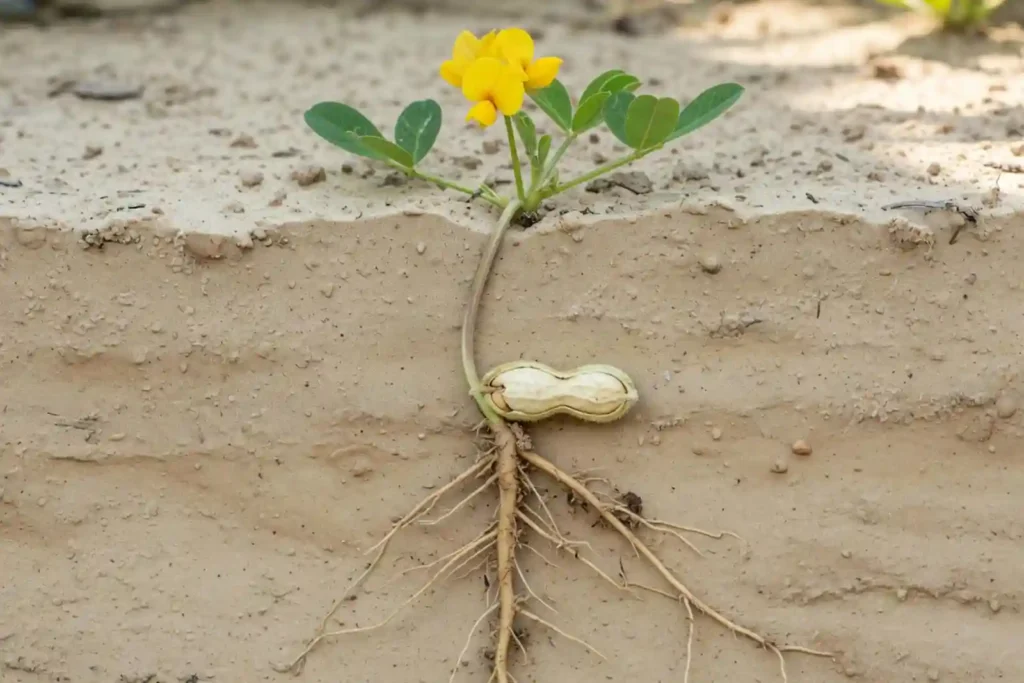
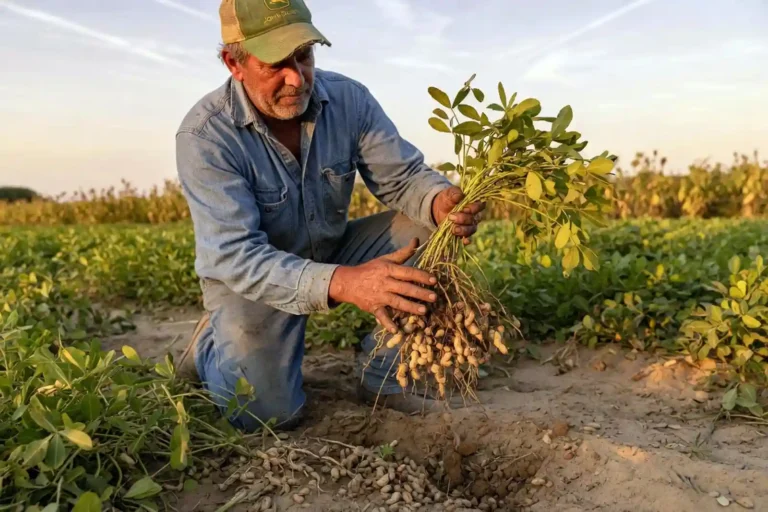
A mature plant can hold 30 to 50 pods below the surface. The grower digs the whole bush, flips it upside down, and lets the pods cure in the field for several days.
How Tall Does a Peanut Bush Grow?
A bunch type peanut bush grows 18 to 24 inches tall and spreads 12 to 18 inches wide. A runner type plant stays low, around 8 to 12 inches in height, but spreads 24 to 36 inches across the row.
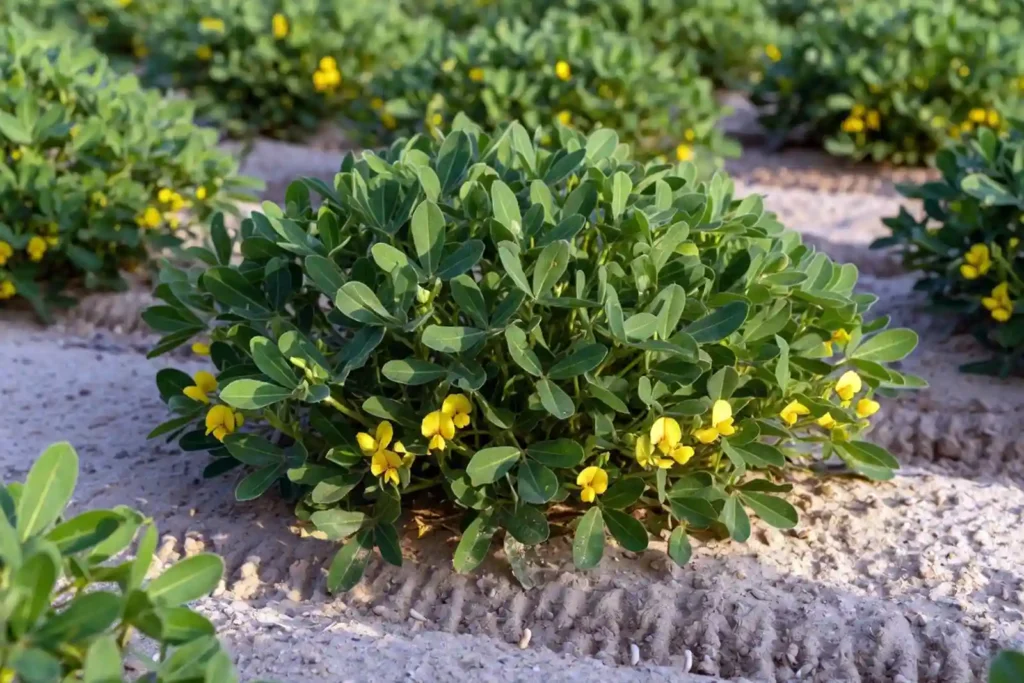
These plants stay much smaller than woody bushes like blueberry or coffee. The peanut plant lives only one season, so it never builds the thick stems or root crown of a true shrub.
Where Do Bush Type Peanuts Grow Best?
Peanut bushes grow best in warm, sandy regions with long frost-free seasons. The plant needs:
- Soil temperature: 65°F or warmer at planting depth
- Soil texture: sandy loam or loamy sand for easy peg penetration
- Soil pH: 5.8 to 6.2
- Rainfall: 20 to 40 inches per growing season
- Frost-free days: at least 120
The U.S. peanut belt covers Georgia, Alabama, Florida, Texas, North Carolina, and South Carolina. Outside the U.S., China and India lead world production. I broke down the global picture in my guide on where peanuts grow naturally.
According to the University of Georgia Extension peanut team, Georgia alone supplies close to half of the U.S. peanut crop each year, and almost every acre uses a Runner type variety.
Common Bush Type Peanut Varieties
Several well-known peanut varieties grow in the upright bush form:
- Spanish peanuts (TamSpan, Olin): small, compact, early maturing in 90 to 110 days
- Valencia peanuts (New Mexico Valencia A): tall, slender bushes with three to five seeds per pod
- Virginia peanuts (Bailey, Sullivan): large-seeded, semi-erect bushes used for in-shell snacks
- Runner peanuts (Georgia-06G, Tifguard): prostrate, the workhorse of the U.S. South
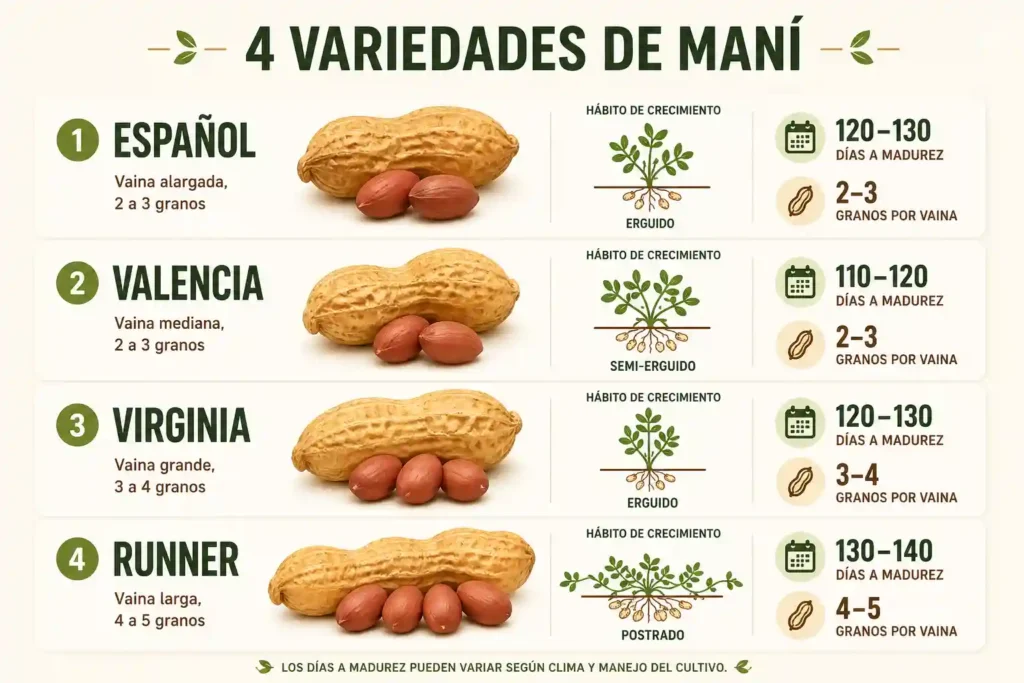
Bunch type bushes finish earlier and fit shorter seasons. Runner type plants yield more under long, warm conditions. Both rotate well with corn or cotton, a point I covered in my crop rotation guide.
Why People Think Peanuts Grow on a Bush Like a Coffee Plant
Most produce comes from above-ground fruit. Apples hang on trees. Tomatoes hang on vines. Coffee cherries grow on shrub branches. So when someone hears “peanut bush,” the picture in their head is pods hanging on stems.
The peanut breaks that pattern. The plant is bushy, but the harvest is buried. The flower drops a peg into the soil, and the shell forms in the dark, surrounded by dirt and root hairs. That is the part most people never see.
This is also why peanut harvest looks strange. The whole bush gets pulled out, flipped upside down, and dried with the pods facing the sun.
Common Mistakes With Peanut Bush Growing
A few mistakes catch new peanut growers off guard:
- Hilling like potatoes: Peanuts do not need hilling. The peg pushes itself down. Hilling can break pegs.
- Planting in heavy clay: The peg cannot enter compacted clay. Pods stay tiny or never form.
- Pulling early: Underground pods give no visual cue when ripe. Lift one bush and check shell color inside before full harvest.
- Skipping calcium: Peanut shells need calcium near the pod zone. Gypsum at flowering keeps shells filled.
- Overwatering near maturity: Wet soil at digging time causes mold and aflatoxin risk.
For yield-side advice that applies across legumes, see my notes in increase crop yield.
FAQs about Peanuts grow on a bush

Is a peanut plant a bush or a vine?
Do peanut bushes come back every year?
Can I grow a peanut bush in my backyard?
How many peanuts grow on one bush?
What does a peanut bush look like before harvest?
Conclusion
Peanuts grow on a low, bushy plant, but the pods form below the soil, not on the branches. The plant is a legume, not a tree or a true shrub, and it finishes its life in a single warm season. Bunch type peanuts look the most bush-like; runner types sprawl along the ground. Either way, the harvest comes from underground, where the peg pushes the developing pod into sandy soil. If you remember that one detail, the peanut bush makes sense.