When to Harvest Sorghum: Timing, Signs, and Field Steps
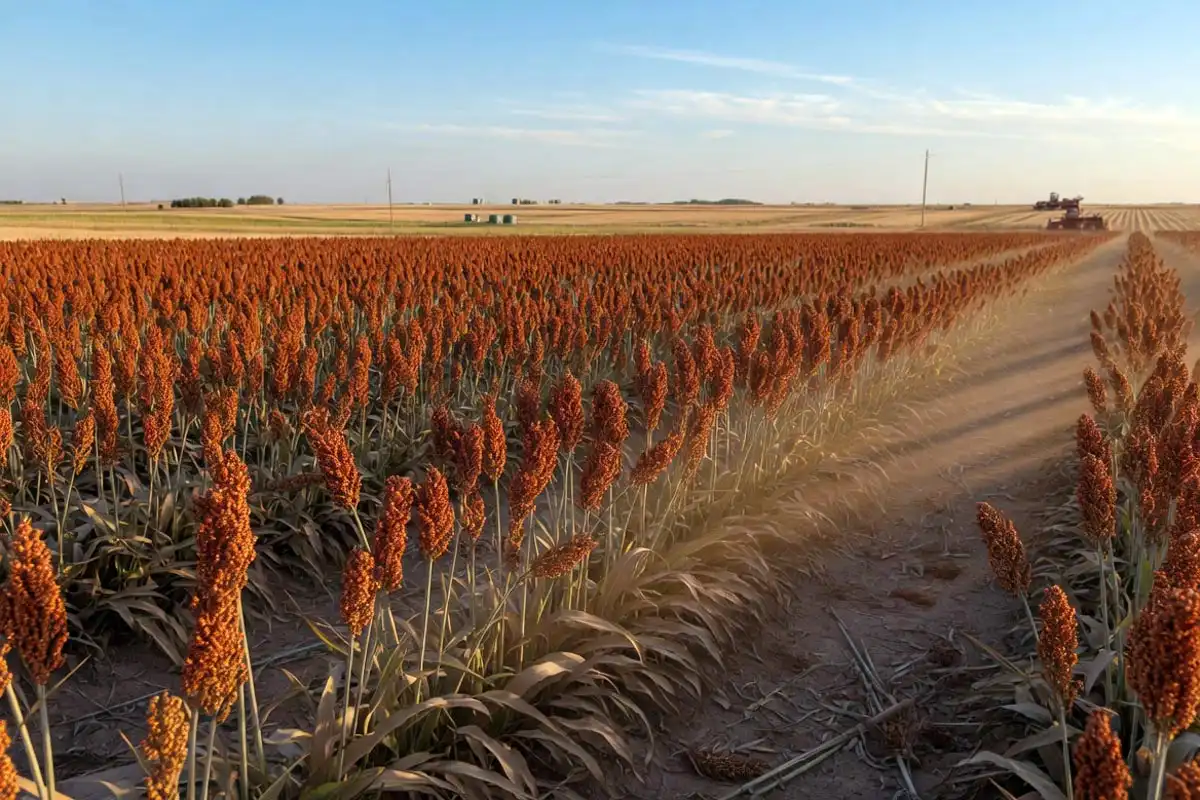
Grain sorghum is ready to harvest when each kernel forms a black layer at the seed base and field moisture drops between 18 and 25 percent. This guide covers maturity signs, regional timing windows, combine settings, drying targets, common harvest problems, and storage steps for a clean, profitable sorghum harvest.
Harvest grain sorghum after the black layer appears at the kernel base and field moisture reads 18% to 25%. In most U.S. regions, that window falls in late September through October, roughly 95 to 120 days after planting. Dry the grain to 13% for safe long-term storage.
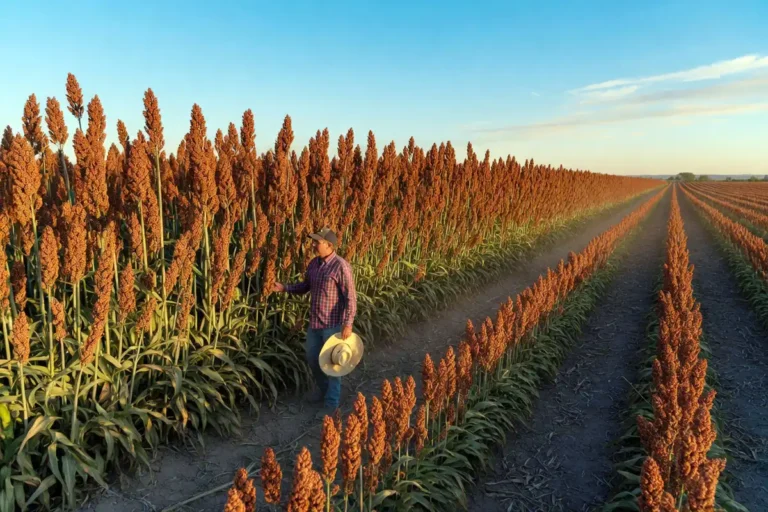
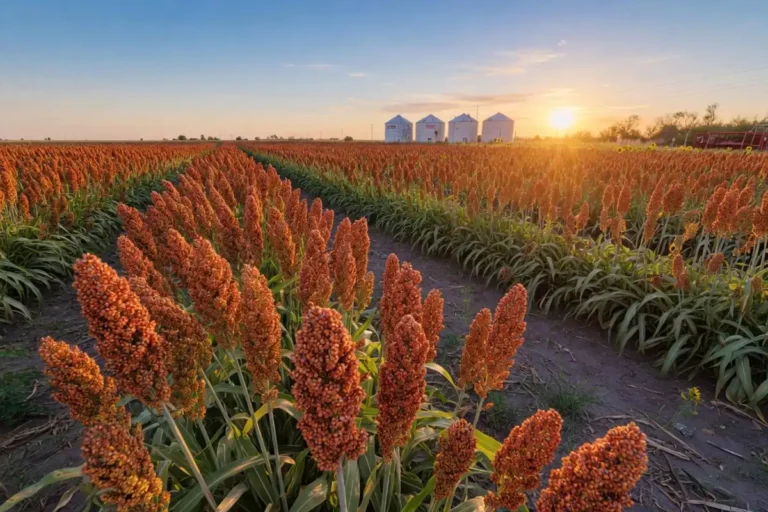
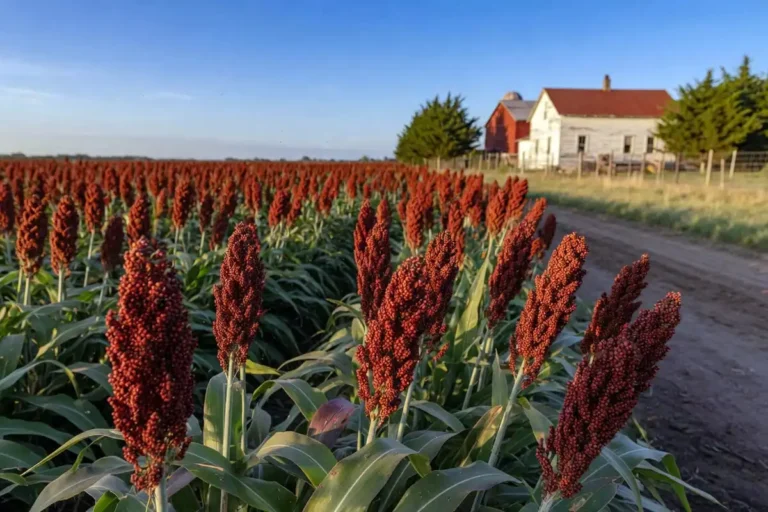
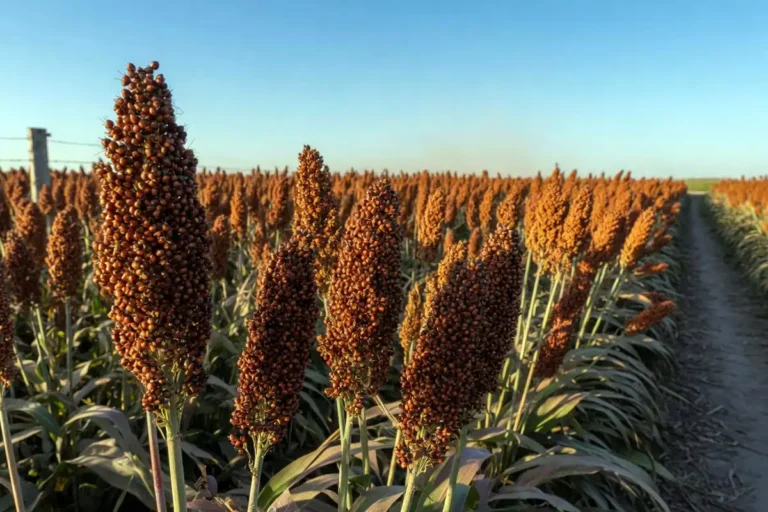
What Sorghum Looks Like at Harvest Maturity
Mature grain sorghum carries dry, hard seeds packed tightly across the panicle. Pinch a kernel with your thumbnail. If it dents but does not crush, you are close. If your nail leaves no mark, the grain is firm and ready for the combine.
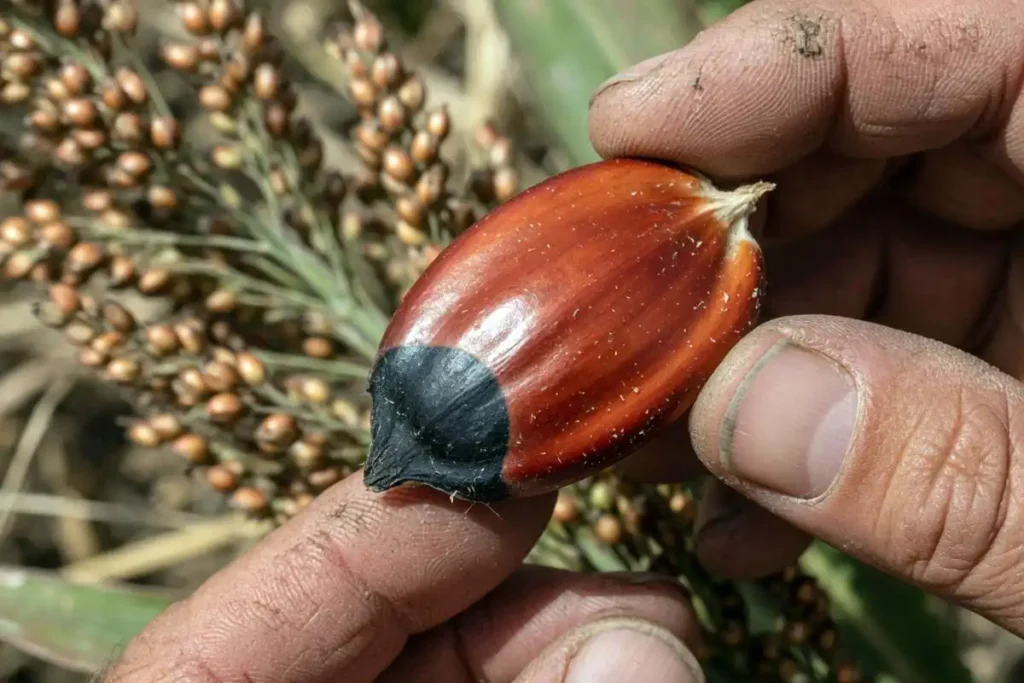
Look at the seed base for the black layer. That small dark dot forms when the kernel stops drawing nutrients from the stalk. From that point, the grain only loses moisture, not weight. Healthy growing sorghum stands reach this stage in a tight window across the field.
Color also tells the story. Red, bronze, or cream hybrids hold full color across the entire panicle when ready. Green tinges still mean active grain fill.
When to Harvest Sorghum by Type
The right window depends on the variety you planted. Each type carries its own cue.
Grain sorghum (milo): Cut when field moisture drops to 18% to 25%. Standing in the field after black layer drives moisture down without yield loss.
Sweet sorghum (syrup): Harvest at the hard dough stage. Stalks carry peak sugar content right before the seed fully hardens.
Forage sorghum (silage): Chop at soft dough to early hard dough. Starch and protein peak for livestock feed at this point.
Sorghum-sudan hybrids (hay/grazing): Cut at 30 to 36 inches tall to lower prussic acid risk. Read the timing notes on cutting sorghum-sudan grass for hay before mowing.
Most hybrids hit grain harvest 95 to 120 days after spring planting. Short-season hybrids finish in 85 to 95 days.
Where Harvest Timing Shifts by Region
Geography changes the calendar. Sorghum needs heat units, so southern fields finish weeks earlier than northern ones.
- Texas and Gulf Coast: Late July through August
- Kansas, Oklahoma, Nebraska: Mid-September through October
- Missouri, Arkansas, Tennessee: Late September through mid-October
- Northern fringe (South Dakota, Iowa): Early to mid-October
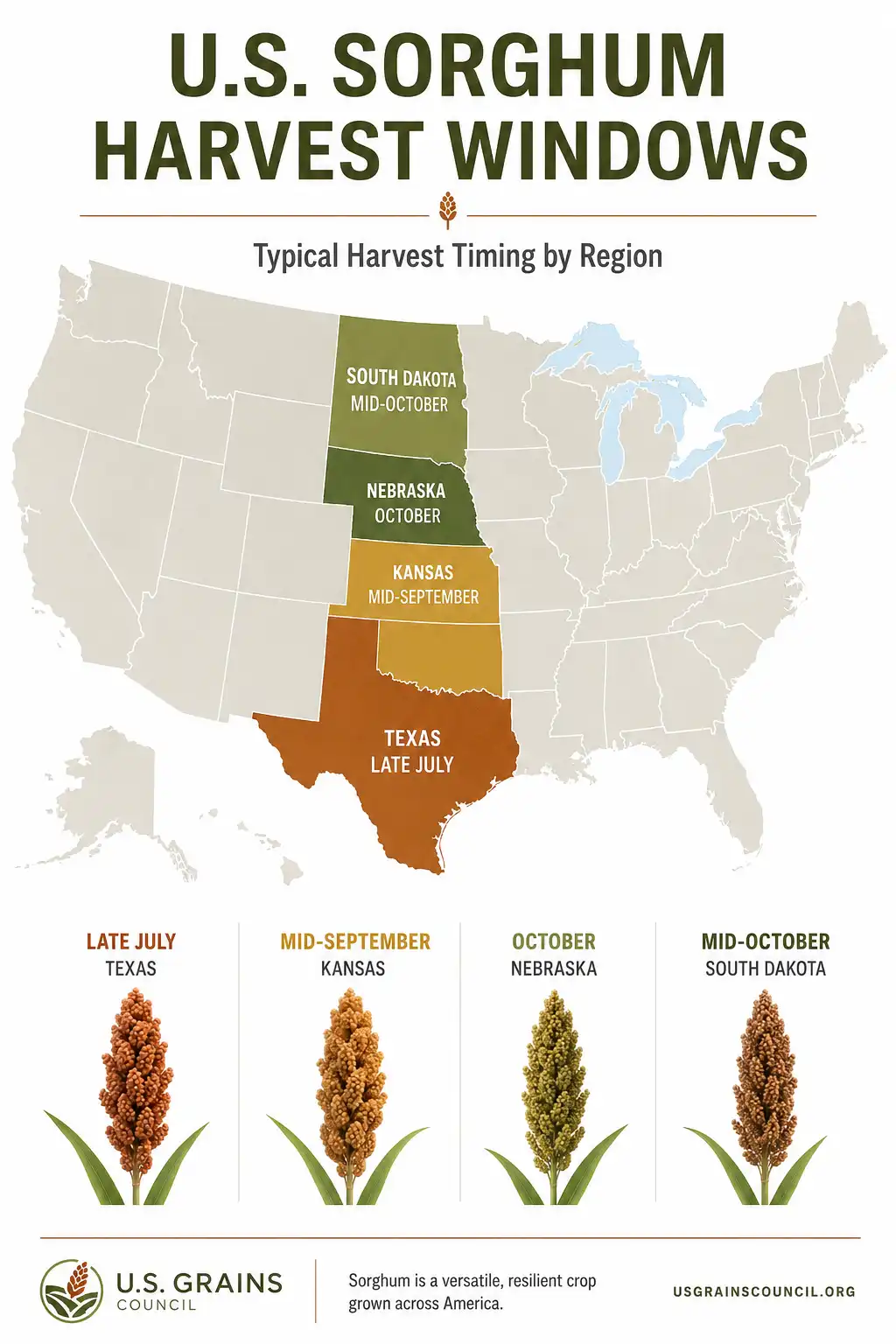
In Kansas, the first full week of October is the aim for standard hybrids. Late-maturity hybrids stretch into mid-October when frost holds off. Guidance from K-State Research and Extension lines up with that timing for most of the central plains.
How to Harvest Sorghum Step by Step
- Test grain moisture. Pull samples from three field zones and check with a calibrated grain moisture meter. Aim for 18% to 20% for clean combining.
- Check field dryness. Walk between rows. Stalks should rustle, not bend wet. Wet stalks foul rotors and slow ground speed.
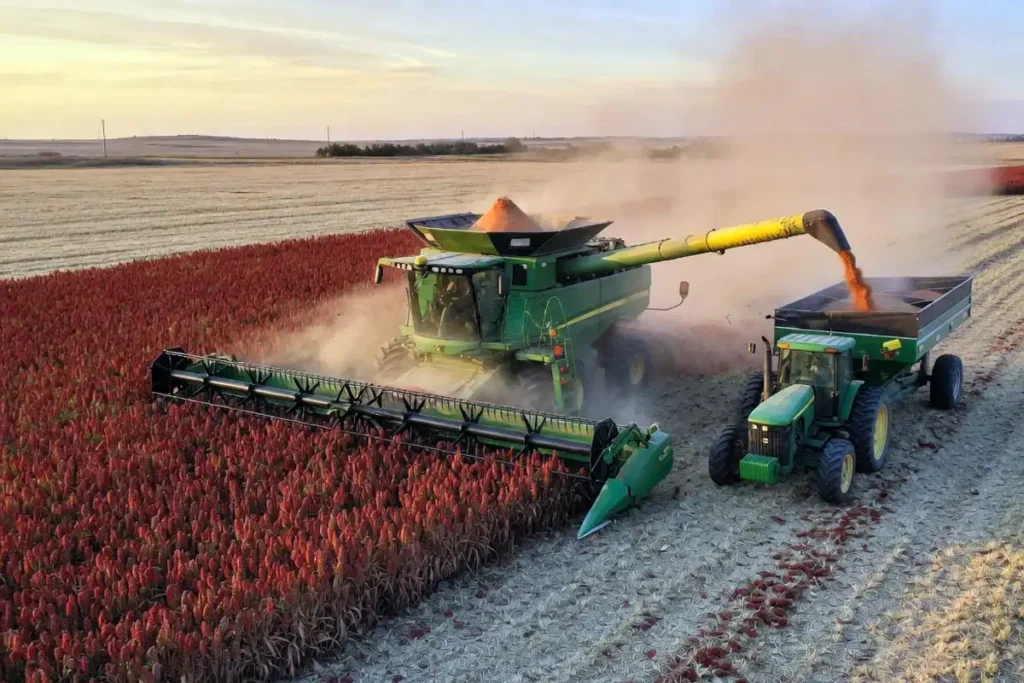
- Set the combine. Run cylinder speed around 600 to 800 RPM. Open concave clearance to about 1/2 inch at the front. Adjust as cracked kernels appear in the tank.
- Cut high. Set header height to leave 12 to 15 inches of stubble. That speeds harvest and keeps green stem material out of the grain tank.
- Combine in dry conditions. Morning dew slows threshing. Wait until the panicles dry off, then run until evening dampness returns.
- Sample each hour. Pull a fresh moisture reading throughout the day. Conditions shift fast in October.
- Dry to 13% for storage. Move grain to a bin with aeration or an in-bin dryer. Review practical grain storage methods for bin prep and airflow targets.
Common Sorghum Harvest Problems and Fixes
Green stalks with mature heads. Stay-green hybrids keep stalks alive after grain matures. Combine anyway if grain moisture is ready, but slow ground speed.
Bird damage. Blackbirds and starlings hit ripening panicles hard. Harvest the worst-damaged corners first to reduce loss.
Lodging. Wind, stalk rot, or late frost can flatten the crop. Lower the header, run a pickup reel, and harvest with the lean.
Wet weather forecasts. If rain is coming and grain reads 22% to 25%, combine and dry. Standing too long past black layer raises field shatter.
University of Nebraska CropWatch reports that field losses climb sharply when sorghum stands more than three weeks past physiological maturity in wet falls.
Mistakes to Avoid During Sorghum Harvest
- Harvesting before black layer forms. Kernels have not finished filling, and yield drops.
- Combining above 25% moisture. Drying costs climb and grain quality slips.
- Running cylinder speed too high. Cracked seed loses market grade.
- Skipping pre-harvest scouting for stalk rot. Weak stalks lodge before you reach them.
- Binning grain above 14% moisture. Mold develops within weeks.
Safety Notes for Sorghum Harvest
Combine fires happen most often during dry sorghum harvest. Keep a fire extinguisher in the cab and a second on the grain cart. Blow chaff off the engine and exhaust manifold at every fill stop.
Watch for prussic acid in frosted forage sorghum or stunted regrowth. Hold livestock off frosted plants for at least 7 to 10 days.
Wear safety glasses when servicing the header. Sorghum dust and trash work under regular eyewear fast.
FAQs
How do you know when grain sorghum is fully mature?
Can sorghum be harvested after a frost?
What moisture should sorghum be at harvest?
How long does sorghum take to mature after planting?
Can I leave sorghum standing too long?
Conclusion
Reading sorghum at harvest comes down to three checks: a black layer at the kernel base, field moisture between 18% and 25%, and a weather window that lets you finish before lodging or birds take their cut. Test moisture across the field, set the combine for clean threshing, and move grain to dry storage right away. That practice is the difference between a full bin and a costly one.