How to Grow Potatoes in NC: 7 Smart Steps That Boost Harvest
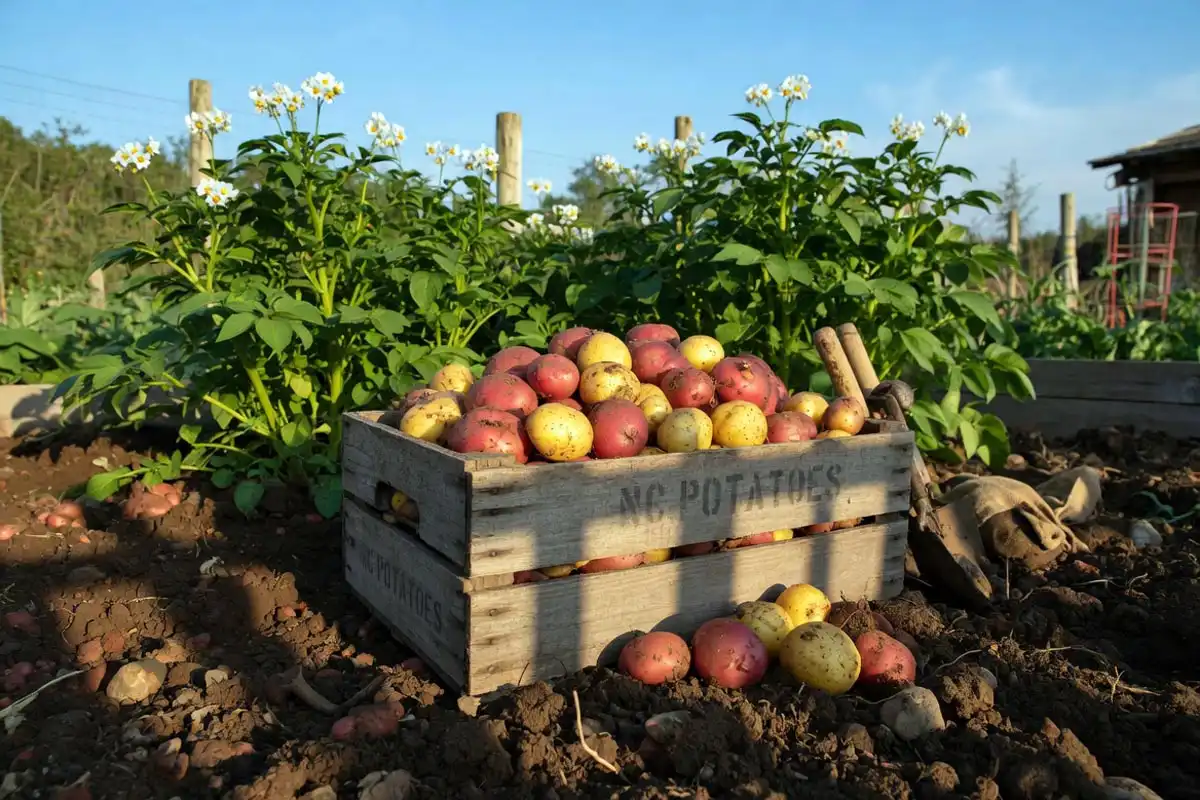
Potatoes thrive in North Carolina’s cool spring soil when planted from late January through early April, depending on your region. This guide walks you through variety selection, soil prep, planting depth, hilling, watering, and harvest timing so you can pull clean, healthy tubers from NC ground.
Plant certified seed potatoes in NC from late January (Coastal Plain) through early April (Mountains). Use loose, acidic soil with a pH of 5.0 to 6.5. Plant seed pieces 4 inches deep and 12 inches apart in rows 30 inches apart, hill twice during the season, and harvest 90 to 110 days later.
For region-by-region timing across the state, see earlier post on potatoes planting time.
What Potato Varieties Grow Best in North Carolina?
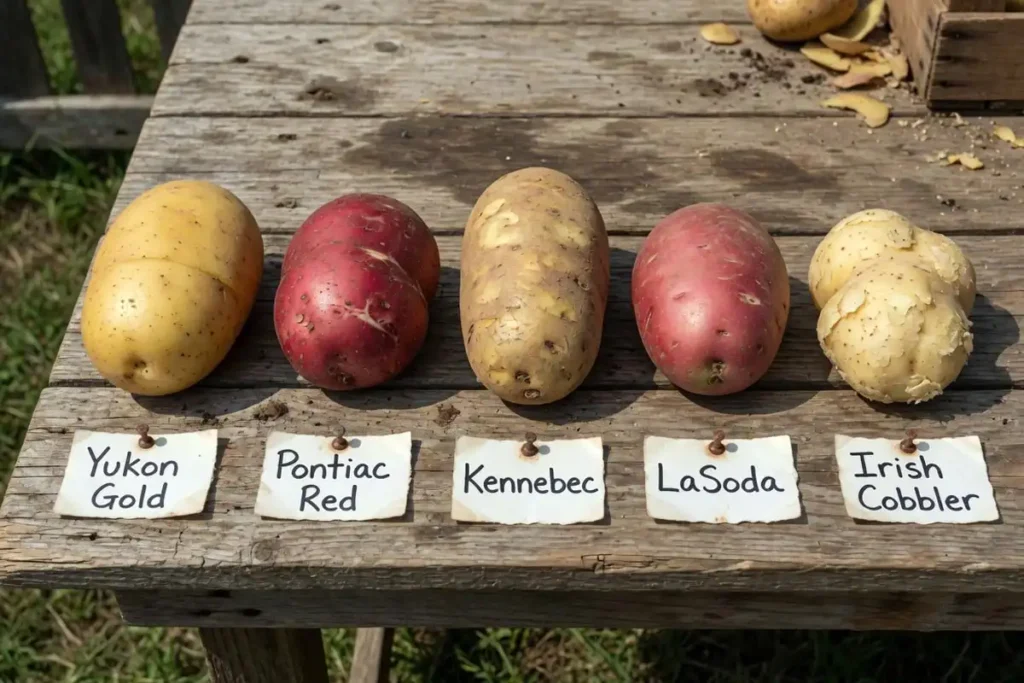
North Carolina growers do well with early and mid-season varieties that tolerate heat before summer hits hard. Top picks include Yukon Gold, Kennebec, Red Pontiac, Red LaSoda, and Irish Cobbler.
Yukon Gold produces yellow-fleshed tubers in about 80 days. Red Pontiac handles clay soil better than most and yields large red-skinned potatoes. Kennebec resists late blight and stores well.
Skip long-season varieties like russets in most of NC. They need cooler conditions than the summers allow.
When to Plant Potatoes in NC
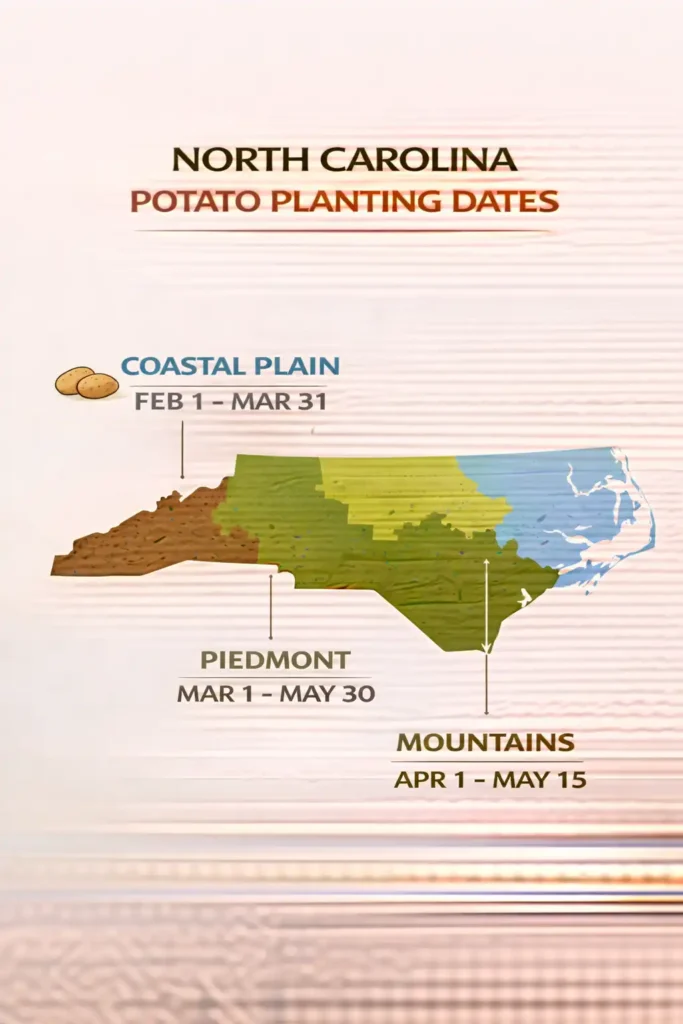
Timing depends on your region. North Carolina has three growing zones with different soil warm-up patterns.
- Coastal Plain: Late January to late February
- Piedmont: Mid-February to mid-March
- Mountains: Mid-March to early April
Plant when soil temperatures reach 45°F at 4 inches deep. Seed potatoes rot in cold, wet soil. You can also plant a fall crop in the Coastal Plain and Piedmont around August 1 for a November harvest.
Check your zone using the USDA Plant Hardiness Zone Map before scheduling your planting week.
Where to Plant Potatoes in North Carolina
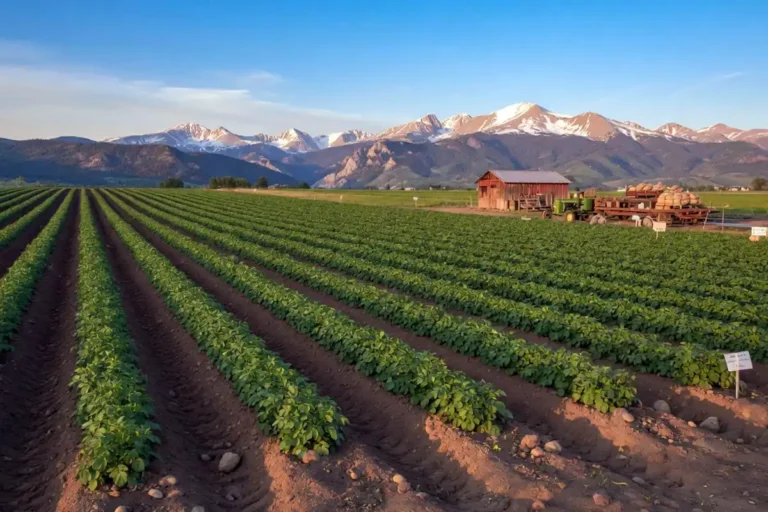
Pick a spot with 6 to 8 hours of direct sun and loose, well-drained soil. Potatoes hate wet feet. Standing water causes rot and disease.
Avoid beds where you grew tomatoes, peppers, eggplants, or potatoes in the past two years. These nightshade cousins share pests and diseases. Rotate potatoes with beans, corn, or squash.
A raised bed or mounded row helps in heavy NC clay. Work in 2 to 3 inches of compost before planting to loosen the soil.
How to Grow Potatoes in NC Step by Step
Step 1: Choose and Prepare Seed Potatoes
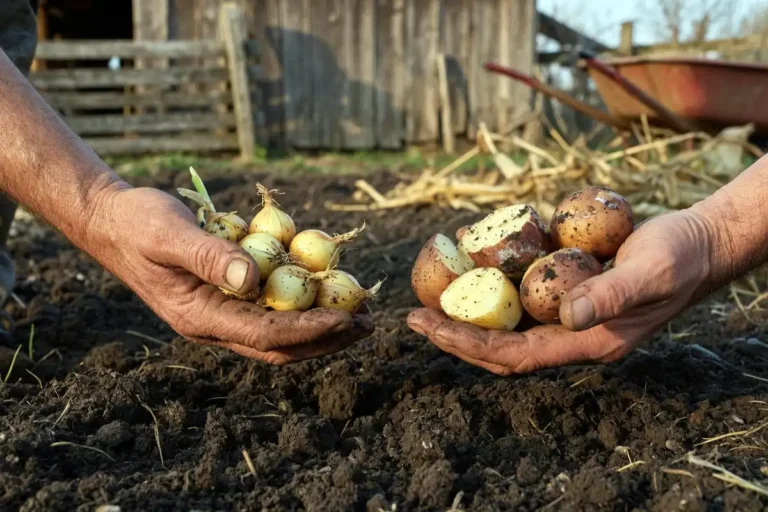
Buy certified disease-free seed potatoes from a local extension office or garden center. Grocery store potatoes carry sprout inhibitors and disease risk. The full sourcing process is covered in our guide on picking seed tubers.
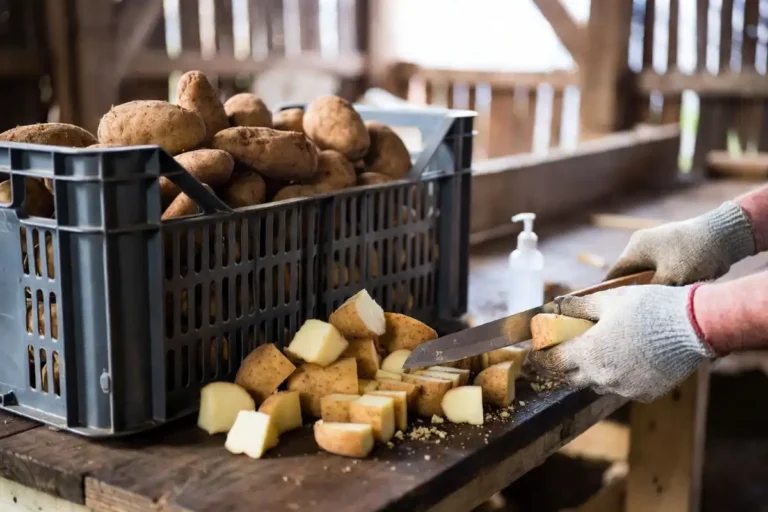
Cut larger tubers into 1.5 to 2 ounce pieces, with each piece holding 1 or 2 eyes. Let cut pieces cure at room temperature for 2 to 3 days until the cut side forms a dry skin. This step reduces rot risk in the ground, covered in this post on cutting and curing seed pieces.
Step 2: Test and Amend the Soil
Potatoes prefer soil pH between 5.0 and 6.5. Lower pH reduces scab. Skip lime applications in the year before planting.
Run a basic soil test through NC State Extension before spring. Soil testing saves money on fertilizer and catches pH issues early, covered in this soil testing article.
Step 3: Dig Trenches and Plant
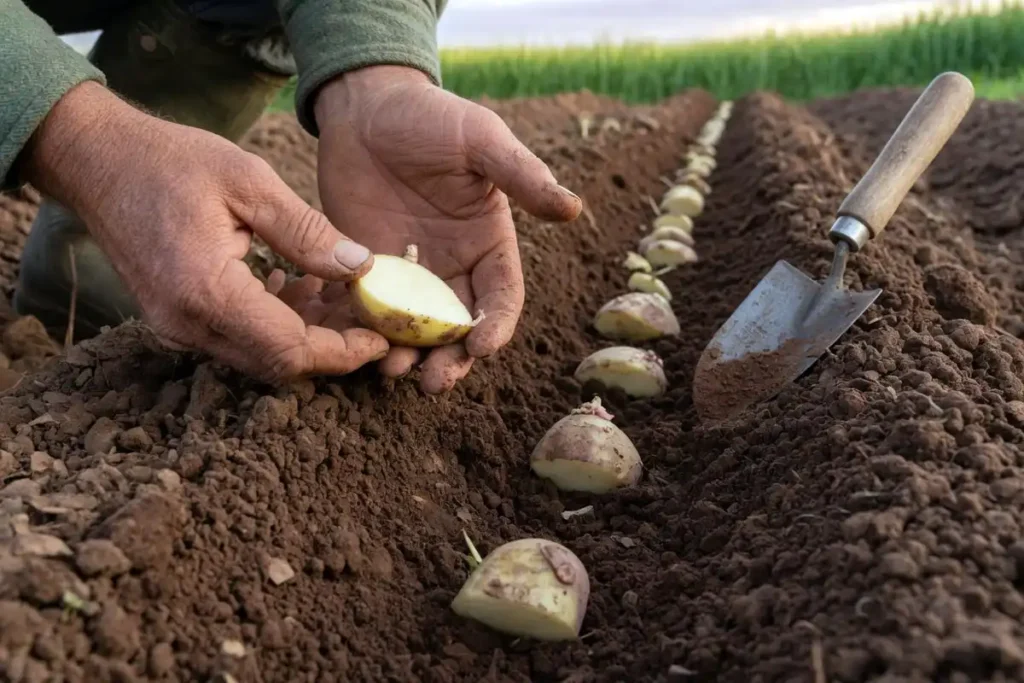
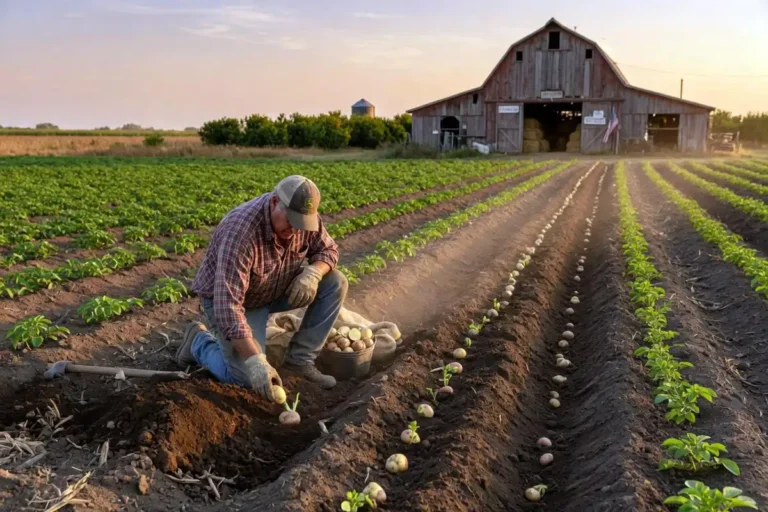
Dig trenches 4 inches deep and 30 inches apart. Drop seed pieces cut-side-down every 12 inches. Cover with 3 to 4 inches of soil.
Water the row lightly after planting. Sprouts emerge in 14 to 21 days depending on soil temperature.
Step 4: Water Consistently
Potatoes need 1 to 2 inches of water per week. Water deeply once or twice weekly rather than shallow daily watering. Drip irrigation works better than overhead sprinklers, which spread fungal disease.
Stop watering 1 to 2 weeks before harvest to let skins thicken.
Step 5: Hill the Plants Twice
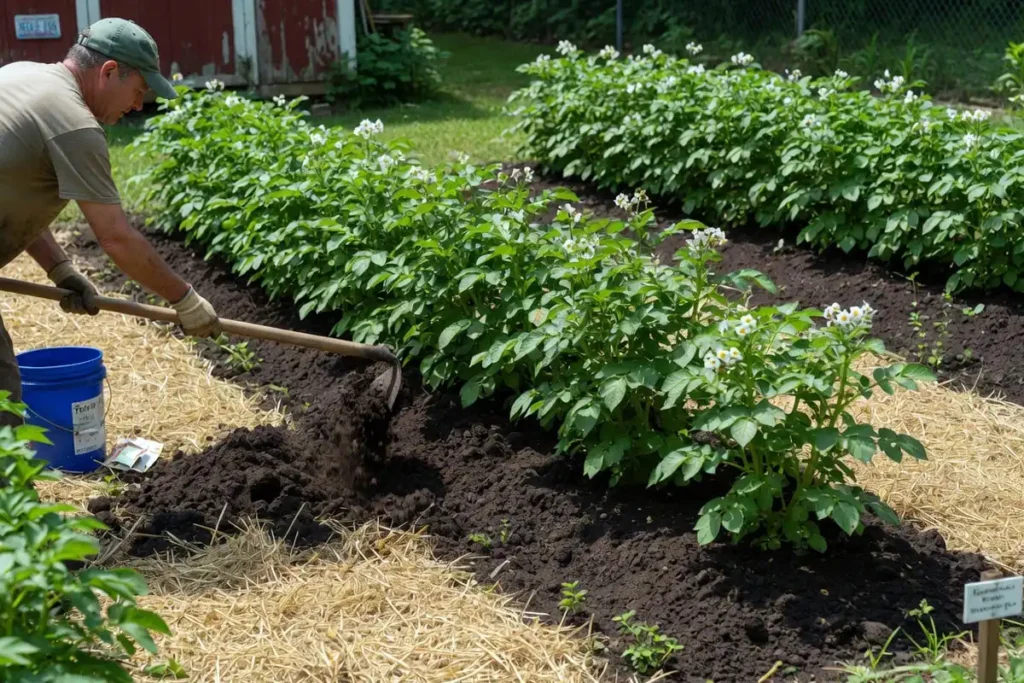
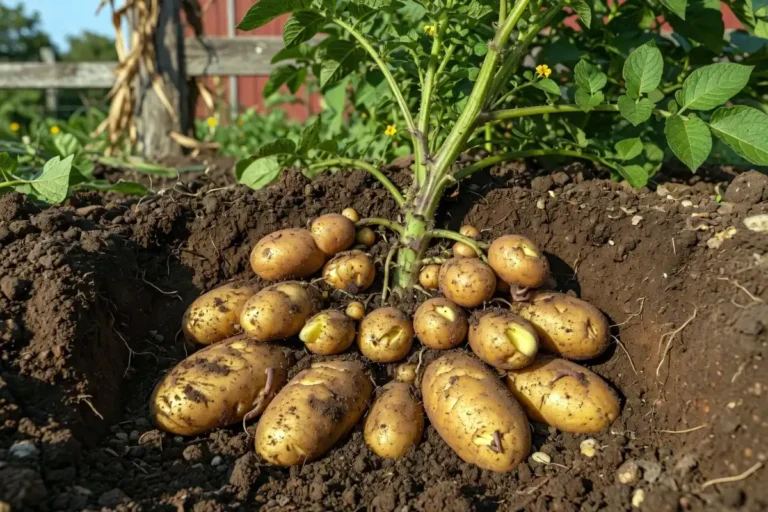
Hilling protects developing tubers from sunlight, which turns them green and toxic. When plants reach 8 inches tall, pull 3 to 4 inches of soil up around the stems. Repeat 2 to 3 weeks later.
The technique and timing is covered in our article on how hilling helps potato yield.
Step 6: Feed at the Right Time
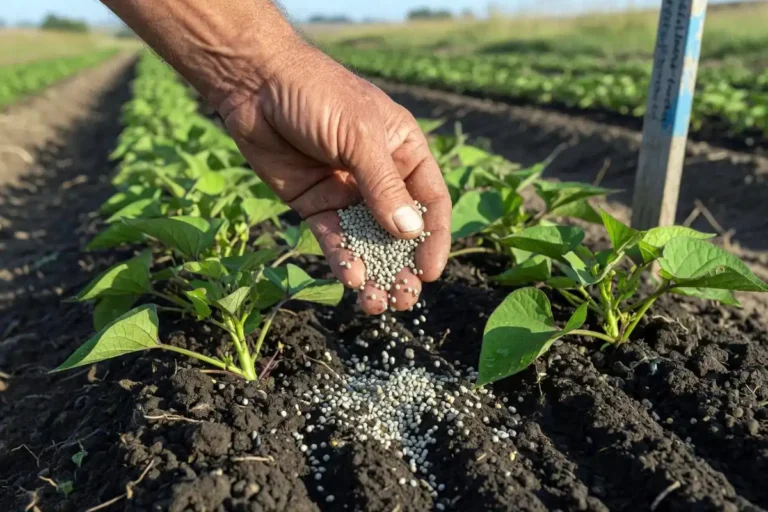
Apply a balanced fertilizer like 10-10-10 at planting, about 1 to 1.5 pounds per 100 square feet. Side-dress with nitrogen when plants reach 6 to 8 inches.
Avoid heavy nitrogen late in the season. Excess nitrogen grows leaves at the expense of tubers.
Step 7: Scout for Pests and Disease
Walk your rows twice a week. Colorado potato beetles lay orange egg clusters on leaf undersides. Crush them by hand or apply spinosad for organic control.
Flea beetles, aphids, and wireworms also attack NC potatoes. Late blight and early blight appear during humid spells. Remove infected leaves and improve airflow.
Step 8: Harvest at the Right Time
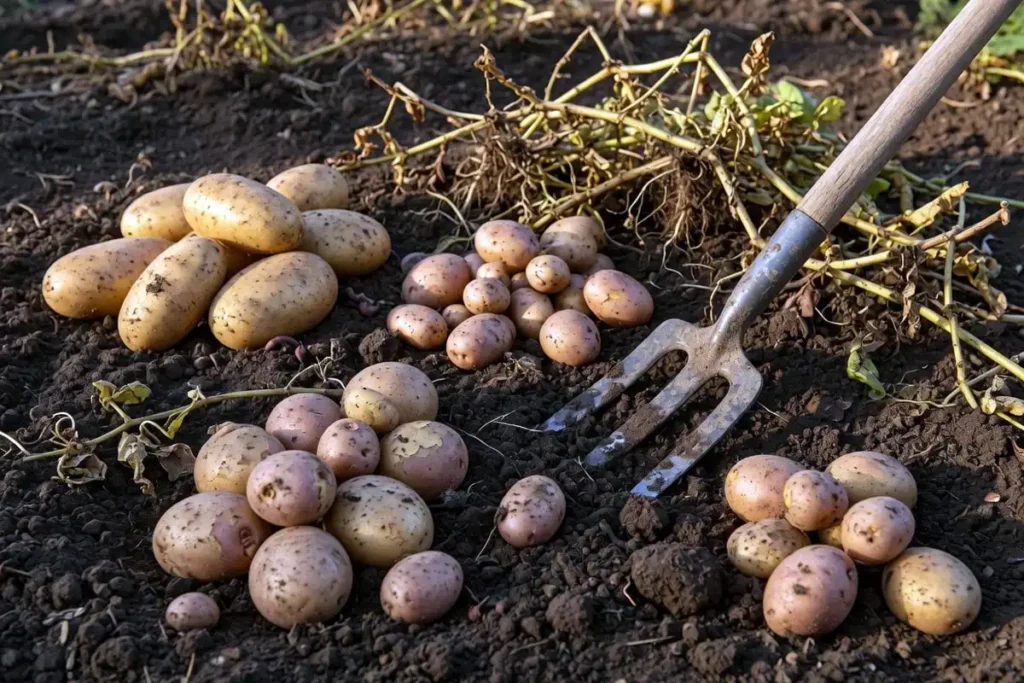
New potatoes can be dug 60 to 70 days after planting. For storage potatoes, wait until tops yellow and die back, around 90 to 110 days.
Dig on a dry day. Use a garden fork and start 12 inches out from the stem to avoid spearing tubers.
Common Problems and Solutions
Scab appears as rough brown patches on skins. Lower soil pH and avoid fresh manure.
Late blight causes brown leaf lesions during humid spells. Space plants for airflow. Apply copper fungicide preventively.
Hollow heart comes from uneven watering. Stick to a consistent schedule.
Green tubers mean sun hit the potato. Hill deeper next time, and never eat the green parts.
Mistakes to Avoid
- Planting grocery store potatoes instead of certified seed
- Putting seed pieces into cold, wet soil below 45°F
- Skipping hilling and losing tubers to sunburn
- Overwatering in heavy clay
- Planting in the same bed year after year
Safety Notes
Green potato skins contain solanine, which causes nausea. Cut off green sections or compost the tuber.
Wear gloves when handling pesticides and follow label rates. Watch late-spring frost forecasts. Cover plants with row cover or straw when temperatures dip below 32°F.
Store cured potatoes at 40 to 50°F in the dark. Light exposure triggers greening even after harvest.
FAQs about Grow Potatoes in NC
Can you grow potatoes year-round in NC?
How many potatoes does one plant produce in NC?
Do potatoes need full sun in NC?
What soil pH is best for potatoes in North Carolina?
Can I grow potatoes in containers in NC?
Final Takeaway
Growing potatoes in NC comes down to matching your region, picking the right varieties, and staying on top of soil prep, hilling, and watering. Start with certified seed, plant into warm soil, and harvest at the right time. With consistent care, a 20-foot row pulls 30 to 50 pounds of clean tubers each season.