Can You Grow Potatoes in Florida? 8 Essential Tips for Growers
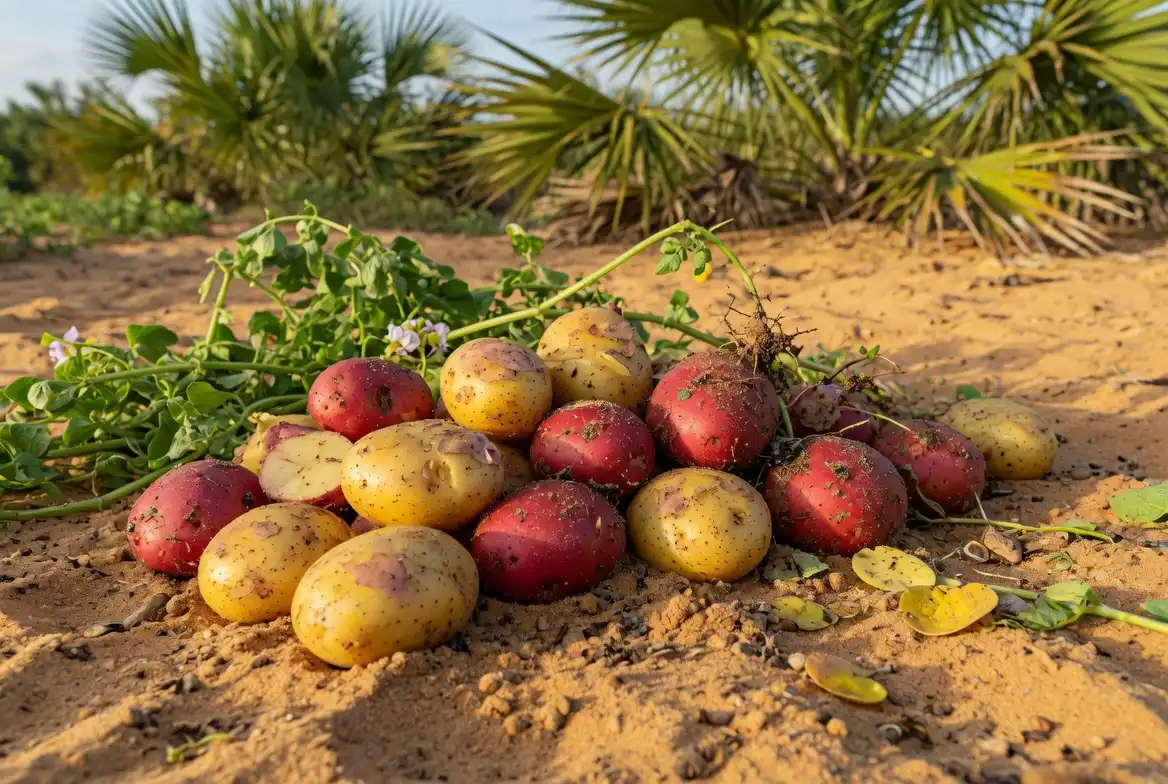
Yes, you can grow potatoes in Florida, and the state ranks among the top U.S. potato producers thanks to sandy soils and mild winters. This guide covers the best planting windows, ideal varieties, soil prep, watering routines, pest issues, and harvest cues so your Florida potato crop turns out strong.
Potatoes grow well in Florida during the cool season. North Florida growers plant from late January to February for a May-June harvest. Central and South Florida growers plant from October through January. Choose varieties like Red LaSoda, Yukon Gold, or Sebago for sandy Florida soils.
Can Potatoes Grow in Florida?
Florida is a leading U.S. potato state, with commercial fields centered in Hastings inside the Tri-County Agricultural Area. Home gardeners across the state also grow solid crops when they plant during cool months. The sandy, well-drained soil Florida is known for drains fast and warms early, which suits potato roots.
Heat and humidity are the main limits. Potatoes stop forming tubers once soil climbs past about 80°F. That is why Florida planting lines up with winter and early spring, not summer.
Learn More: How to Plant Garlic with Potatoes
When to Plant Potatoes in Florida
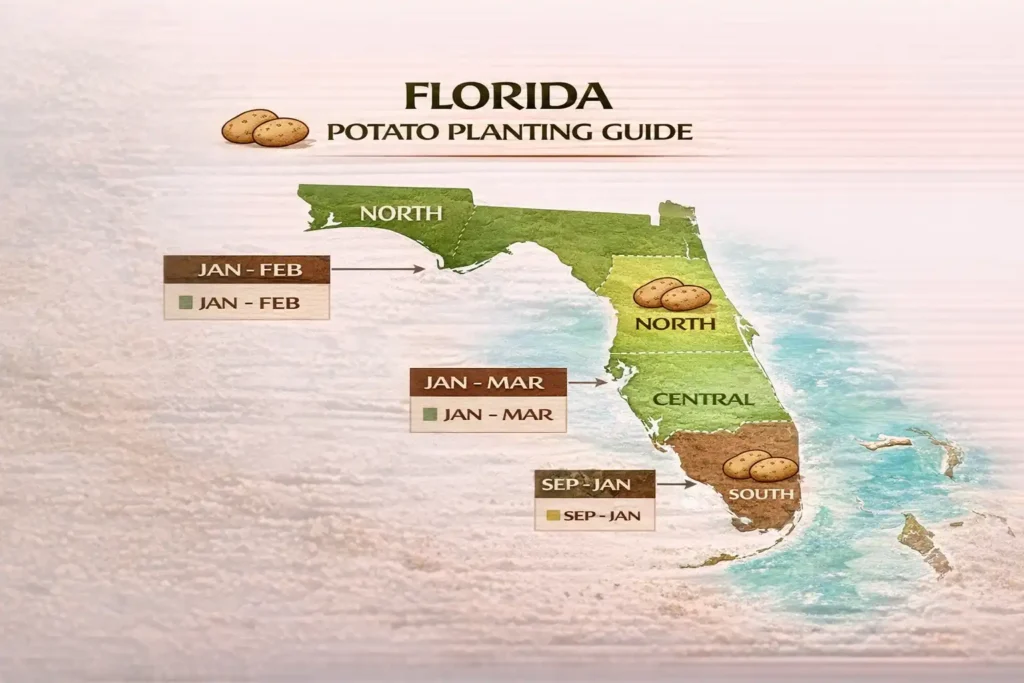
The planting window shifts by region. This is broken down below, with general baseline dates covered in this potato planting timing guide.
- North Florida (Panhandle, Jacksonville): Plant mid-January through late February. Harvest May to June.
- Central Florida (Orlando, Tampa): Plant December through early February. Harvest April to May.
- South Florida (Miami, Naples): Plant October through January. Harvest February to April.
Soil temperature at planting should sit between 45°F and 65°F. Seed pieces rot in cold, wet soil below 40°F and sprout poorly above 75°F. You can check your zone on the USDA Plant Hardiness Zone Map; Florida covers zones 8a through 11.
Where Potatoes Grow Best in Florida
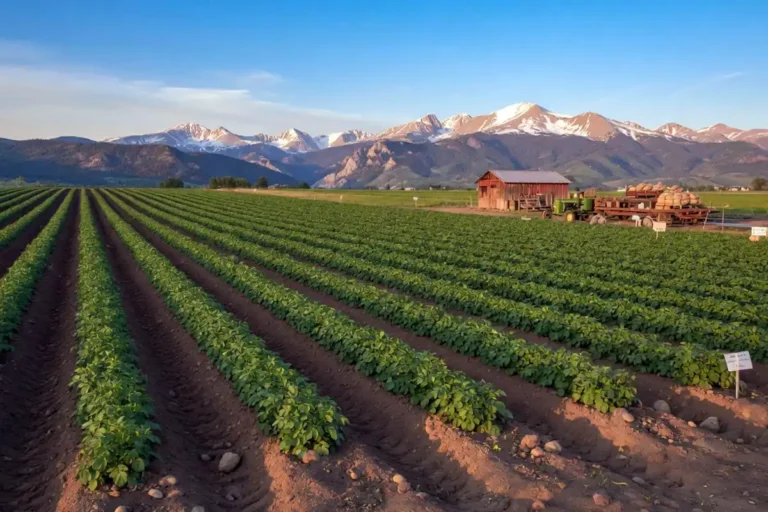
Hastings has been called the Potato Capital of Florida for over a century. The Tri-County Agricultural Area (St. Johns, Putnam, and Flagler counties) produces most of Florida’s commercial potato acres, supplying chipping potatoes used nationwide.
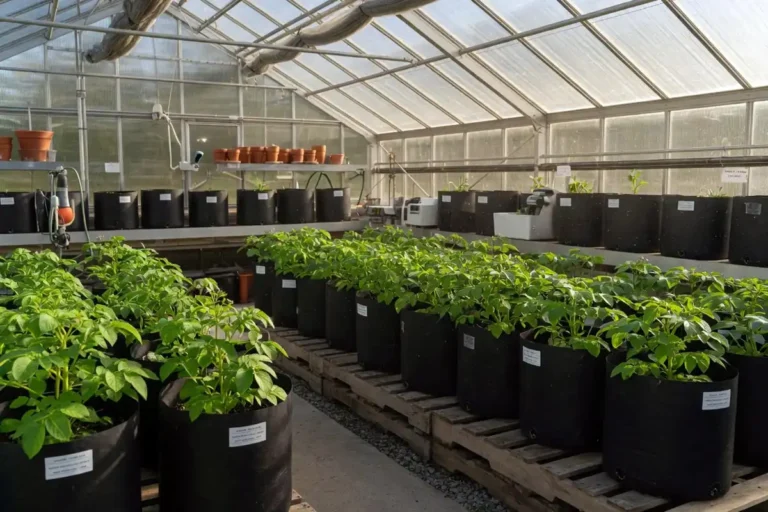
For home gardeners, any raised bed or loose sandy plot in full sun works. A site that drains within one hour after heavy rain is the best pick. Avoid low spots where water pools.
How to Grow Potatoes in Florida Step by Step
Here is the workflow when helping friends set up a Florida potato patch.
1. Pick the Right Variety
Florida’s warm spring favors short-season and heat-tolerant types. Good picks include:
- Red LaSoda (red-skinned, widely grown in Florida)
- Yukon Gold (yellow flesh, reliable)
- Sebago (white, late-maturing)
- Atlantic (classic Florida chipping variety)
- Russet Norkotah (for drier sites)
2. Prepare the Soil
Loosen the bed 10 to 12 inches deep. Potatoes prefer a pH between 5.0 and 6.0, which Florida’s acidic sands often hit without much adjustment. Work in 2 to 3 inches of compost. Our guide covers natural amendments in this soil fertility guide.
3. Prepare and Plant Seed Potatoes
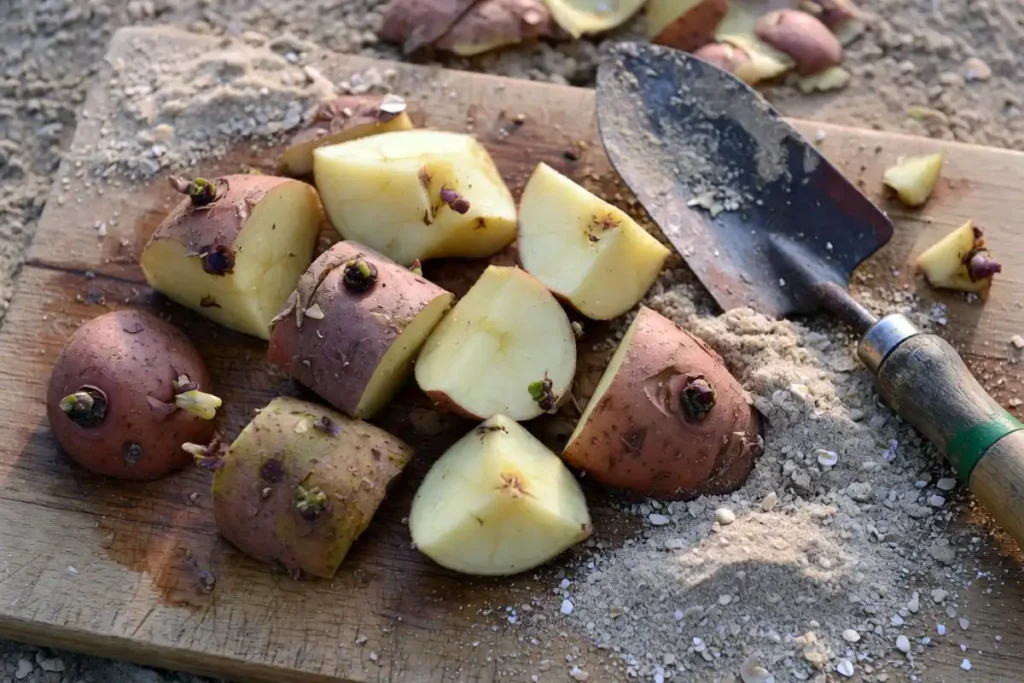
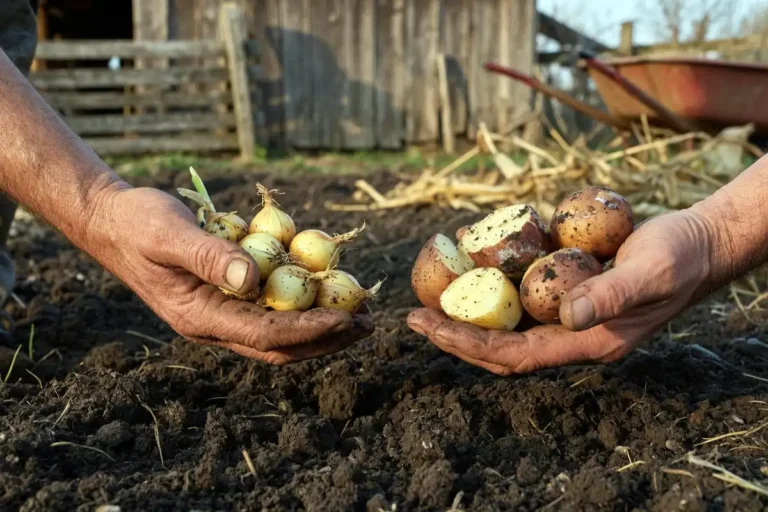
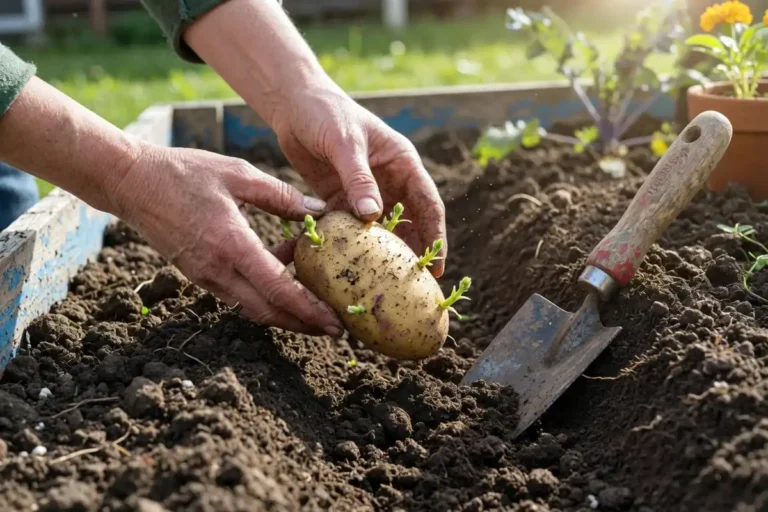
Buy certified seed potatoes from a trusted supplier. Grocery store potatoes often carry sprout inhibitors and disease. Cut larger pieces into 1.5 to 2 ounce chunks, each with at least two eyes. Let cut pieces cure for 1 to 2 days in a dry, shaded spot. This seed potato cutting and curing post covers this step in detail.
Plant pieces 4 inches deep, 12 inches apart, in rows 30 to 36 inches apart. Cover with loose soil.
4. Water and Feed
Keep the top 6 inches of soil evenly moist. Florida’s sandy soil drains fast, so plan on 1 to 1.5 inches of water per week, split across 2 to 3 waterings. Apply a balanced 10-10-10 fertilizer at planting, then side-dress with nitrogen at 4 and 8 weeks.
5. Hill the Soil
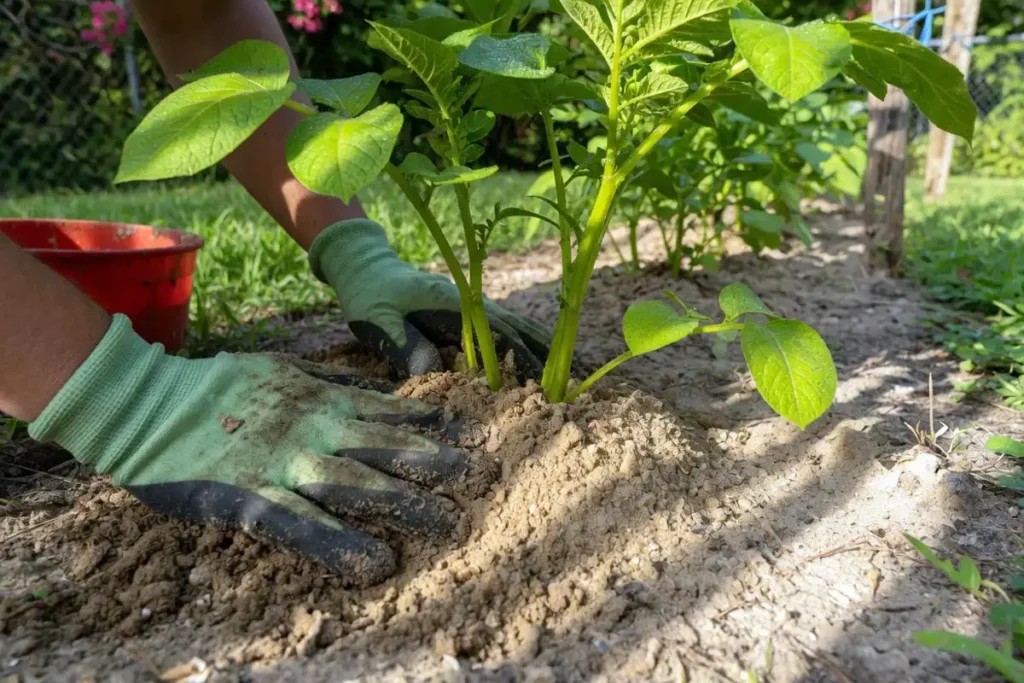
Mound loose soil around the stems when plants reach 6 to 8 inches tall. Hilling keeps tubers covered, blocks sunlight, and lifts yield. Our post on how hilling potatoes works breaks down why this step matters.
6. Harvest
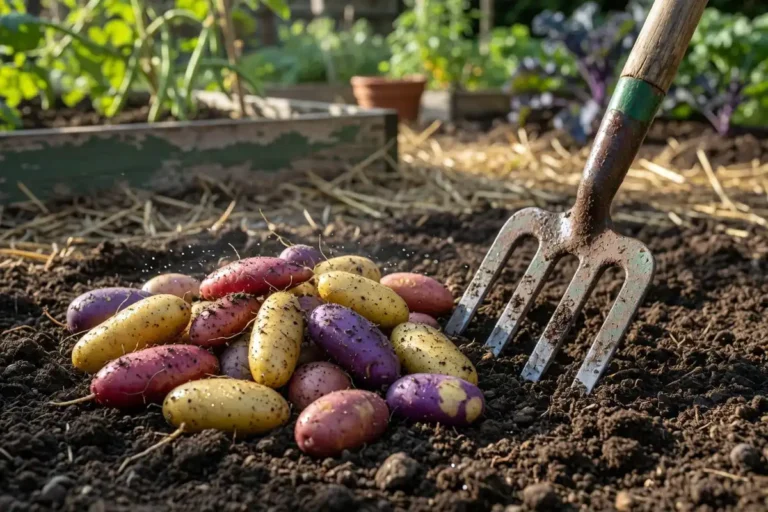
Vines yellow and die back 90 to 120 days after planting. Dig carefully with a fork about 2 weeks after the vines die for thicker skins. Our guide covers the exact cues in our potato harvest timing guide.
Common Problems When Growing Potatoes in Florida
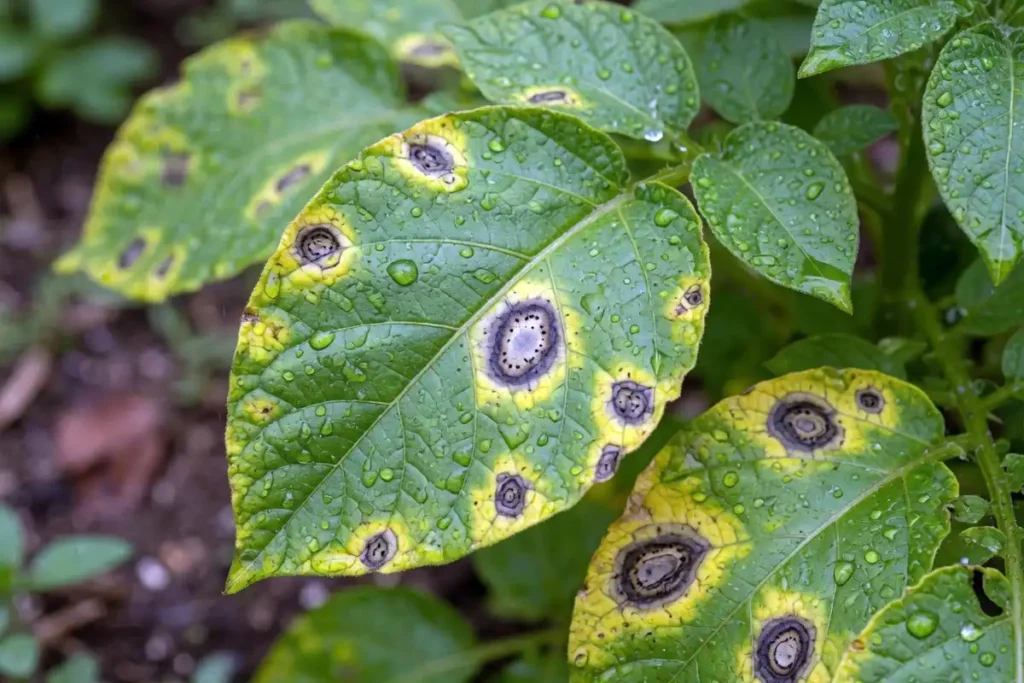
Heat, humidity, and sandy soil create three main headaches.
- Early blight and late blight: Fungal leaf spots worsen in Florida’s humid spring. Use resistant varieties and rotate out of the nightshade family.
- Wireworms and aphids: Wireworms tunnel into tubers. Crop rotation and solarizing the bed before planting help.
- Heat shutdown: Tubers stop sizing above 80°F soil temperature. Mulch with 3 inches of straw to keep soil cool.
UF/IFAS Extension publishes Florida-specific potato production bulletins covering local pest pressure and cultivar trials.
Mistakes to Avoid
- Planting too late in spring (tubers fail to form in heat)
- Using uncertified grocery store potatoes
- Overwatering in sandy soil (causes rot)
- Skipping the hill step (green, bitter potatoes)
- Planting in the same bed two years in a row (builds disease pressure)
Safety Tips
Toss any green or heavily sprouted potatoes. Green skin contains solanine, which is toxic. Store harvested potatoes in a dark, cool spot at 45-55°F with good airflow. Wear gloves when handling fungicides or treated seed pieces. Wash hands after working in the garden.
FAQs about Grow Potatoes in Florida
Can I grow potatoes in Florida in summer?
How long do potatoes take to grow in Florida?
What potato variety grows best in Florida?
Do potatoes need full sun in Florida?
Can you grow potatoes year-round in South Florida?
Conclusion
Florida suits potatoes when you plant during the cool season, use certified seed, and stay on top of water and hilling. The sandy soil works in your favor for drainage. Pick the right variety for your region, watch for blight, and harvest before the heat arrives. Follow the timing for your zone and you’ll pull a solid crop each year.