How to Grow Potatoes in Arizona in 7 Steps (Low Desert Guide)
Potatoes grow well in Arizona when planted from mid-January through March in the low desert and from April through May at higher elevations. This guide walks through planting windows, soil prep, watering, hilling, pest control, and harvest timing that fit Arizona’s heat, sandy soil, and short cool season for home growers.
Plant certified seed potatoes in Arizona from mid-January to early March in the low desert and from April to May in the high country. Use loose, sandy loam at pH 5.5 to 6.5, water deeply twice a week, hill soil around stems, and harvest before soil temperatures top 85°F.
What Makes Arizona Different for Potato Growing
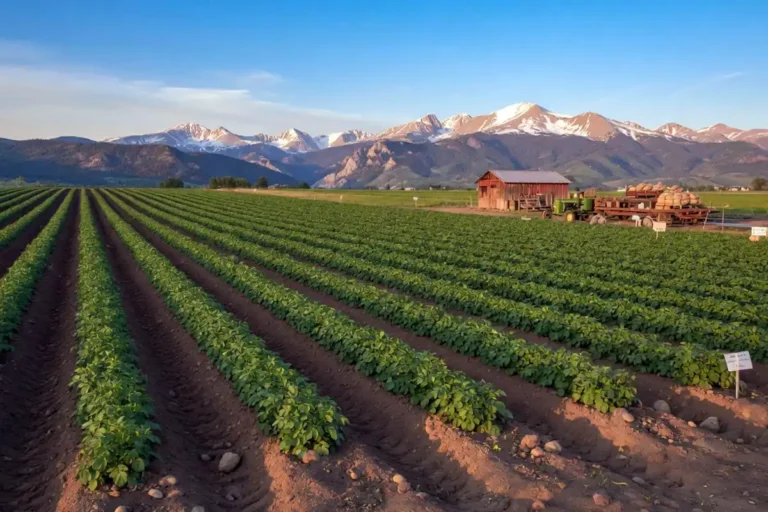
Arizona has two distinct growing zones for potatoes. The low desert around Phoenix, Yuma, and Tucson stays warm most of the year, and tuber formation stops once soil passes 85°F. The high country near Flagstaff and Prescott runs cooler and fits a standard spring planting.
Potatoes form tubers best at soil temperatures between 45°F and 70°F. That narrow window shapes every decision here, from variety selection to planting date. Check your zone on the USDA plant hardiness zone map before ordering seed.
When to Plant Potatoes in Arizona
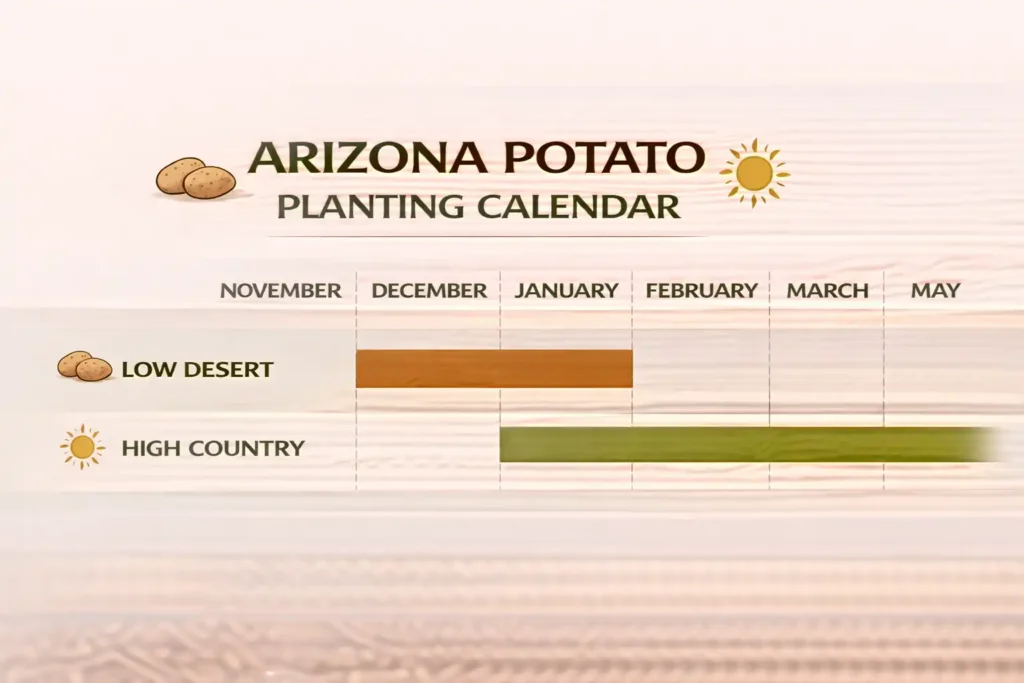
Low desert growers plant from mid-January through early March. High-elevation growers plant from April through May, after the last hard frost. A second fall crop fits the low desert too, with seed pieces going in from late August to mid-September for a December harvest.
Soil temperature matters more than the calendar. Aim for 50°F at four inches deep. our guide covers the broader planting window for potatoes in an earlier guide that applies across most U.S. zones.
Where Potatoes Grow Best in Arizona
Pick a spot with full sun and deep, loose soil. Sandy loam drains well and lets tubers swell without resistance. Heavy clay holds water and rots seed pieces in warm soil.
Raised beds help in caliche-heavy yards. A pH between 5.5 and 6.5 reduces scab risk. Run a basic soil test before planting, especially if the ground has not grown vegetables before.
How to Grow Potatoes in Arizona: Step by Step
Here is the start-to-finish workflow used when planting a row in the low desert.
Step 1: Choose the right variety
Short-season varieties win in Arizona heat. Yukon Gold, Red Pontiac, Kennebec, Norland, and Red La Soda mature in 70 to 90 days. Long-season russets often fail before the heat sets in. Our notes on picking good seed potatoes cover certified sources.
Step 2: Prepare seed pieces
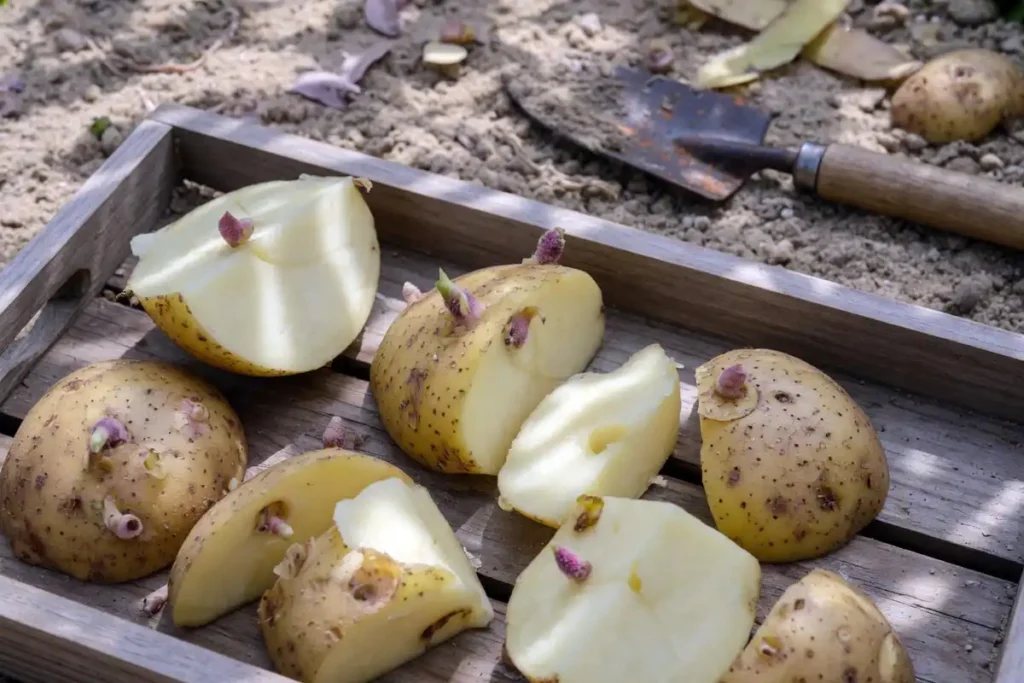
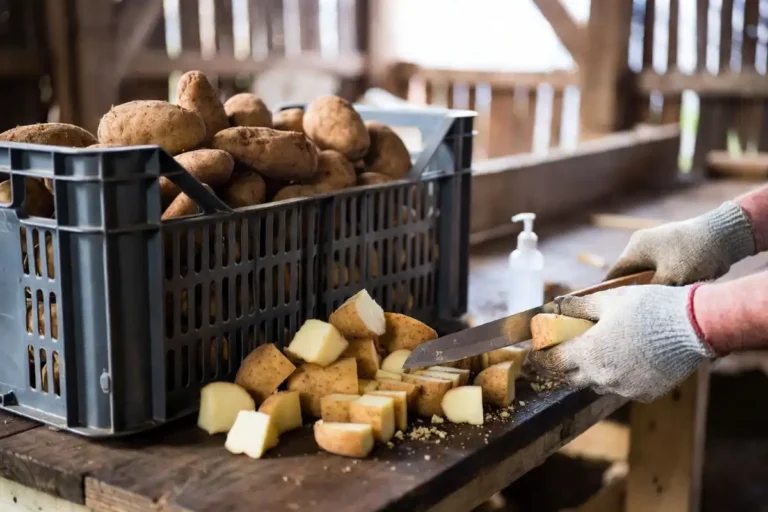
Cut large seed potatoes into chunks with at least two eyes each. Let cut pieces cure for two to three days in a shaded, airy spot so they form a protective skin. Small whole seed potatoes under two ounces can go in uncut. The steps for cutting and curing seed pieces matter in warm Arizona soil, where raw cuts rot fast.
Step 3: Prep the bed
Loosen soil to 12 inches deep. Work in two to three inches of compost and a balanced fertilizer at planting. Skip fresh manure because it raises scab risk.
Step 4: Plant the seed pieces
Dig trenches four to six inches deep. Space seed pieces 10 to 12 inches apart, eyes facing up, with rows 30 to 36 inches apart. Cover with three inches of soil and water in.
Step 5: Water and wait for sprouts
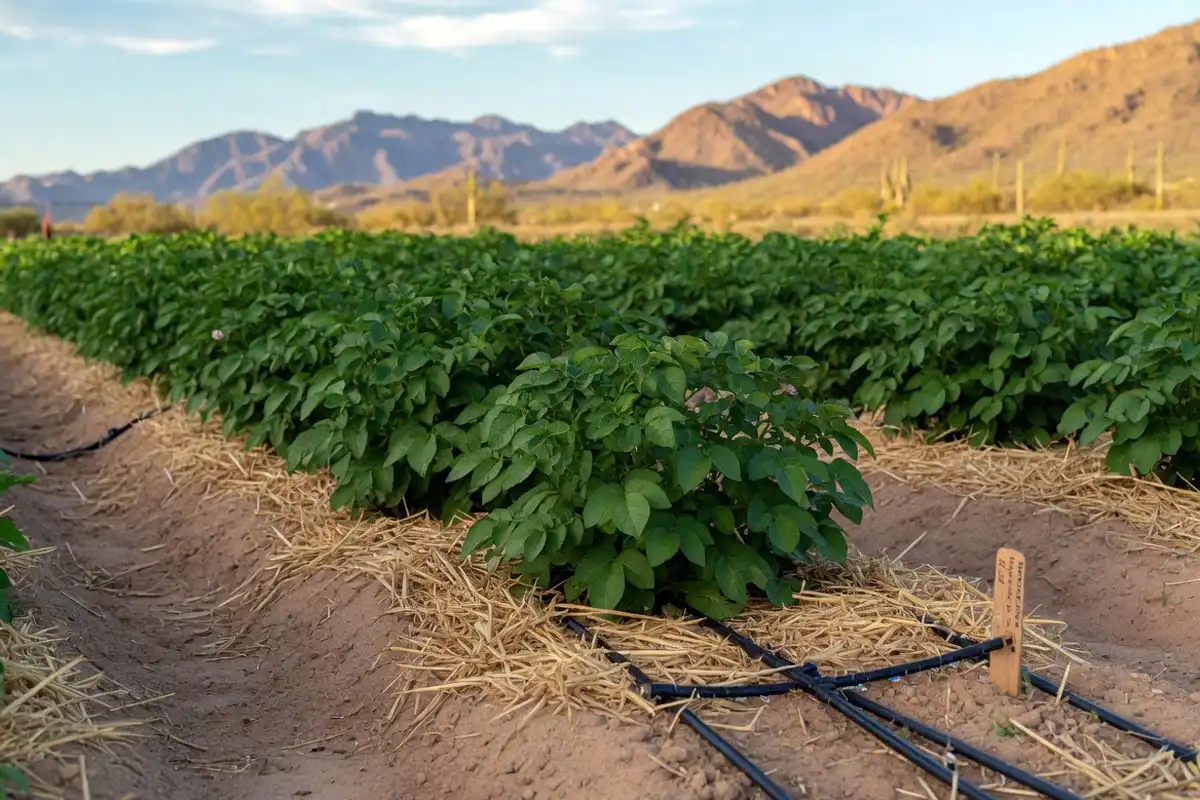
Sprouts appear in 14 to 21 days. Keep soil evenly moist, not soggy. Drip irrigation performs better than overhead watering in desert heat.
Step 6: Hill and mulch the plants
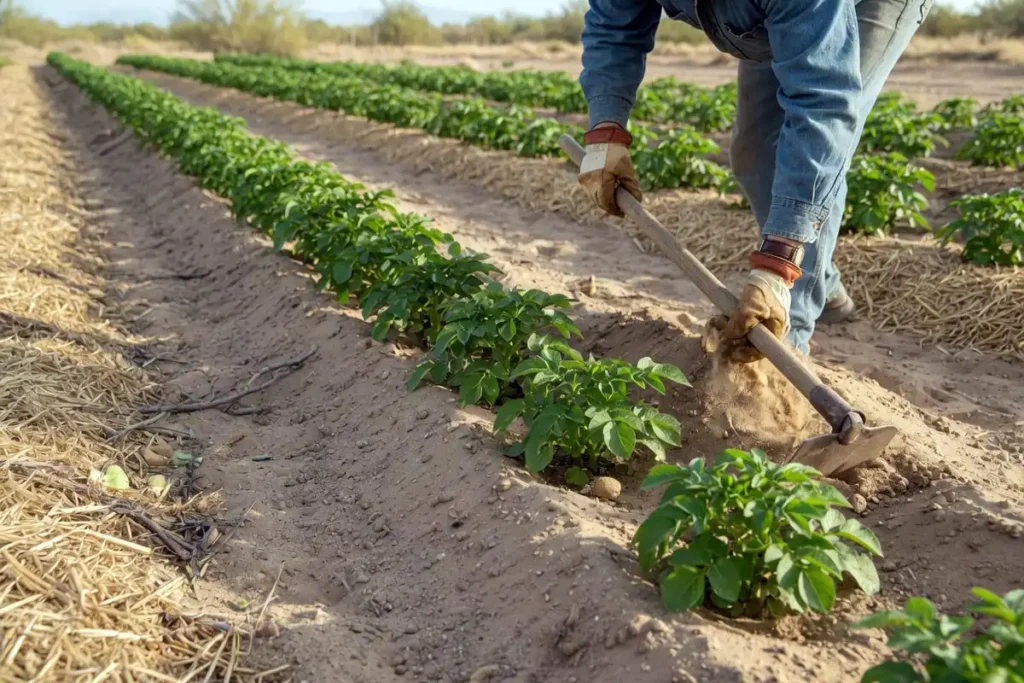
Mound soil around the stems when plants reach eight inches tall. Hilling protects tubers from sun, which turns them green and toxic. Repeat every two weeks until flowers form. Here is how hilling works on a potato row.
Step 7: Harvest the crop
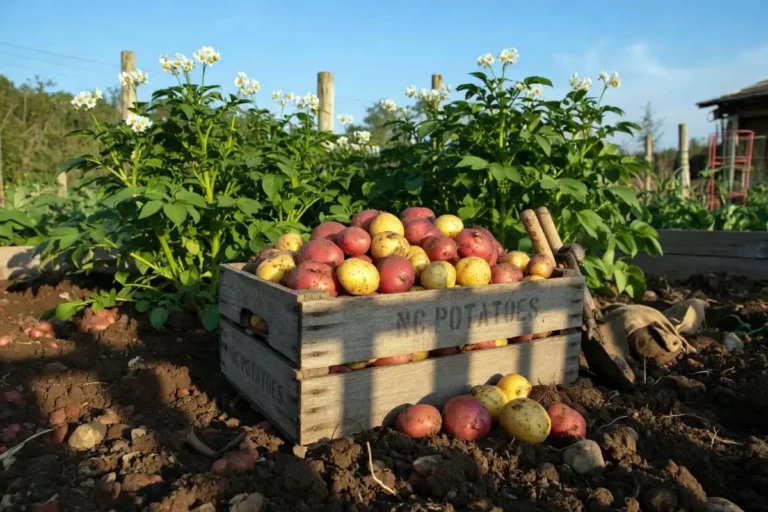
Dig new potatoes two weeks after flowering for fresh eating. For full storage potatoes, wait until vines yellow and die back. Our guide on when to dig your potatoes walks through the visual cues.
Watering Potatoes in the Desert
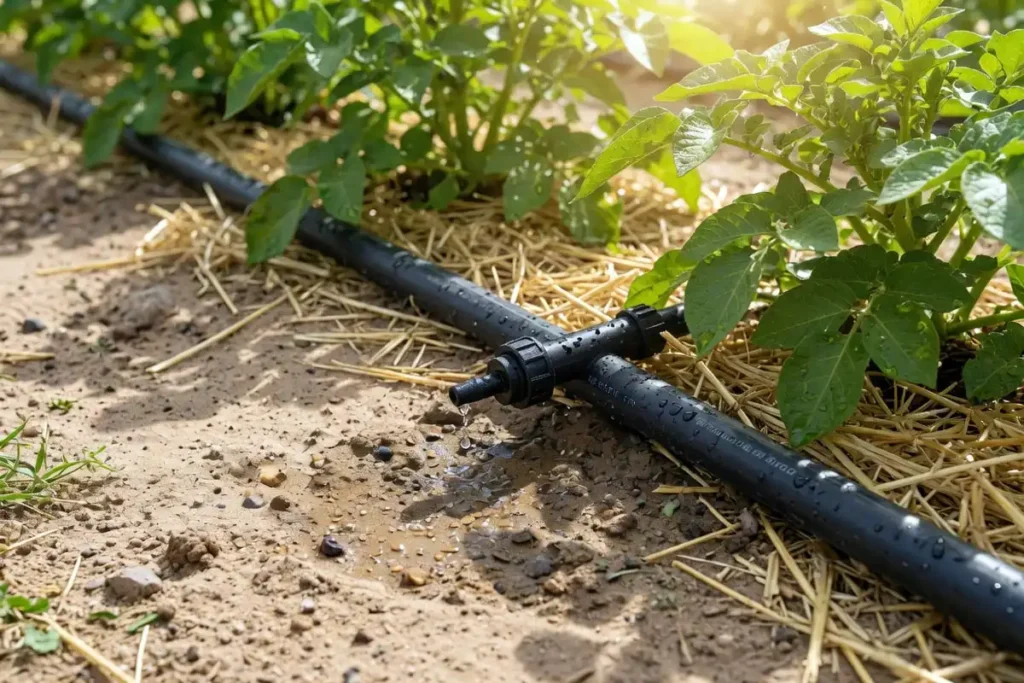
Potatoes in Arizona need one to two inches of water per week. Sandy desert soil drains fast, so split that into two or three deep soakings.
During tuber formation, roughly four to eight weeks after planting, steady moisture prevents hollow heart and cracking. Cut water back as vines yellow so skins cure in the ground.
Hilling, Mulching, and Heat Protection
Mulch is a major ally here. A three to four inch layer of straw or dry grass clippings drops soil temperature by 10 to 15°F. That cooler soil extends the tuber-forming window by two to three weeks.
Shade cloth at 30 to 40 percent reduces heat stress in late spring. Growers short on ground space can try growing potatoes in grow bags, which gives better root-zone control.
Common Pests and Diseases in Arizona
Colorado potato beetles, aphids, and flea beetles show up most often. Hand-pick beetles early in the morning. Neem oil handles aphids on young plants.
Early blight and verticillium wilt hit stressed plants. Rotate potatoes with non-nightshade crops every three years. The University of Arizona Cooperative Extension publishes current pest alerts by county.
When to Harvest Potatoes in Arizona
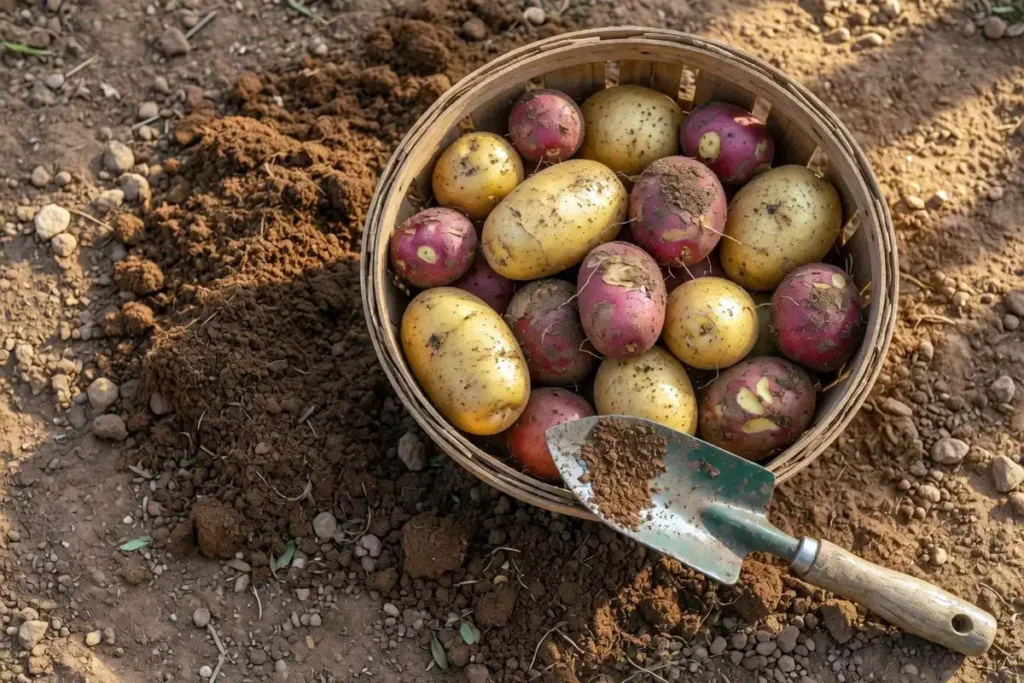
Low desert growers harvest from May through early June, before soil hits 85°F. High-country growers dig from late August through September. Stop watering one week before harvest to firm up the skins.
Dig on a dry, cloudy morning. Exposed tubers sunburn in 30 minutes of direct Arizona sun.
Mistakes to Avoid
- Planting too late in the low desert. Tubers stop forming once soil tops 85°F.
- Using grocery-store potatoes. They carry disease and often contain sprout inhibitors.
- Overwatering sandy soil. Rot kills seed pieces within a week.
- Skipping hilling. Green shoulders on tubers mean wasted food.
- Planting in heavy clay without raised beds. Tubers come out small and misshapen.
Safety Notes
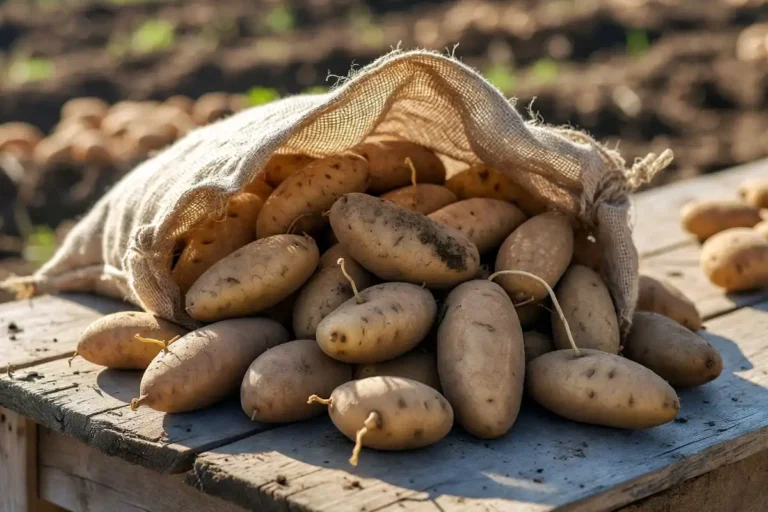
Green potatoes contain solanine, a toxic compound. Cut off green parts or compost them. Never eat sprouted or soft potatoes.
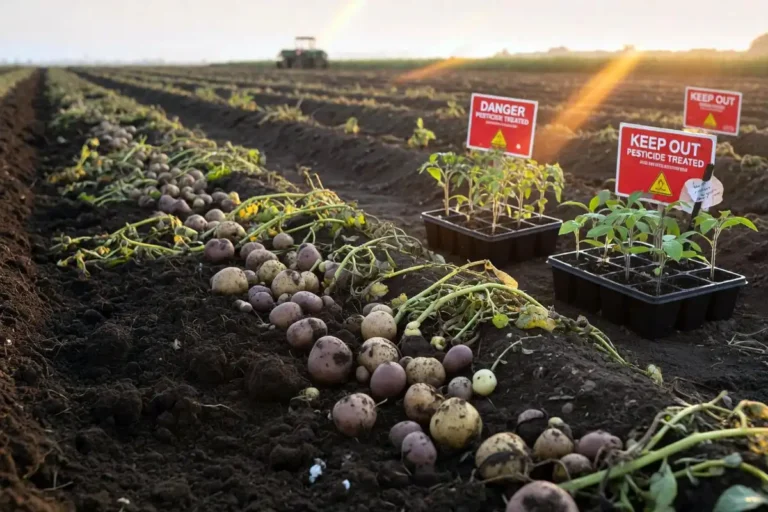
Store harvested potatoes in a dark, cool, ventilated space at 45 to 55°F. Wear gloves and a mask when mixing pesticides, and read every label before application.
FAQs about Grow Potatoes in Arizona
Can you grow potatoes in Phoenix year-round?
How long do potatoes take to grow in Arizona?
Do potatoes need full sun in Arizona?
What potato variety grows best in Arizona heat?
Can I plant store-bought potatoes in Arizona?
Final Takeaway
Growing potatoes in Arizona works when you match variety, timing, and watering to your zone. Low desert gardeners beat the heat with January planting. High-country growers follow a standard spring schedule. Short-season varieties, deep mulch, and steady drip irrigation carry the crop to a clean harvest.