Can Potatoes Grow Anywhere? 7 Climate Facts You Should Know
Potatoes grow in most temperate climates, but not truly anywhere on earth. They need cool soil, loose drainage, and a 90 to 120 day growing window to produce a solid crop. This guide covers which climates work, which don’t, and how to succeed in hot, cold, or small-space conditions.
Potatoes grow almost anywhere with cool soil between 45°F and 70°F, loose well-drained ground, and at least 90 frost-free days. They struggle in tropical heat above 85°F, waterlogged soil, and heavy clay without amendment.
Can Potatoes Grow Anywhere?
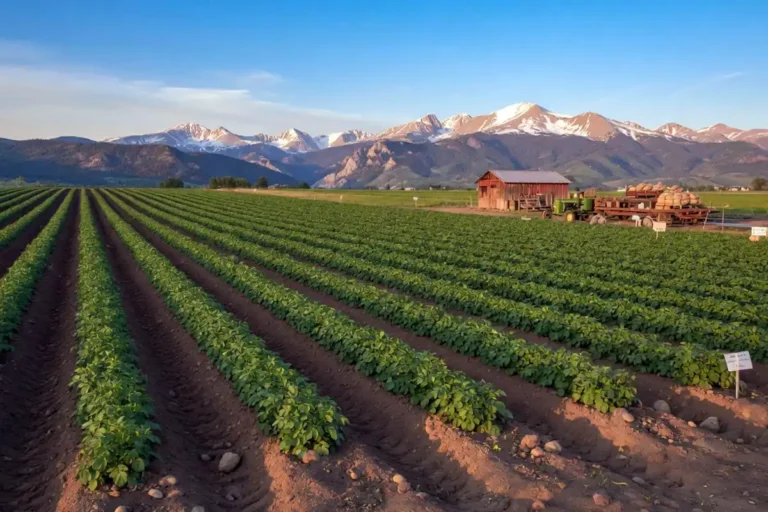
Potatoes grow across USDA zones 3 through 10 when planting aligns with local frost dates. The crop adapts to short Canadian summers and long southern winters alike. Farmers produce potatoes on six continents, with global output near 375 million metric tons per year per FAO 2023 data.
Location still matters. The plant sets tubers when soil sits below 70°F. Above that range, yields drop sharply. Below 28°F, young shoots die from frost damage. For timing details, our guide covers the right planting window in a separate post.
Where Potatoes Grow Best
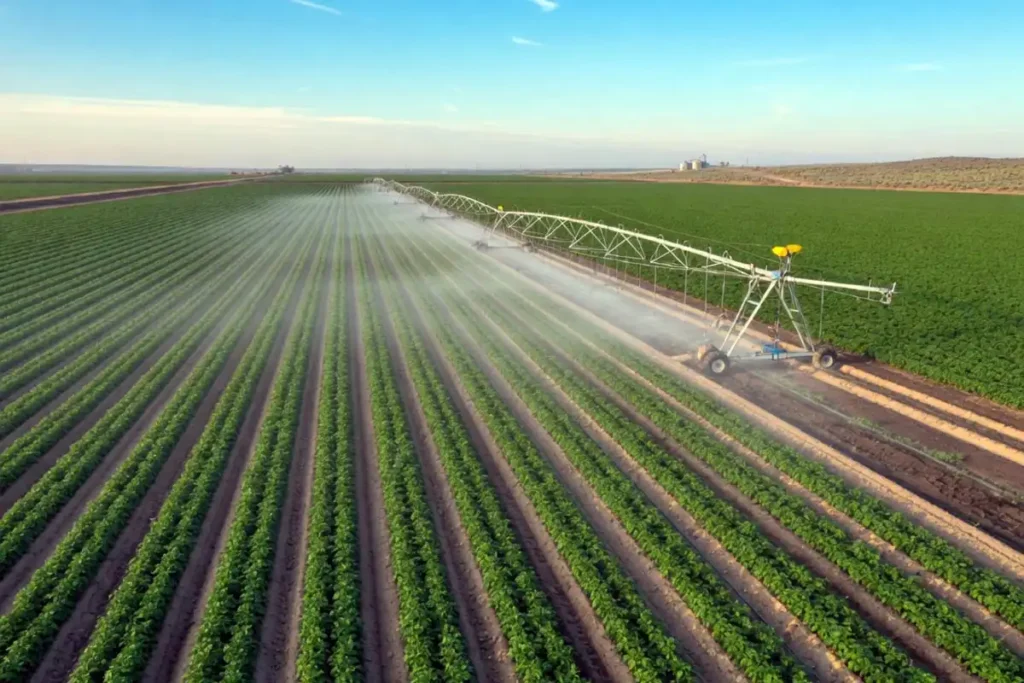
Potatoes produce the highest yields in cool, temperate zones with loose loam soil. Idaho, Maine, North Dakota, and Washington lead U.S. production. These states share short nights, cool soil, and steady rainfall during tuber formation.
Ideal conditions include:
- Daytime temperatures between 60°F and 70°F
- Night temperatures between 55°F and 60°F
- Soil pH of 5.0 to 6.5
- Loose loam or sandy loam with good drainage
- 1 to 2 inches of rainfall per week during bulking
The USDA Plant Hardiness Zone Map helps identify your frost dates, which drive planting decisions more than any other factor.
Climates Where Potatoes Struggle
Potatoes fail in three environments without intervention.
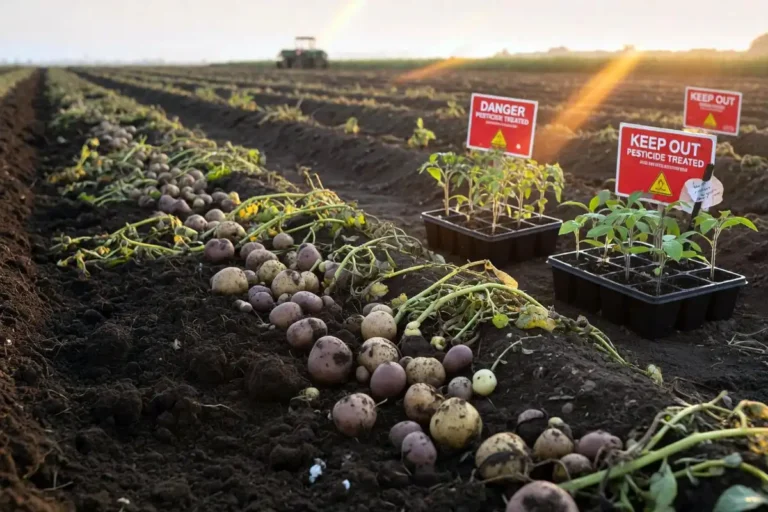
Hot tropical lowlands. Soil above 85°F stops tuber formation. Growers in India and Southeast Asia time crops for the cool dry season instead of summer.
Arctic permafrost zones. The 90 day minimum growing window rules out regions above latitude 68°N without polytunnels.
Waterlogged clay. Saturated soil rots seed pieces within days. Heavy clay also compacts around tubers and limits size.
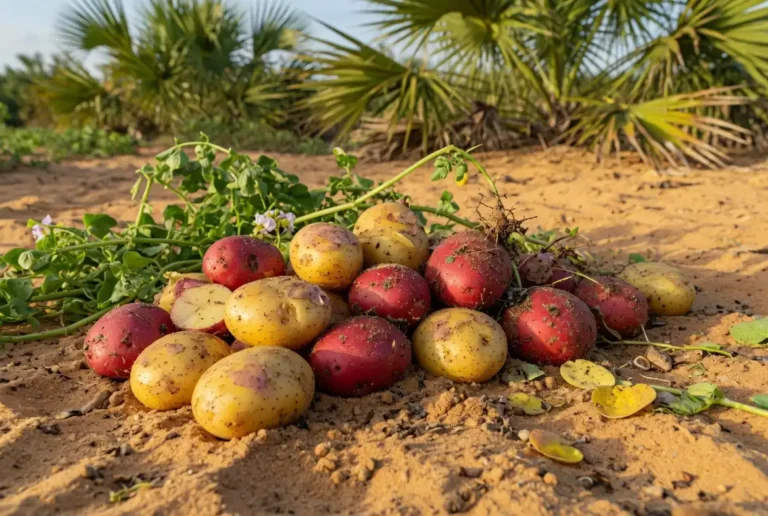
Hot southern gardens work if you plant in late winter and harvest before July heat sets in. our guide covers hot-climate potato timing for Arizona earlier, which applies to similar desert zones.
When to Plant Based on Your Climate
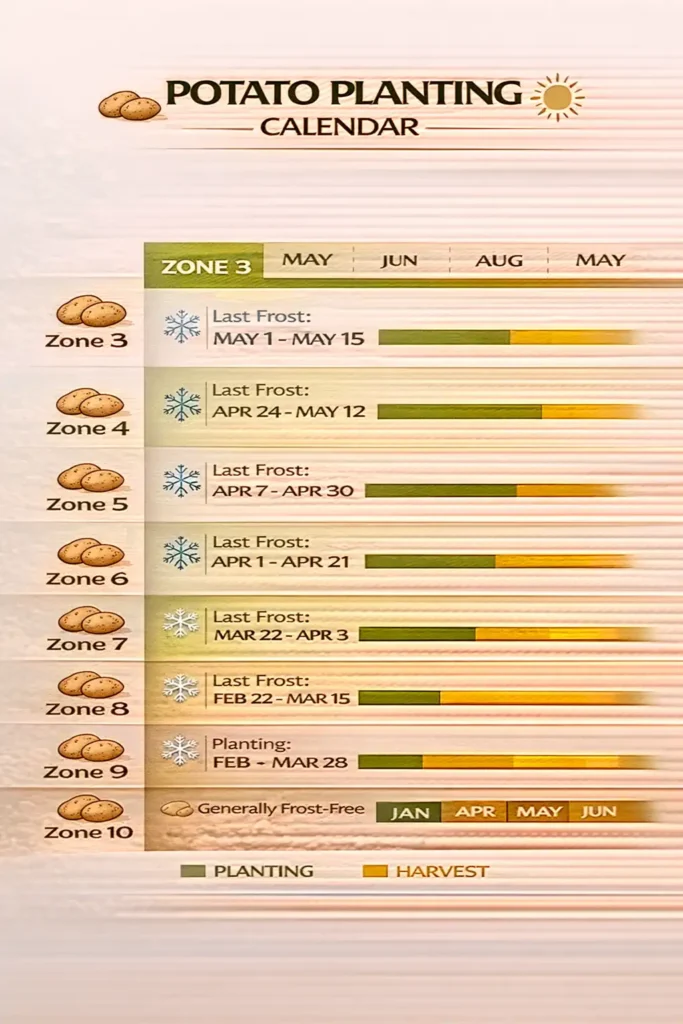
Timing depends on your last spring frost date.
Cold zones (3 to 5): Plant 2 weeks before the last frost, usually April to May. Harvest in September.
Temperate zones (6 to 7): Plant in late March or early April. Harvest July through August.
Warm zones (8 to 10): Plant in January or February for a spring crop. A second fall crop goes in during August.
Soil temperature at 4 inches deep needs to reach 45°F before planting. Cold wet soil encourages seed rot and stunts early growth.
How to Grow Potatoes in Difficult Climates
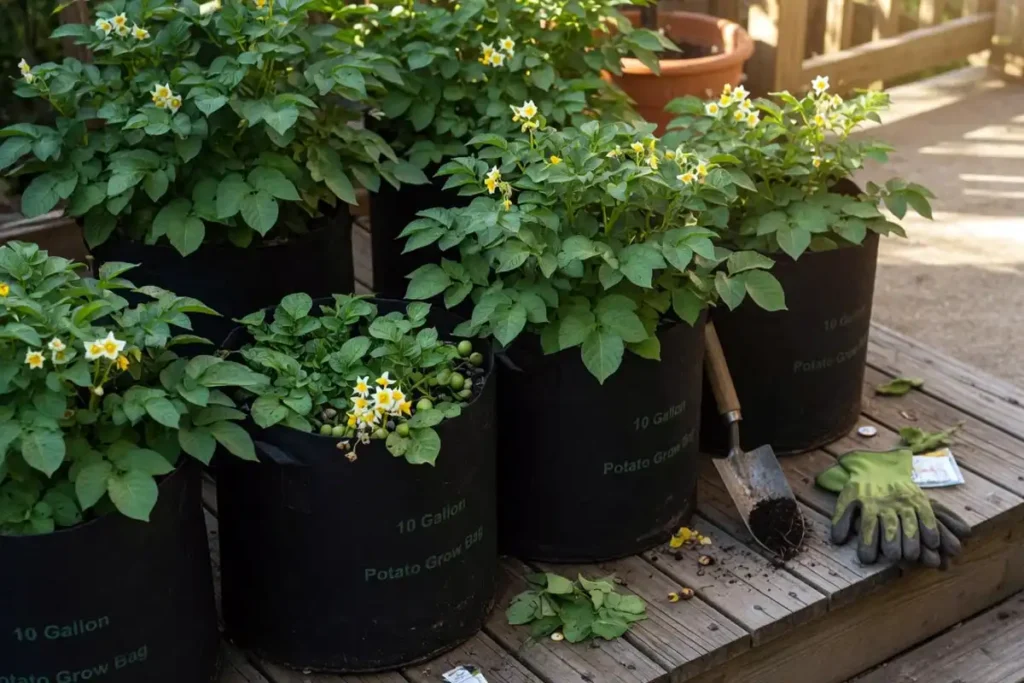
You can stretch the growing range with a few practical adjustments.
For hot climates:
- Plant in late winter, not spring
- Apply white or straw mulch to cool soil by 10°F to 15°F
- Pick short-season varieties like Red Norland (70 days)
- Irrigate deeply at dawn to lower root-zone heat
For short seasons:
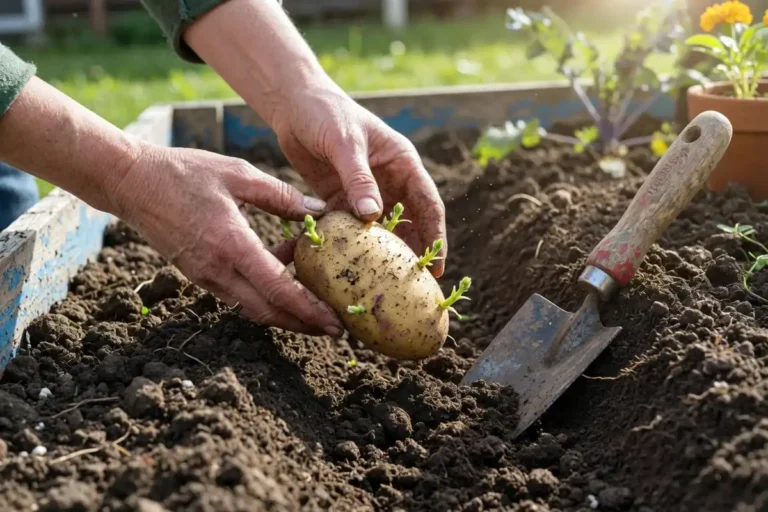
- Chit seed potatoes 2 to 3 weeks before planting
- Choose early varieties like Yukon Gold or Caribe
- Use black plastic mulch to warm soil
- Cover rows with row cloth against late frost
And for limited space:
- Grow in 10-gallon fabric bags or barrels
- Fill with a 50/50 compost and loam mix
- Add straw as plants grow
method for growing potatoes in fabric bags works well for renters, balcony gardeners, and anyone with tight ground space.
Soil Requirements
Potatoes prefer acidic soil at pH 5.0 to 6.5. Alkaline soil above 7.0 raises the risk of scab disease on tuber skin.
Amend heavy clay with:
- 3 to 4 inches of aged compost
- Coarse sand or perlite for drainage
- Sulfur to lower pH if needed
Skip fresh manure. It encourages scab and promotes leafy growth over tuber set. A soil test from your county extension office saves guesswork and money.
Seed Potato Basics
Use certified seed potatoes, not grocery tubers. Store-bought potatoes carry sprout inhibitors and disease risk. Certified seed pieces test clean for scab, late blight, and nematodes.
Cut large seed potatoes into 2-ounce pieces with at least 2 eyes each. Cure the cut faces for 2 to 3 days in a warm dry spot before planting. This step prevents rot in cold soil.
Hilling and Aftercare
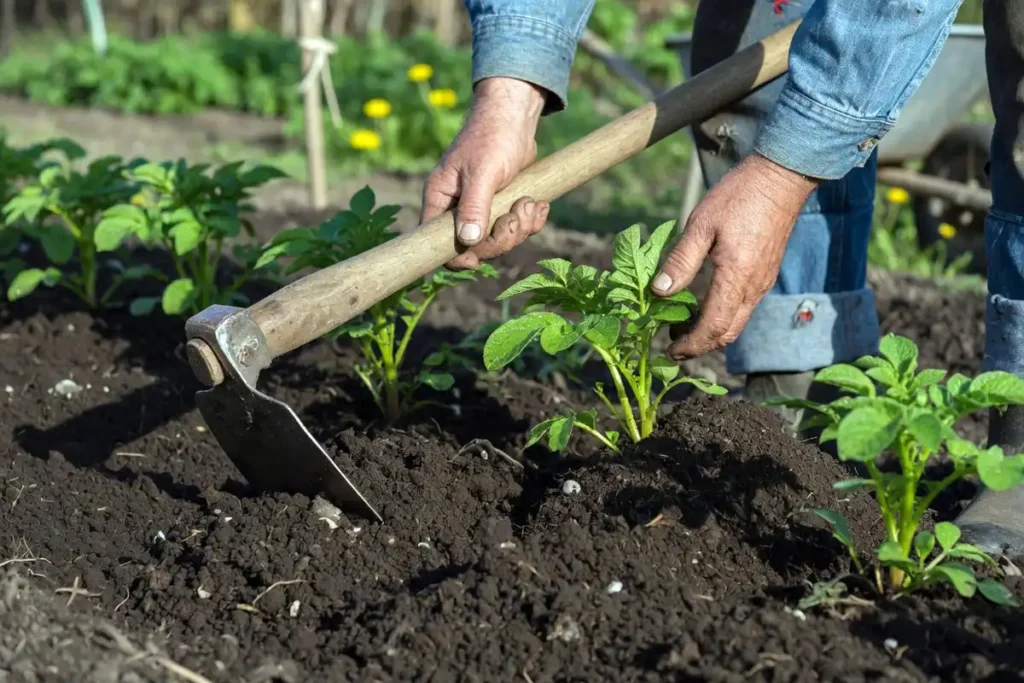
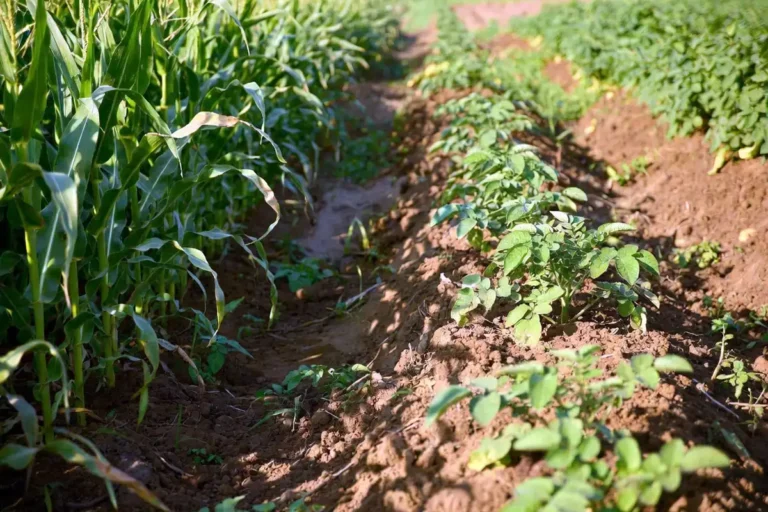
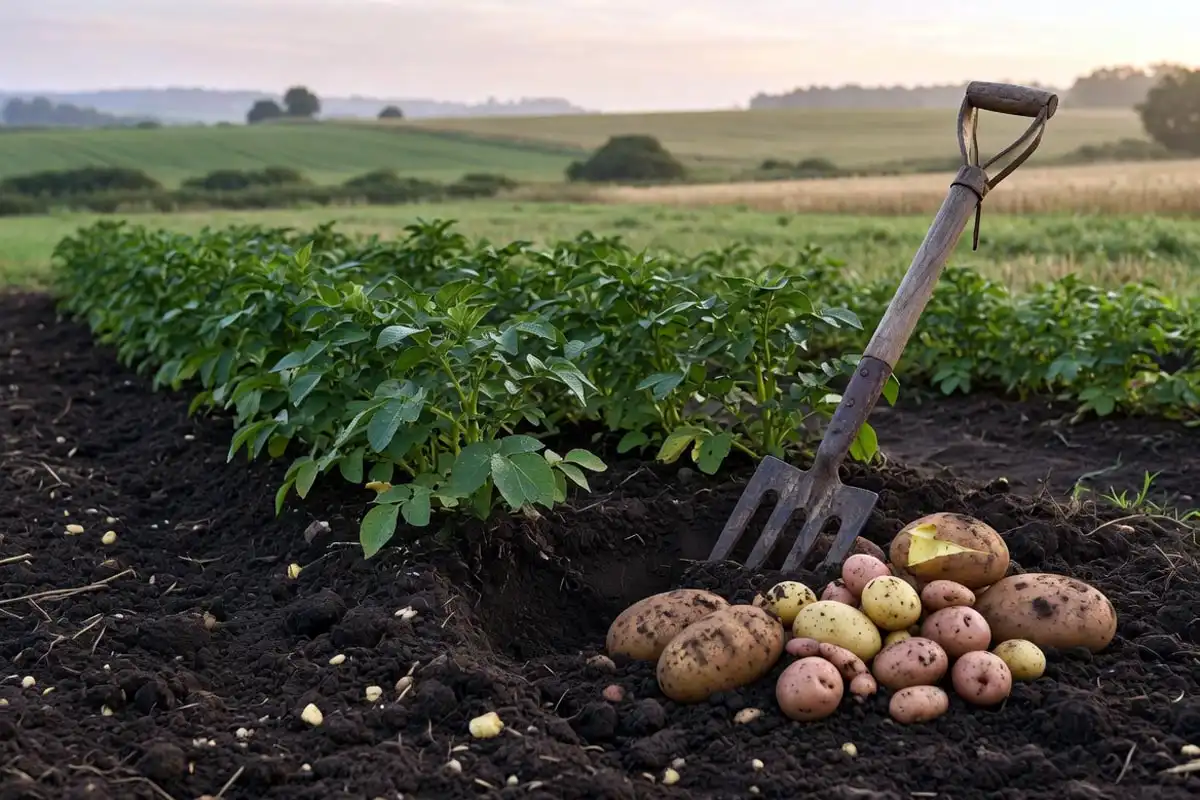
Potatoes form tubers along the stem above the seed piece. Hilling soil around the stems increases yield and protects tubers from sunlight. Green tubers contain solanine, which is toxic.
Hill twice during the season:
- When plants reach 6 inches tall
- Again at 12 inches, two weeks later
Water consistently at 1 to 2 inches per week, especially during flowering and early bulking.
Common Mistakes to Avoid
New growers tend to repeat a few errors:
- Planting in cold wet soil before it dries
- Using grocery store potatoes as seed
- Letting tubers sit exposed to sunlight
- Overwatering after foliage yellows
- Skipping crop rotation, which builds disease pressure
Rotate potatoes out of the same bed for at least 3 years. Follow with legumes or grains, not tomatoes, peppers, or eggplant, since those share soil diseases.
Troubleshooting Growth Problems
Yellow leaves early in the season. Nitrogen shortage or cold stress. Side-dress with a balanced fertilizer.
Hollow or cracked tubers. Uneven watering during bulking. Keep soil moisture steady.
Rot in storage. Harvested too wet or cured at the wrong temperature. Cure at 55°F to 60°F for 2 weeks before storage.
Orange-red beetles with black stripes. Colorado potato beetle. Hand-pick daily or apply spinosad per label rates. The University of Minnesota Extension potato guide covers organic pest options in depth.
Late blight spots on leaves. Pull infected plants, stop overhead watering, and plant resistant varieties next season.
Safety Notes
Never eat green potatoes or green sprouts. Both contain solanine and chaconine, which are mildly toxic alkaloids.
Handle sprouting seed potatoes with gloves if your skin is sensitive. Sprouts and foliage hold the same compounds as green tubers.
Watch for late spring frost. Our guide covers frost damage on potato crops in detail, including recovery steps after cold snaps.
FAQs about Grow Potatoes
Can potatoes grow in any soil type?
Can you grow potatoes indoors?
Can potatoes grow in tropical climates?
How cold is too cold for potatoes?
Do potatoes grow back every year?
Final Thoughts
Potatoes adapt to most climates, but the crop isn’t truly universal. Cool soil, loose drainage, and a 90 day window drive success. Match the variety to your season, prep the soil with care, and handle seed pieces right. With those basics covered, potatoes reward almost any patient grower.