Can You Grow Potatoes in Shade? 5 Smart Steps for a Solid Harvest
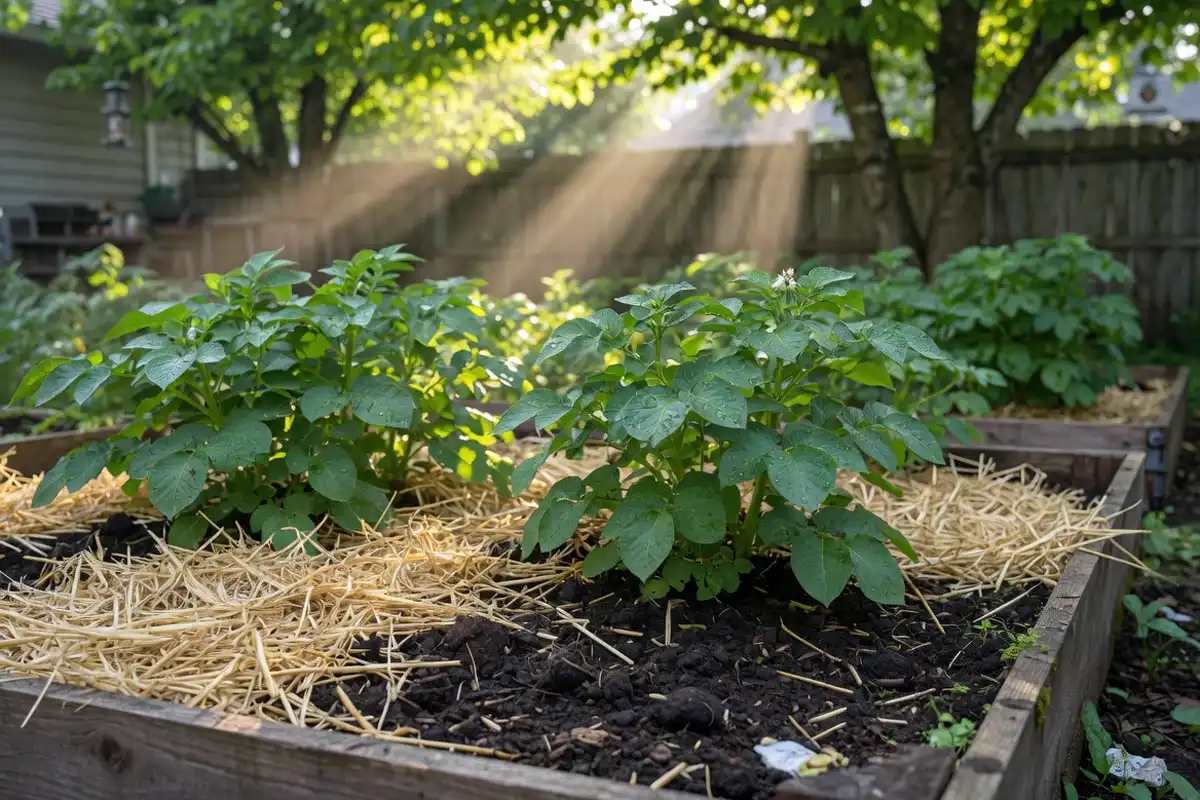
Yes, potatoes can grow in partial shade, though yields drop compared to full-sun plots. This guide walks through exact light needs, shade-tolerant varieties, planting steps, common problems, and practical fixes so you can grow a solid crop from a less sunny corner of your yard.
Potatoes grow in partial shade with 4 to 6 hours of sunlight, but tubers stay smaller and yields drop 30 to 50 percent. Full sun (6 to 8 hours daily) gives the best harvest. Choose early-maturing varieties like Red Norland or Yukon Gold for shaded beds, since they produce faster before light shifts further.
The plants won’t match a full-sun bed, but shaded growing works if you plan around the light. For baseline timing, this guide on planting potatoes covers seasonal windows.
What Counts as Shade for Potatoes?
Shade means a spot that gets less than 6 hours of direct sunlight per day. Partial shade falls between 3 and 6 hours. Full shade gives under 3 hours. Dappled light from tree canopies counts as partial shade.
Potatoes sit in the full-sun vegetable group. Their leaves use photosynthesis to build starches, which then move down into tubers. Less light means less starch and smaller potatoes.
Can You Grow Potatoes in Shade?
Yes, potatoes grow in partial shade, but the harvest shrinks. According to Penn State Extension, potatoes produce best with full sunlight and well-drained soil. S, a 4-hour sun bed yields about half of what a 7-hour bed produces.
Shade-grown potatoes stay smaller and mature a bit slower. You still get real, edible tubers. You just get fewer per plant.
Morning sun works better than afternoon sun for shaded potatoes. Morning light dries dew and reduces disease pressure. Afternoon shade keeps soil cooler, which potatoes prefer.
How Many Hours of Sunlight Do Potatoes Need?
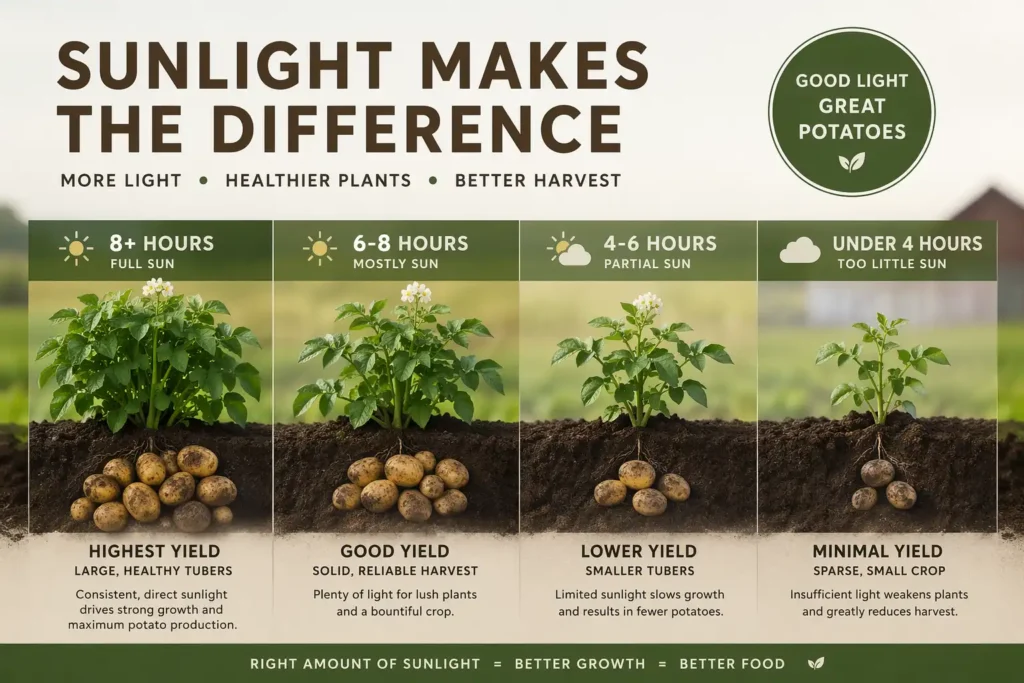
Potatoes need 6 to 8 hours of direct sunlight for full yield. With 4 to 6 hours, plants produce 50 to 70 percent of a full-sun harvest. Below 4 hours, yields drop sharply and tubers may stay pea-sized.
Quick light-to-yield reference:
- 8+ hours: Best yield, largest tubers
- 6 to 8 hours: Strong yield, standard size
- 4 to 6 hours: Reduced yield, smaller tubers
- Under 4 hours: Poor yield, possible crop failure
Minnesota Extension notes potatoes thrive in full sun with consistent moisture and loose soil.
Best Potato Varieties for Shaded Beds
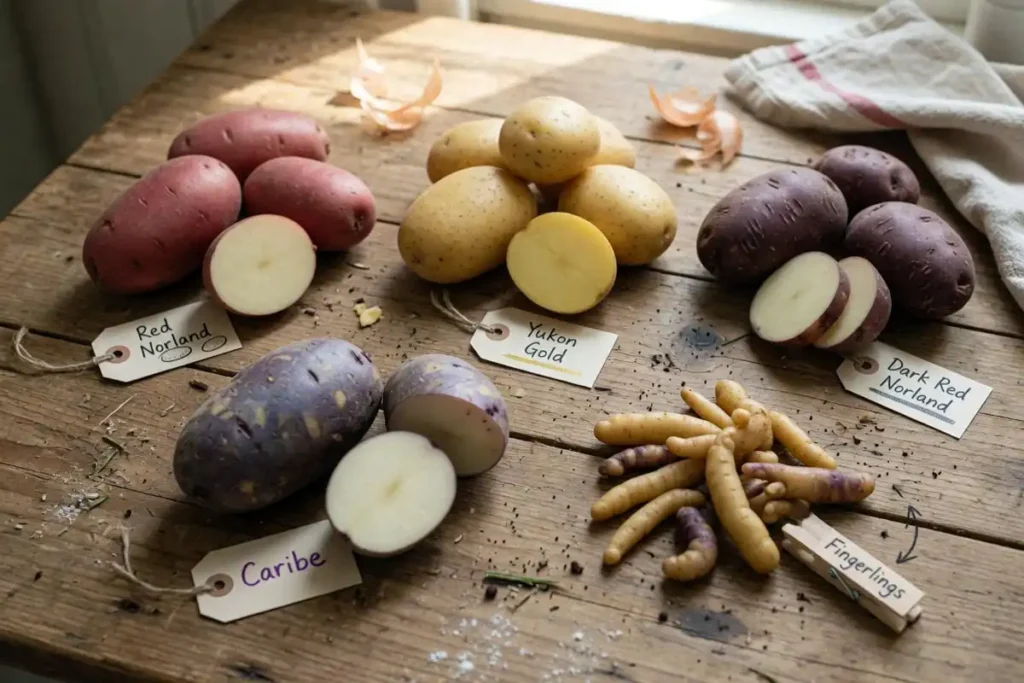
Early-maturing varieties handle shade better because they finish growing before peak summer light shifts. Short-season types also wrap up before disease builds in cooler, damper spots.
Good picks for partial shade:
- Red Norland: 70 to 90 days, handles cool shaded soil well
- Yukon Gold: 80 to 90 days, reliable in mixed light
- Dark Red Norland: Early, tolerates lower light levels
- Caribe: Blue-skinned, quick to mature
- Fingerlings: Small tubers, fit shaded beds
For picking healthy starters, this seed potato selection guide walks through what to buy.
How to Grow Potatoes in Shade (Step-by-Step)
Step 1: Pick the Right Spot
Find the sunniest corner of your shaded area. Morning sun spots work best. Avoid low, damp pockets where cold air settles.
Step 2: Prep the Soil
Loosen soil to 12 inches deep. Mix in 2 to 3 inches of compost. Potatoes need loose, well-drained soil with a pH between 5.0 and 6.5.
Step 3: Cut and Cure Seed Potatoes
Cut seed potatoes into 2-inch pieces with 1 to 2 eyes each. Let cut pieces sit for 2 days to form a protective layer. This reduces rot risk in cool, shaded soil.
Step 4: Plant at the Right Depth
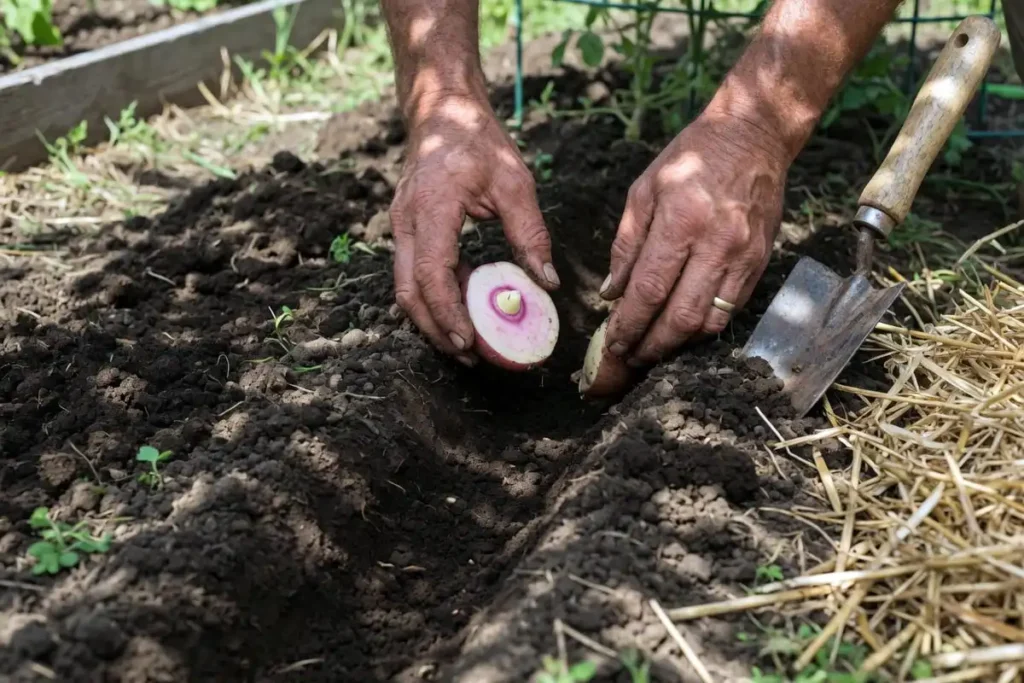
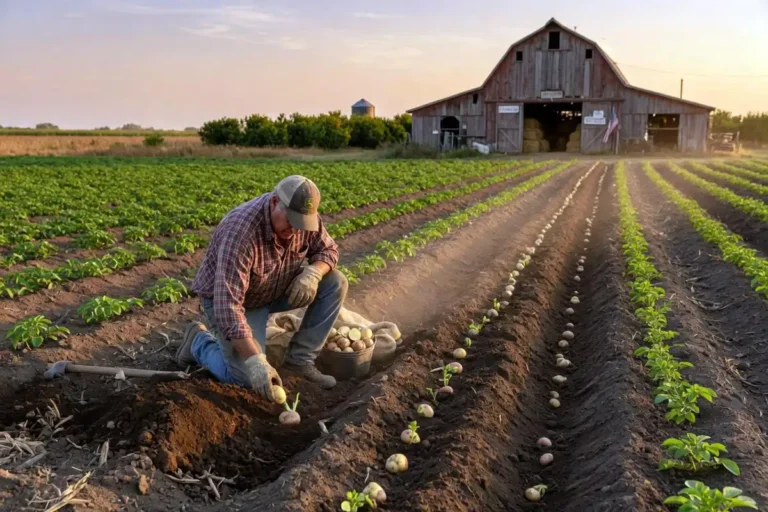
Plant seed pieces 4 inches deep with eyes facing up. Space 12 inches apart in rows 24 to 30 inches apart. Shaded soil stays cooler, so plant a week or two later than sunny beds.
Step 5: Hill the Plants
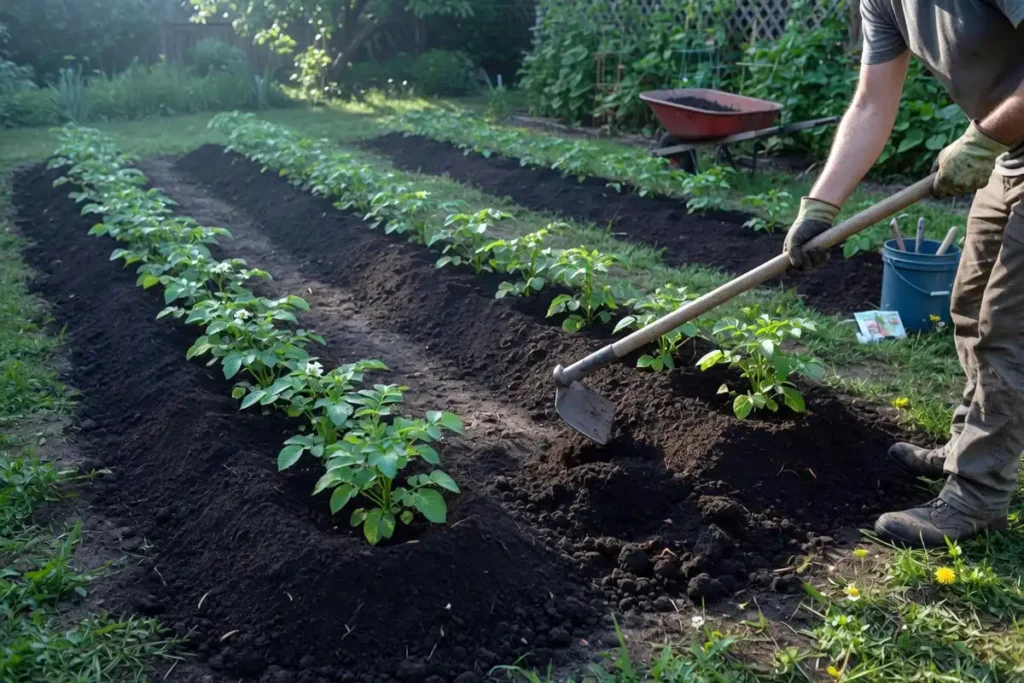
Once plants reach 6 to 8 inches tall, mound soil around the stems. Leave the top 3 to 4 inches exposed. The hilling process covered elsewhere protects tubers from light and boosts yield.
Step 6: Water and Mulch
Water 1 to 2 inches per week. Shaded soil holds moisture longer, so check before watering. Apply 3 inches of straw mulch to keep soil cool and weeds down. These mulching notes for crop beds explain material choices.
Step 7: Monitor and Harvest
Watch for flowering, which signals tubers are forming. Harvest 2 to 3 weeks after vines yellow and die back. Shaded crops mature 1 to 2 weeks later than full-sun crops.
Common Problems When Growing Potatoes in Shade
Smaller tubers: Less light means less starch. Expect golf-ball to tennis-ball sized potatoes.
Leggy, weak stems: Low light makes plants stretch toward sun. Stems stay thin and may flop. Hill more to support them.
Fungal diseases: Shaded, damp leaves stay wet longer. Late blight, early blight, and white mold show up faster. Space plants wider to improve airflow.
Slow growth: Cool soil slows sprouting. Warm shaded soil with black plastic for 2 weeks before planting.
Slug damage: Slugs love cool, shaded, mulched beds. Check under mulch and use iron phosphate bait if needed.
Mistakes to Avoid
- Planting in deep shade under dense tree canopies
- Overwatering shaded beds, which stay damp longer
- Skipping hilling, which exposes tubers to light and causes greening
- Using long-season varieties in shade, which often fail to mature
- Crowding plants, which worsens disease in low-airflow spots
- Ignoring drainage, since shaded soil clogs faster
Safety Notes
Green potatoes contain solanine, a natural toxin. Never eat green-tinted tubers or heavily sprouted potatoes. Store harvested potatoes in a dark, cool spot. Wash hands after handling plants to avoid skin irritation from sap.
Frost also kills exposed potato foliage fast. This note on frost damage to potatoes helps for growing in early spring or late fall.
FAQs about Grow Potatoes in Shade
Will potatoes grow without direct sunlight?
Can I grow potatoes on a shaded patio?
Do potatoes like morning or afternoon sun?
How much yield do I lose growing potatoes in shade?
Can sweet potatoes grow in shade?
Final Takeaway
Potatoes grow in partial shade, but yield trades off against convenience. Pick early varieties, use morning-sun spots, and hill well to get the most out of shaded beds. Following these basics can produce a workable harvest even in low-sun plots of around 4 hours daily, though yields will run below full-sun plantings. Even yards with only shaded corners can still produce fresh, homegrown tubers every season.