How Peanuts Are Processed: 7 Stages Every Grower Knows
Peanuts are processed through harvesting, drying, shelling, cleaning, sorting, and roasting before reaching grocery shelves. This guide walks each step of peanut processing from the field to finished products like peanut butter, oil, and roasted snacks, plus the quality standards growers and processors follow at every stage.
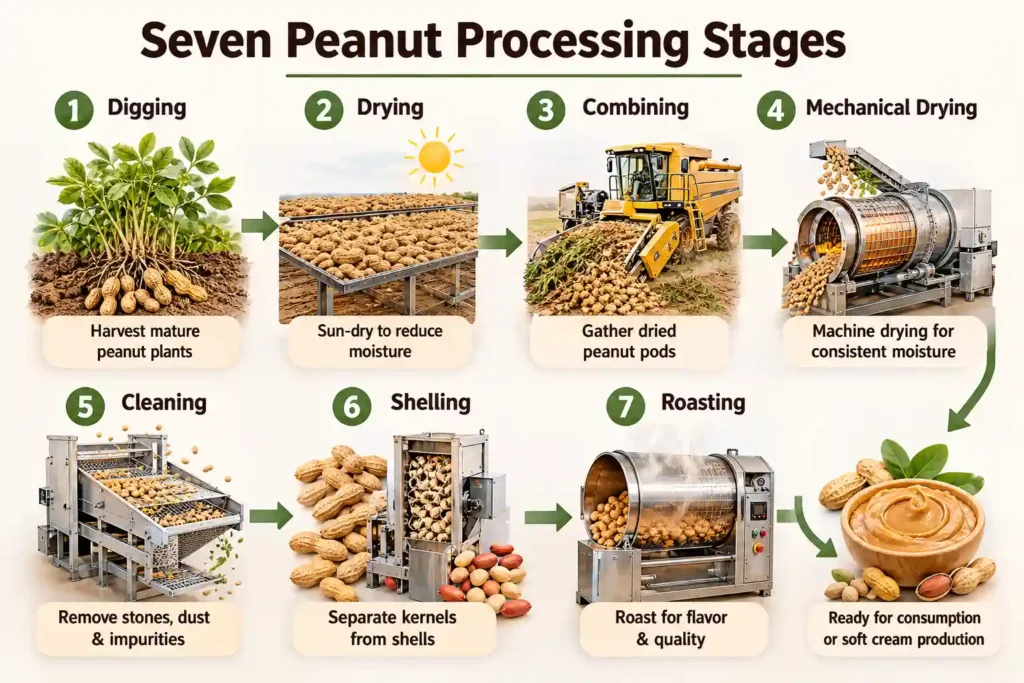
Peanuts move through seven main processing steps — digging, field drying, combining, mechanical drying, cleaning, shelling, and roasting. Processors test for moisture, foreign material, and aflatoxin before kernels ship to peanut butter plants, oil mills, candy makers, or snack lines.
What Is Peanut Processing?
Peanut processing is the series of steps that turn raw pods dug from the soil into clean, graded kernels ready for food use. The workflow covers harvesting, drying, shelling, sorting, and roasting. Each step removes moisture, debris, damaged kernels, and contamination risks before peanuts ship to manufacturers.
U.S. processors handle four market types: Runner, Virginia, Spanish, and Valencia. Runner peanuts dominate the peanut butter supply. Virginia kernels go to in-shell snacks. Spanish and Valencia types feed candy and gourmet lines.
When Are Peanuts Processed?
Peanuts begin processing within days of harvest. Growers dig plants from late September through early November, depending on region. The crop dries in windrows for 3 to 5 days, then heads to a buying point for mechanical drying. Shelling and roasting run year-round as buyers pull from cleaned, stored stocks.
Where Does Peanut Processing Happen?
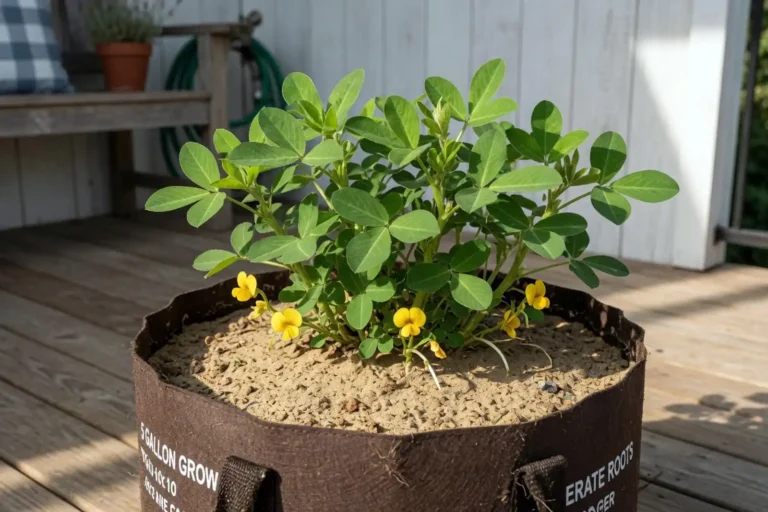
The U.S. peanut belt covers Georgia, Alabama, Florida, Texas, North Carolina, South Carolina, Virginia, Mississippi, Oklahoma, and New Mexico. Georgia produces about half the national crop. Buying points and shelling plants cluster in towns like Dawson, Albany, Suffolk, and Edenton. After shelling, kernels travel to peanut butter plants, oil mills, roasters, and confectioners. Home growers often ask where peanuts grow naturally before starting their own plot.
How Are Peanuts Processed Step by Step?
Step 1: Digging and Inverting
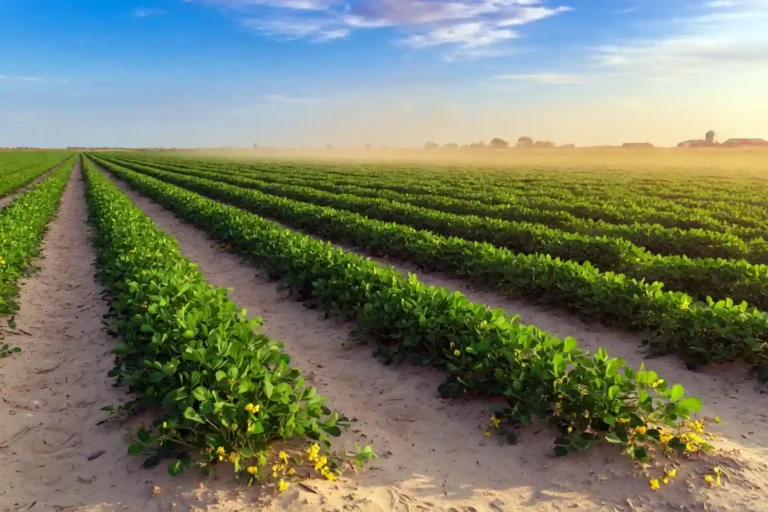
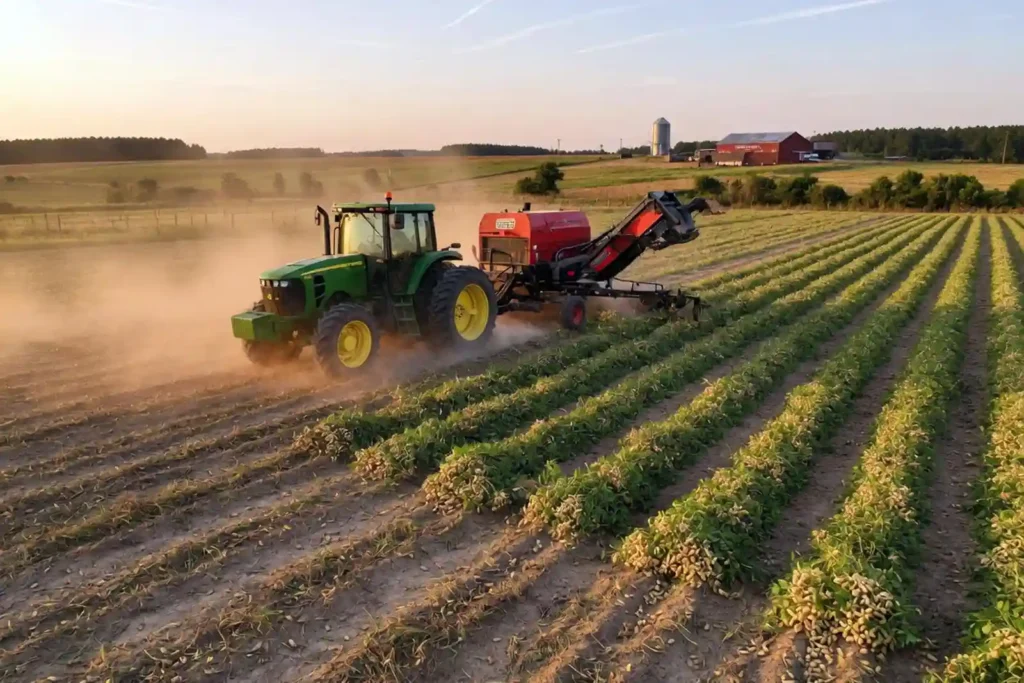
A digger-inverter pulls plants from the ground and flips the vines so pods face up. Sun and wind dry the pods for 3 to 5 days in the field. Pod moisture drops from around 35 percent to 18 to 24 percent.
Step 2: Combining and Hauling
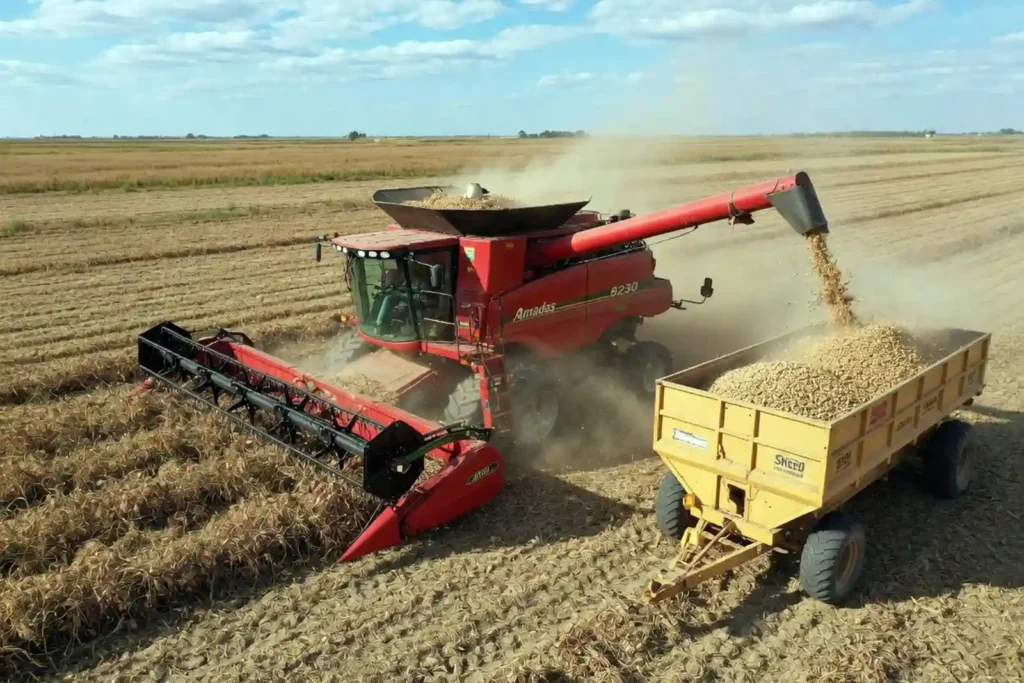
A peanut combine threshes the dried windrows. It separates pods from vines and loads pods into a hopper trailer. Drivers haul loads to a buying point within hours of combining.
Step 3: Drying and Grading
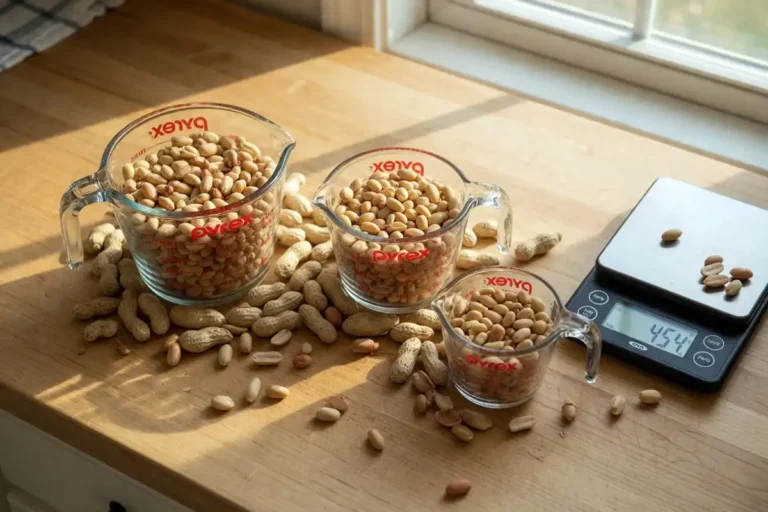
At the buying point, hot-air dryers reduce kernel moisture to 10.49 percent or below. Federal-state inspectors grade each load by size, foreign material, damaged kernels, and moisture. The grade sets the price the farmer receives. Knowing pounds per bushel of peanuts helps growers track yield against grade results.
Step 4: Storage
Graded peanuts move to warehouses kept under 70°F and around 70 percent humidity. Aeration fans hold conditions steady. Solid crop storage practices limit aflatoxin growth during the holding period.
Step 5: Cleaning and Shelling
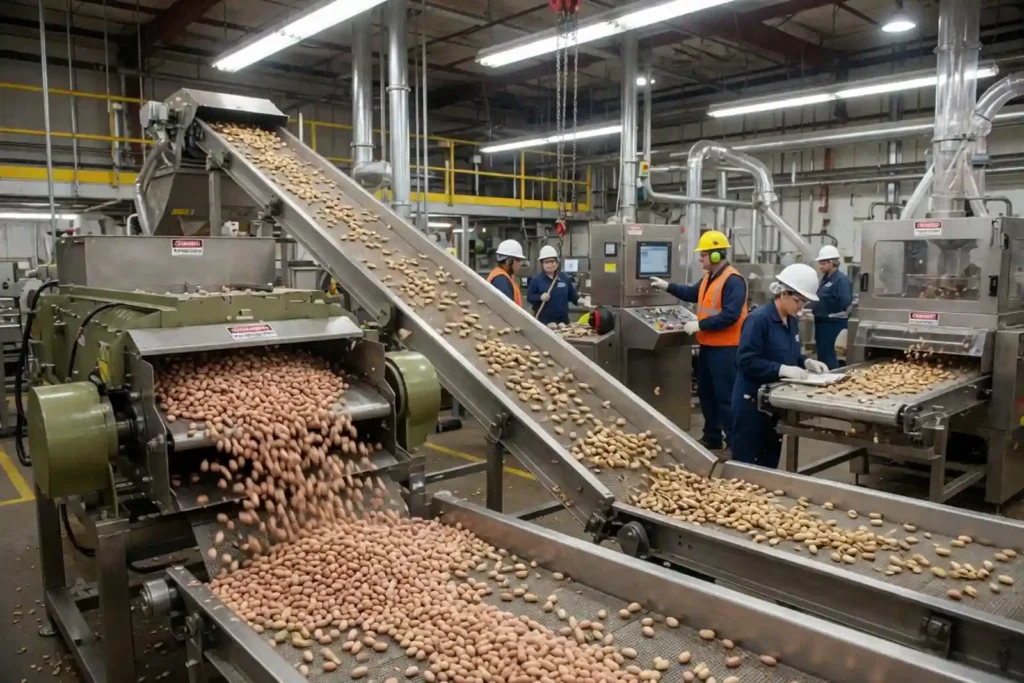
Shelling plants run peanuts through screens, destoners, and air aspirators to remove dirt, stones, and trash. Mechanical shellers crack the hulls and release the kernels. Vacuum lifts and gravity tables separate hulls from kernels.
Step 6: Sizing and Sorting
Sizing screens grade kernels into Jumbo, Medium, No. 1, and splits. Electronic color sorters scan each kernel and reject discolored or moldy ones. Hand-pickers do a final visual check on the line.
Step 7: Blanching, Roasting, and Packaging
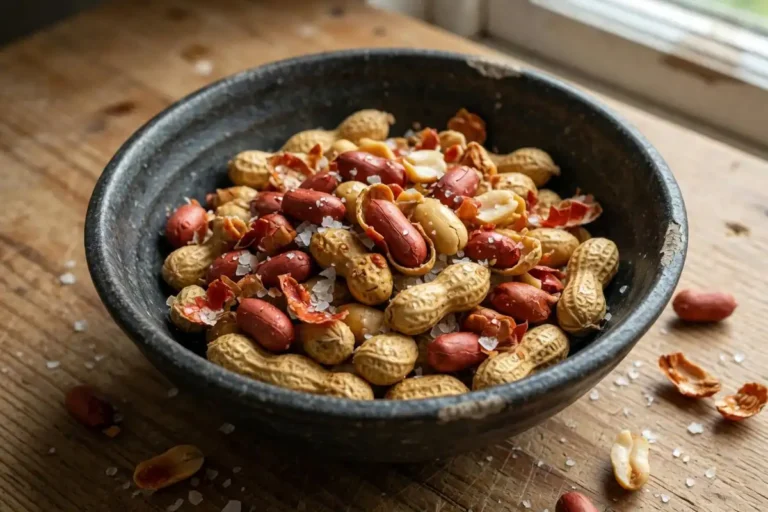
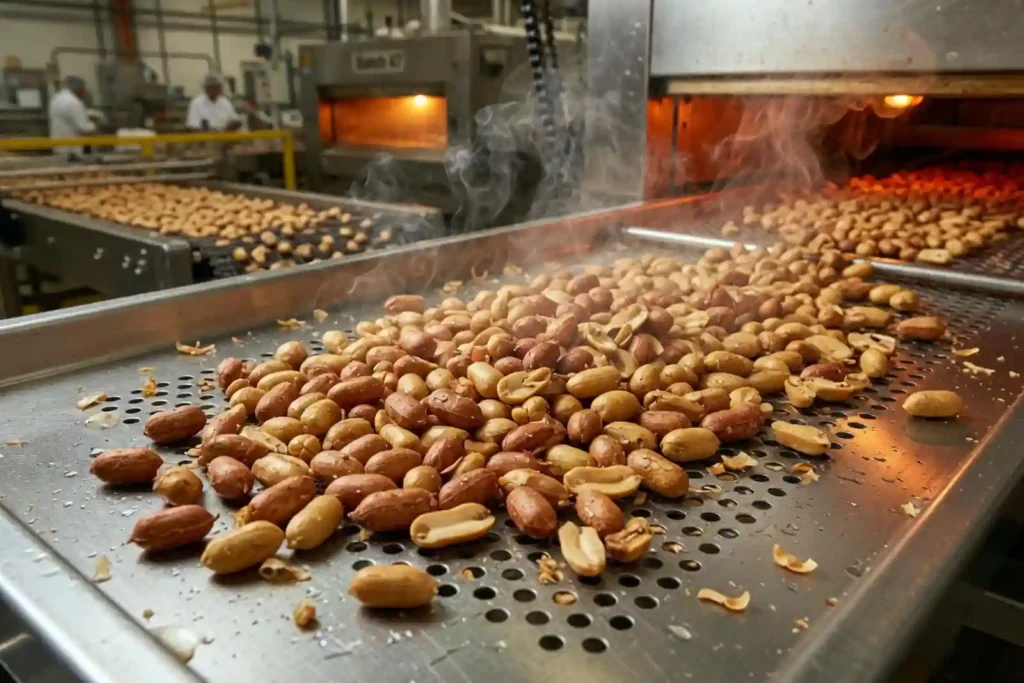
Blanchers heat kernels to loosen and remove the red skins. Roasters cook kernels at 320°F to 360°F for 15 to 20 minutes. Cooled peanuts go into peanut butter grinders, oil presses, candy lines, or sealed snack bags.
Common Processing Problems
Aflatoxin from Aspergillus flavus is the leading food-safety concern. Drought stress, late-season heat, and slow drying all raise the risk. The FDA aflatoxin action level for human-grade peanuts is 20 parts per billion. Loads above that limit divert to oil crushing or animal feed.
Other issues include split kernels from rough handling, off-flavors from over-roasting, and reabsorbed moisture during humid weather. Plants run inline meters and lab tests to catch each problem early.
Mistakes to Avoid
- Combining peanuts above 24 percent pod moisture damages kernels and raises rot risk.
- Skipping field cure time produces uneven kernel color and off-flavors.
- Storing above 70°F invites mold and insect infestation.
- Roasting too hot caramelizes sugars and turns oil rancid faster.
Following sound post-harvest handling steps protects quality through every transfer.
Safety Notes
Workers handle hot dryers, moving augers, and dust-laden air. Plants follow OSHA grain-handling rules and run dust collection systems. Allergen control matters on any line that also runs tree nuts. The University of Georgia peanut research program tracks aflatoxin testing and equipment safety practices.
For consumers with allergies, processed peanut products carry clear labels under FDA rules. Cross-contact controls keep peanut residues out of nut-free production runs.
FAQs on Peanut Processing
How long does it take to process peanuts after harvest?
Are peanuts washed during processing?
What temperature roasts peanuts best?
Why are some peanuts rejected during sorting?
Can home growers process peanuts the same way?
Conclusion
Peanut processing follows a clear path from field to finished product. Each step removes risk and lifts quality, from windrow drying to color sorting to controlled roasting. Knowing the workflow helps farmers, buyers, and home growers see why moisture, grade, and storage carry such weight in the peanuts on the shelf.