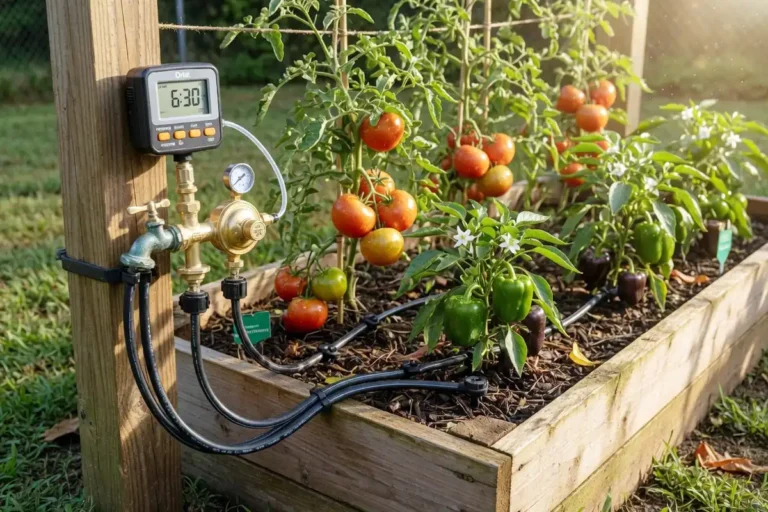
Best Sprinkler for Garden: 7 Top Picks for Beds and Big Yards (2026)
Because a hose leaves dry corners and wets foliage that invites disease, you need the best sprinkler for garden watering to spread even moisture over every bed. Match it to your plot shape and water pressure, and every corner stays green through a hot summer.
The best sprinkler for garden use is the GARDENA ZoomMaxx oscillating sprinkler, since its adjustable range fits odd-shaped beds. The Rain Bird 25PJDAC brass impact sprinkler covers large plots. For raised beds on a budget, pick the Eden 96213.
- Best overall: GARDENA 20575 ZoomMaxx Oscillating Sprinkler (adjustable coverage for beds and lawns)
- Best for large gardens: Rain Bird 25PJDAC Brass Impact Sprinkler (long throw for open plots)
- Best value for raised beds: Eden 96213 Essential Oscillating Sprinkler (gentle, rectangular coverage)
Top Picks At a Glance: Garden Sprinkler Comparison
| Sprinkler | Type | Coverage | Best For |
|---|---|---|---|
| GARDENA ZoomMaxx | Oscillating | 96 to 2,300 sq ft | Beds and narrow strips (overall pick) |
| Rain Bird 25PJDAC | Brass impact | Up to 5,200 sq ft | Large open plots |
| Eden 96213 | Oscillating | Up to 3,600 sq ft | Raised beds on a budget |
| Aqua Joe Metal Base | Oscillating | Up to 3,600 sq ft | Big rectangular lawns |
| Melnor Daisy Kit | 3 spike heads | Up to 1,800 sq ft | Flower beds, mixed layouts |
| Gilmour Circle Spot | Stationary spot | About a 30 ft circle | Spot watering, low pressure |
| Dramm 9-Pattern | Turret, 9 patterns | Strips up to 54 ft | Odd shapes, small beds |
7 Best Garden Sprinklers: Reviews
Here are seven garden sprinklers worth considering, plus one handy hose nozzle. These are sorted by the job they do best, making it easy to jump straight to a given situation.
1. GARDENA 20575 ZoomMaxx Oscillating Sprinkler
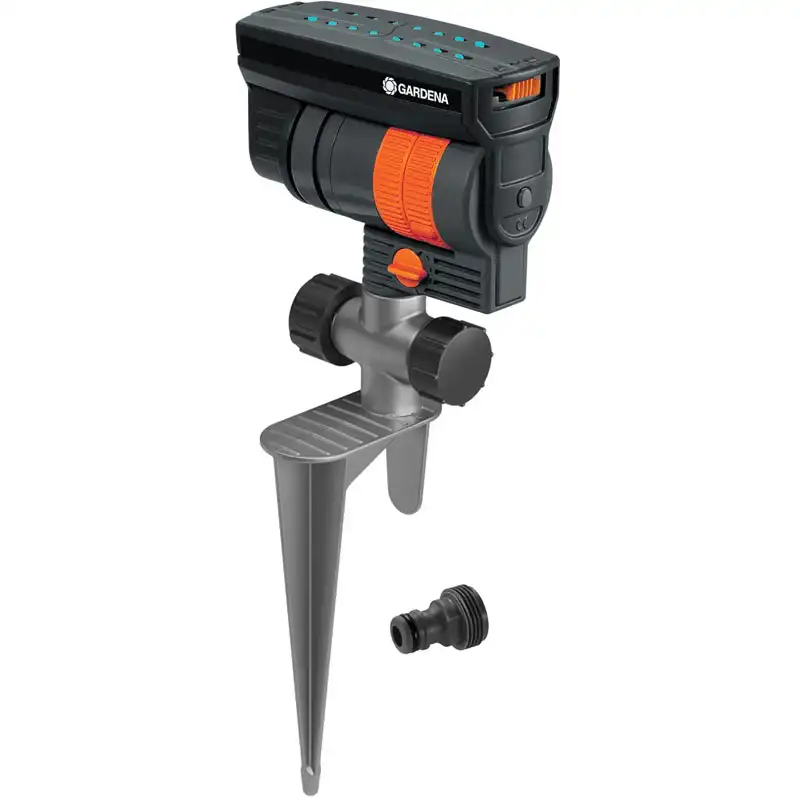
The GARDENA ZoomMaxx stands out as the top pick, built in Germany by a brand with 20-plus years behind it. It covers 96 to 2,300 square feet. Three sliders and a flow controller shape the spray, so it fits narrow strips and rectangular beds. The metal spike has a built-in step, so it grips soft soil and slopes. Owners say it still runs well on low well pressure.
Specifications:
- All-metal spike base
- UV and frost-proof body
- Removable fine-mesh filter
- Quick-connect hose fitting
2. Rain Bird 25PJDAC Brass Impact Sprinkler
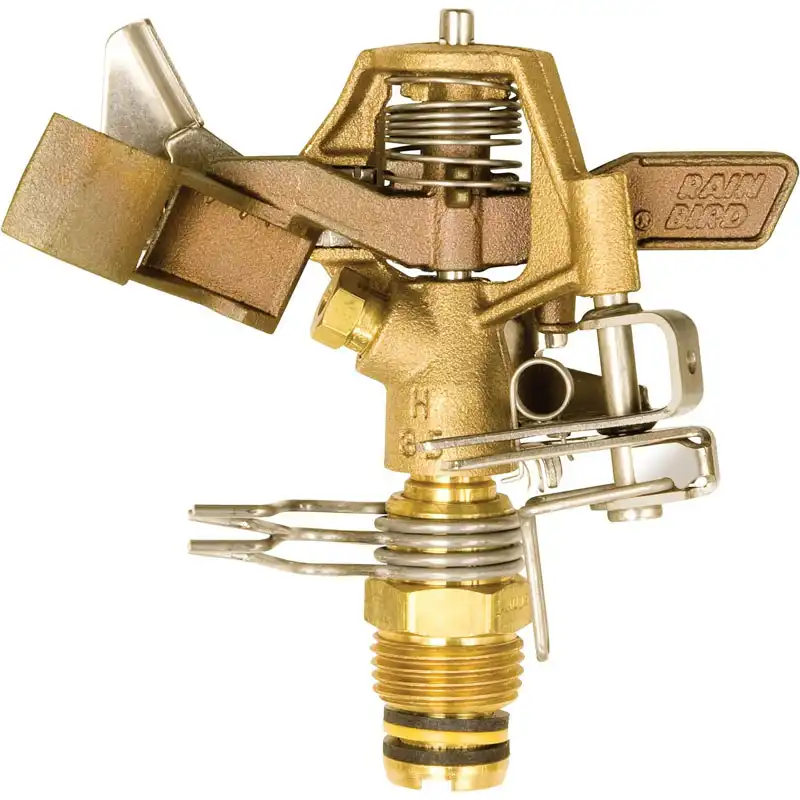
Since it covers up to about 5,200 square feet, the Rain Bird brass impact suits big open ground. It throws one strong jet in a circle, with a radius you set from 20 to 41 feet. Brass, bronze, and stainless steel also outlast the zinc heads on cheap models. The straight-through flow even handles pond or reclaimed water without clogging. Rain Bird has made these since 1933.
Specifications:
- Brass and bronze body
- Stainless steel internals
- Die-cast bronze spray arm
- 2.4 to 5 GPM
3. Eden 96213 Essential Oscillating Sprinkler
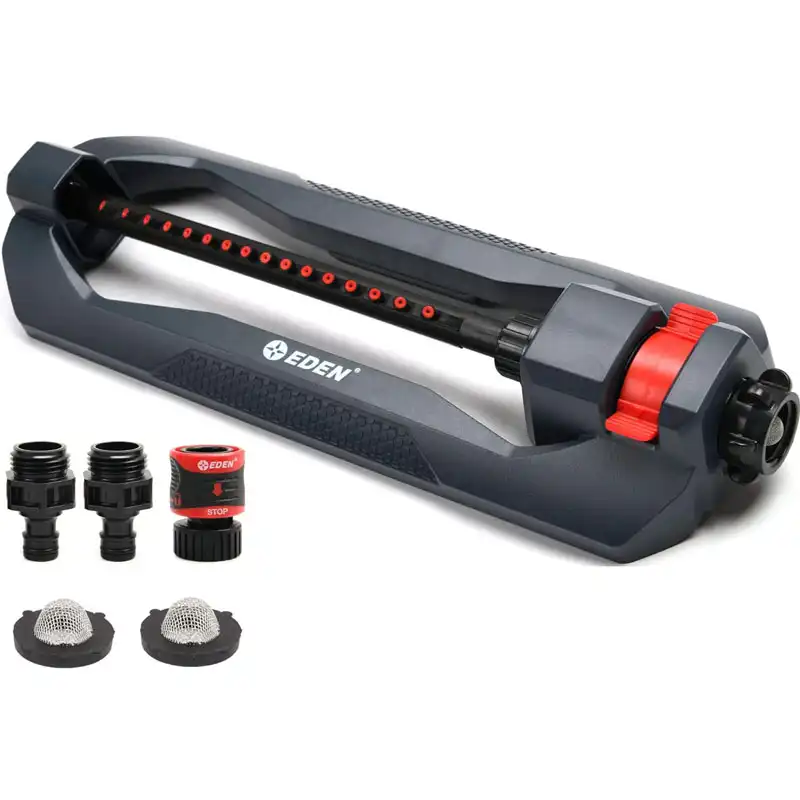
The Eden Essential oscillator spreads wide, even coverage up to 3,600 square feet. So you water a lot without overspending. Sixteen precision nozzles and sliding tabs then match the spray to straight beds and rows. It also runs quiet on a sealed turbo motor. The kit adds a quick-connect set and two stainless steel filter washers. Owners report years of steady use.
Specifications:
- Sealed turbo-drive motor
- Stainless steel filter washers
- Weighted stability base
- 2-year limited warranty
4. Aqua Joe Indestructible Metal Base Oscillating Garden Sprinkler
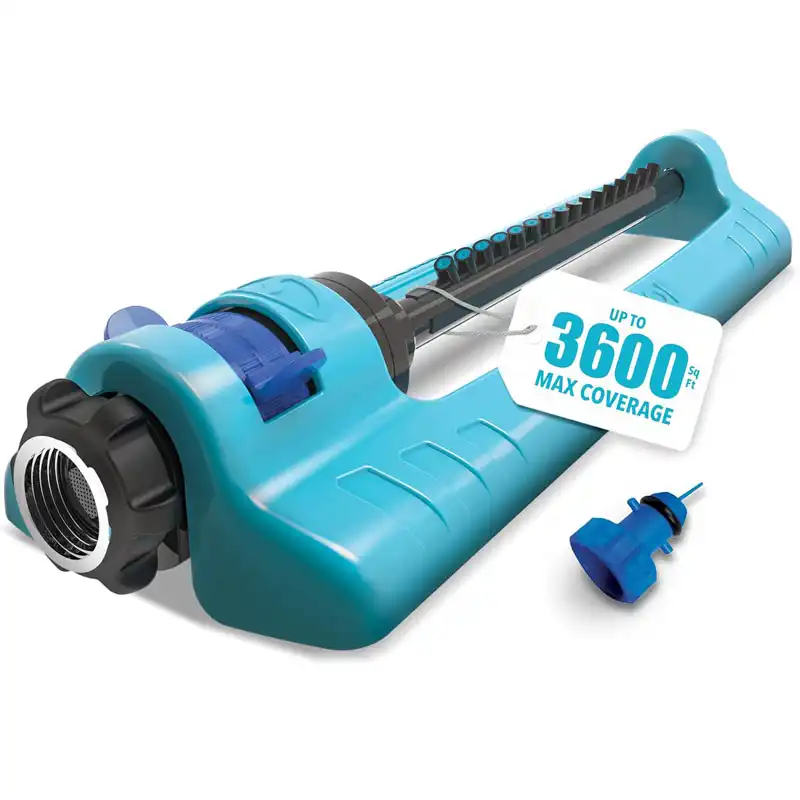
The Aqua Joe oscillating sprinkler comes from Snow Joe’s Go with Joe tool line. It sweeps a wide fan across up to 3,600 square feet. So it fits large rectangular lawns and long runs. The solid metal base also keeps it steady, and owners say it soaks slow and even. Still, the durability runs hot or cold.
Specifications:
- Solid aluminum metal base
- 16 clog-resistant nozzles
- Sealed turbo-drive motor
- 2-year limited warranty
5. Melnor 65194AMZ Daisy Multi-Adjustable Spike Kit
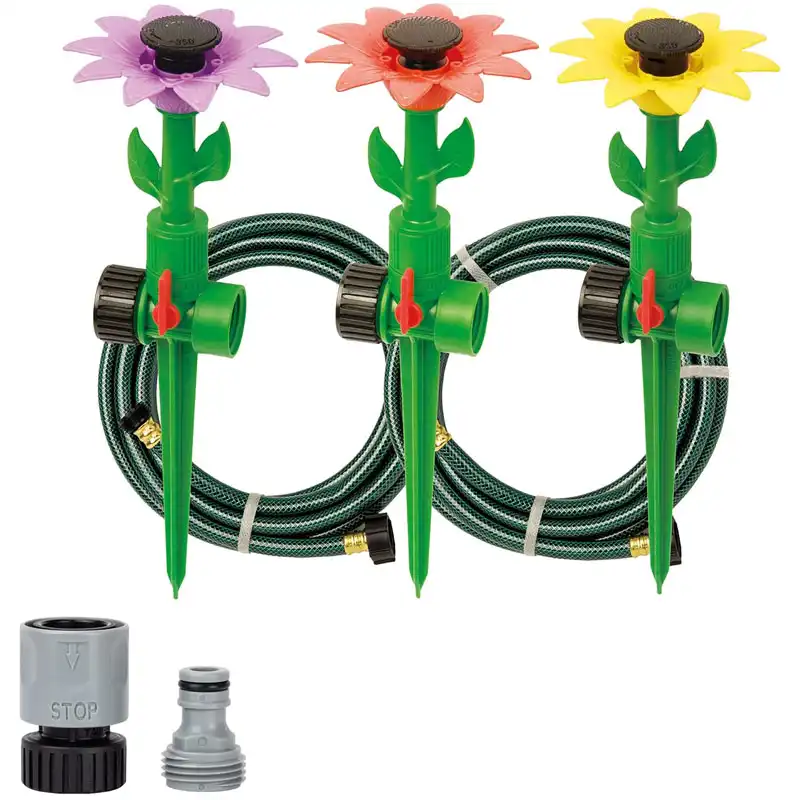
This Melnor kit packs three daisy-head spike sprinklers and two 15-foot hoses. So you can spread coverage across an odd layout up to 1,800 square feet. You also adjust each head’s angle, direction, and distance for flower beds and a mixed vegetable garden. The quick-connect couplings then swap tools fast. Gardeners like the cheerful look and easy placement.
Specifications:
- Kink-resistant supply hoses
- Multi-adjustable spray heads
- Rotating coupling nuts
- Melnor 2-year warranty
6. Gilmour Circle Pattern Spot Sprinkler
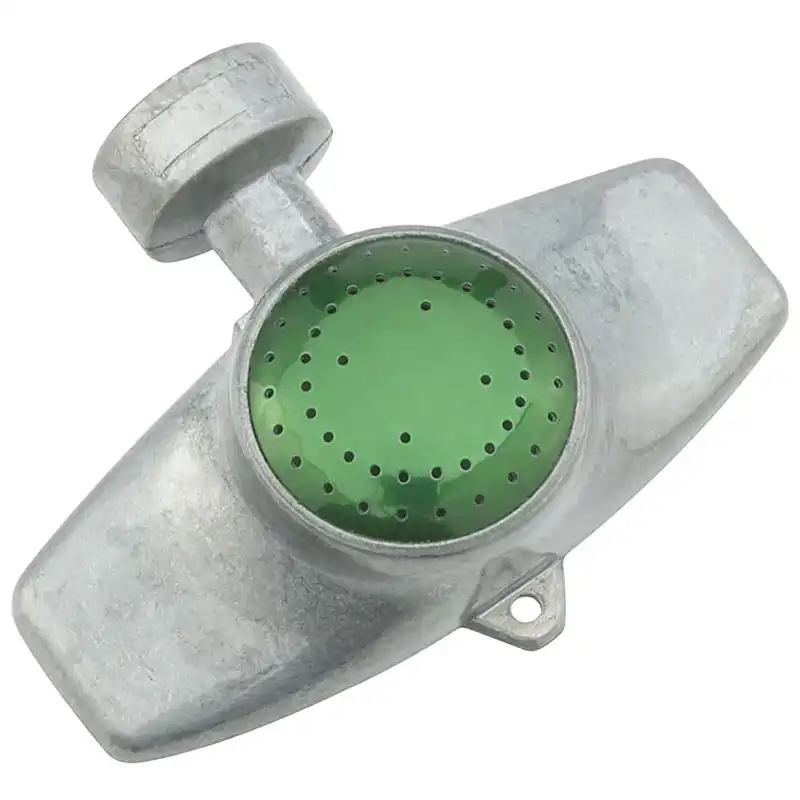
The Gilmour circle spot sprinkler keeps things dead simple, since it has no moving parts to break. It’s all metal and made in the USA, spraying a gentle 30-foot circle that stays inside a bed. The label notes lead in the metal, so rinse your hands after use. Owners say it still runs great on low well pressure and won’t wash out fresh seed.
Specifications:
- Solid all-metal build
- No-clog stationary head
- 3/4-inch hose thread
- Lifetime replacement warranty
7. Dramm 9-Pattern Turret Garden Sprinkler
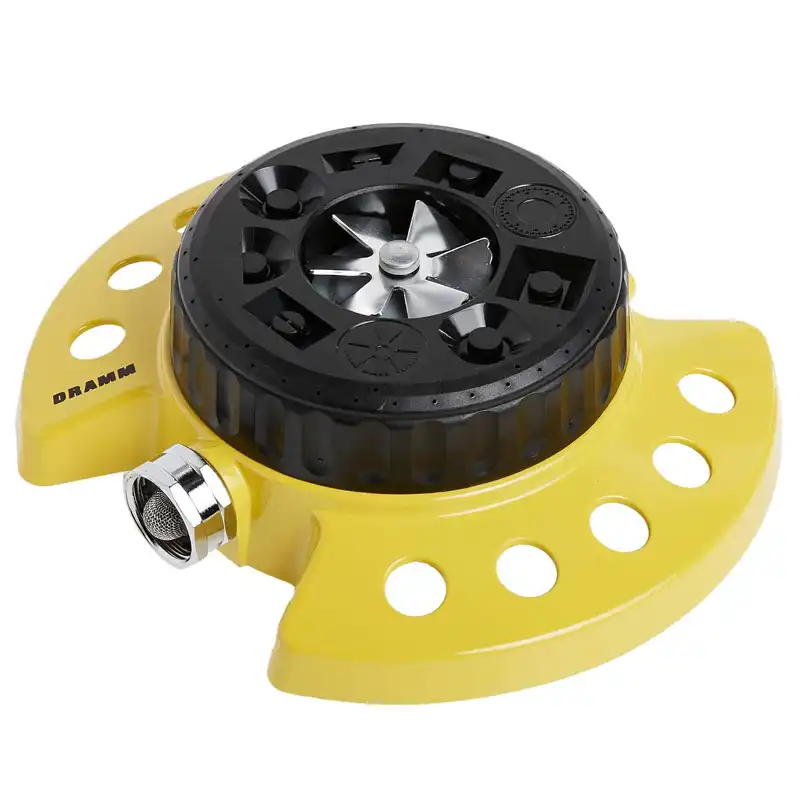
The Dramm turret gives you nine spray patterns from one head. So you can match circles, squares, and narrow strips to a tricky bed. You just twist the dial. The die-cast metal base is heavy enough to step on. Dramm has also built pro watering gear for 80-plus years. Owners still praise the solid feel and the pattern range.
Specifications:
- Die-cast metal base
- Reinforced structural ribs
- 3/4-inch hose thread
- Lifetime guarantee
FANHAO 2-in-1 Rotating Garden Hose Nozzle: Essential Accessory
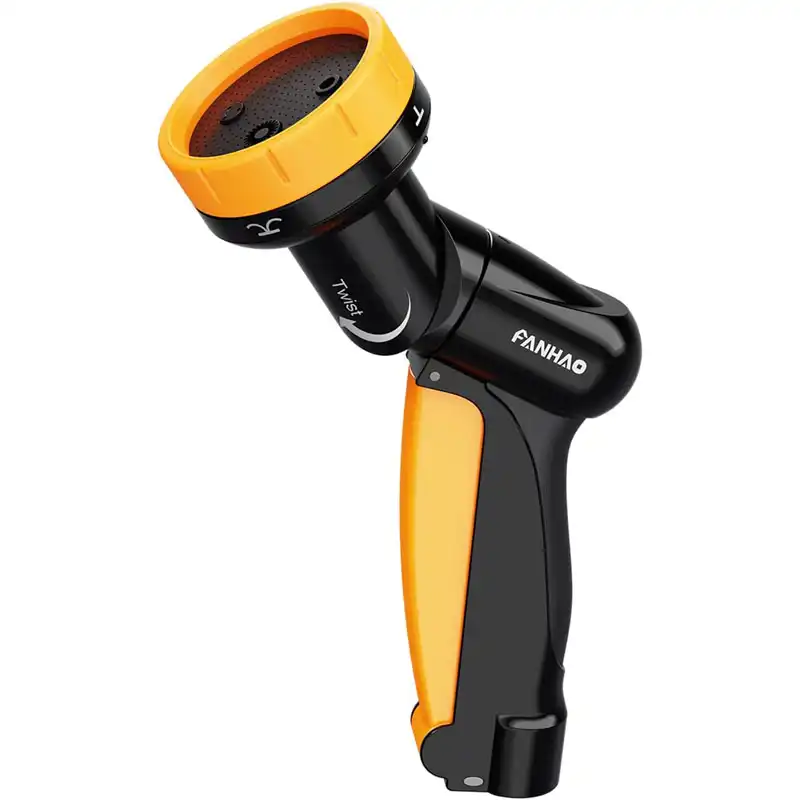
This FANHAO nozzle is not a full sprinkler on its own. Twist the head, then it flips from a hand sprayer to a small lawn sprinkler mode. Four patterns also cover misting for seedlings, a jet for cleaning, full spray, and light irrigation. The ABS and PP body shrugs off drops. For heavier spot spraying, a dedicated handheld sprayer still does more.
Specifications:
- High-impact ABS and PP
- Leak-proof rubber gasket
- ANSI B16.11 certified
- 1-year refund guarantee
Types of Garden Sprinklers
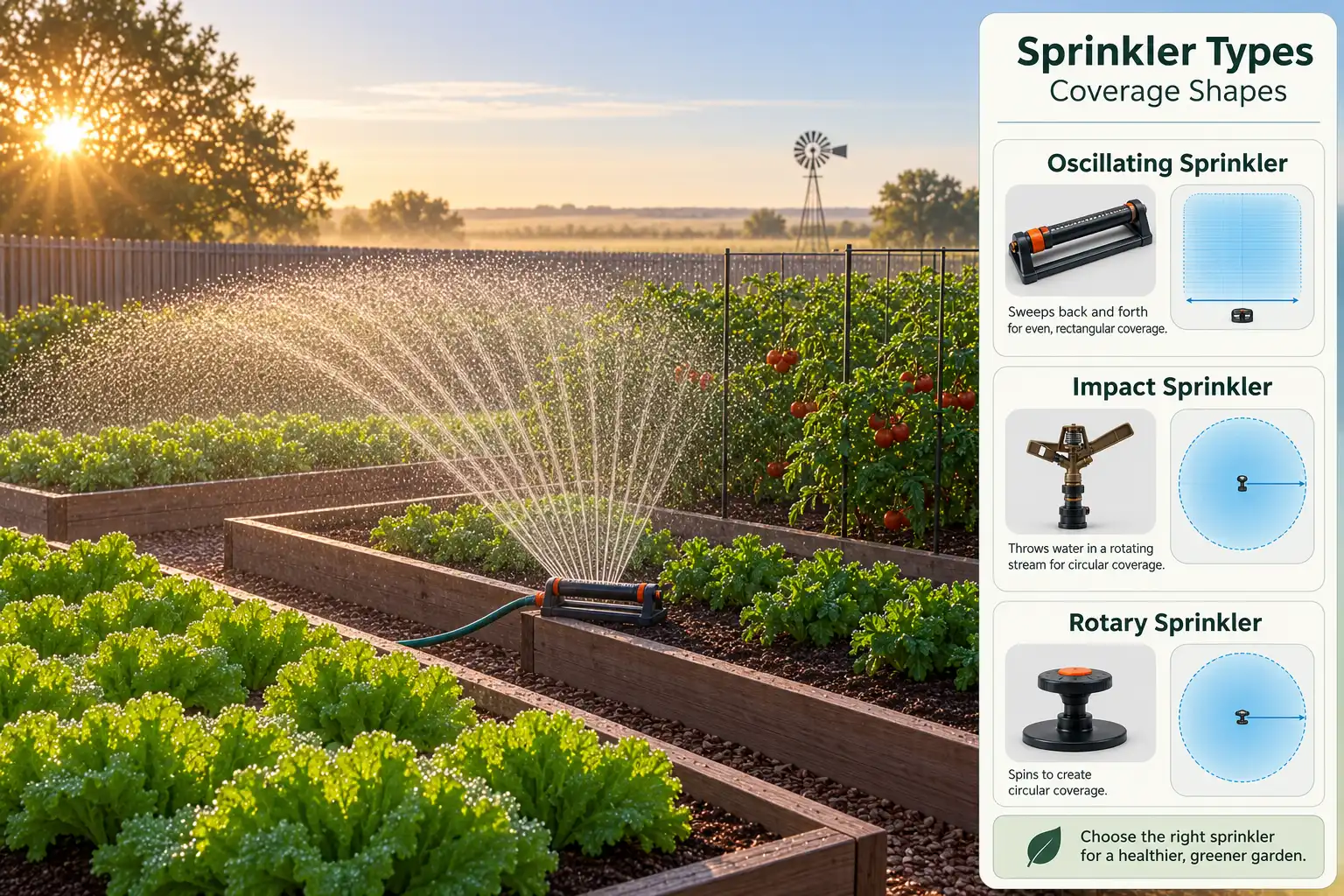
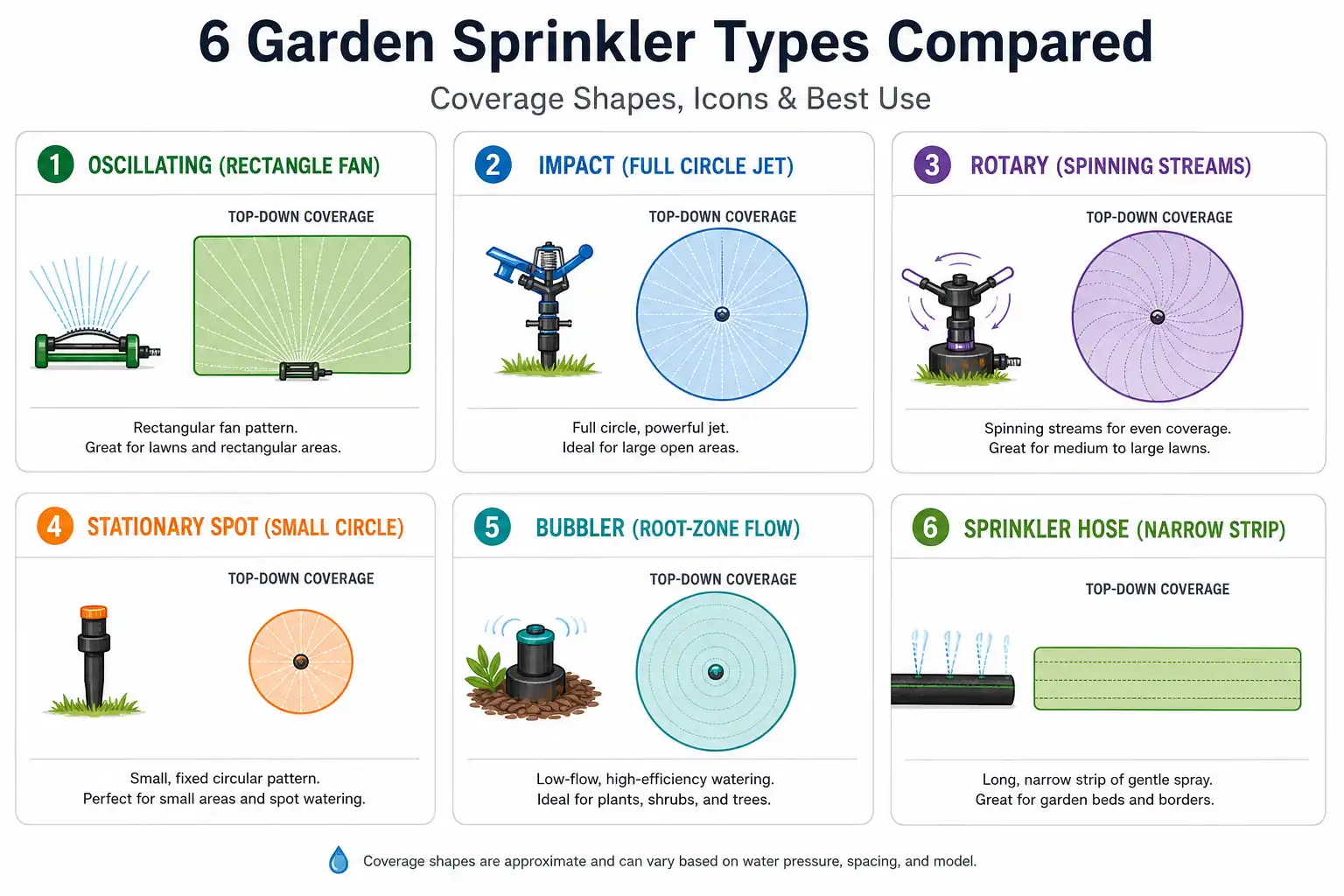
Garden sprinklers split into a few main types, and each one fits a different plot shape. Match the type to your beds before you match the brand.
Oscillating Sprinkler
An oscillating sprinkler sweeps a fan of water back and forth over a rectangle. That shape suits raised beds, flower beds, and a vegetable garden with straight rows. The spray falls gently, so seedlings stay put. Because output is easy to time, you can match it to how much water lettuce needs week to week.
Impact Sprinkler (Impulse)
An impact sprinkler uses a rotating arm to throw one strong jet in a circle. It handles larger or windier plots better than most types. Brands like Rain Bird and Orbit build the classic clicking heads for wide, open ground on a spike or a tripod.
Rotary Sprinkler
A rotary sprinkler spins several thin streams outward in a circle. It waters medium round or square areas evenly, with less misting than a fine spray. This type splits the difference between garden and lawn duty.
Stationary or Spot Sprinkler
A stationary sprinkler, also called a spot sprinkler, sprays one fixed pattern over a small area. It fits a single bed, a fresh patch of seed, or a tight corner. Many spot heads offer swappable patterns like circle, square, or strip.
Bubbler
A bubbler delivers a low, soft flow straight to the root zone with almost no spray. It suits containers, single plants, and thirsty transplants. Since it wets soil and not leaves, it lowers disease pressure, the same principle covered in this guide to watering tomatoes correctly.
Sprinkler Hose
A sprinkler hose is a flat, perforated hose that sprays a low curtain of water along its whole length. Lay it beside a row and it soaks a long, narrow strip. It works like a cross between a sprinkler and a soaker hose.
Before you buy any of these, it helps to see how drip and sprinkler methods compare for your beds.
How to Choose the Best Sprinkler for Your Garden
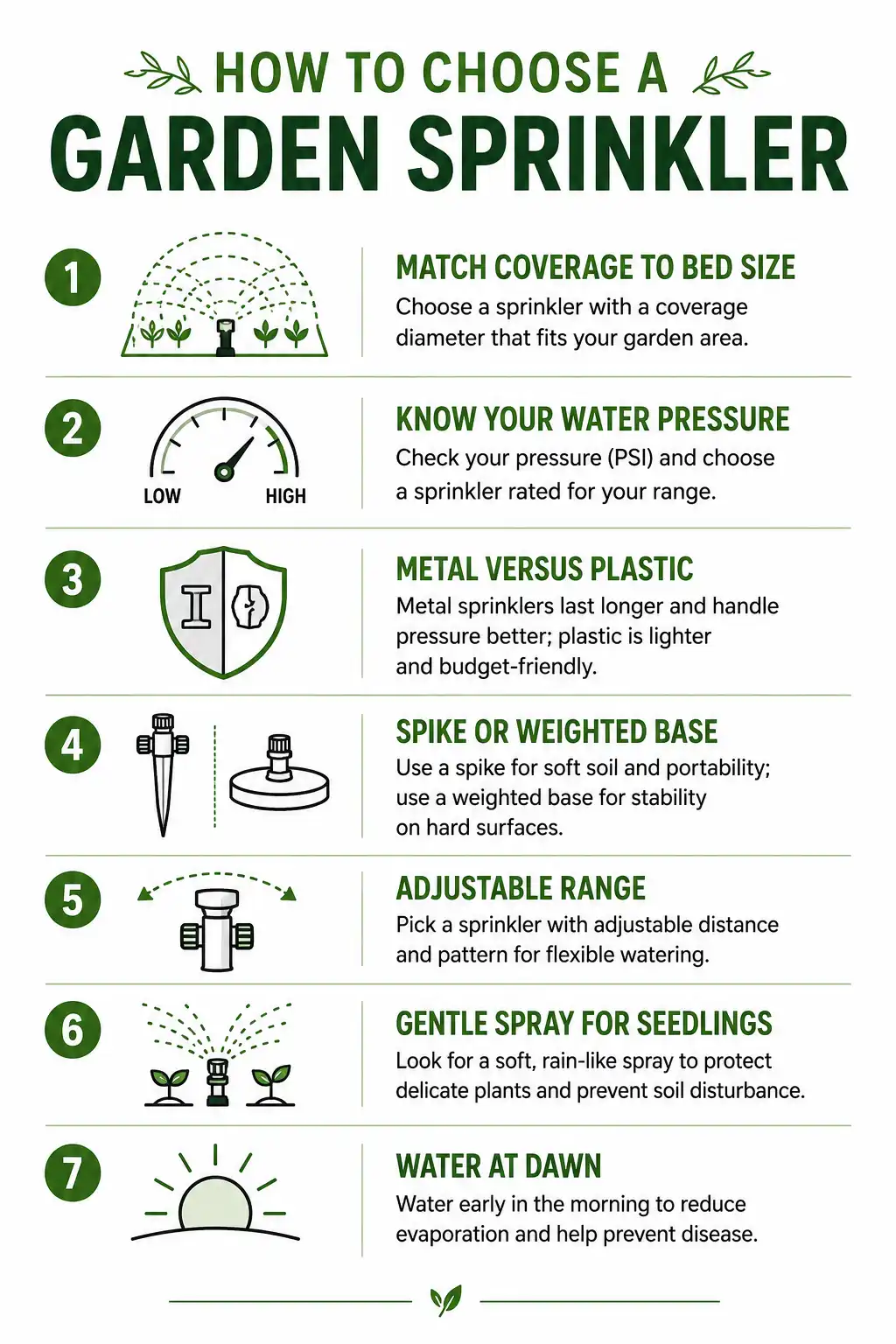
Choosing the best sprinkler for garden duty comes down to seven things. Weigh coverage, water pressure, material, base, adjustability, gentleness, and water use. Work through them in order.
Coverage Area vs Garden Size
Match the sprinkler’s coverage area to your garden’s square footage first. A small bed needs a spot or oscillating head rated for a few hundred square feet. A big plot needs an impact sprinkler that throws 40 feet or more. Buying too much range wastes water on paths and fences.
Water Pressure (PSI)
Check your water pressure before you buy, because every sprinkler lists a working range. Most home systems run between 30 and 60 PSI. Nearly every lawn and garden sprinkler works best with at least 30 PSI. Flow, measured in GPM (gallons per minute), sets how fast you hit that 1 inch. Some impact and rotary heads need more pressure to reach rated coverage. A cheap gauge on a hose bib tells you where you stand.
Material (Metal vs Plastic)
Pick a metal base and metal internals if the sprinkler lives outside all season. Brass and zinc heads resist cracking, sun, and freeze far better than plastic. Rain Bird and some Gilmour models use brass for that reason. Plastic still works for light, seasonal use and costs less.
Base Type (Spike, Sled, or Weighted)
Choose the base by how you move and set the sprinkler. A spike base pushes into soft soil and stays put in a bed. A sled base drags across a lawn without tipping. A weighted metal base holds an oscillating head steady on hard ground.
Adjustability and Nozzles
Look for adjustable width, length, and spray pattern, since one garden rarely has one shape. An adjustable range and swappable nozzles let you match the throw to a narrow bed or a square patch. Melnor and Gardena oscillating models shine here. Adjustable coverage also keeps water off concrete.
Gentleness for Seedlings
Use a soft, fine spray on beds full of seedlings so you do not wash out seed or flatten sprouts. Oscillating and bubbler styles fall gently, while a hard impact jet can dig channels in fresh soil. Run a fine pattern until young plants root in.
Water Conservation
Waste less by matching the pattern to the bed and watering at the right time. Drip irrigation and a soaker hose save the most water, yet a well-aimed sprinkler with adjustable coverage comes close. A drip kit run on a timer helps if you want slow, deep watering without standing there.
How Much and How Often to Water a Garden with a Sprinkler
Most gardens want about 1 inch of water per week, delivered deep rather than daily. Split that inch into two or three soakings, and add more in a hot, windy Kansas summer.
The catch-can test tells you how long to run a sprinkler for that inch:
- Set three or four straight-sided cans around the spray zone.
- Run the sprinkler for 15 minutes.
- Measure the depth, then scale the time up to reach 1 inch.
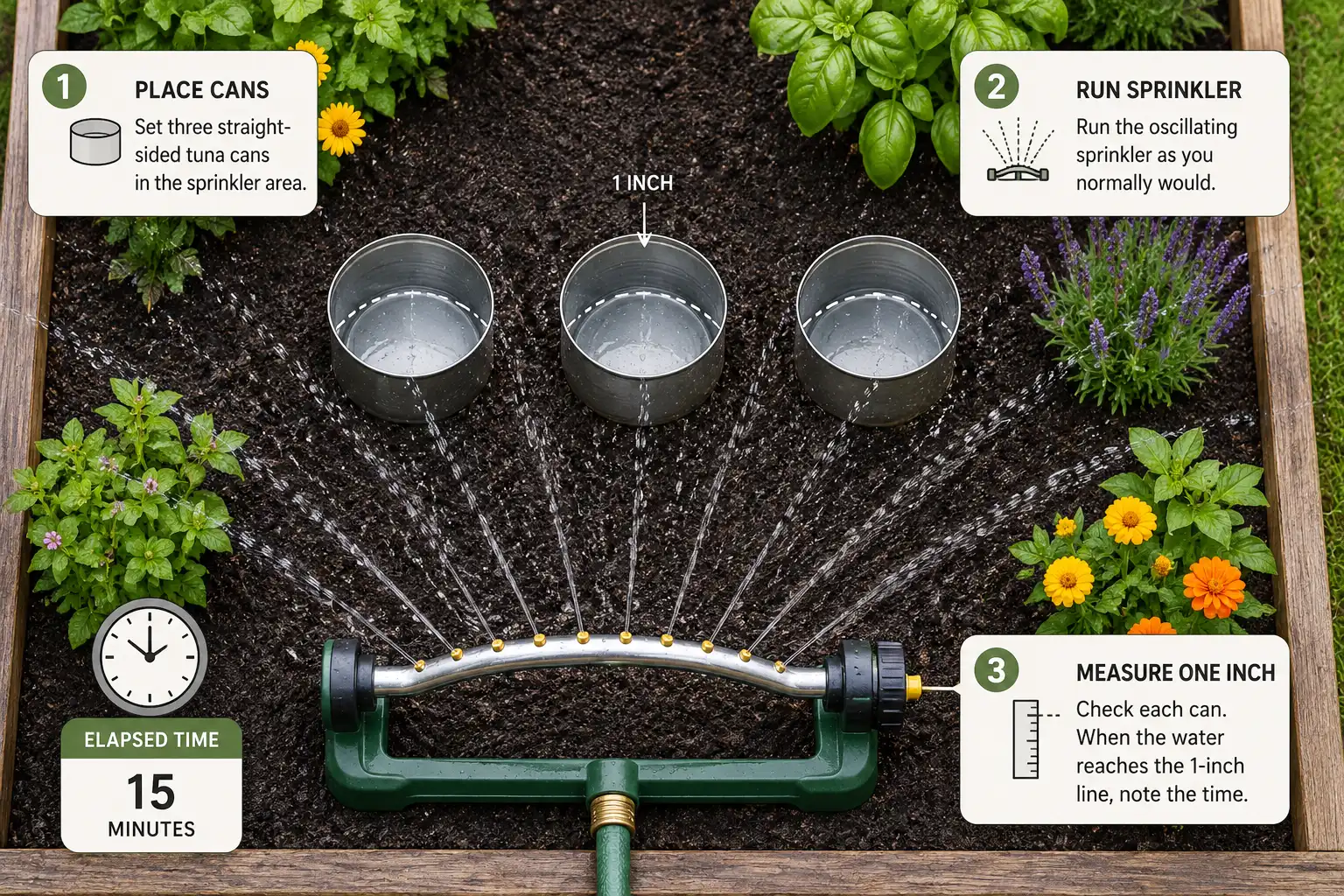
That number also settles how often to water a garden, since you just split the weekly inch across your soakings. Early morning is best, since pressure runs highest and leaves dry before disease can set in, per Iowa State Extension. On slow clay, Clemson Extension suggests cycle-and-soak: half an inch, pause, then the rest. An oscillating sprinkler spreads that inch evenly over rectangular beds, while drip irrigation saves the most water overall. To size totals across every bed, it helps to work out water needs for crops first.
Common Questions About Garden Sprinklers
What is the best sprinkler for a small garden?
Is an oscillating or impact sprinkler better for a garden?
Can you use a sprinkler on a vegetable garden?
What sprinkler is best for raised beds?
What type of sprinkler covers the most area?
How long should I run a sprinkler in my garden?
How much water pressure do I need for a garden sprinkler?
Are garden sprinklers better than drip irrigation?
Final Verdict on Garden Sprinkler
For most home plots, the GARDENA ZoomMaxx oscillating sprinkler is the best all-around garden watering sprinkler. Its adjustable range fits real beds without soaking the driveway. For raised beds on a budget, the Eden 96213 does the same job on a smaller scale. Whatever you pick, match the sprinkler type to your garden’s shape and your PSI. That single step builds the best sprinkler system for garden results, season after season.
Good luck and enjoy reviewing. Thanks.