What Climate Do Peanuts Grow In? 7 Key Facts for Healthy Yields
Peanuts grow best in warm, subtropical climates with 120 to 160 frost-free days, daytime temperatures of 70 to 90°F, and 20 to 50 inches of well-distributed rainfall. This guide covers the temperature, rainfall, soil-climate link, and regional fit so you can match peanuts to your farm.
Peanuts grow in warm, frost-free climates. Soil temperatures need to reach 65°F at planting, daytime air stays between 70 and 90°F, and rainfall totals 20 to 50 inches across a 120 to 160 day season. USDA hardiness zones 7 to 11 fit best.
Contents
- 1 What climate do peanuts need to grow?
- 2 Best temperature range for peanut growth
- 3 How much rainfall do peanuts need?
- 4 Where do peanuts grow best in the United States?
- 5 USDA hardiness zones for peanuts
- 6 How climate affects peanut yield and harvest
- 7 Mistakes to avoid with peanut climate planning
- 8 Safety and harvest weather notes
- 9 Frequently asked questions
- 10 Conclusion
What climate do peanuts need to grow?
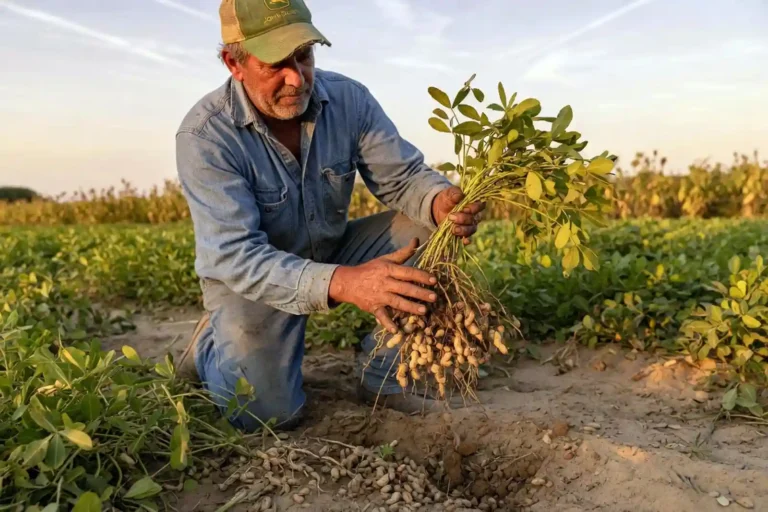
Peanuts (Arachis hypogaea) are warm-season legumes native to South America. They need consistent heat, moderate rainfall, and a long frost-free window. Cold soil stalls germination. One fall frost ends the crop. The plant takes about 4 to 5 months of warm weather from planting to harvest.
According to the University of Georgia Extension peanut production guide, peanuts perform best in soils that warm steadily and hold above 65°F for several days. Cooler soils trigger seedling diseases.
If you’re checking whether peanuts fit your area, look at where peanuts naturally grow across the world before committing acreage.
Best temperature range for peanut growth
Peanuts prefer daytime air temperatures between 70°F and 90°F. Nighttime lows above 60°F support steady pod fill. Temperatures above 95°F during flowering reduce pollen viability and lower yield. Below 56°F, growth slows sharply.
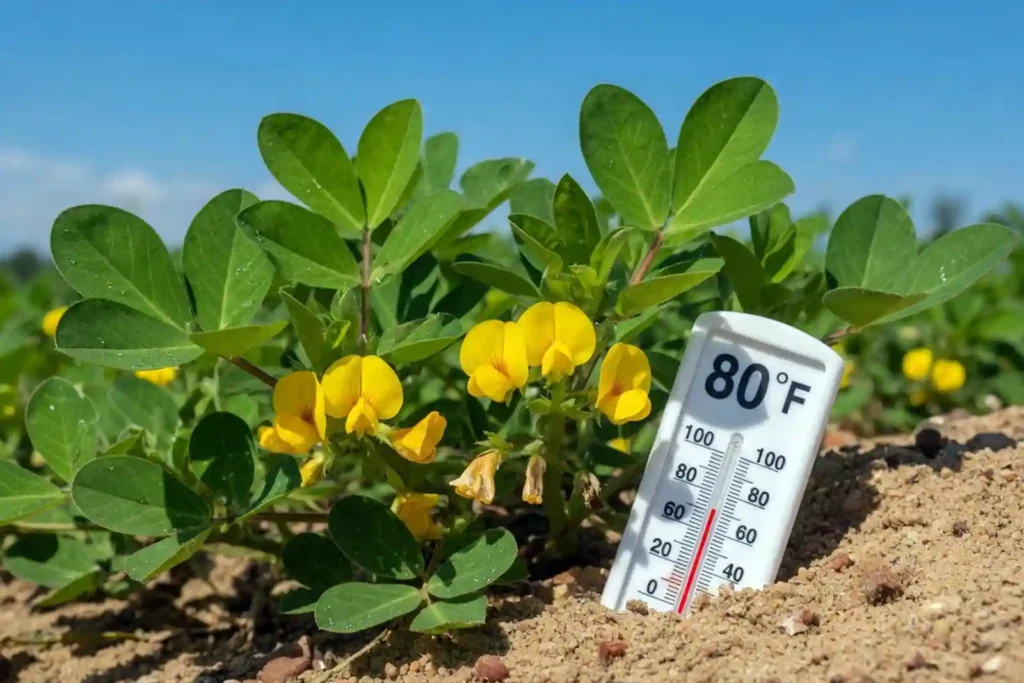
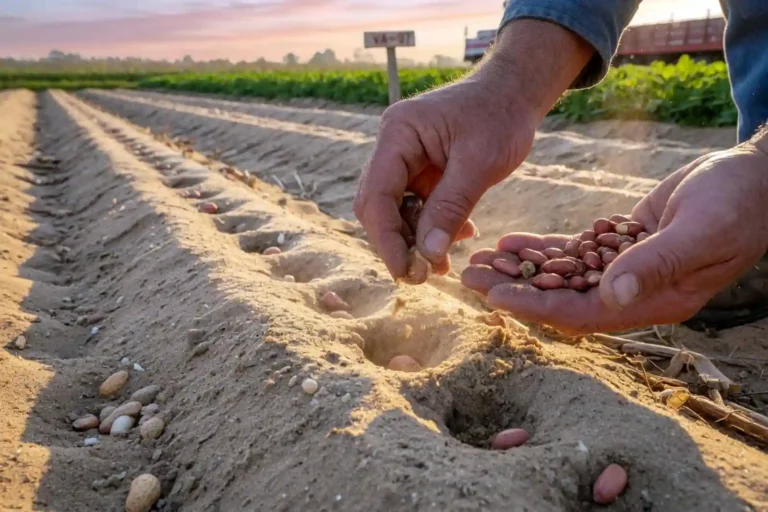
Soil temperature matters more than air temperature at planting. I wait until soil at 4 inches deep holds at 65°F for three days before I drop seed. That single check saves more peanut crops than any other practice on my farm.
| Growth stage | Optimal temperature |
|---|---|
| Germination (soil, 4-inch depth) | 65 to 70°F |
| Vegetative growth | 75 to 85°F |
| Flowering and pegging | 75 to 90°F |
| Pod fill | 70 to 85°F |
How much rainfall do peanuts need?
Peanuts need 20 to 50 inches of rainfall spread across the season. The plant uses about 0.20 inches of water per day during pod fill, the most water-sensitive stage. Drought during pegging cuts yield and raises aflatoxin risk.
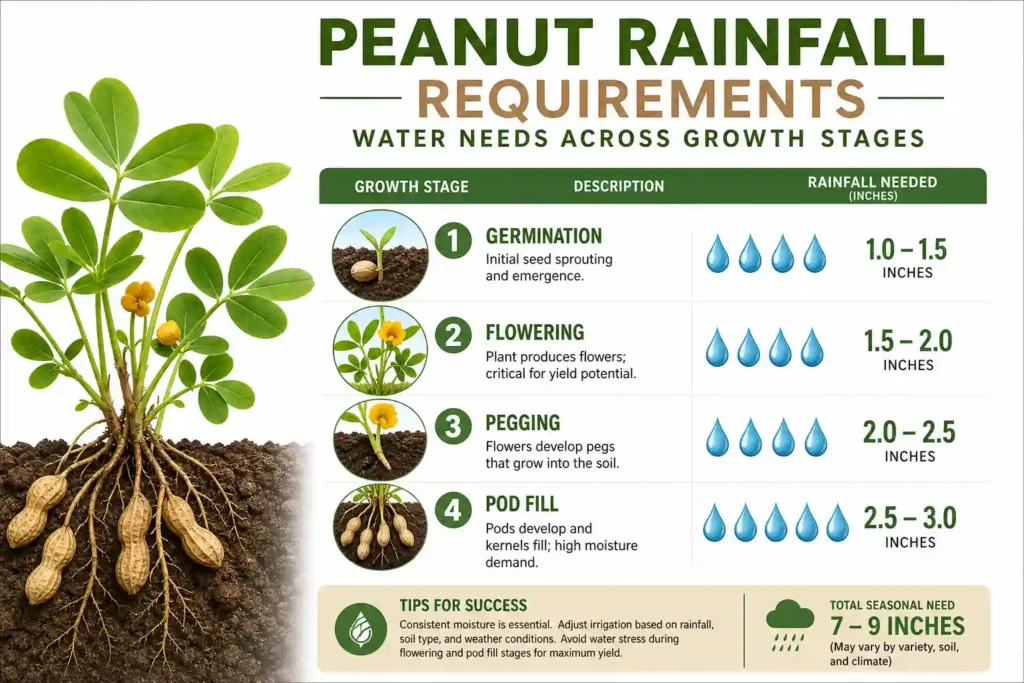
Even rainfall beats heavy storms. Long dry stretches after flowering cause hollow pods. If your region averages under 20 inches in summer, supplemental irrigation pays off. The USDA NRCS water management resources outline efficiency practices that fit peanut rotations well.
Where do peanuts grow best in the United States?
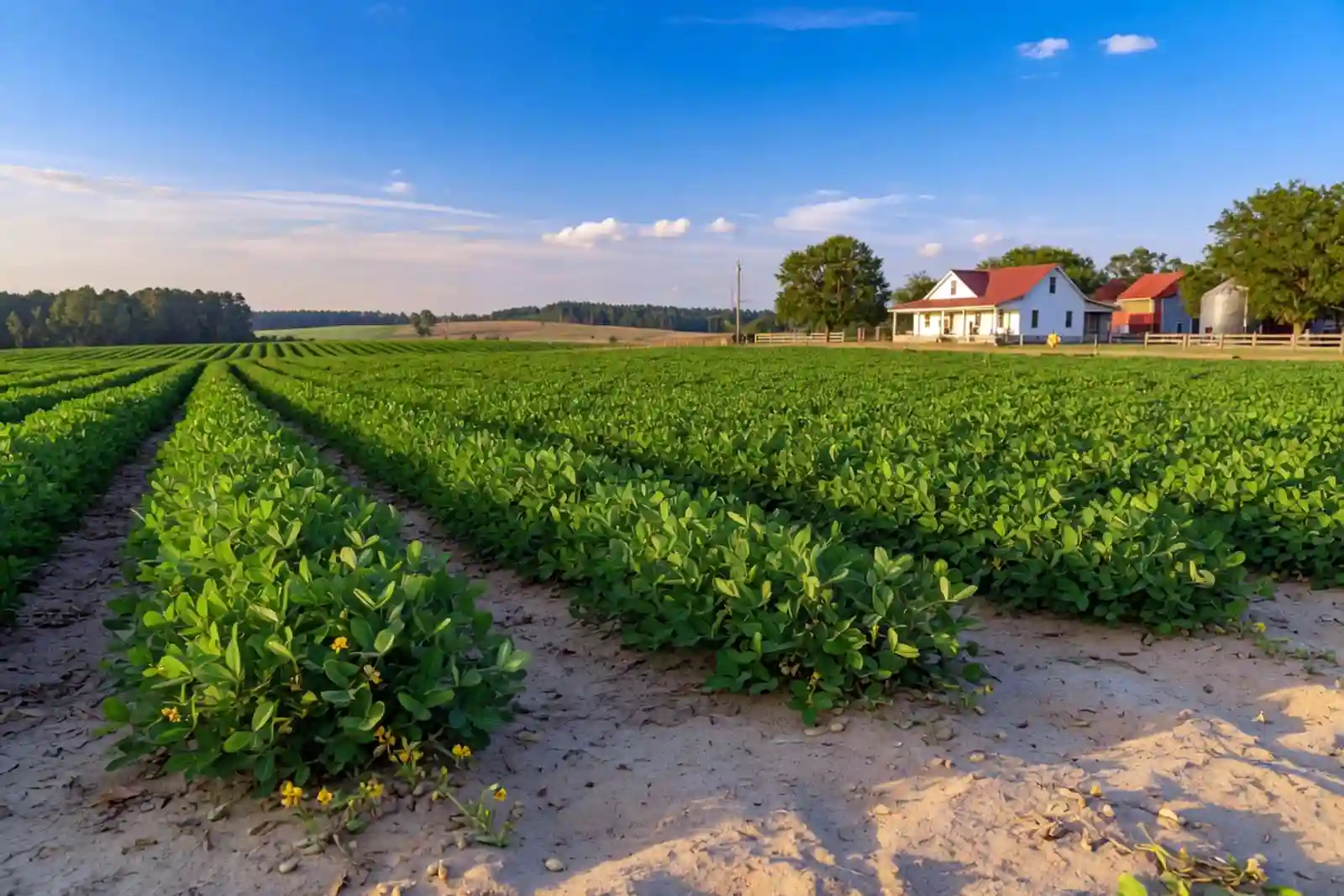
Peanuts grow best in the southeastern and south-central states. The four largest peanut-producing states are Georgia, Texas, Alabama, and Florida, together accounting for over 80 percent of U.S. production. North Carolina, South Carolina, Virginia, Oklahoma, Mississippi, and Arkansas round out the peanut belt.
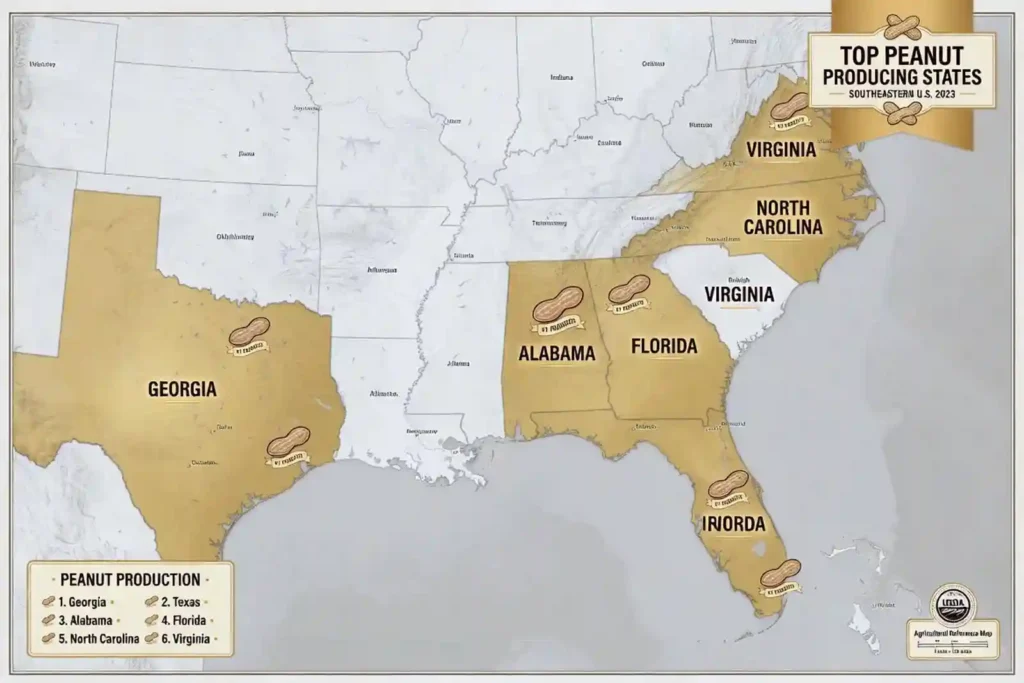
These regions share warm summers, sandy loam soils, and 5-month frost-free windows. The plant forms pegs that push into loose soil to develop pods, so the soil-climate combination decides yield as much as temperature alone. If you garden in cooler zones, growing peanuts at home is doable in raised beds with row covers, but commercial production stays south.
USDA hardiness zones for peanuts
Peanuts perform best in USDA hardiness zones 7 through 11. Zone 6 gardeners can grow short-season Spanish-type peanuts with transplants and season extension. Zones below 6 lack the heat units needed to finish the crop.
Heat units, measured as growing degree days (GDD), matter more than zone alone. Runner peanuts need 2,500 to 2,700 GDD base 56°F. Spanish types finish in 2,000 to 2,300 GDD. Short-season varieties give northern growers a workable path.
How climate affects peanut yield and harvest
Yield drops sharply when climate strays from the ideal range. Drought during pegging cuts pod set by 30 to 50 percent. Late frost before harvest stops oil and protein development. Excess rain at digging causes pod sprouting and aflatoxin growth.
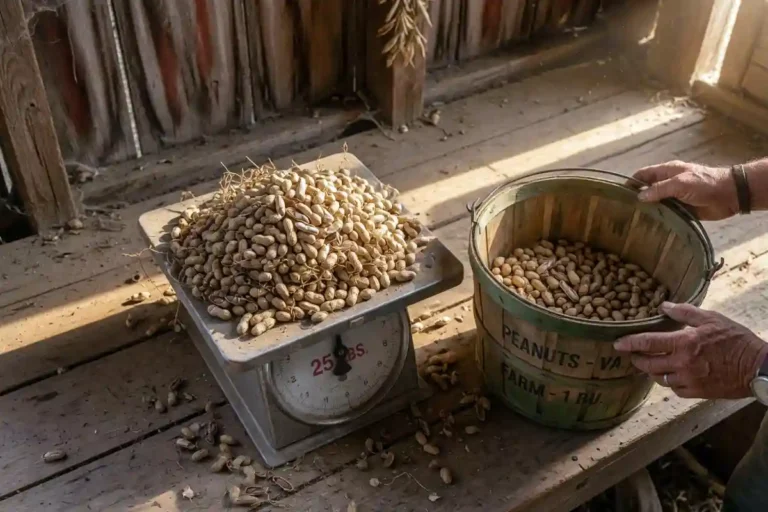
Peanuts flower continuously, so a cool spell of 5 to 7 days during early flowering shifts the whole pod-fill curve. I plan planting dates around the last spring frost plus 2 weeks of soil warming, not a fixed calendar date. After harvest, growers measure output in pounds per bushel of peanuts, and climate stress shows up first in test weight.
Mistakes to avoid with peanut climate planning
- Planting before soil reaches 65°F for three consecutive days
- Choosing a long-season Virginia variety in a 120-day climate
- Skipping irrigation during pegging when rainfall drops below 1 inch per week
- Ignoring fall frost dates when scheduling digging
- Planting in heavy clay soils that stay cold and wet through May
A short-season Spanish variety in a borderline climate beats a high-yield Virginia variety that runs out of season.
Safety and harvest weather notes
Peanuts dug late in cold, wet weather develop high aflatoxin levels, a fungal toxin regulated by the FDA at 20 parts per billion in human food. Harvest when soil moisture allows clean digging and air temperatures support drying. Wet windrows in cool weather invite mold. Dry windrows in 75 to 90°F air finish in 3 to 5 days.
For background on the plant itself, see whether peanuts grow on a bush and how peanuts compare to tree nuts in growing requirements.
Frequently asked questions

Can peanuts grow in cold climates?
What is the lowest temperature peanuts can tolerate?
Do peanuts need full sun?
How long is the peanut growing season?
Can peanuts grow in tropical climates?
Conclusion
Peanuts grow in warm, frost-free climates with steady rainfall and sandy, well-drained soils. Match temperature, rainfall, and frost-free days to your variety, and the crop produces a strong yield. Plant timing and harvest weather decide quality as much as season averages, so watch the soil thermometer and the fall forecast as carefully as the calendar.