Are Peanuts Genetically Modified? 7 Facts You Should Know
No, peanuts grown commercially in the United States are not genetically modified. The peanuts you buy at the grocery store come from conventional breeding programs, not GMO seed lines. This guide explains why peanuts stay non-GMO, how breeders improve them, and what labels mean.
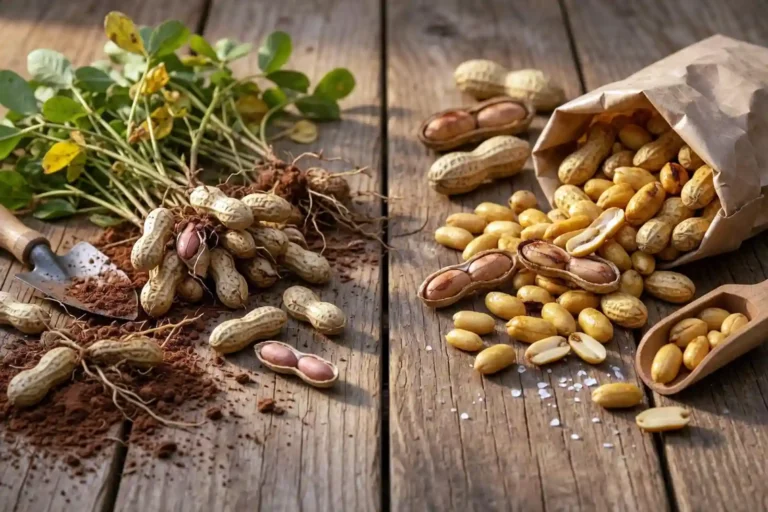
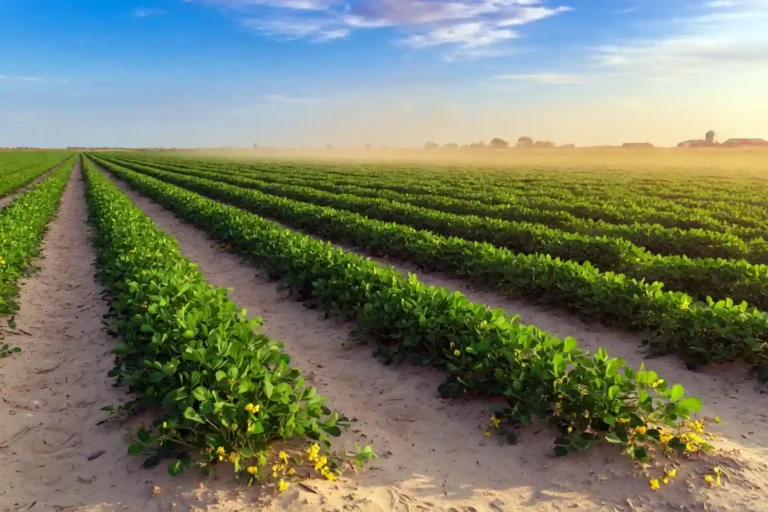
Peanuts are not genetically modified. As of 2025, no GMO peanut variety is approved for commercial sale or planted by U.S. farmers. All peanut improvements come from traditional cross-breeding by USDA and university programs.
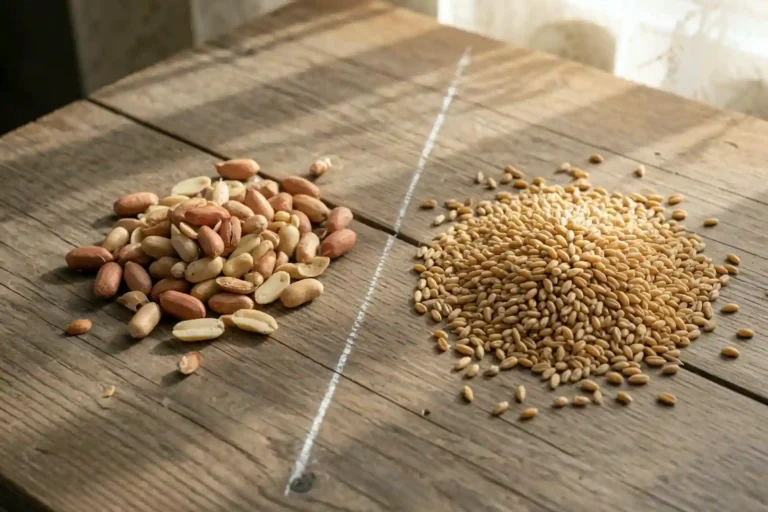
I farm in Kansas, and I get this question every harvest season. People mix up peanuts with corn and soybeans because those crops dominate the GMO conversation. Peanuts sit in a different category, and the facts are clear once you look at the seed supply. If you also wonder about GMO status in cereal grains, the comparison helps explain why some crops are modified and others are not.
Contents
- 1 What Does GMO Mean?
- 2 Are Commercial Peanuts GMO?
- 3 Why Are Peanuts Not Genetically Modified?
- 4 How Are Peanut Varieties Improved Without GMO Methods?
- 5 Are Organic Peanuts Different From Regular Peanuts?
- 6 Common Misconceptions About Peanut GMO Status
- 7 Mistakes to Avoid When Reading Peanut Labels
- 8 Safety and Regulatory Notes
- 9 FAQs
- 10 Conclusion
What Does GMO Mean?
A genetically modified organism contains DNA changed through laboratory techniques. Scientists insert, delete, or edit specific genes to add traits like herbicide tolerance or insect resistance. The U.S. Department of Agriculture defines GMO crops as those developed using recombinant DNA technology, which differs from traditional plant breeding.
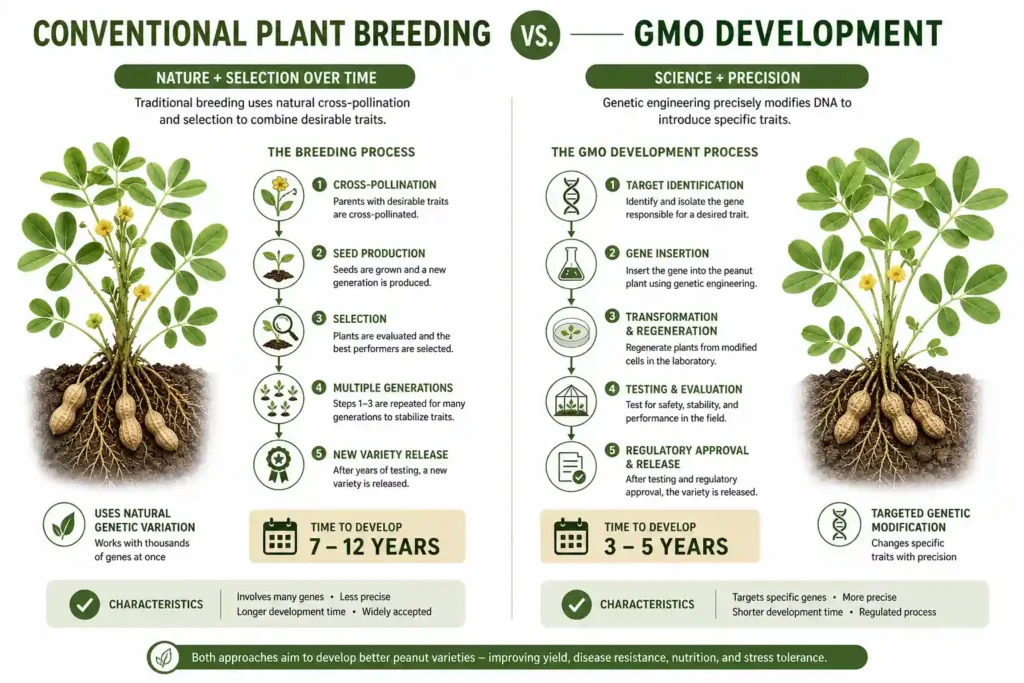
Conventional breeding crosses two parent plants and selects offspring with desired traits. This process takes 7 to 12 years per variety. GMO development can shorten timelines but requires regulatory approval from the USDA, FDA, and EPA before commercial planting.
Are Commercial Peanuts GMO?
Commercial peanuts are not GMO. According to the USDA Economic Research Service data on biotech crops, only corn, soybeans, cotton, sugar beets, alfalfa, canola, papaya, squash, potatoes, and apples have approved GMO varieties in the U.S. as of 2024. Peanuts do not appear on that list.
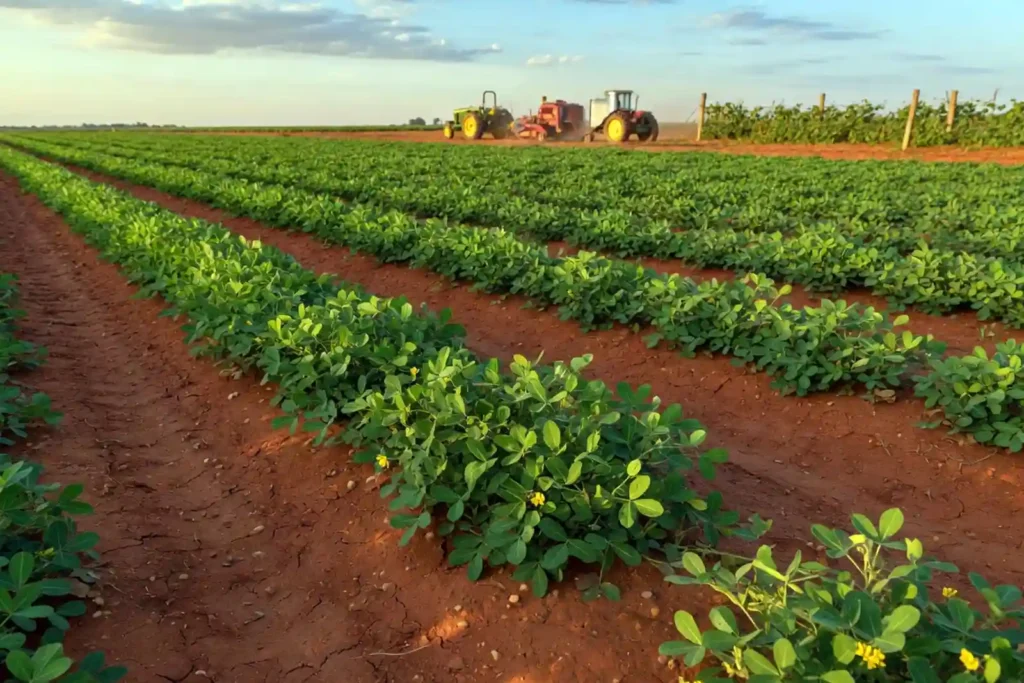
Every peanut grown in Georgia, Texas, Alabama, Florida, North Carolina, and Virginia comes from non-GMO seed. These six states produce over 95% of the U.S. peanut crop, based on USDA NASS reports. The same applies to peanuts imported from Argentina, India, and China.
Why Are Peanuts Not Genetically Modified?
Peanuts are not genetically modified for three reasons: market demand, breeding success, and crop economics.
1. Market resistance. Peanut buyers, including Jif, Skippy, and Planters, source from non-GMO supply chains. Allergy concerns also push processors toward conservative sourcing.
2. Conventional breeding works well. Programs at the University of Georgia and the USDA Agricultural Research Service peanut breeding lab release new varieties every few years. Recent cultivars resist tomato spotted wilt virus, leaf spot, and white mold without genetic engineering.
3. Smaller acreage economics. U.S. peanut acreage averages 1.5 million acres yearly, compared to 90 million for corn. Biotech companies focus research on larger markets where seed sales return their investment.
How Are Peanut Varieties Improved Without GMO Methods?
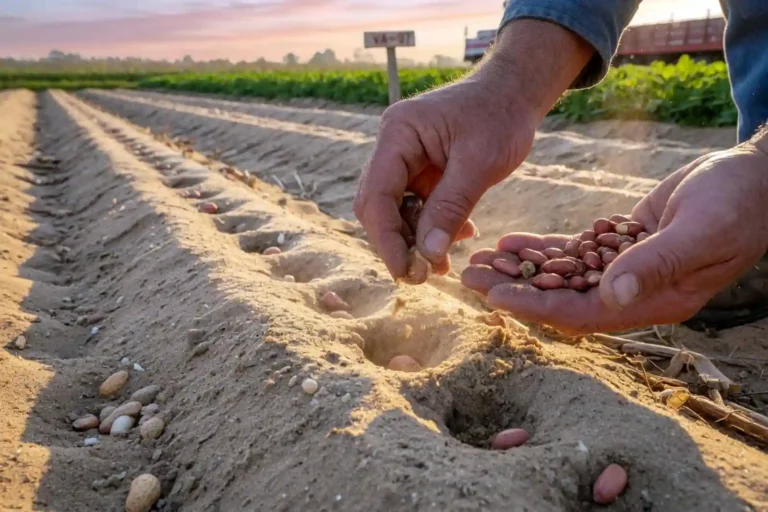
Breeders improve peanuts through marker-assisted selection and traditional crossing. They identify parent plants with strong traits, hand-pollinate flowers, then test offspring across multiple seasons.
The Runner, Virginia, Spanish, and Valencia market types each go through this process. Popular cultivars like Georgia-06G, TifNV-High O/L, and Florida-07 came from years of field selection, not lab gene editing.
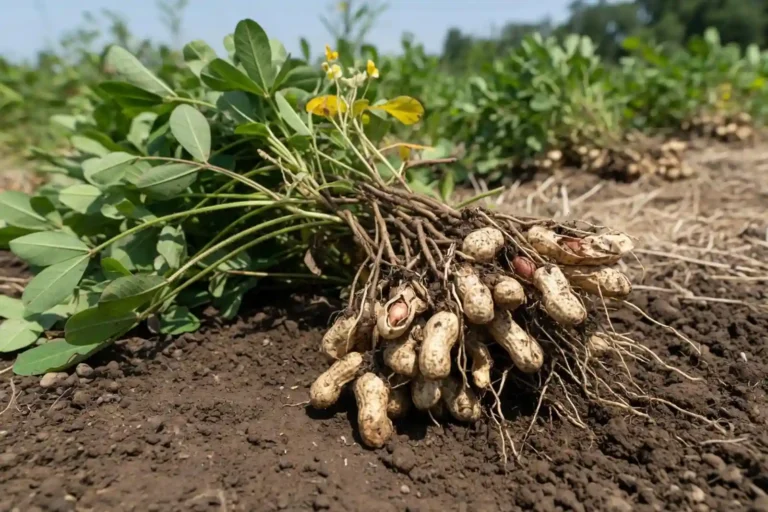
For readers curious about how peanut plants develop, this guide on where peanuts grow in nature covers the biology that makes breeding work. The plants pollinate themselves, which keeps varieties stable across generations.
Are Organic Peanuts Different From Regular Peanuts?
Organic peanuts and conventional peanuts are both non-GMO. The difference is pesticide and fertilizer use. Organic certification under the USDA National Organic Program prohibits synthetic pesticides, synthetic fertilizers, and GMO seed.
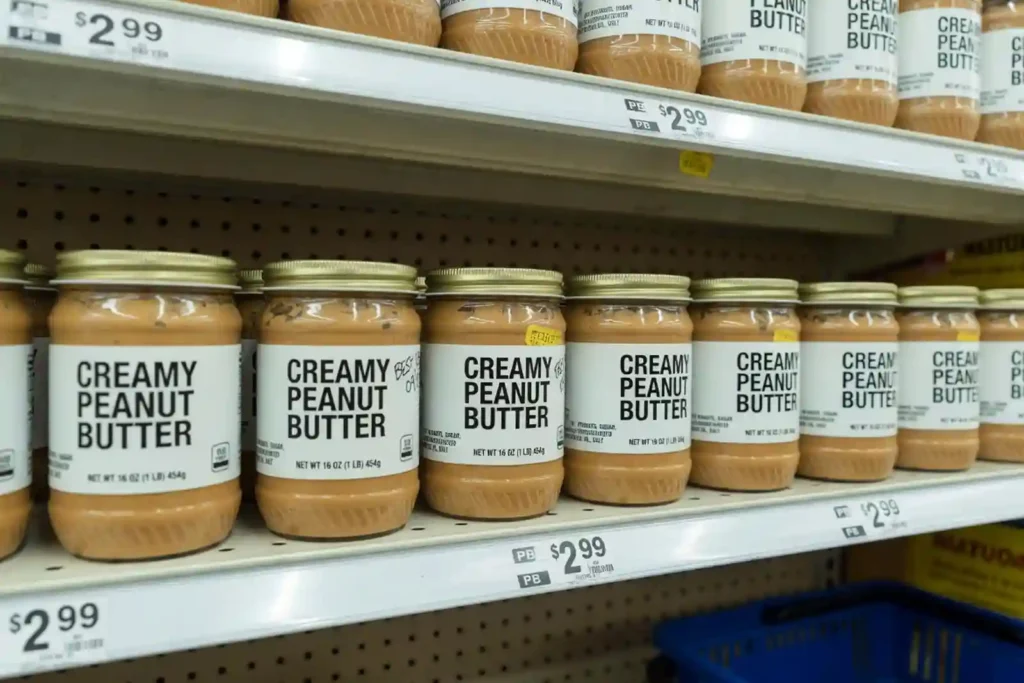
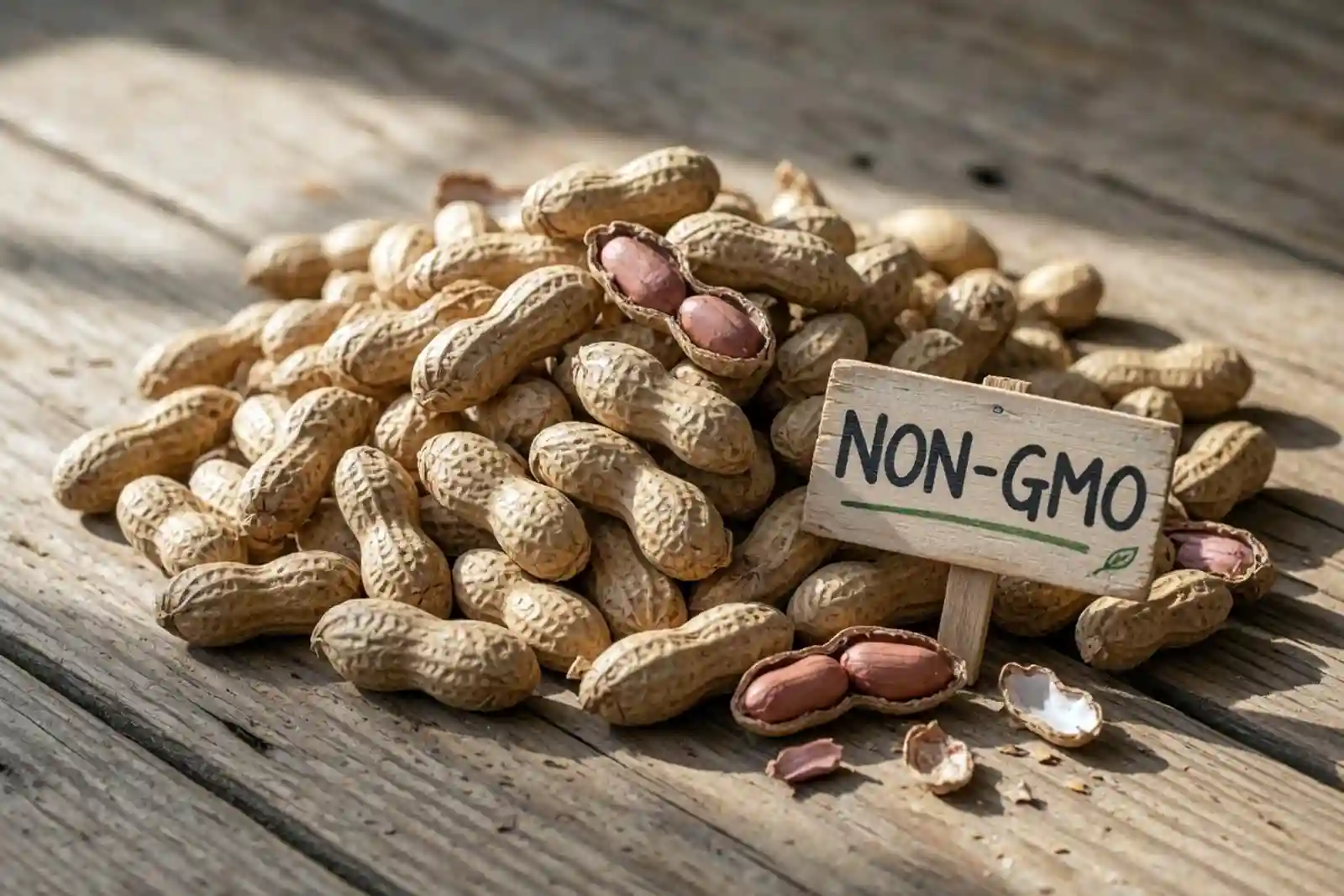
A bag labeled “Non-GMO Project Verified” tells you the same thing as standard peanuts. The verification confirms what is already true across the peanut industry. Some brands use the label for marketing, even though no GMO peanuts exist on the market.
Common Misconceptions About Peanut GMO Status
Several misconceptions circulate online. Here are the ones I hear most:
- Roundup-ready peanuts. No herbicide-tolerant peanut variety exists. Farmers control weeds using pre-emergent herbicides applied before peanut sprouts emerge.
- Peanut allergies caused by GMO. Peanut allergies predate any biotech research. Studies from the National Institute of Allergy and Infectious Diseases link allergy rates to early-life exposure patterns, not genetic modification.
- Imported peanuts are GMO. Peanut-producing countries including Argentina, India, and China all grow conventional varieties.
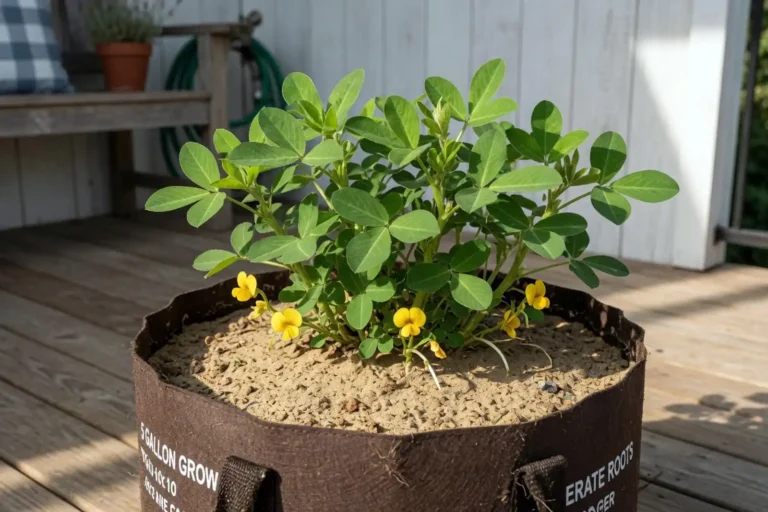
If you want to grow your own and avoid the question entirely, this walkthrough on growing peanuts at home explains the basics for home gardens.
Mistakes to Avoid When Reading Peanut Labels
Shoppers often misread peanut packaging. Watch for these errors:
- Paying premium prices for “non-GMO peanut butter” when all peanut butter is non-GMO.
- Assuming “organic” means safer for allergies. Allergens stay the same regardless of farming method.
- Confusing peanuts with tree nuts, which follow different agricultural and allergen rules.
- Trusting marketing claims over USDA-approved labels.
Safety and Regulatory Notes
The FDA, USDA, and EPA jointly regulate GMO crops in the U.S. Any new GMO peanut would require years of safety testing before approval. None has been submitted for commercial release. Peanut allergen labeling under the Food Allergen Labeling and Consumer Protection Act of 2004 applies to all peanut products, GMO or not.
If you have a peanut allergy, the genetic modification question does not change your medical advice. Consult an allergist before testing tolerance.
FAQs

Are peanut butter brands like Jif and Skippy GMO?
Will GMO peanuts ever exist?
Do "Non-GMO Project Verified" peanuts cost more for a reason?
Are peanuts sprayed with chemicals if not GMO?
Are peanuts genetically modified to remove allergens?
Conclusion
Peanuts stay one of the few major U.S. crops untouched by genetic modification. Conventional breeding handles disease resistance, yield gains, and quality improvements that biotech tackles in corn or soybeans. Whether you buy raw peanuts, peanut butter, or roasted snacks, the answer is the same. No GMO peanuts exist on the market. Read labels for what matters to you, like organic certification or allergen handling, and skip premiums that promise something already true.