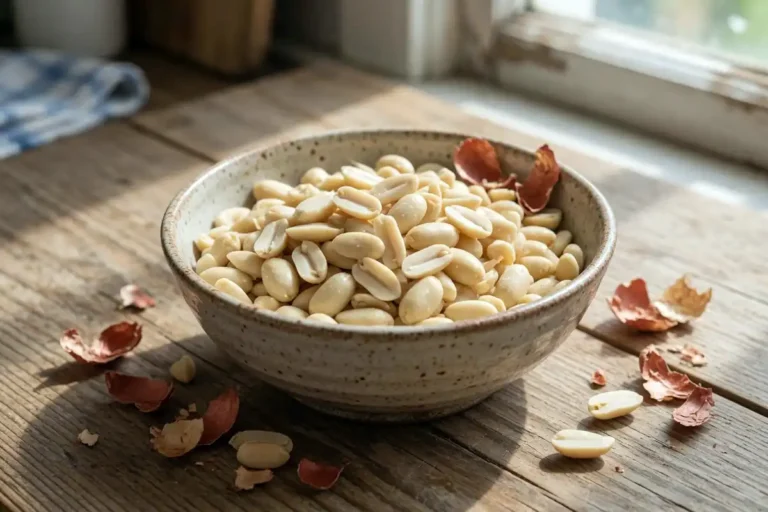
Can You Grow Peanuts in Pennsylvania? 8 Expert Insights
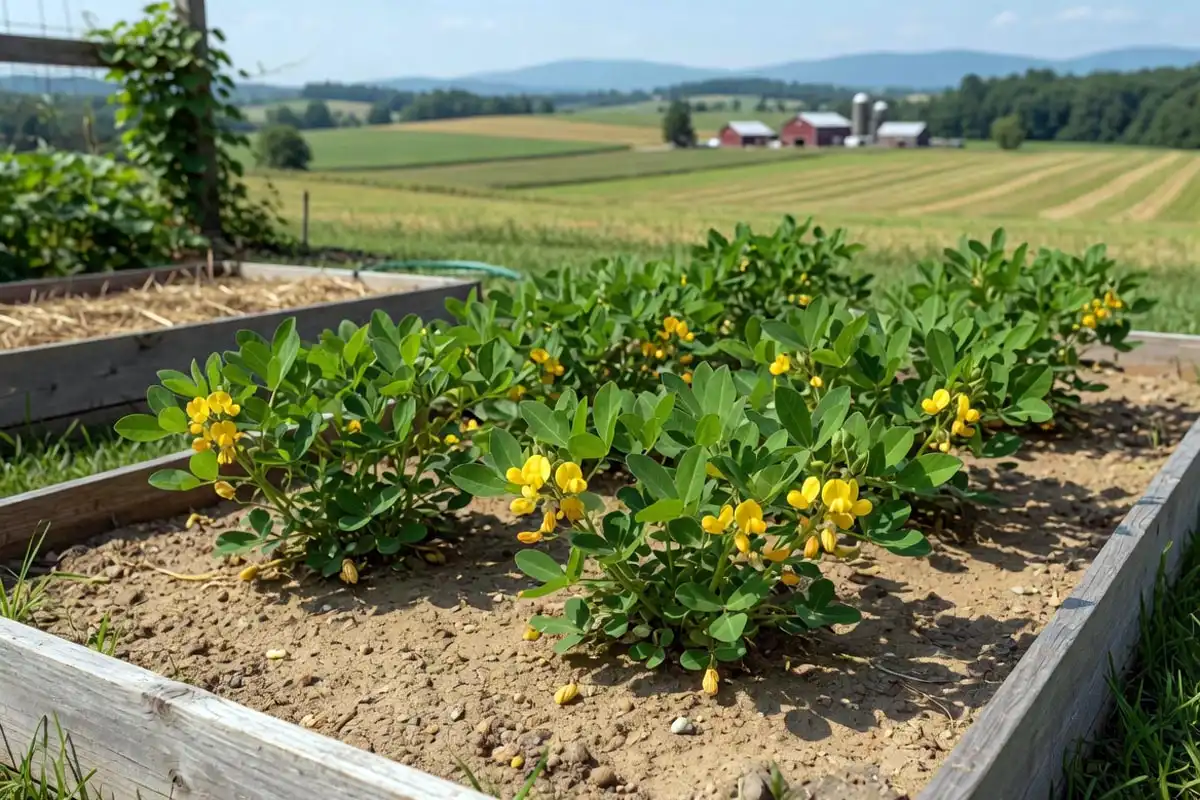
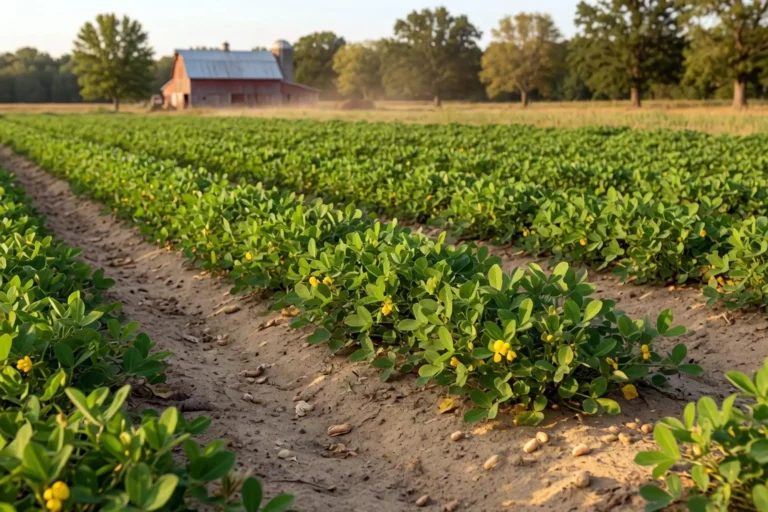
Yes, you can grow peanuts in Pennsylvania, though only short-season varieties like Valencia or Spanish reliably finish before fall frost arrives here. This guide walks you through the right planting window, soil prep, growing zones, harvest timing, and the common problems Pennsylvania backyard growers tend to run into each season.
Peanuts grow in Pennsylvania when you pick a 90 to 110 day variety, plant after soil hits 65°F (mid to late May in most counties), choose loose sandy loam, and harvest before the first hard frost. Southern PA (USDA Zones 6b–7a) gives the most reliable results.
Contents
- 1 What Peanuts Need to Grow
- 2 When to Plant Peanuts in Pennsylvania
- 3 Where Peanuts Grow Best in Pennsylvania
- 4 How to Grow Peanuts in Pennsylvania Step by Step
- 5 Problems Pennsylvania Growers Face
- 6 Mistakes to Avoid
- 7 Safety and Handling Notes
- 8 FAQs on Growing Peanuts in Pennsylvania
- 9 Final Word from the Field
What Peanuts Need to Grow
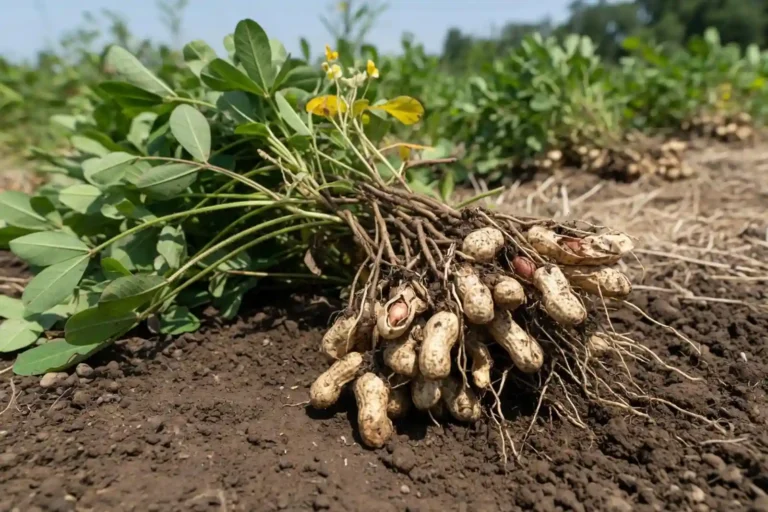
Peanuts are warm-season legumes that flower above ground, then push pegs into the soil where pods form. The plant needs steady warmth, loose soil, and consistent moisture during pegging and pod fill. For background, here is a clear primer on how peanut plants actually develop and finish.
Three numbers matter most for Pennsylvania growers:
- 120 to 160 frost-free days depending on variety
- 65°F minimum soil temperature at planting
- 18 to 24 inches of rainfall during the growing season
Spanish and Valencia types finish in roughly 90 to 110 days. Virginia and Runner types need 140 to 160 days, which is too long for most of Pennsylvania.
When to Plant Peanuts in Pennsylvania
Plant peanuts in Pennsylvania between mid-May and early June, after the last frost date passes and soil temperature stays above 65°F at a 4-inch depth. In southern PA counties like Lancaster, Chester, and York, growers often start around May 15. In northern and elevation areas, wait until late May or the first week of June. Timing-wise, this lines up with the general planting window most peanut growers follow.
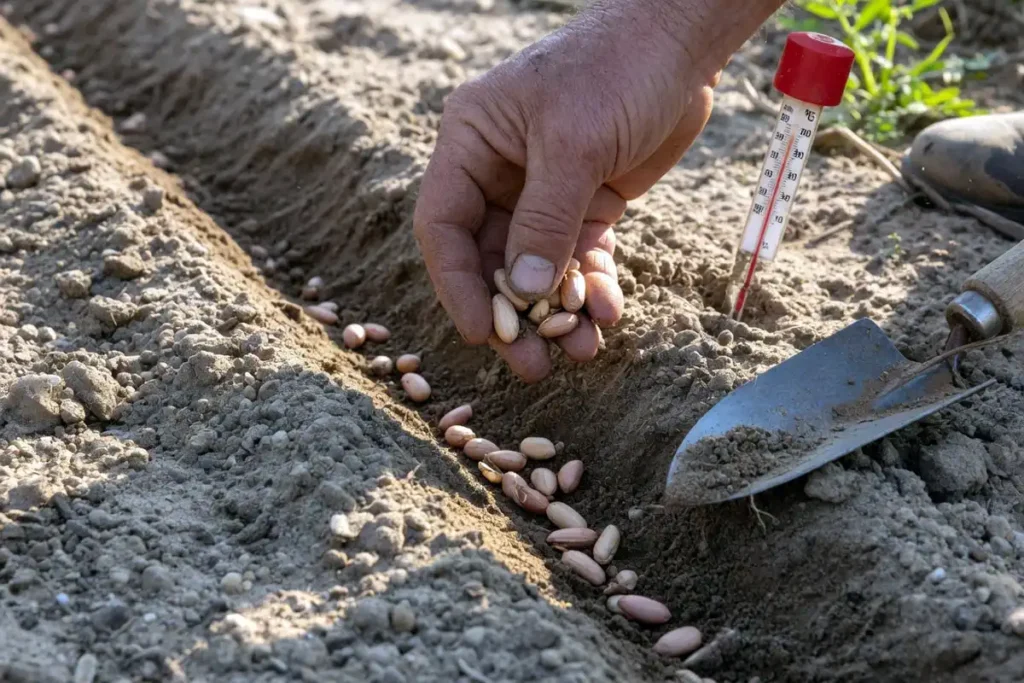
Cold soil leads to poor stands and seedling rot. I tell folks to use a soil thermometer rather than guessing by air temperature.
Where Peanuts Grow Best in Pennsylvania
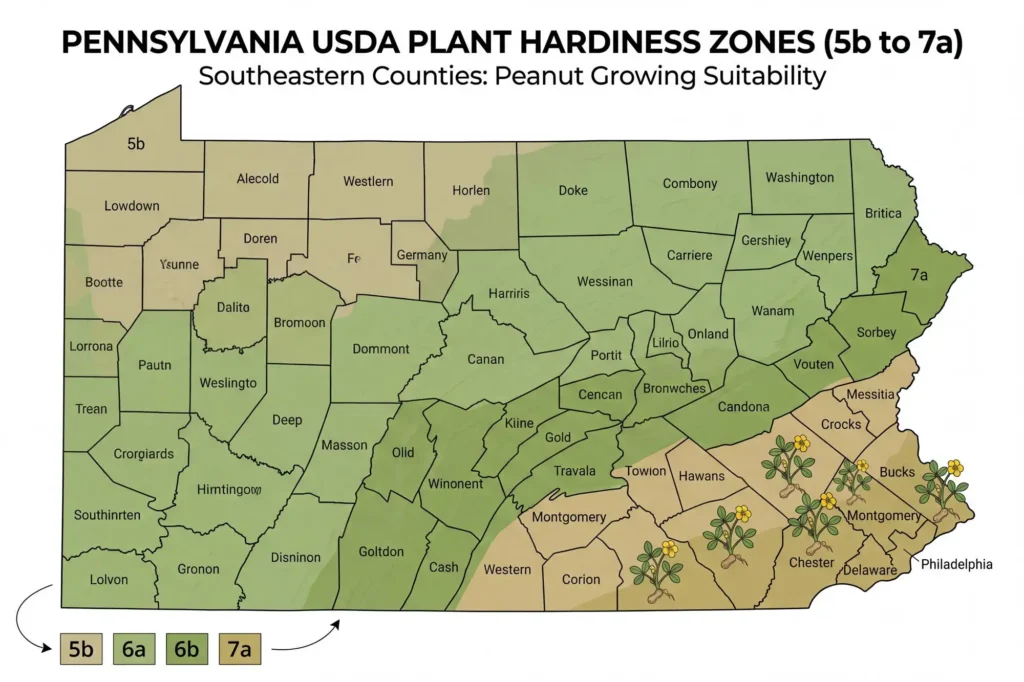
Peanuts perform best in USDA Hardiness Zones 6b and 7a across Pennsylvania, which covers the southeastern third of the state. You can verify your zone using the USDA Plant Hardiness Zone Map.
| Region | Zone | Growing Window | Outlook |
|---|---|---|---|
| Southeast PA (Philadelphia, Lancaster) | 7a | 180+ days | Reliable |
| South Central PA (York, Harrisburg) | 6b | 165–180 days | Good |
| Western PA (Pittsburgh) | 6a–6b | 150–170 days | Workable with Valencia |
| Northern PA (Erie, Bradford) | 5b–6a | 130–150 days | Marginal |
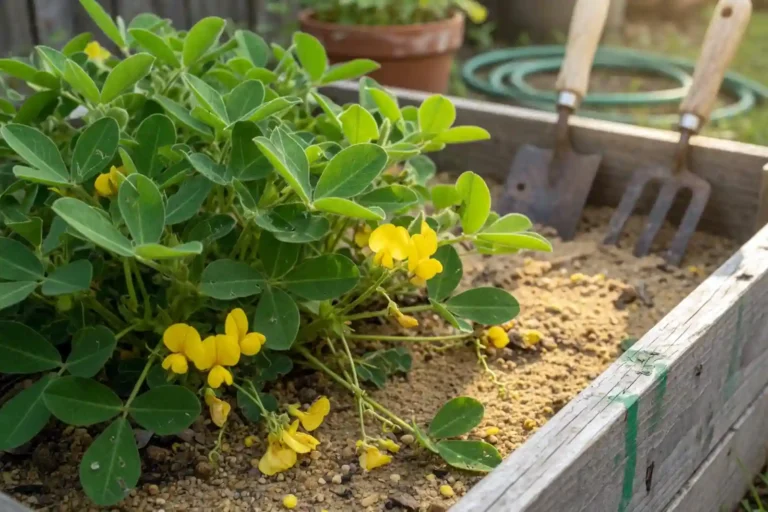
If you live in Zone 5b or colder, growing peanuts in containers gives you better soil temperature control and a movable plant.
How to Grow Peanuts in Pennsylvania Step by Step
1. Pick the Right Variety
Choose Valencia (90–110 days, sweet, four-seeded pods) or Spanish (95–110 days, smaller pods, high oil). Skip Virginia and Runner types unless you garden in the warmest pockets of southeast PA.
2. Prepare Sandy, Loose Soil
Peanuts need sandy loam with a pH between 5.8 and 6.5. Heavy clay blocks pegging and ruins your harvest. Work the bed 8 to 10 inches deep, mix in 2 inches of compost, and avoid fresh manure (too much nitrogen reduces pod set).
3. Plant the Seeds
Use raw, unroasted peanuts still in the shell. Shell them right before planting, leaving the papery skin intact. Plant 1.5 to 2 inches deep, 6 inches apart, in rows 24 to 30 inches apart. For better stand rates, this advice on getting peanut seeds to germinate covers temperature and moisture in detail.
4. Water and Feed
Water 1 inch per week, with extra during flowering and pegging (roughly weeks 6–10). Side-dress with gypsum when plants begin flowering. Calcium is non-negotiable for filled pods.
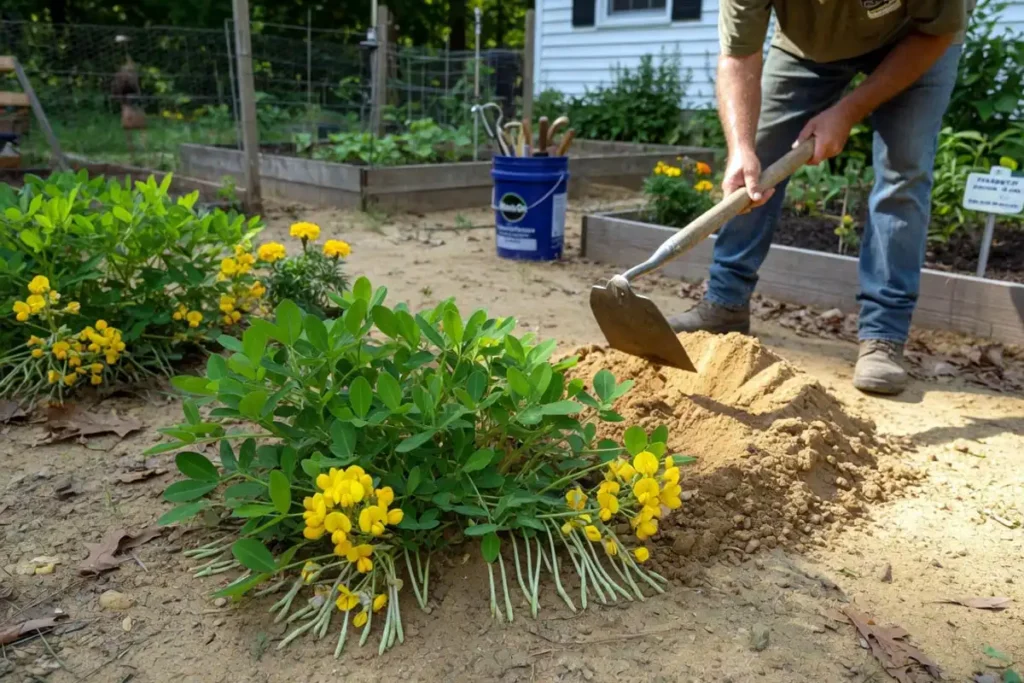
5. Hill the Plants
Once flowers appear, mound loose soil around the base 2 to 3 inches high. This gives pegs soft ground to enter. Skip hilling and you get hollow pods.
6. Harvest Before First Frost
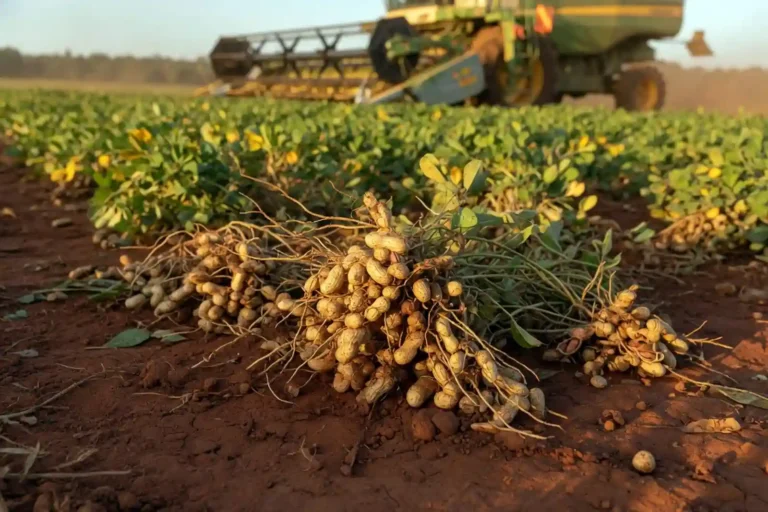
Pull plants when leaves yellow and inner pod hulls show dark veining (usually 90 to 110 days for Valencia). The University of Georgia maturity profile board is the standard, and Penn State Extension offers regional planting and harvest resources for legumes. In Pennsylvania, target harvest between late September and mid-October.
Problems Pennsylvania Growers Face
Cool soil at planting. Pennsylvania springs swing wildly. Plant too early and seeds rot. Wait for steady 65°F soil.
Short fall windows. An early September frost can end the season before pods fill. Use row covers on cold nights in late September.
Heavy clay soils. Much of central and western PA has clay-heavy ground. Build raised beds with sandy loam if your native soil resists digging.
Wildlife pressure. Squirrels, voles, and crows pull peanut plants for the pods. Hardware cloth at planting and netting at harvest help.
Mistakes to Avoid
- Planting roasted peanuts (they will not sprout)
- Skipping gypsum at flowering (empty pods follow)
- Watering heavily near harvest (causes mold)
- Using nitrogen-heavy fertilizer (lush leaves, no pods)
- Harvesting after a hard freeze (frost-damaged pods spoil in storage)
Safety and Handling Notes
Peanuts grown in damp, cool conditions can develop aflatoxin, a fungal toxin produced by Aspergillus flavus. To reduce risk:
- Harvest before pods stay wet for extended periods
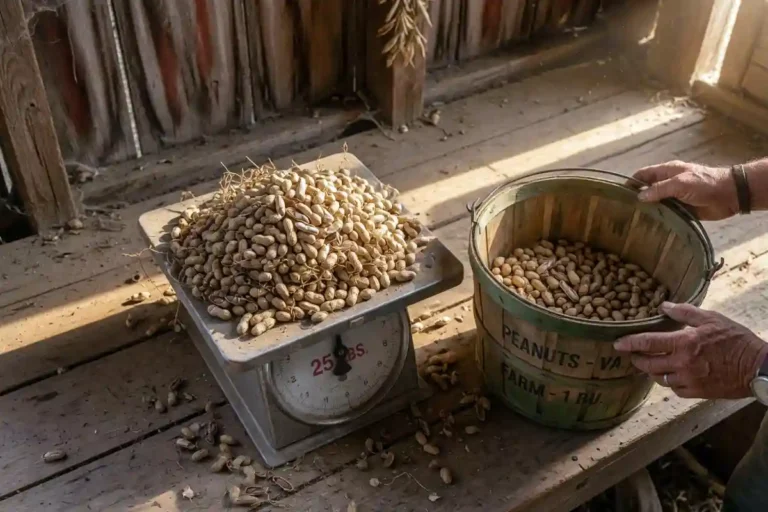
- Cure plants for 2 to 3 weeks in a dry, ventilated space at 95°F or below
- Discard any pods with discoloration, soft spots, or musty smell
- Store cured peanuts in airtight containers below 60°F
If anyone in your household has a peanut allergy, handle and store the harvest separately from food prep areas.
FAQs on Growing Peanuts in Pennsylvania

How long do peanuts take to grow in Pennsylvania?
Can you grow peanuts in northern Pennsylvania?
What variety of peanut grows best in Pennsylvania?
Do peanuts need full sun in Pennsylvania?
When should I harvest peanuts in Pennsylvania?
Final Word from the Field
Peanuts are a fun, low-input crop for Pennsylvania growers willing to match variety to climate. Stick with Valencia or Spanish, plant into warm sandy soil after May 15, add gypsum at flowering, and pull the crop before frost. Get those four right and you’ll bring in a respectable harvest, even this far north of peanut country.