Can You Grow Peanuts in Indiana? 6 Smart Steps
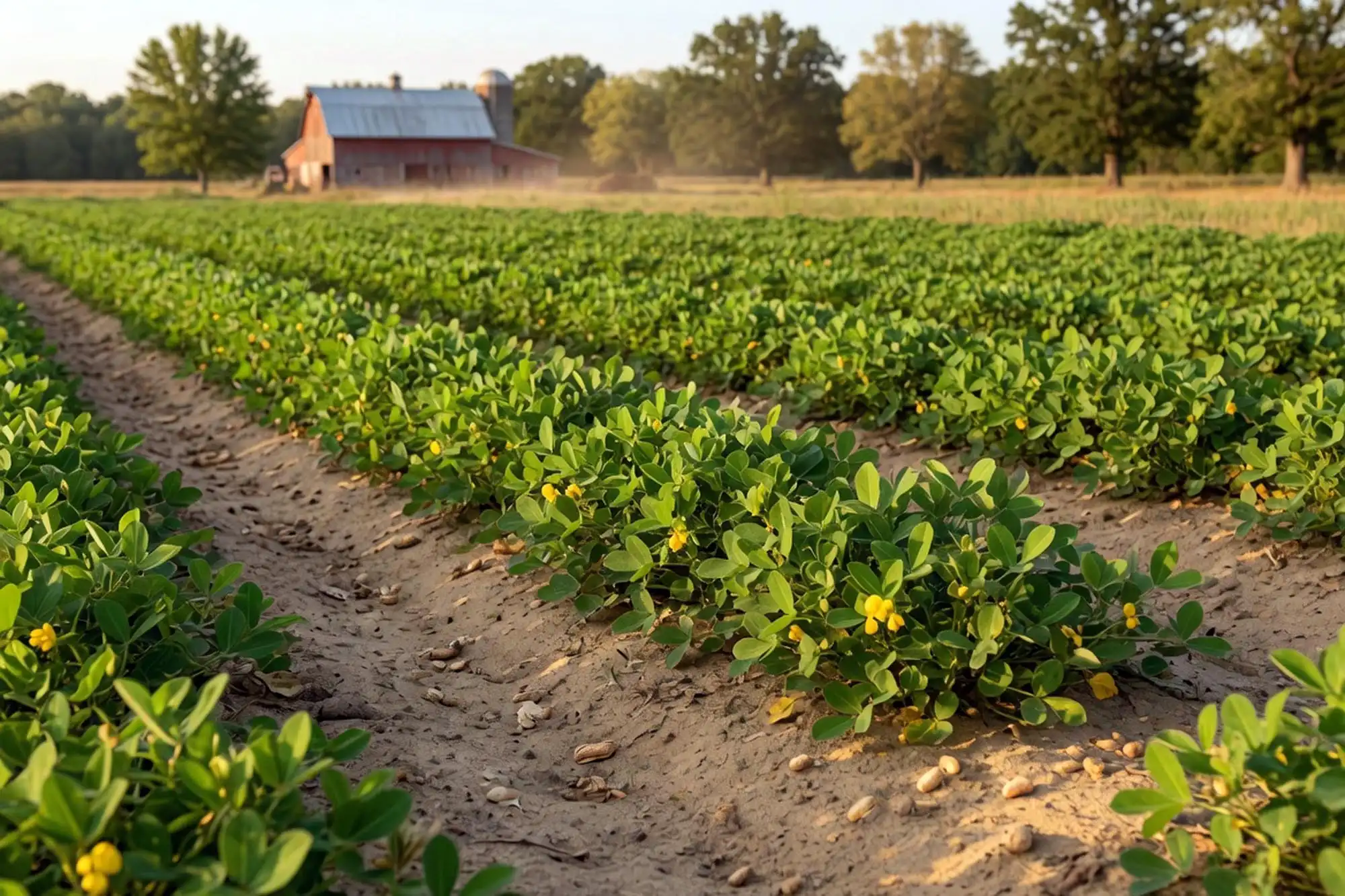
Yes, you can grow peanuts in Indiana, especially in the southern half of the state where the growing season runs 150 to 180 frost-free days. This guide covers when to plant, soil prep, the right varieties, harvest timing, and the common problems Indiana growers run into.
Peanuts grow well in southern Indiana with sandy loam soil, full sun, and 110 to 130 frost-free days. Plant Valencia or Spanish varieties after soil reaches 65°F, around mid-May. Harvest in early October before the first hard frost.
Can Peanuts Grow in Indiana’s Climate?
Peanuts (Arachis hypogaea) need 110 to 160 warm days, soil temperatures above 65°F at planting, and full sun. Indiana’s southern counties hit those marks most years. Northern Indiana runs tighter on heat, so the season often falls short for full-size Virginia types.
The state sits in USDA zones 5b to 6b per the USDA Plant Hardiness Zone Map. Southern counties get up to 180 frost-free days, which fits short-season peanut varieties. Understanding the climate peanuts thrive in shapes every choice you make from variety pick to harvest date.
When to Plant Peanuts in Indiana
Plant peanuts after soil temperature reaches 65°F at 4 inches deep. In southern Indiana, that lands around May 10 to 20. Central Indiana hits that mark by late May. Northern Indiana growers wait until early June.
Frost is the killer. The last spring frost ranges from April 15 in the south to May 10 in the north, and Purdue Extension tracks county-level frost dates across Indiana. Wait two weeks past the last frost date for safety. Proper timing for planting peanuts gives the crop the heat it needs to mature before October frosts.
Where Peanuts Grow Best in Indiana
Southern Indiana suits peanuts better than the north. The lower Wabash and Ohio River valleys offer sandy loam soils, longer seasons, and warmer summer nights.
Counties with strong potential include Posey, Vanderburgh, Spencer, Warrick, Knox, and Gibson. These areas average 60 to 80 days above 80°F during summer, which peanuts need for kernel fill.
Heavy clay soils in central and northern Indiana drain slowly and stay cool. Peanut pegs cannot push into compacted ground.
How to Grow Peanuts in Indiana: Step by Step
1. Pick the Right Variety
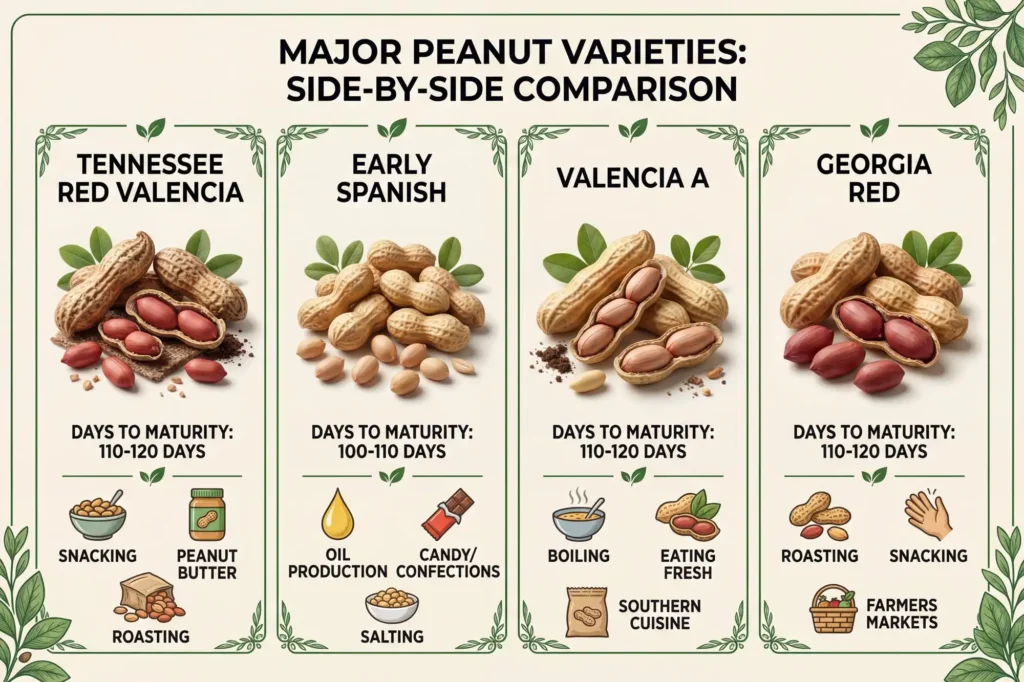
Choose short-season types. Spanish peanuts mature in 100 to 110 days. Valencia peanuts finish in 110 to 120 days. Tennessee Red and Early Spanish handle Indiana’s shorter window better than Virginia or Runner types.
2. Prep the Soil
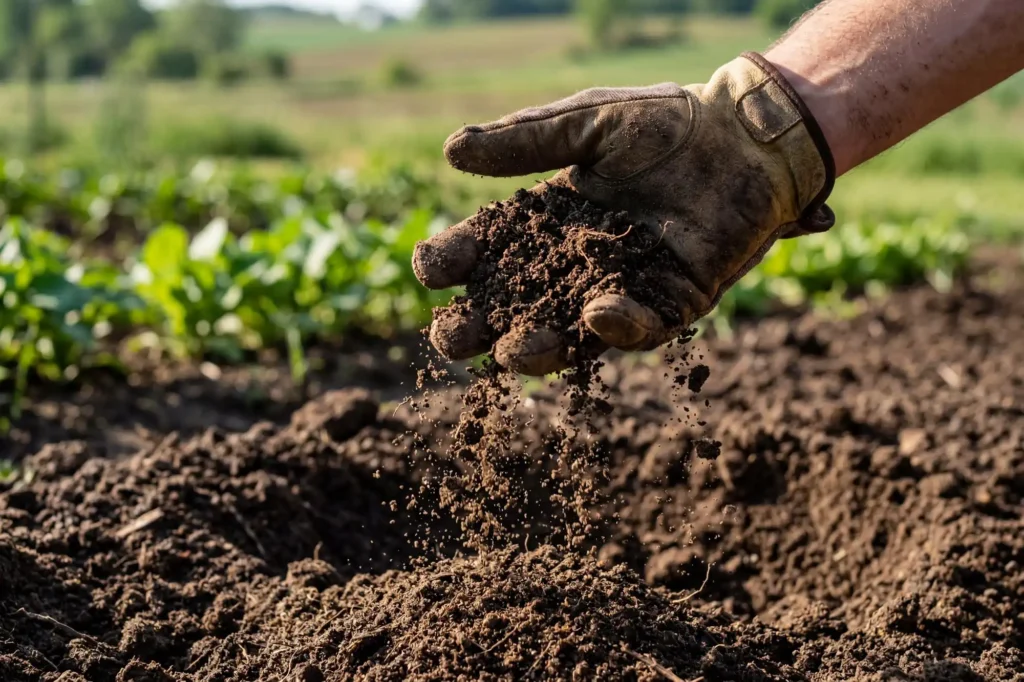
Peanuts want loose, sandy loam with a pH of 5.8 to 6.2. Till to 8 inches and remove rocks. Add gypsum at flowering for kernel development. Skip heavy nitrogen since rhizobia bacteria fix it from the air.
3. Plant the Seeds
Sow shelled, raw peanut kernels 1.5 to 2 inches deep. Space seeds 4 inches apart in rows 30 inches apart. Water lightly after planting. Getting peanuts to germinate takes 7 to 14 days at 70°F soil temperature.
4. Tend the Crop
Peanuts need 1 inch of water per week, more during pegging and pod fill in July and August. Hill loose soil around plants when they reach 12 inches tall. This helps pegs reach the ground and form pods.
5. Harvest at the Right Time
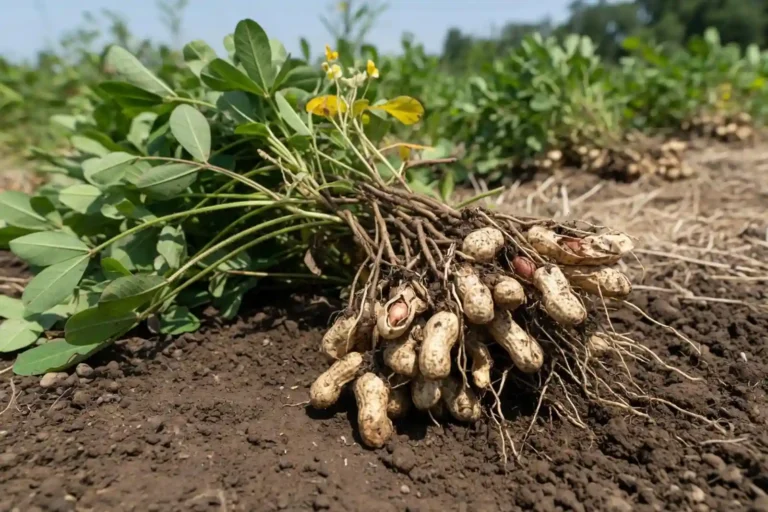
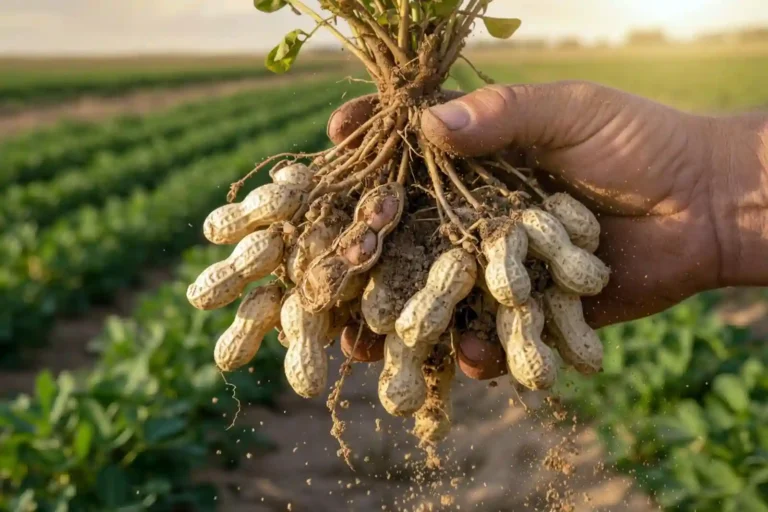
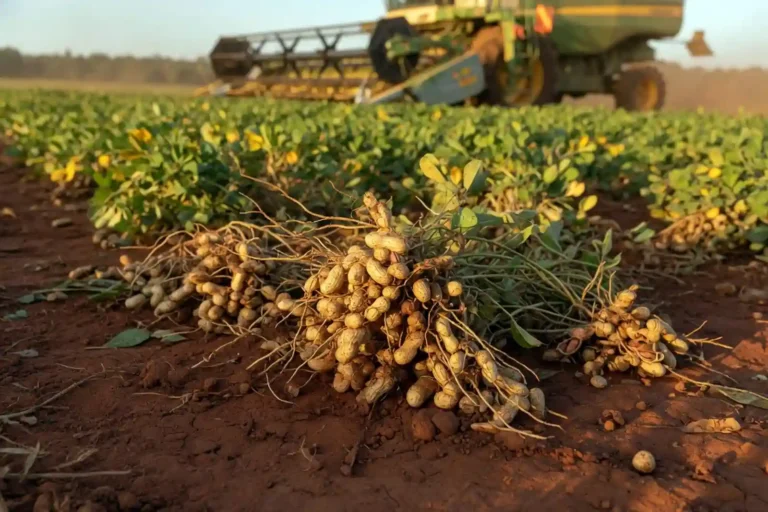
Most Indiana peanuts are ready between September 25 and October 15. Pull a few plants and check the inside of pod shells. Brown veining inside means mature kernels. Knowing when peanuts are ready prevents lost yield from frost damage or sprouting.
Best Peanut Varieties for Indiana
| Variety | Days to Mature | Best Use |
|---|---|---|
| Tennessee Red Valencia | 110–120 | Boiling, fresh eating |
| Early Spanish | 100–110 | Roasting, candy |
| Valencia A | 115–120 | Sweet, multi-kernel pods |
| Georgia Red | 120–130 | Southern Indiana only |
Skip Virginia and Runner types. They need 140 to 160 days, which Indiana rarely delivers.
Common Problems and Troubleshooting
Slow germination: Soil is too cold. Wait until soil hits 65°F. Cover rows with black plastic mulch 2 weeks before planting to warm the ground.
Yellow leaves: Indicates wet soil or low calcium. Check drainage. Apply gypsum at 500 pounds per acre during flowering.
No pods forming: Pegs cannot enter compacted or weedy soil. Hill loose soil around plants and keep beds weed-free.
Animal damage: Squirrels, raccoons, and crows pull plants. Use mesh row covers or short fencing during pod fill.
Common Mistakes to Avoid
- Planting too early into cold soil under 60°F
- Picking long-season Virginia varieties for short Indiana summers
- Adding nitrogen fertilizer (peanuts fix their own through rhizobia bacteria)
- Skipping gypsum during pod fill
- Leaving plants in the ground after a hard frost, which damages kernels
For a smaller scale option, growing peanuts at home in raised beds works well in central and northern Indiana.
Safety Notes
Wear gloves when handling raw peanut seeds. Some people react to peanut dust during harvest, so a basic dust mask helps protect your lungs.
Store harvested peanuts at moisture below 10% to prevent aflatoxin from Aspergillus flavus mold. Cure pods in mesh bags at 95°F to 105°F for 2 to 3 weeks before long-term storage.
FAQs about Growing Peanuts in Indiana
Can peanuts survive frost in Indiana?
What soil is best for peanuts in Indiana?
How many peanuts does one plant produce?
Do peanuts grow above or below ground?
Can I grow peanuts in northern Indiana?
Conclusion
Indiana growers can raise peanuts with the right variety, sandy soil, and a warm-summer plot. Southern counties have the easiest run of it. Northern growers still pull a crop with raised beds and short-season varieties like Tennessee Red. Plant after soil hits 65°F, hill the rows when plants reach a foot tall, harvest before frost, and you will have homegrown peanuts curing on the porch by Halloween.