How to Grow Peanuts in a Container in 120 Days
Growing peanuts in a container works when you give the plant a deep pot, loose soil, and a long warm season. A 5-gallon container holds one healthy plant from seed to harvest. This guide walks through pot size, soil mix, planting, care, hilling, and digging time at the end.
Plant raw, unroasted peanut seeds 2 inches deep in a 5-gallon container filled with loose, sandy loam. Keep soil above 65°F, water steadily, hill at flowering, and harvest after 120 to 150 frost-free days.
I have grown peanuts in pots on my Topeka patio for years, and the steps below hold up for anyone with a sunny spot and patience. If you want a wider primer on growing peanuts at home, that piece pairs well with this container guide.
Contents
What Are Peanuts and How Do They Grow in Pots?
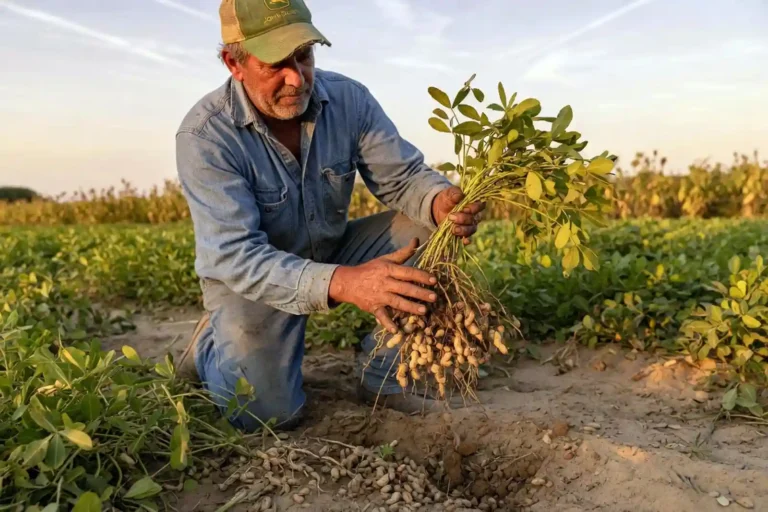
Peanuts (Arachis hypogaea) are legumes, not tree nuts. The plant flowers above ground, then sends pegs down into the soil where pods form. That underground pod habit means containers need depth, soft soil, and room for pegs to push down. A low-growing peanut bush like Spanish or Valencia fits container space better than spreading runner types.
When to Plant Peanuts in a Container
Plant peanut seeds after the last frost when soil temperature reaches 65°F to 70°F at a 4-inch depth. In Kansas, that lands around mid-May. Southern growers start in April, while northern growers begin indoors 4 weeks before moving pots outside. Peanuts need 120 to 150 frost-free days to mature.
Where to Place the Container
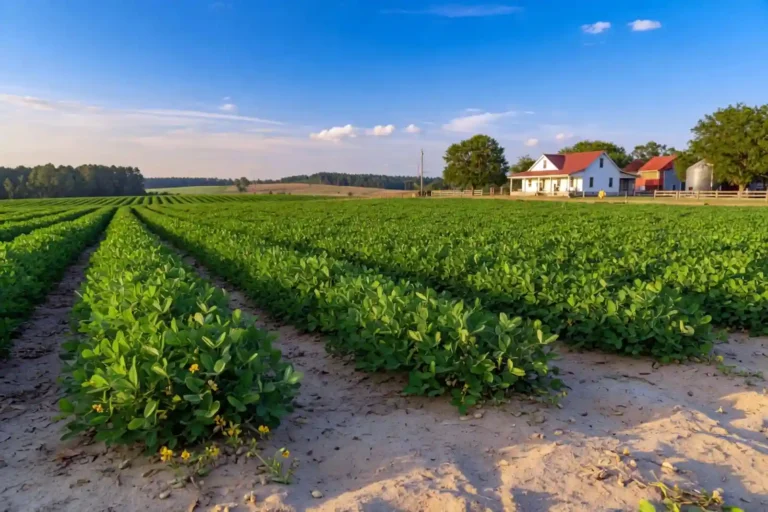
Set the container in full sun with 8 or more hours of direct light each day. South-facing patios, sunny driveways, and rooftops all work. Peanuts originated in warm South American climates, and the article on peanuts grow naturally gives more climate context. Avoid shaded corners since dim spots reduce flowering and produce empty pods.
How to Grow Peanuts in a Container Step by Step
1. Choose the Right Pot
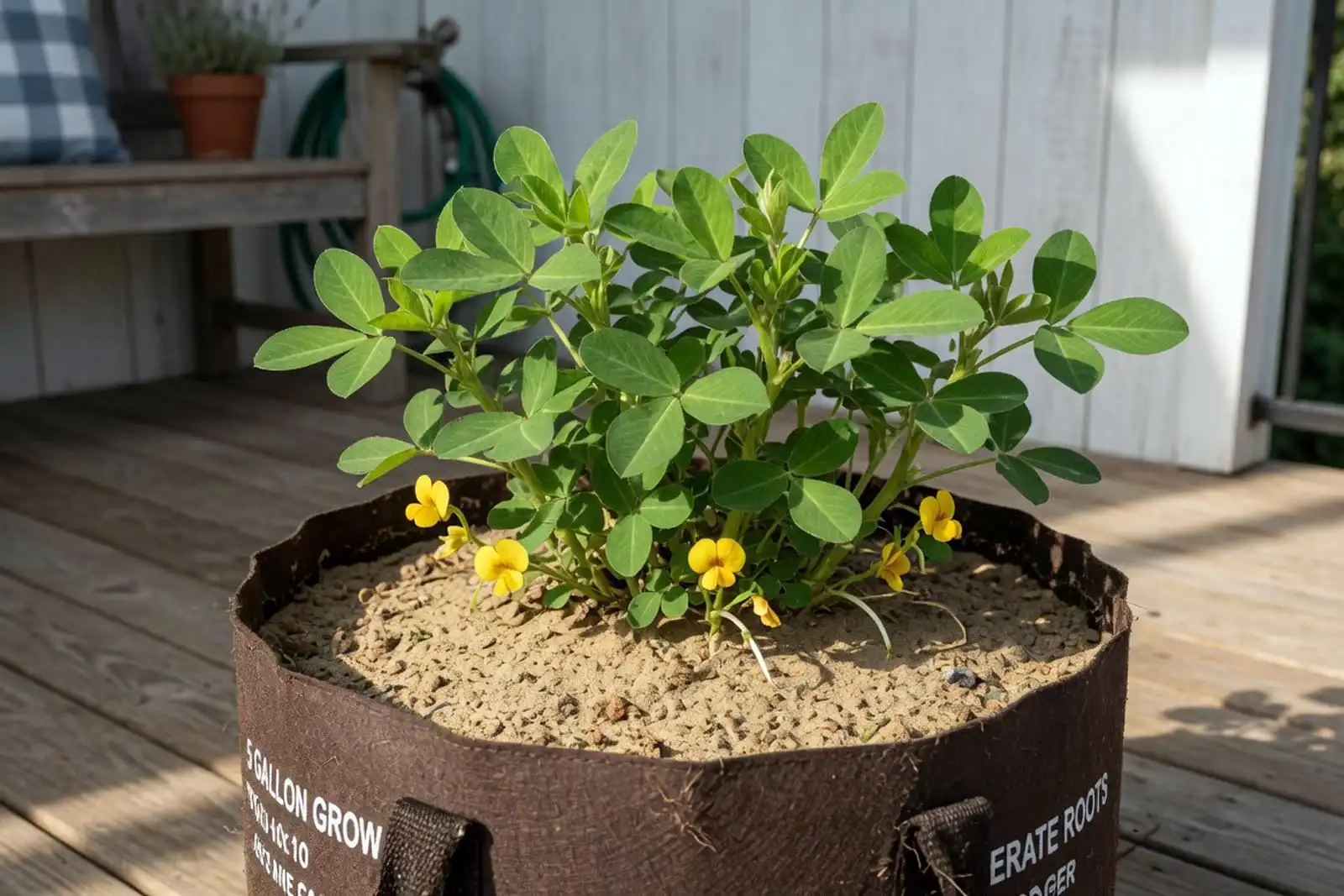
Pick a container that holds at least 5 gallons and stands 12 inches deep. Fabric grow bags, plastic nursery pots, and half whiskey barrels all work well. Drainage holes are required since waterlogged pots rot the seeds. One plant per 5-gallon pot keeps the roots from crowding.
2. Mix the Soil
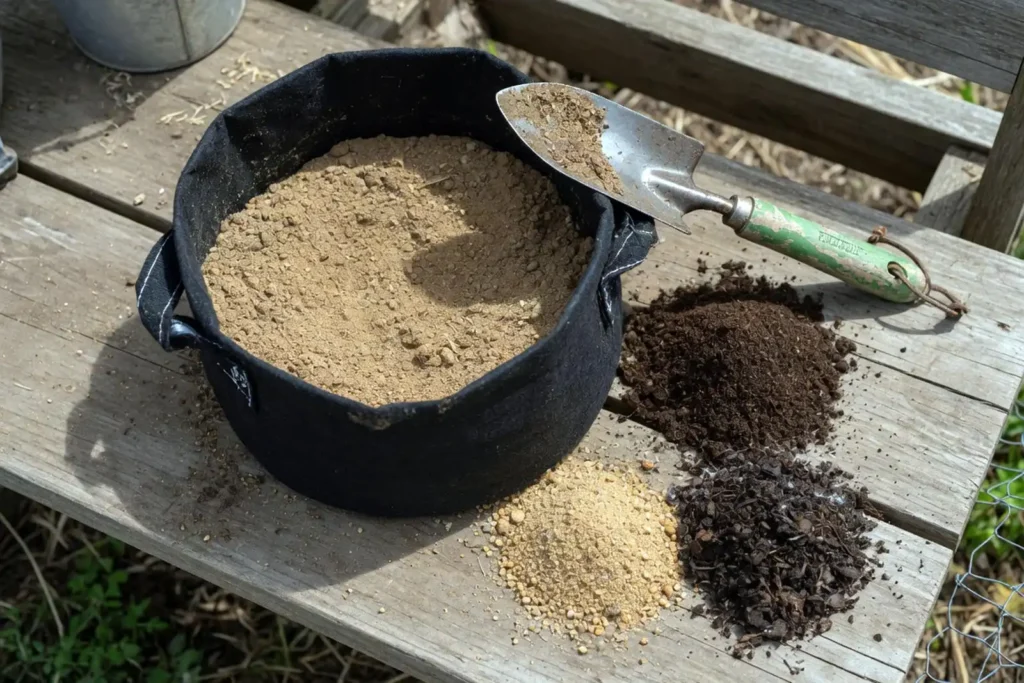
Fill the pot with a sandy loam blend: 50% potting soil, 30% coarse sand, and 20% compost. Loose, gritty soil lets pegs push down without bending. Skip heavy clay mixes. Peanuts fix their own nitrogen, so high-nitrogen fertilizer leads to leafy plants and few pods.
3. Plant Raw Peanut Seeds
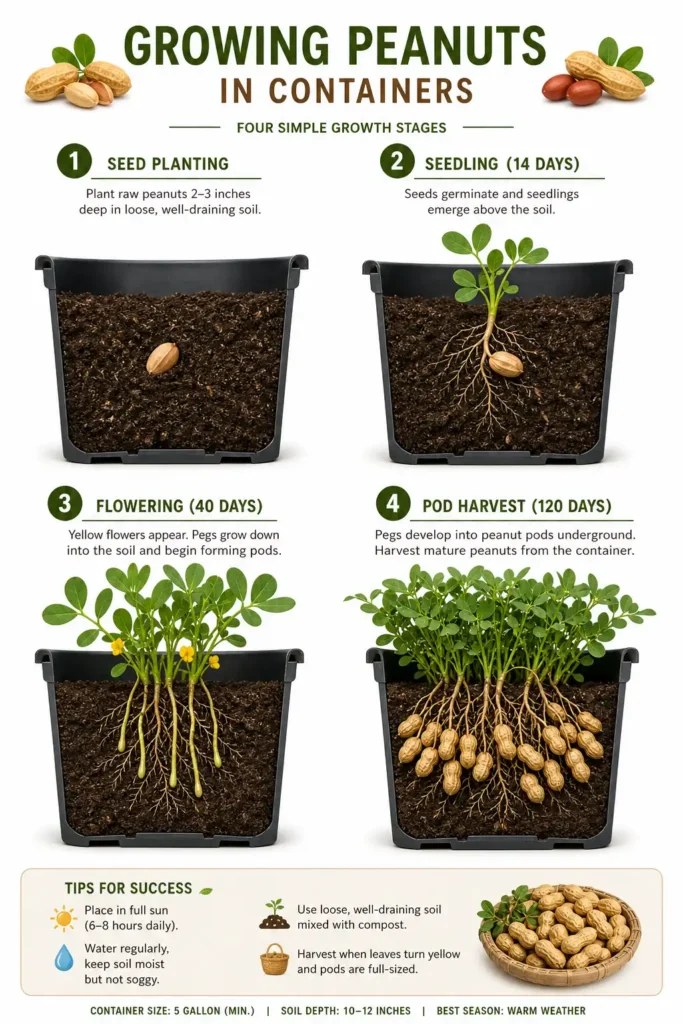
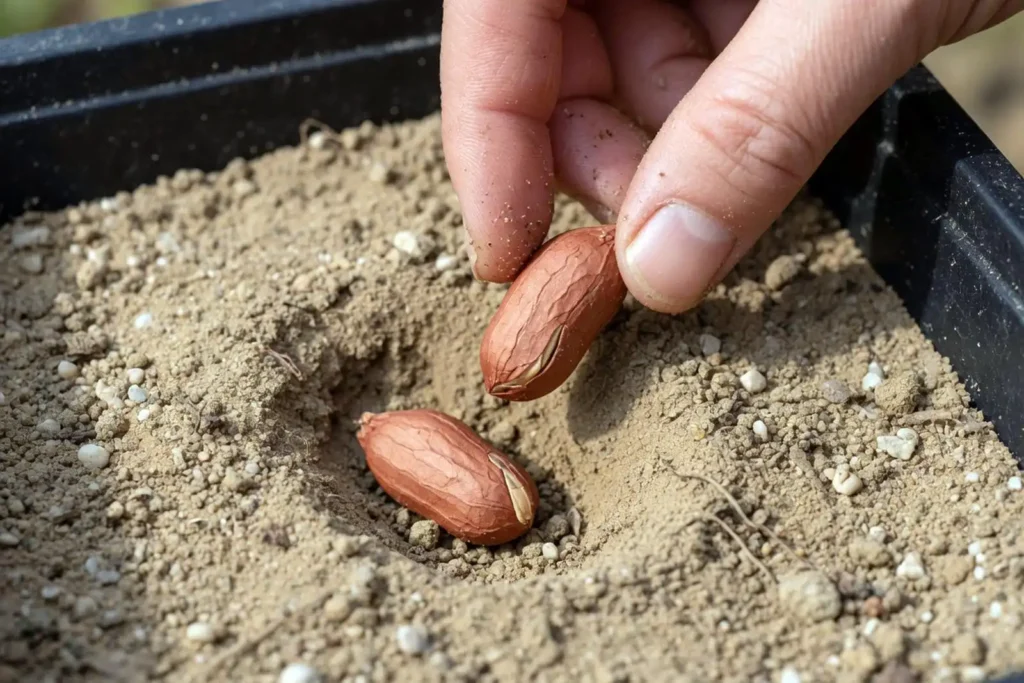
Use raw, unroasted peanuts in the shell or with their red skins intact. Roasted grocery peanuts will not sprout. Plant 2 seeds per pot at a depth of 2 inches, 6 inches apart. Water once after planting. Seedlings emerge in 7 to 14 days at 70°F soil.
4. Water and Warm the Seedlings
Water when the top inch of soil feels dry, around every 2 to 3 days in summer heat. Keep soil moist, not soggy. Container peanuts need about 1 to 1.5 inches of water per week. Move pots indoors during cold snaps below 50°F since chilly nights stall growth.
5. Hill the Soil at Flowering
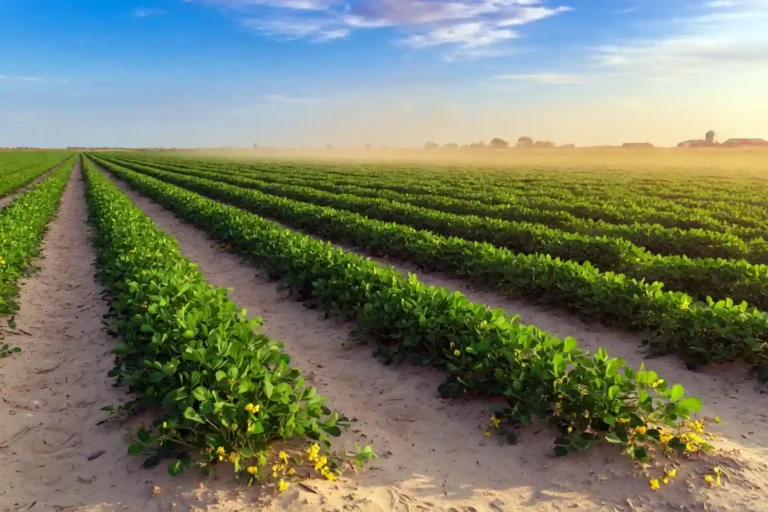
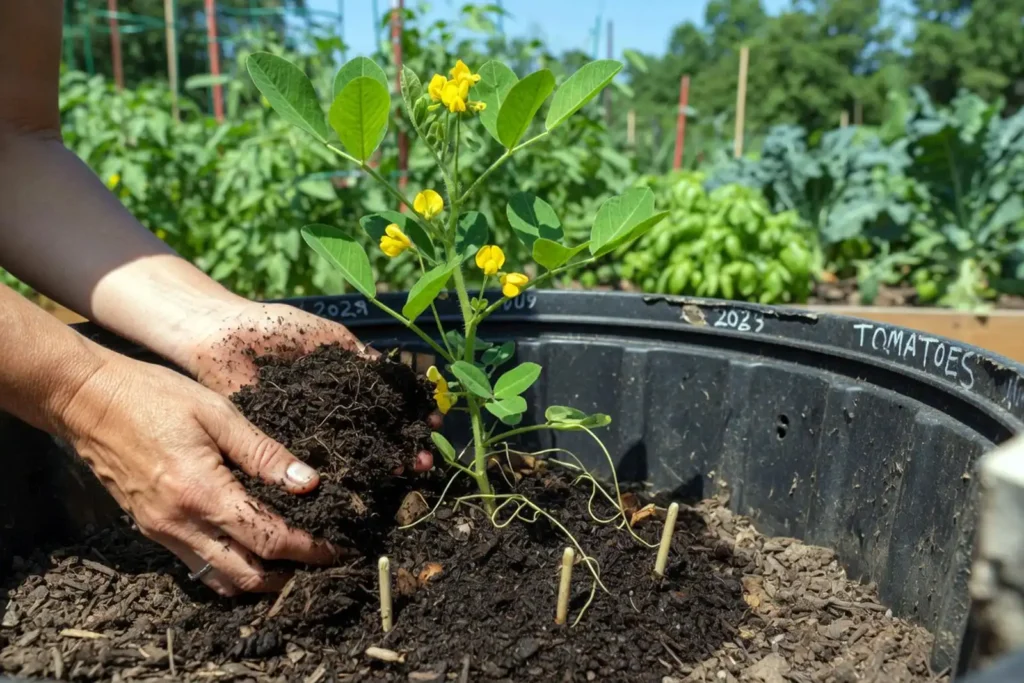
Around day 40, yellow flowers appear at the base of the plant. After the petals drop, each flower stalk forms a peg that grows downward. Add 2 inches of loose soil or compost around the stem. Hilling helps pegs reach soil and form pods. The University of Georgia Extension publishes detailed peanut production guides on this peg-and-pod cycle.
6. Stop Watering Before Harvest
Cut back water 1 to 2 weeks before digging. Drier soil firms the pods and makes them easier to lift cleanly. Yellowing leaves and a dry top layer signal that harvest time is close.
7. Harvest and Cure the Pods
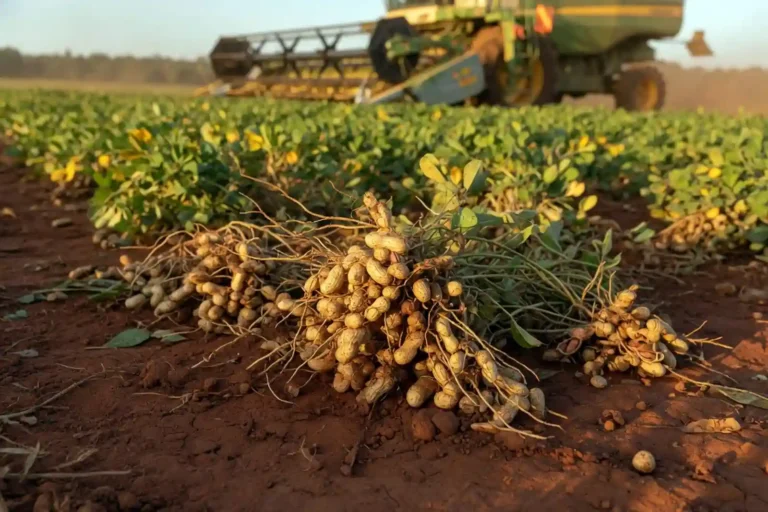
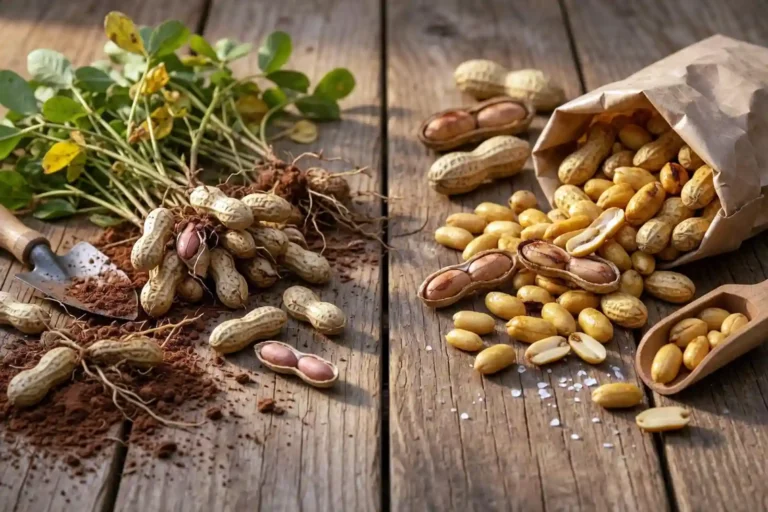
After 120 to 150 days, pull a test pod. Mature pods have dark veins inside the shell and a pink or red skin on the kernel. Tip the pot, lift the whole plant, and shake off the soil. Cure pods in a warm, airy spot for 2 to 3 weeks before storing.
Common Problems and Troubleshooting
Empty pods often point to dry soil during pegging or a calcium shortage. Add gypsum at flowering to fix this. Yellow leaves with green veins suggest iron deficiency, common in containers with hard tap water; flush the pot with rainwater. Holes in leaves usually come from caterpillars, which respond well to handpicking or Bt spray.
Mistakes to Avoid
Avoid using a pot smaller than 5 gallons since roots and pegs need room. Skip nitrogen-heavy fertilizers like 20-10-10. Never plant roasted or salted seed peanuts. Forgetting to hill at flowering leaves pegs hanging in the air, which produces zero pods. Some growers also wonder if peanuts belong to the nightshade family, which changes how you rotate them in future seasons.
Safety Notes
Wear gloves when handling damp peanut plants since the foliage can irritate skin. Keep harvested raw peanuts away from kids and pets since uncured pods carry molds that produce aflatoxin. Cure pods in a dry spot below 65% humidity, and shell only what you can roast within a week. The USDA plant database lists peanut characteristics for reference. Households with peanut allergies grow these plants outdoors only.
FAQs on Growing Peanuts in a Container

Can you grow peanuts indoors year-round?
How many peanuts does one container plant produce?
Do peanut plants need a trellis?
Can I plant store-bought raw peanuts?
How much sun do container peanuts need?
Final Words
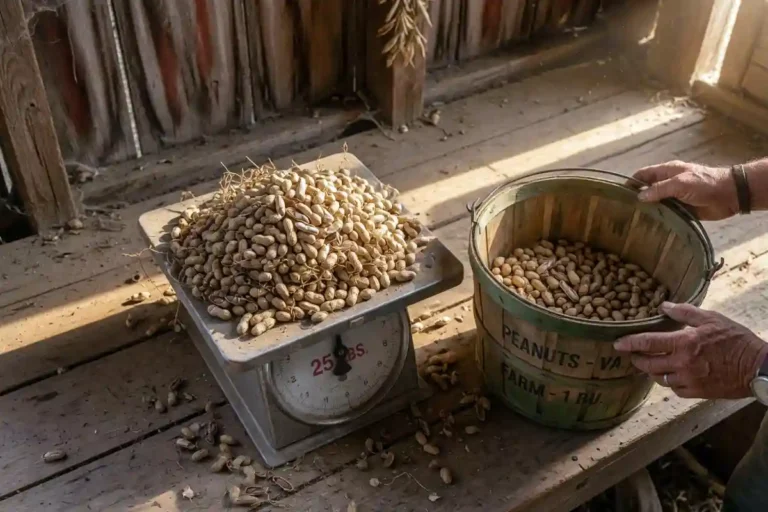
Container peanuts reward steady care and a long warm season. Pick a 5-gallon pot, fill it with sandy loam, plant raw seeds after the last frost, hill at flowering, and harvest after 120 days. Peanut numbers add up too, and a quick look at peanut bushel weight helps when scaling beyond a single pot. Try one container this season and see how the harvest turns out.