What Are Virginia Peanuts? Types, Uses, and How They Grow
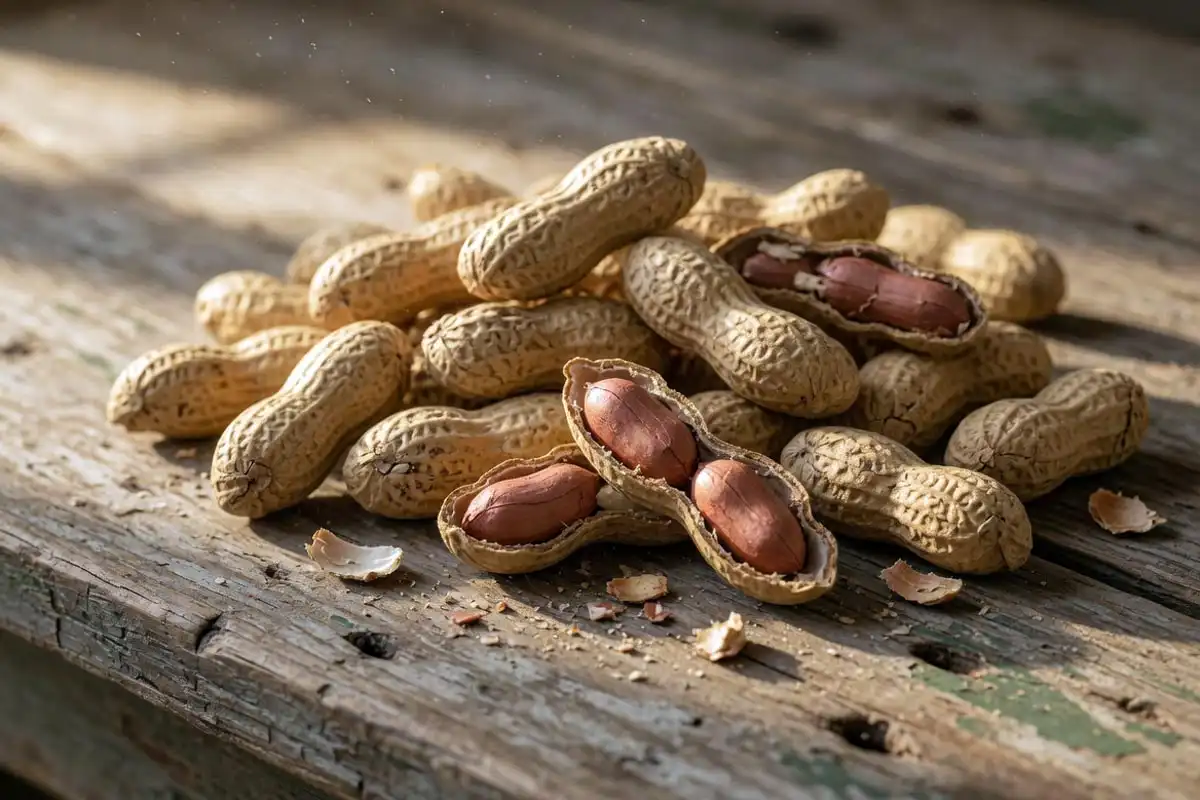
Virginia peanuts are the largest peanut variety grown in the United States, prized for their big kernels, crunchy texture, and mild sweet flavor. This guide covers what Virginia peanuts are, where they grow, how farmers produce them, and why they dominate the in-shell and gourmet snack market.
Virginia peanuts are a large-kernel peanut type (Arachis hypogaea var. hypogaea) grown mainly in Virginia, North Carolina, and South Carolina. They produce the biggest seeds of any U.S. peanut variety, making them the standard for ballpark peanuts, gourmet snacks, and in-shell roasted nuts.
What Are Virginia Peanuts?
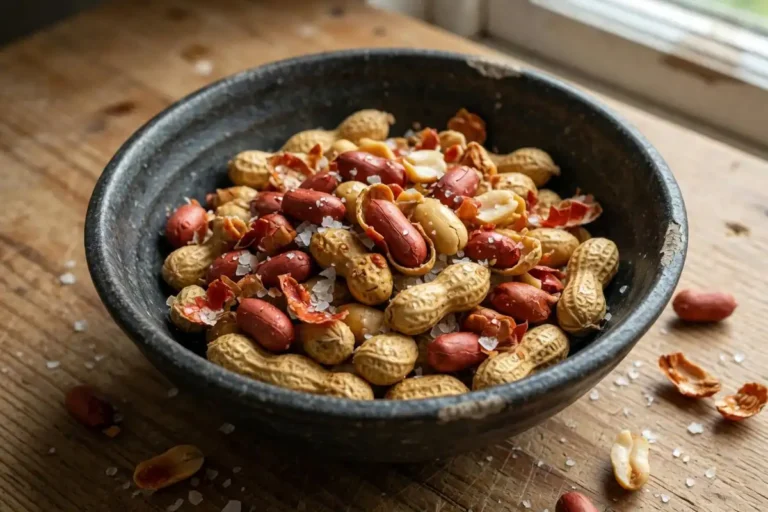
Virginia peanuts are one of four main peanut market types grown in the U.S., alongside Runner, Spanish, and Valencia. They produce extra-large kernels with a crisp bite and a mild, slightly sweet taste. Processors sort the largest kernels for premium snack packs, which is why the trade calls them the “cocktail nut.”
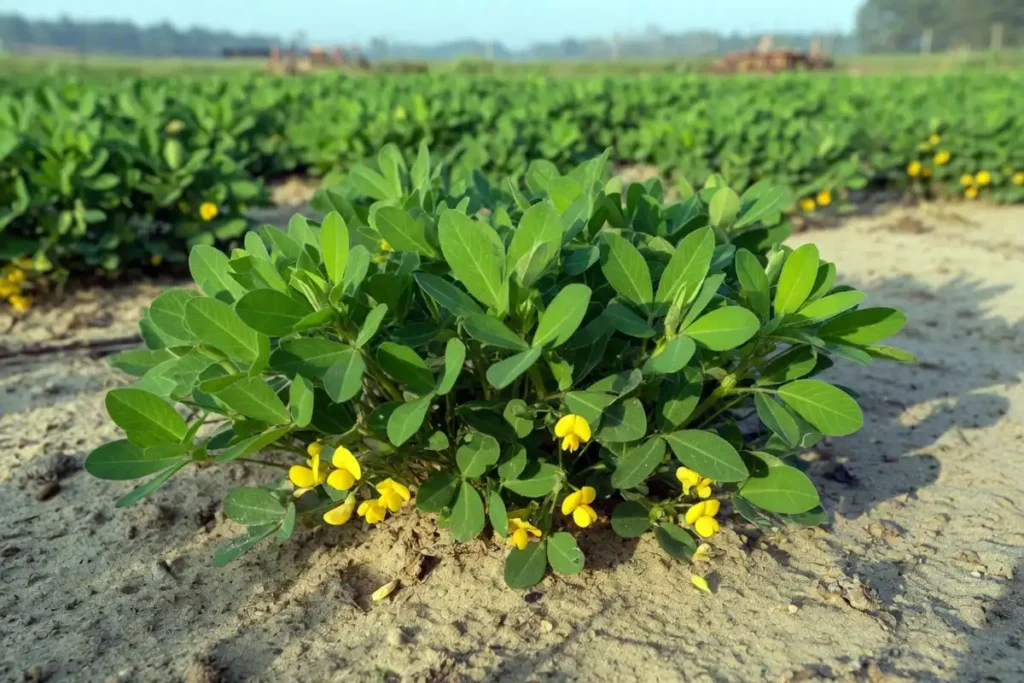
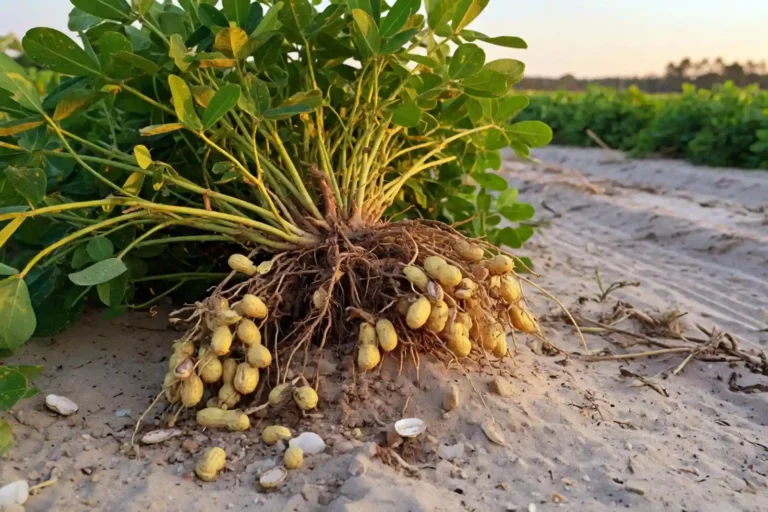
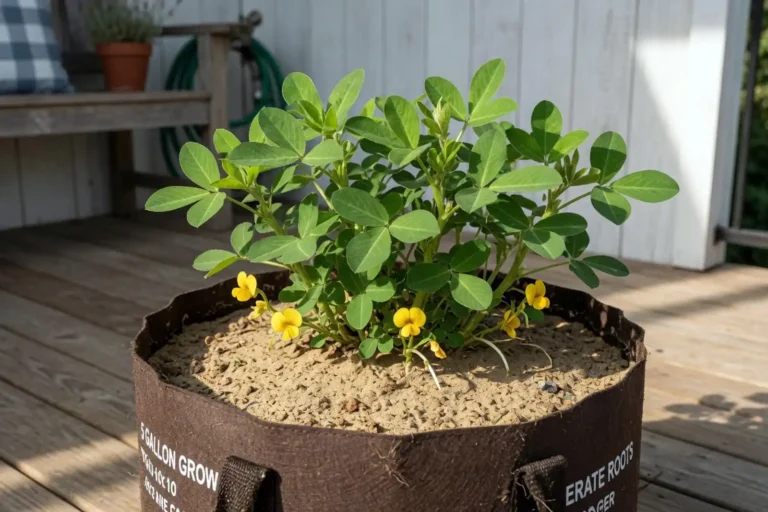
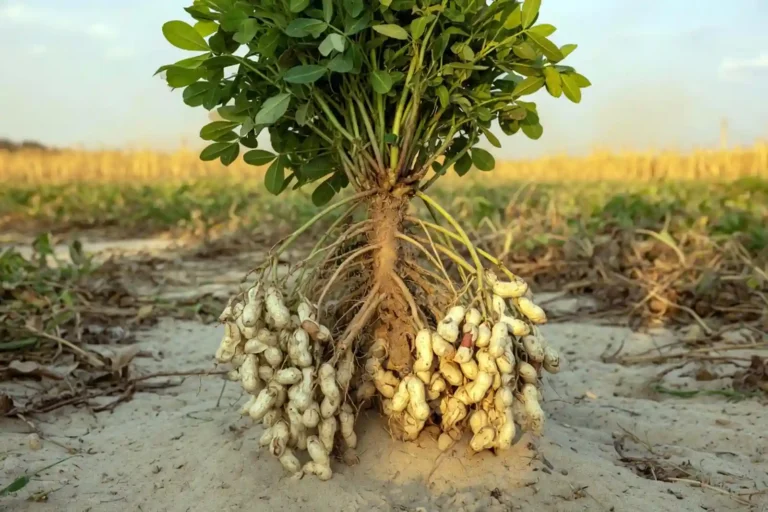
The plant grows as a low, bushy legume with yellow flowers. After pollination, flower stalks bend down and push pegs into the soil, where pods form underground. Most pods hold two large kernels wrapped in a tan papery skin. If you want a closer look at peanuts are grown and harvested, the field workflow follows the same pattern across all market types.
Why Virginia Peanuts Stand Out
Three traits separate Virginia peanuts from other types:
- Kernel size: Virginia kernels average around 512–650 per pound, the largest of any U.S. peanut type.
- Shell quality: Shells are bright, clean, and roast well in-shell.
- Flavor profile: Mild and sweet, without the heavy oil note found in Spanish or Runner peanuts.
These traits put Virginia peanuts on the shelves of ballpark vendors, gift tins, and gourmet roasters.
Where Do Virginia Peanuts Grow?
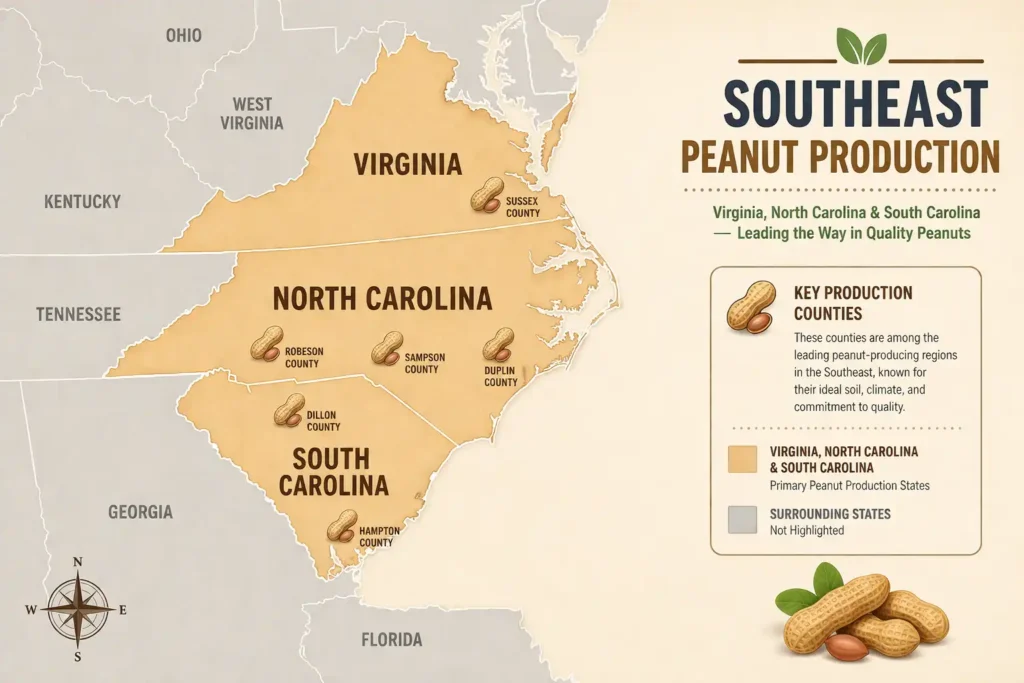
Virginia peanuts grow best in the Virginia-Carolina production region, which covers southeastern Virginia, northeastern North Carolina, and parts of South Carolina. The Virginia-Carolina belt produces nearly all of the country’s Virginia-type crop, while Runner peanuts dominate Georgia, Alabama, and Florida. You can read more about where peanuts grow naturally for a fuller regional picture.
The region works because of:
- Sandy loam soils that let pegs penetrate easily
- A 150-frost-free-day growing season
- Warm summer nights between 70°F and 75°F
- Average rainfall of 20–25 inches during the season
According to USDA NASS production data, Virginia and the Carolinas account for the bulk of Virginia-type acreage each year.
When Are Virginia Peanuts Planted and Harvested?
Farmers in the Virginia-Carolina region plant Virginia peanuts from late April through mid-May, once soil temperatures reach 65°F at the 4-inch depth. The crop matures in 140–160 days, which puts harvest between late September and early November.
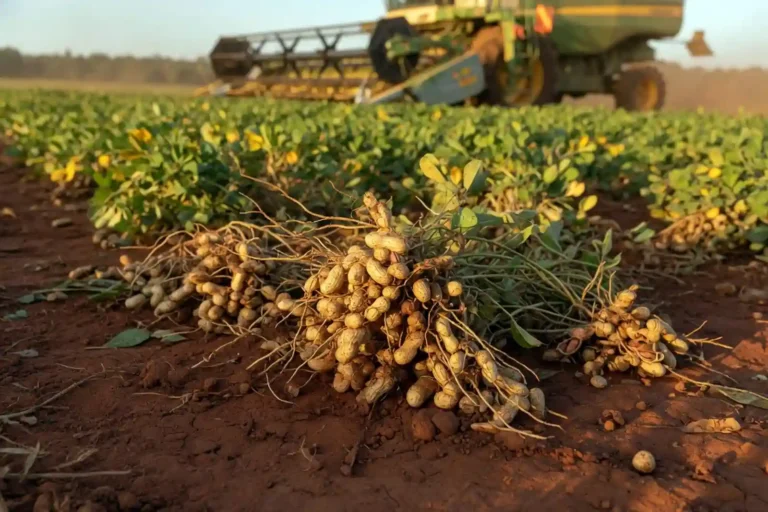
Harvest runs in two passes. A digger inverts plants so pods face up, then a combine separates pods from vines after a few days of field drying. For more on harvesting peanuts, maturity checks rely on hull-scrape color rather than calendar dates.
How Are Virginia Peanuts Grown?
Step 1: Soil preparation
Growers test soil for pH, calcium, and gypsum needs. Virginia peanuts perform best at pH 5.8–6.2 with high calcium for proper kernel fill.
Step 2: Planting
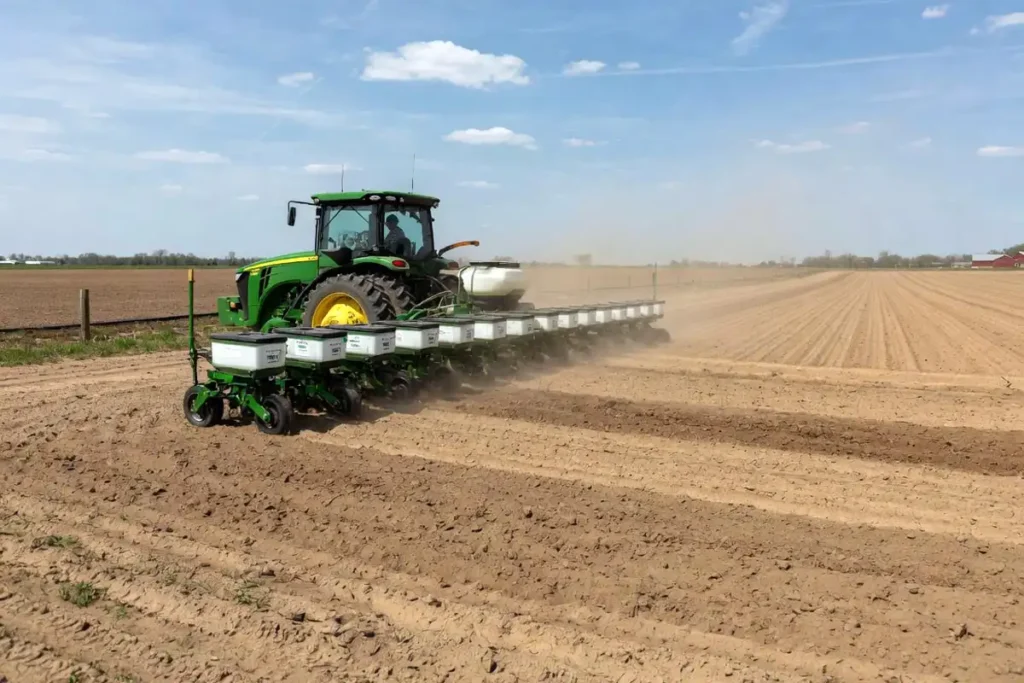
Seed goes 1.5–2 inches deep, 3–4 inches apart, in rows spaced 36 inches. Most farmers run a precision planter and inoculate seed with rhizobium bacteria for nitrogen fixation. The same peanut planting timing works for the Virginia-Carolina belt.
Step 3: Field care
Weed control, calcium application at early bloom, and fungicide programs for leaf spot and white mold protect yield. Virginia peanuts have a longer season than Runner types, so disease pressure builds toward the end of summer.
Step 4: Harvest and curing
Pods are dug, field-dried for 2–4 days, then combined and trucked to a buying point for moisture testing and grading. Final storage moisture sits between 7% and 10%.
What Are Virginia Peanuts Used For?
Virginia peanuts go into specific product categories:
- In-shell roasted peanuts: ballpark and tailgate snacks
- Gourmet salted peanuts: premium tins and gift packs
- Brittle and confections: where kernel size matters
- Boiled peanuts: green Virginia peanuts are a Southern favorite
Virginia kernels rarely go into peanut butter. Processors prefer Runner peanuts for that, since their uniform medium kernels grind into a smoother paste.
Virginia Peanuts vs Other Peanut Types
| Type | Kernel Size | Main Region | Common Use |
|---|---|---|---|
| Virginia | Largest | VA, NC, SC | In-shell, gourmet |
| Runner | Medium, uniform | GA, AL, FL, TX | Peanut butter |
| Spanish | Small, round | OK, TX | Candy, oil |
| Valencia | Small, sweet | NM | Boiled, natural butter |
Common Mistakes Growers Make
- Planting into cold soil below 65°F, which causes poor germination
- Skipping calcium at pegging, which leads to empty pods called “pops”
- Harvesting too late, which raises aflatoxin risk
- Over-irrigating during pod fill, which encourages disease
Safety and Storage Notes
Store cured Virginia peanuts at 7%–10% moisture in clean, ventilated bins. Aflatoxin from Aspergillus flavus mold remains the biggest food-safety concern in peanuts. Buying points reject loads that exceed the FDA action level of 20 parts per billion. Keep storage bins dry and cool to slow mold growth.
FAQs
Are Virginia peanuts the same as ballpark peanuts?
Can I grow Virginia peanuts at home?
Are Virginia peanuts healthier than other peanuts?
Why do Virginia peanuts cost more?
When are Virginia peanuts in season?
Conclusion
Virginia peanuts earn their place as the largest, mildest, and most snack-friendly peanut type grown in the United States. Their big kernels, clean shells, and sweet taste put them on stadium menus and inside gourmet tins across the country. If you grow, cook, or sell peanuts, knowing the Virginia type helps you pick the right variety for the right market.