How to Establish a Crop Farm: 6 Budget-Smart Basics
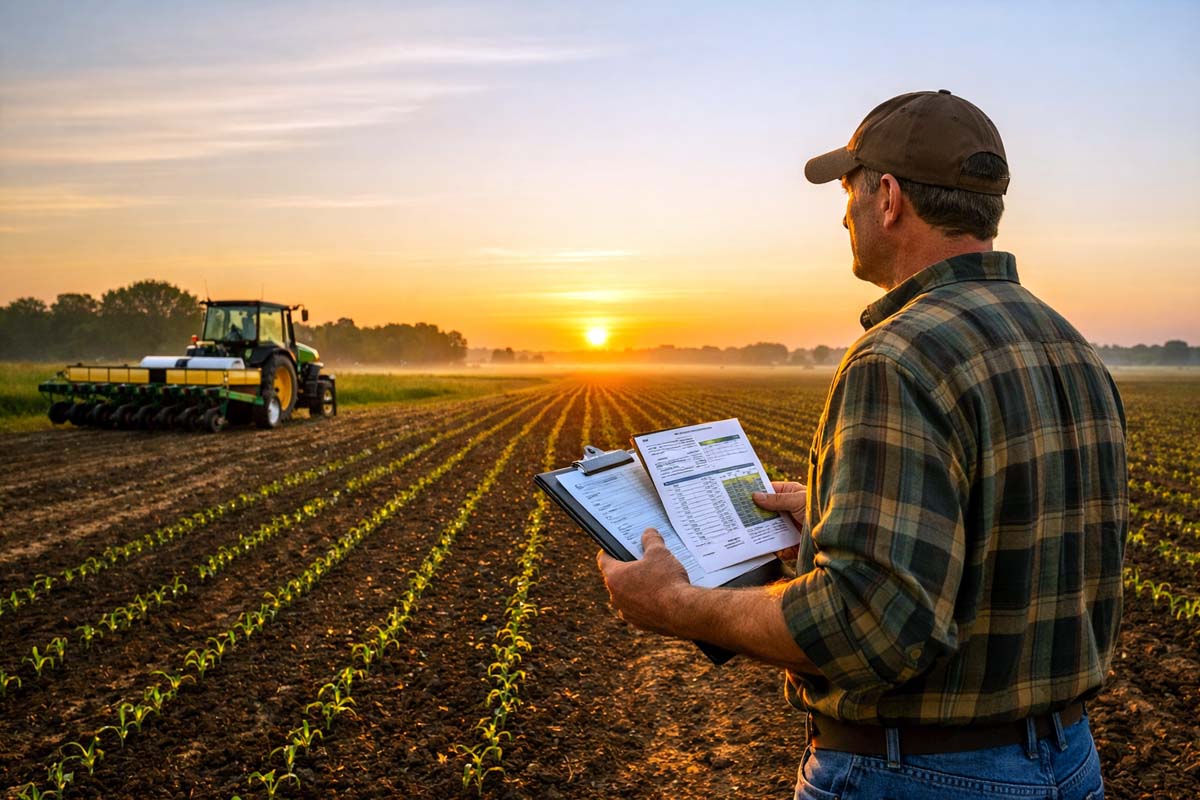
Establish a crop farm by choosing a profitable market and crop plan, securing suitable land and water, testing and improving soil, building a realistic budget and equipment/operations setup, and running the season with disciplined scouting, records, and safety practices.
A crop farm produces saleable grain, fiber, forage, or produce using planned fields, inputs, equipment, labor, and records.
A good startup plan matches land capability, water access, and a real buyer list before the first seed goes in.
USDA NRCS (2022) recommends soil testing every 3–5 years, which makes the soil test a first purchase, not a last one.
What does “establishing a crop farm” mean?
Establishing a crop farm means setting up land, water, money, systems, and labor so crops produce consistent yields and clean sales. The work includes field selection, soil testing, crop choice, rotation planning, input sourcing, and storage planning. The goal is repeatable production, not a one-time crop.
Learn more: What Farmers Sow to Make Plants Grow: Essential Planting Add Ons
How do you choose a farm goal and market before buying land?
Choosing a farm goal means picking 1–2 primary crops and 1 primary buyer type. Start with a buyer list, then fit crops to that demand. Grain elevators, feedlots, processors, and produce distributors each require different specs. Write target acres, target yield, and target sale window in one page.
Practical starting point (examples):
- Row crops: corn, wheat, soybeans, sorghum
- Vegetables: tomatoes, onions, lettuce
- Root crops: potatoes, carrots, sugar beets
Explore crop options here: Crop Guides
What land traits decide whether a field grows profit?
Land traits decide profit through drainage, slope, soil texture, compaction risk, and access. A field with poor drainage increases stand loss and disease pressure. A field with weak access increases harvest delays and trucking cost. Walk the field after rain, then check low spots, ruts, and ponding patterns.
How do you check soils before signing a lease or deed?
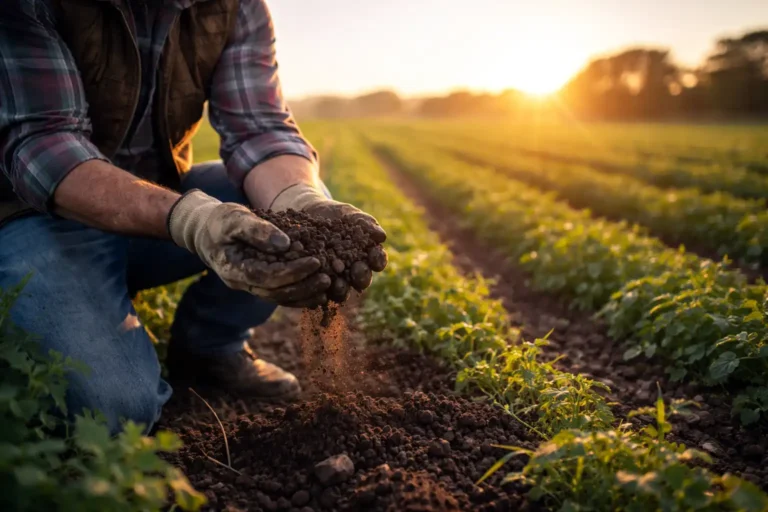
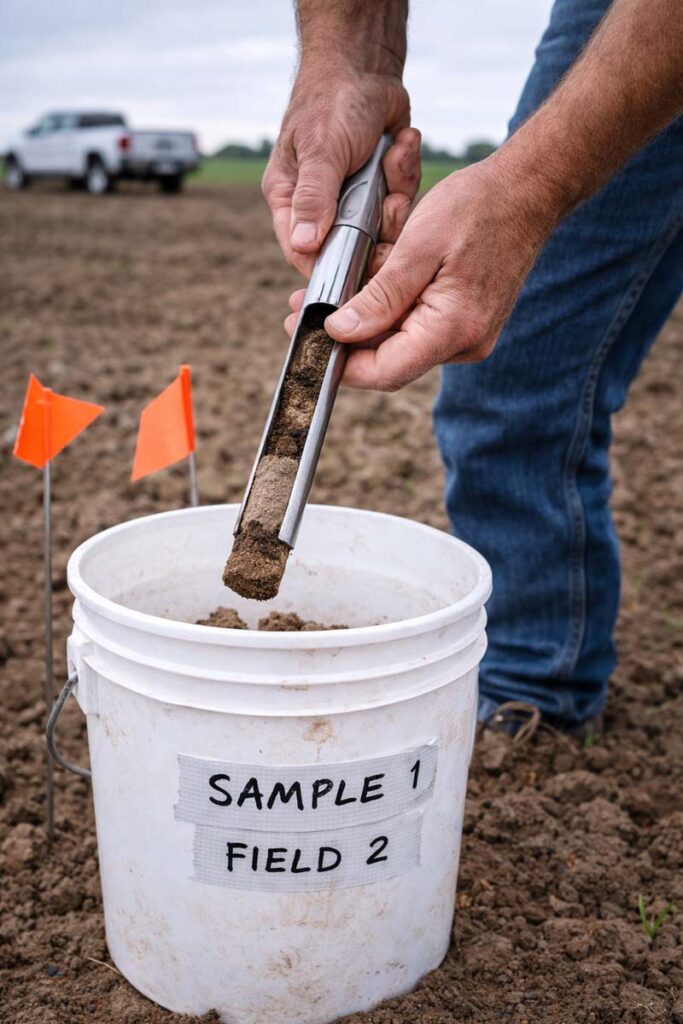
Soil checks start with a lab test, then a shovel test. USDA NRCS (2022) lists a general soil testing interval of 3–5 years, which supports baseline testing before long commitments. A composite sample usually uses 15–20 cores per area, mixed into one bag.
Tools that pay fast:
- Soil probe, buckets, sample bags, permanent marker
- Tape measure or GPS mapping app
- Penetrometer or spade for compaction checks
Related guide: Soil Fertility and Soil Testing & Measuring Tools
How do you secure water and drainage for reliable yields?
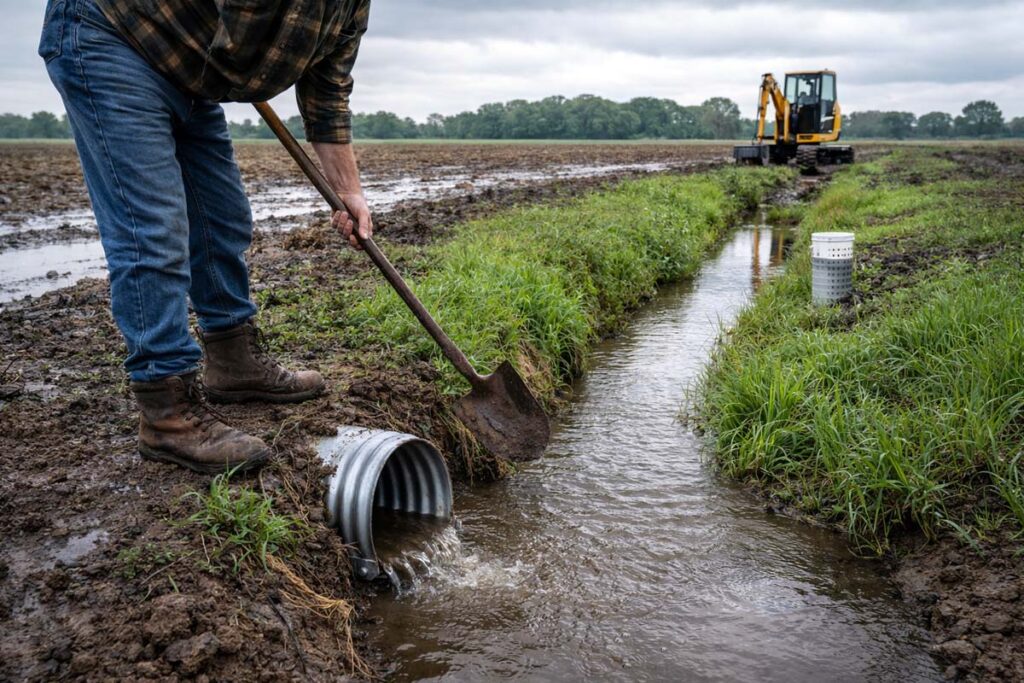
Water security means knowing the source, capacity, and legal rules before planting. Rainfed fields still need drainage planning to reduce ponding and root stress. Irrigated fields need pump capacity, power cost estimates, and maintenance access. Map outlets, ditches, culverts, and tile lines, then budget repairs.
Related guide: Irrigation & Water
What legal and business setup keeps the farm compliant?
A compliant farm uses a business structure, a basic accounting system, and a documentation habit. Register the operation, separate farm and personal accounts, and track receipts by field and crop. Keep copies of leases, insurance, soil tests, pesticide records, and seed tags. File storage beats memory in July.
Helpful site pages: Disclaimer and Editorial Policy & Review Methodology
How do you build a startup budget and cash-flow plan?
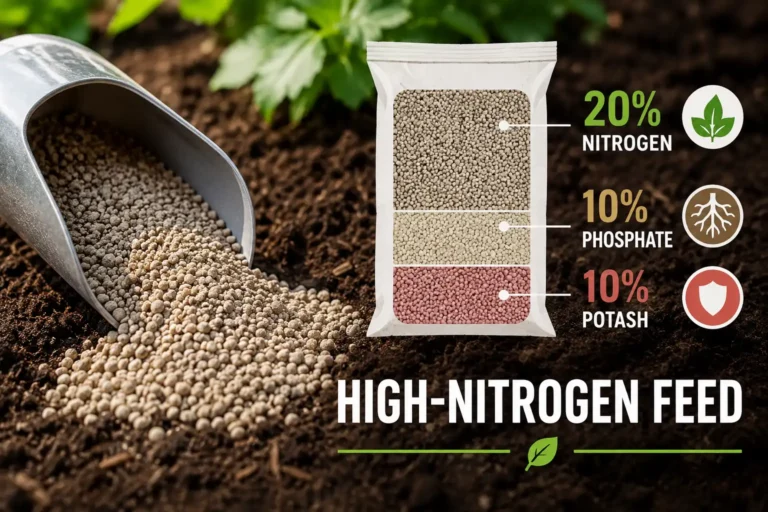
A startup budget lists fixed costs, variable costs, and a cash timeline. Fixed costs include rent, insurance, interest, storage, and repairs. Variable costs include seed, fertilizer, lime, fuel, chemicals, and custom work. Build a month-by-month cash sheet so inputs get paid before sales arrive.
Cost control habits that hold up:
- Price inputs per acre, not per tote
- Track break-even by field and crop
- Use custom operators for low-use equipment
How do you finance a new crop farm?
Financing works best when it matches the crop cycle and the asset life. Short-term inputs fit operating credit, while long-life assets fit term loans. USDA FSA states Direct Operating Loans have a maximum of $400,000. Build a packet with a plan, budgets, and 2–3 years of projected cash flow.
What equipment list covers Year 1 without overspending?
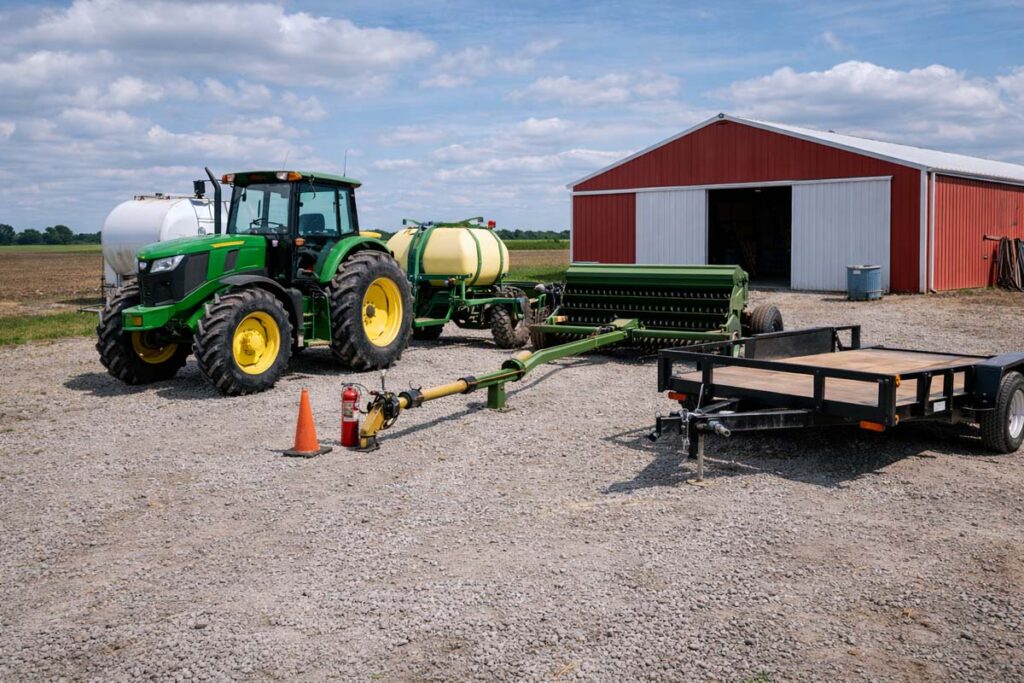
Year 1 equipment works best as a mix of owned basics and custom hire. Prioritize what affects timing: planting, spraying, and harvest. Many new farms save money by hiring harvest, then buying storage and hauling later. Match horsepower and implement width to acres, not ego.
Equipment hub: Tools & Equipment
Key sections: Planting & Seeding Tools and Sprayers & Application Gear
How do you set up storage and handling for harvested crops?
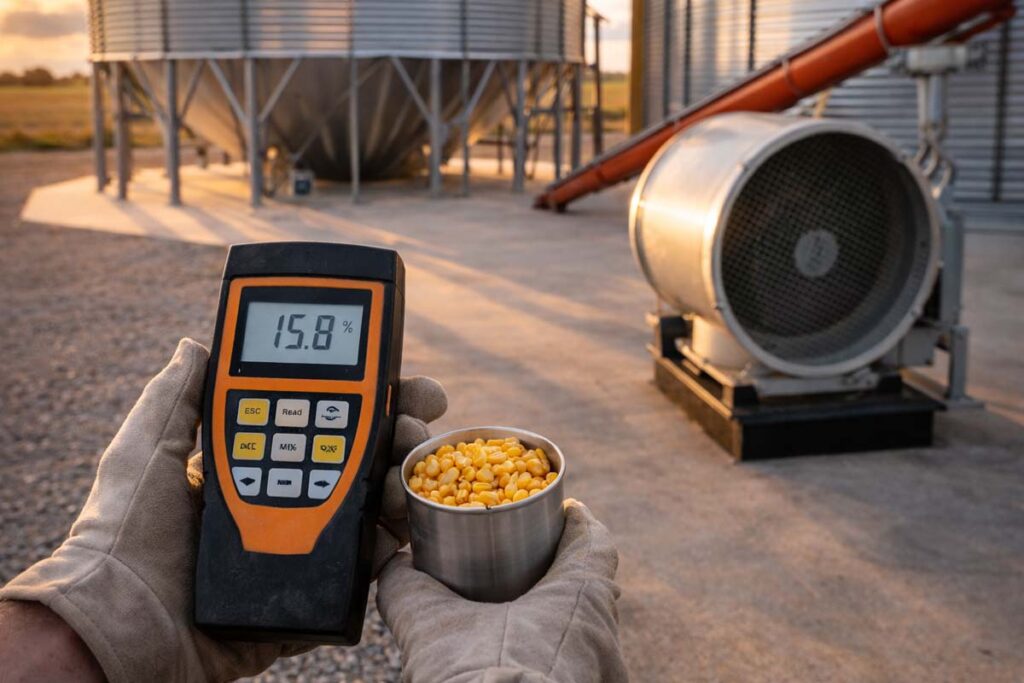
Storage setup starts with moisture control, pest exclusion, and clean handling. Grain needs drying capacity or delivery timing that avoids discounts. Produce needs shade, airflow, and fast cooling. Build a clean traffic pattern so trucks do not cross muddy lanes. Storage problems erase margin after the hard work.
Essential guides for you: Harvest & Storage and Drying & Storage Gear
How do you design a crop rotation and field layout?
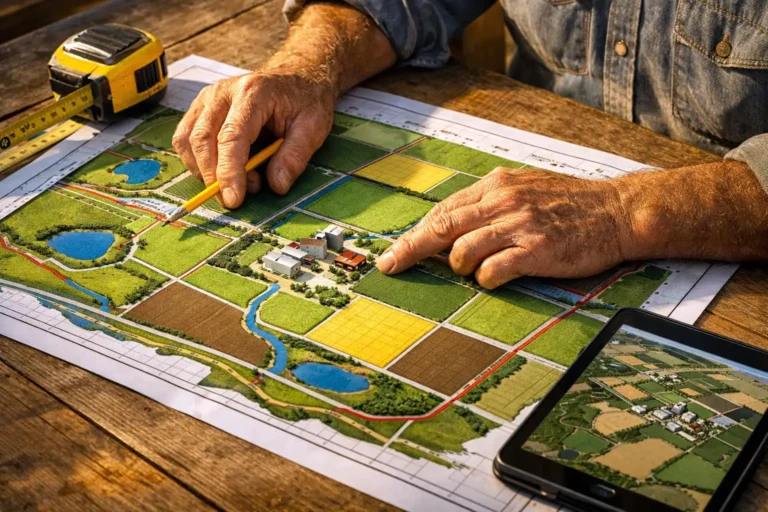
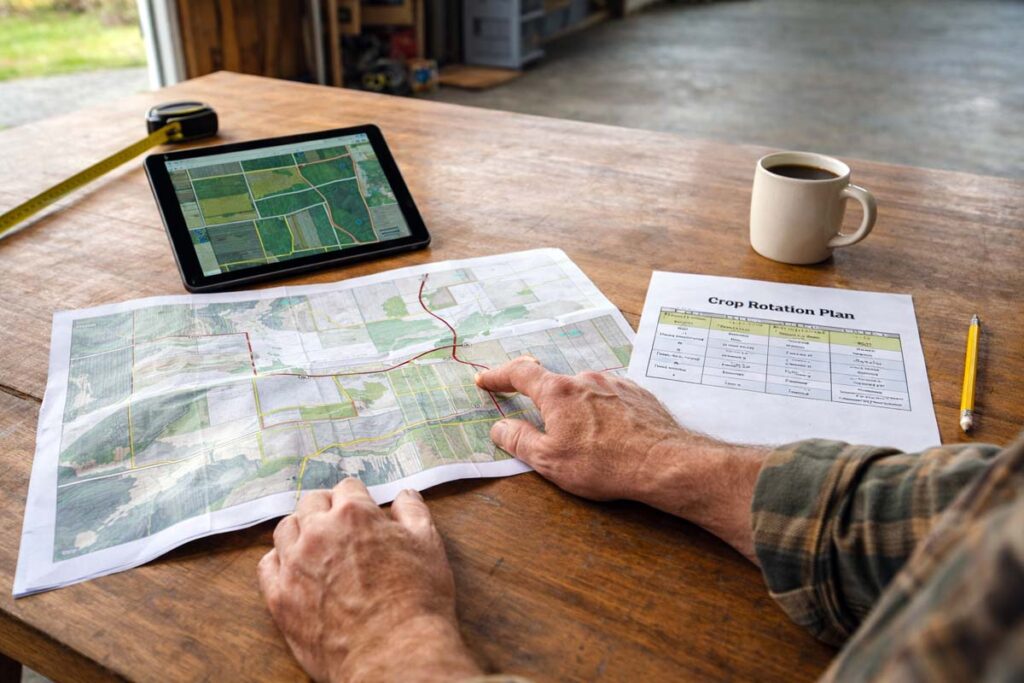
Rotation design reduces pests, spreads labor, and balances nutrient demand. A simple first rotation uses two crops with different planting and harvest windows. Field layout adds headlands, waterways, and access lanes that protect soil structure. Map every field and name each one, then keep names consistent in records.
Crop examples to study:
How do you plan planting, fertility, weeds, pests, and harvest timing?
A seasonal plan uses a calendar that ties field operations to crop stages. Start with planting dates, then backfill tillage, fertility, burndown, and pre-emerge steps. Scout weekly and write counts, not feelings. For pesticides, EPA states labels are legally enforceable and include the federal law statement about use inconsistent with labeling.
Necessary guides: Planting & Seeding • Weed Control • Pest & Disease
What safety and PPE setup belongs on every new farm?
A safe farm uses PPE, lockout habits, chemical storage rules, and a communication plan. Put eyewash, gloves, and clean water near the chemical mixing area. Keep labels and SDS sheets organized and reachable. Train everyone on PTO shielding, hitching rules, and confined space risks around bins.
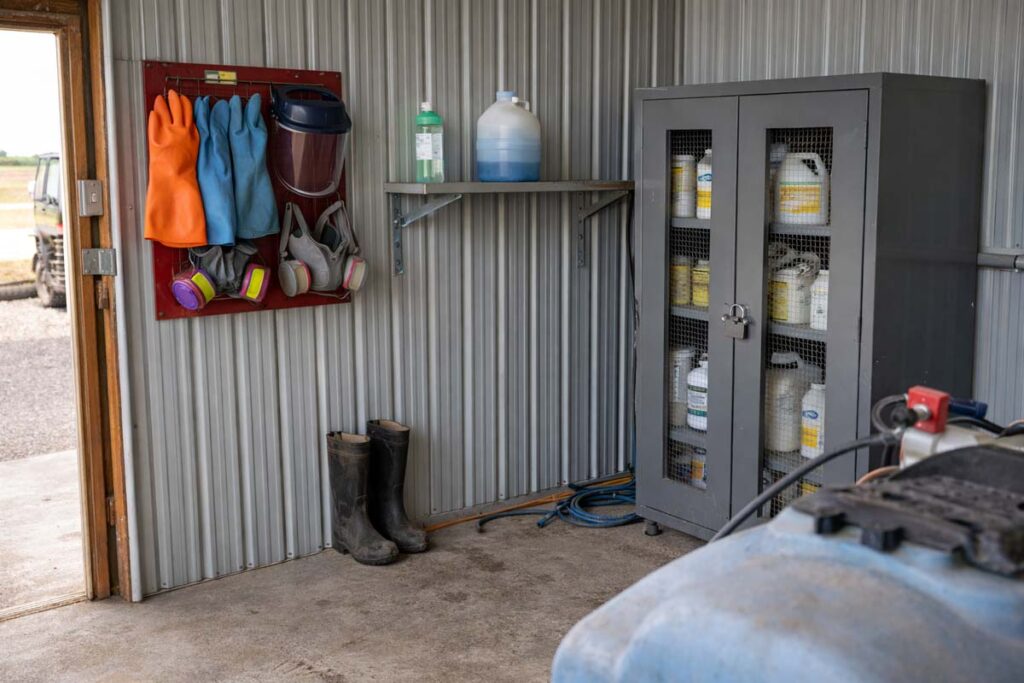
Essential guide: Safety & PPE
How do records and scouting improve decisions each season?
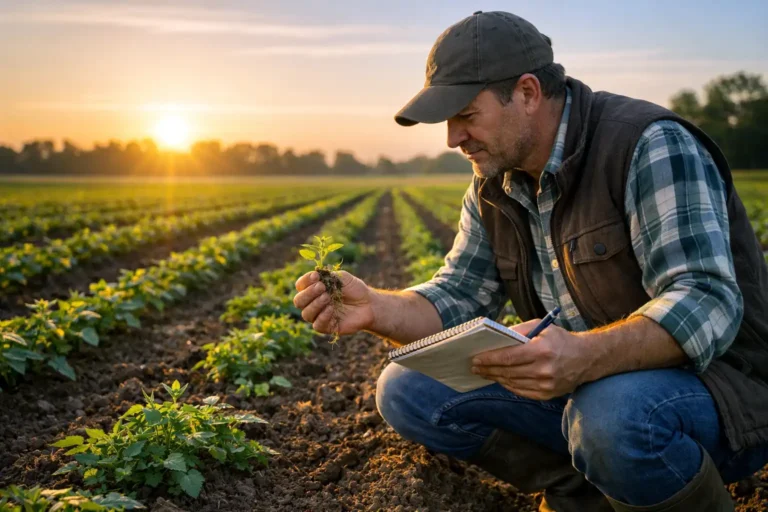
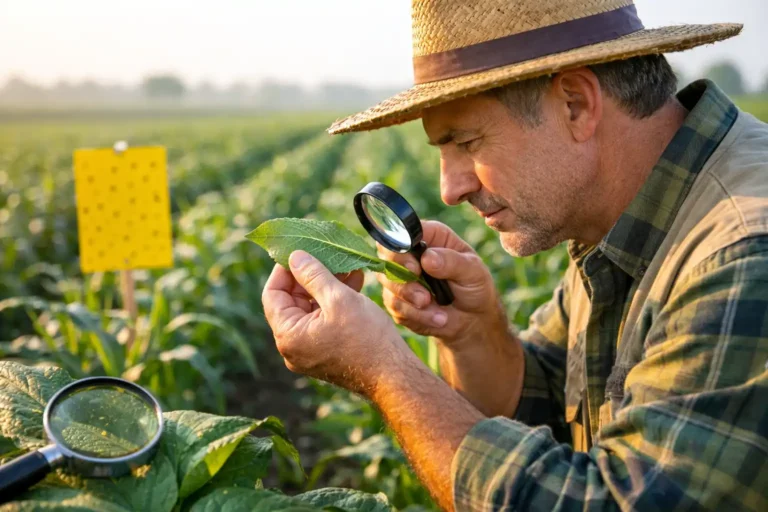
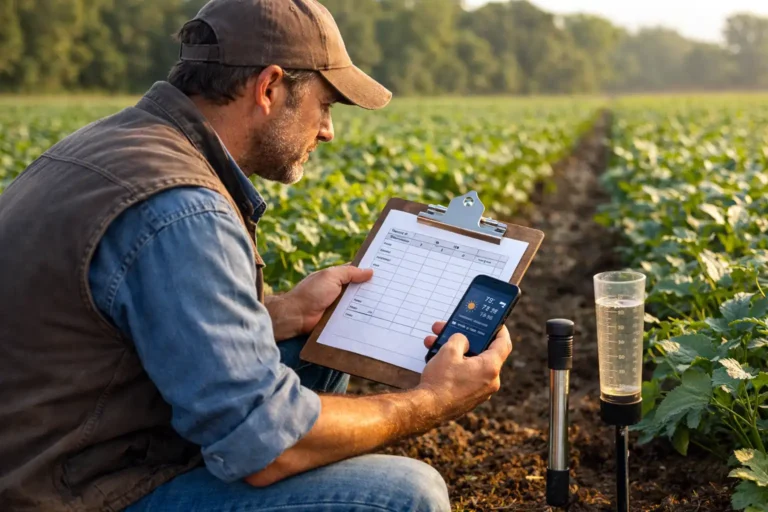
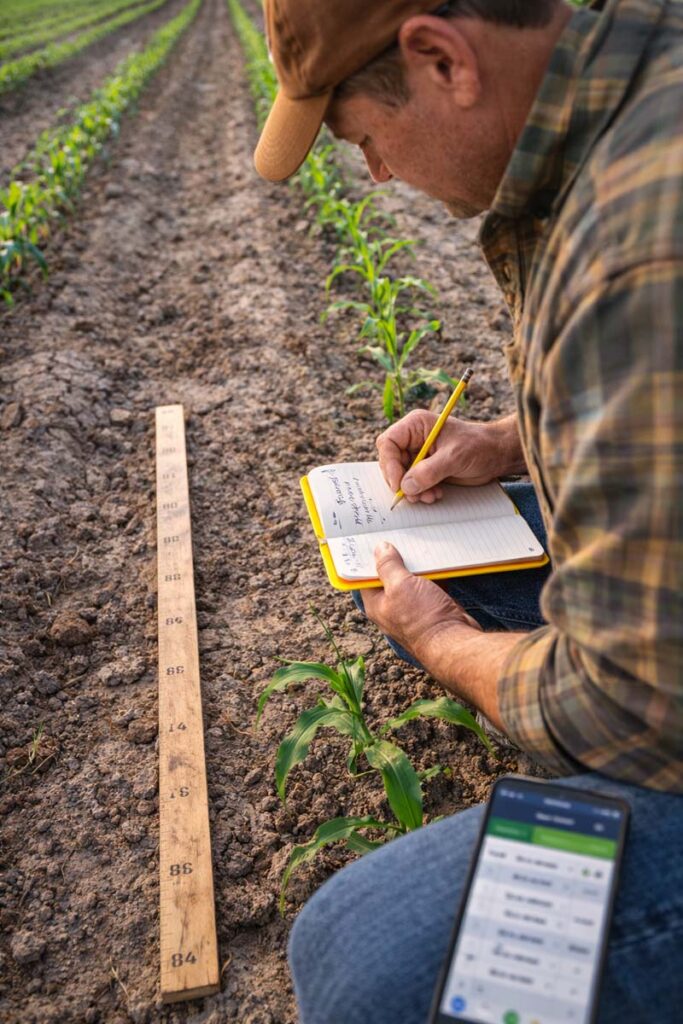
Records improve decisions by turning each field into a repeatable system. Track planting date, hybrid or variety, seeding rate, fertilizer rate, spray date, product, and weather notes. Scout using counts like plants per 10 feet, weed escapes per square yard, and disease incidence by row. Clean records sharpen next year’s budget.
What is a 30-day checklist for starting a crop farm?
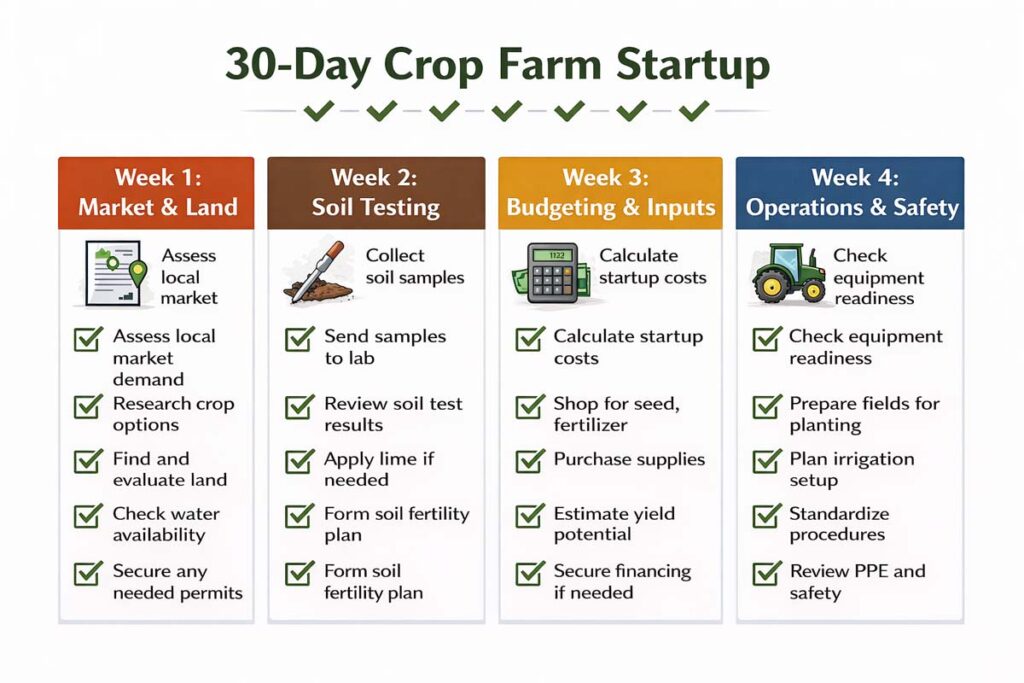
A 30-day checklist starts the farm by locking land details, soil facts, and the first operating plan.
- Week 1 sets the goal, crop list, and buyer list.
- Week 2 completes soil sampling and a baseline budget.
- Week 3 lines up inputs and custom hire.
- Week 4 finalizes maps, records, and safety.
30-day checklist:
- Choose 1–2 crops and 1 buyer type
- Verify access, drainage, and water source
- Pull 15–20 soil cores per composite area and send to a lab
- Build per-acre budgets and a monthly cash sheet
- Line up seed, fertilizer, and herbicides by delivery date
- Set storage and hauling plan before harvest pressure
- Stock PPE and chemical handling supplies
When does scaling make sense, and what gets upgraded first?
Scaling makes sense when the farm hits consistent yields, timely fieldwork, and predictable cash flow. Upgrade bottlenecks first, not convenience items. Storage and hauling upgrades often return faster than more horsepower. Add acres in blocks that match labor capacity and planting speed. Protect soil structure as acres increase.
Final Words
Establishing a crop farm is mostly about setting the fundamentals before you chase yield—pick a buyer and crop plan, prove the soil and water, build a budget that survives a rough year, and run the season with tight timing, scouting, and records. Start simple, protect your soil structure, and upgrade the bottlenecks (storage, hauling, field speed) only after you’ve got repeatable results.