Crop Farming Profitability: 7 Steps to Raise Margins This Season
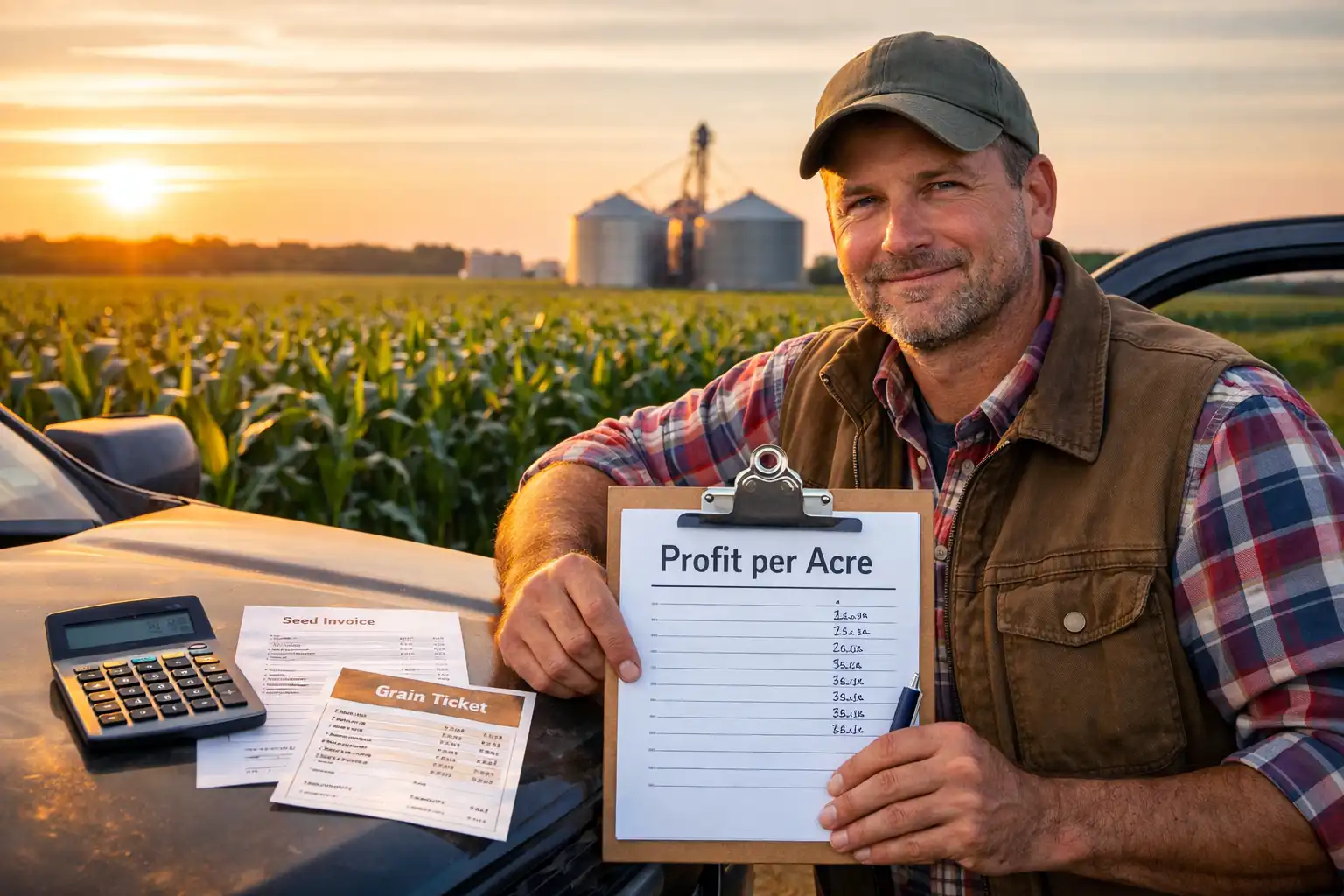
Crop farming profitability improves when revenue per acre stays higher than total cost per acre, year after year. This guide shows how to calculate profit per acre, build a field-level cost-of-production budget, set break-even targets, and manage the biggest levers: yield, price, and input efficiency. You’ll also learn how to check margins in-season, reduce downside risk, and use field-by-field records to decide what to fix, cut, or expand.
What is crop farming profitability?
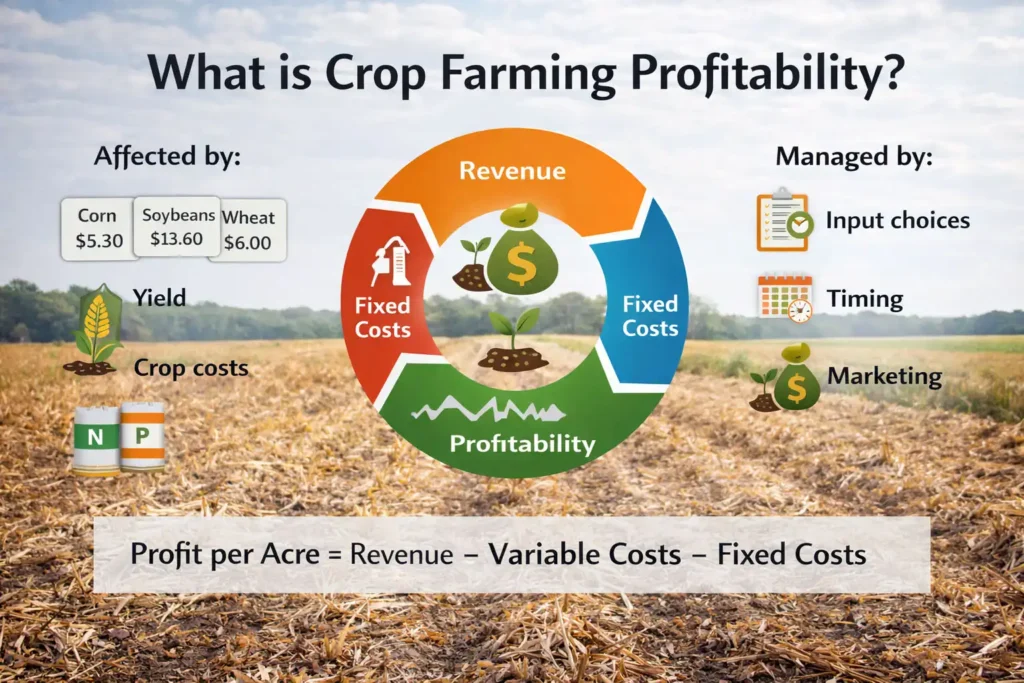
Crop farming profitability is the net margin a farm keeps after it pays all costs tied to producing and selling a crop. A manager measures it per acre, per field, and per crop enterprise. Net profit includes variable costs (seed and fertilizer), fixed costs (land and machinery ownership), and overhead allocations (labor, insurance, taxes, and interest). Profitability matters most when it protects cash flow, because bills come before grain checks.
If you want higher yields without wasting inputs, focus on practices that boost farm crop production like tighter soil testing, better weed timing, and improving drainage in your worst-performing zones. See the crop farming workflow.
What numbers prove a crop is profitable?
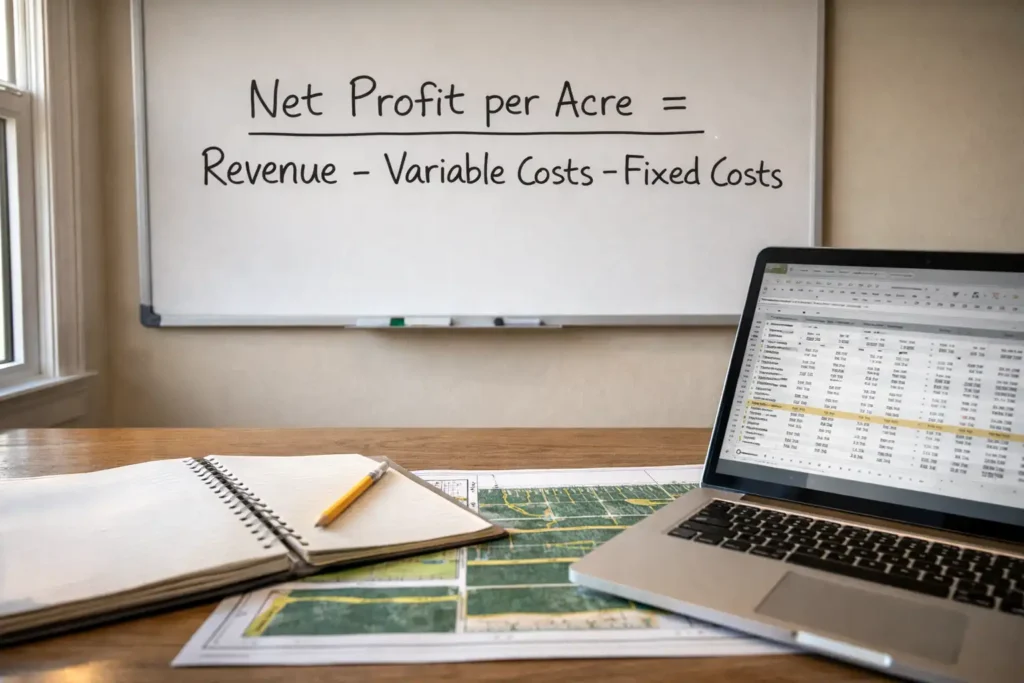
A crop is profitable when it shows a positive net return after variable costs and after fixed costs.
Gross revenue per acre = (Yield × Price) + Premiums + Contract or program payments (if used)
Variable cost per acre = Seed + Fertilizer + Lime + Crop protection + Insurance + Drying + Custom work + Fuel/repairs tied to that crop
Fixed cost per acre = Land cost + Machinery ownership (depreciation and interest) + Taxes + Farm insurance + Labor/management allocation
Net profit per acre = Gross revenue − Variable costs − Fixed costs
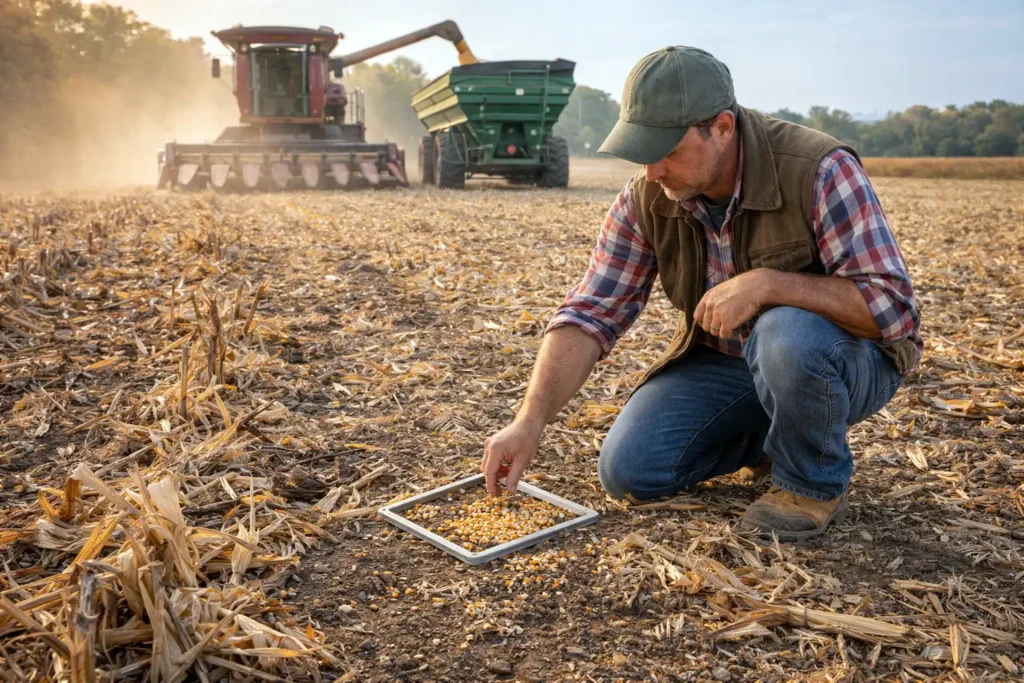
Profit per acre drives decisions better than profit per bushel, because land and overhead live on acres. Profit can disappear at the finish line, so understanding when to harvest crops helps you protect test weight, cut field loss, and avoid moisture and quality discounts.
How do harvest timing and storage losses erase profit?
Harvest and storage losses erase profit because lost bushels still carry most of the costs that produced them. Delayed harvest can raise lodging, shatter loss, and field loss risk. Poor storage can add shrink, mold risk, and quality discounts. A tighter harvest plan plus basic storage checks often protects margin more reliably than chasing a small yield gain.
If you want supporting practices, use harvest and storage practices.
Which records and KPIs keep a farm profitable year after year?
Records support profitability when they show margin by field, not just whole-farm averages. Track inputs, passes, yield, moisture, and sale tickets in one system. Then calculate:
- Cost per acre
- Revenue per acre
- Net return per acre
- Break-even price per bushel
- Break-even yield per acre
- Working capital trend (cash cushion over time)
If you don’t measure by field, one bad field can hide inside a “fine” farm average.
How do you calculate break-even yield and break-even price?
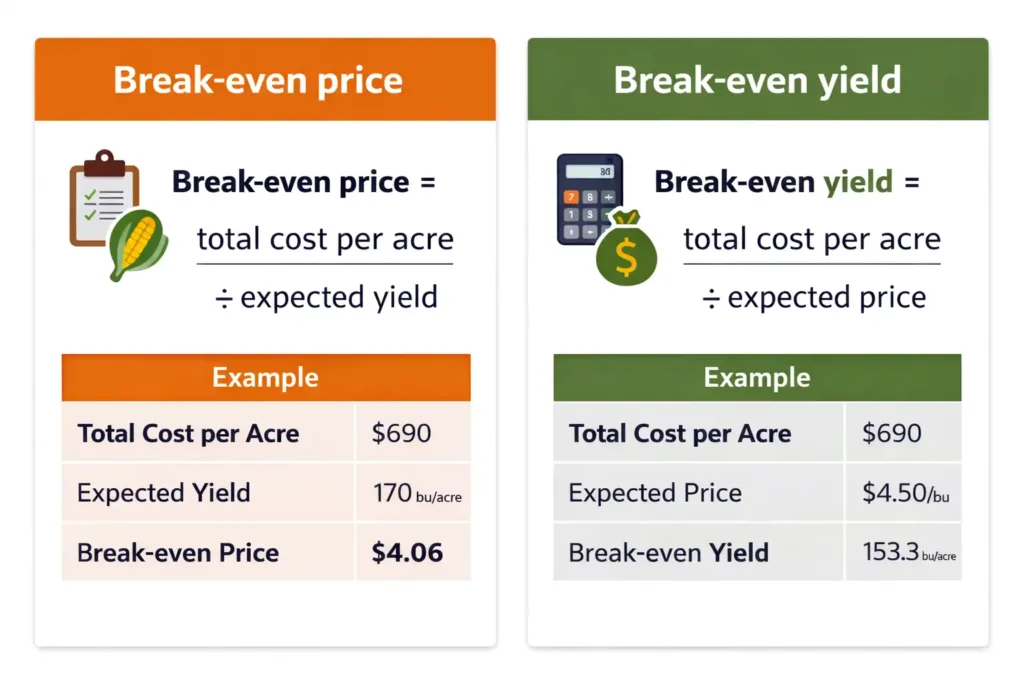
Break-even numbers draw a line you can use for buying inputs and selling grain.
Break-even price = Total cost per acre ÷ Expected yield
Break-even yield = Total cost per acre ÷ Expected price
Run three cases: low, likely, and high. That keeps your plan honest when weather shifts.
How do you build a cost-of-production budget that matches the field?

A useful budget uses your farm’s rates, your field history, and your real input plan.
Step 1: Budget one field at a time
Each field has its own yield potential, drainage, weed pressure, and timing risk. Put one field on one sheet.
Step 2: List every pass across the field
Include every trip and every service:
- Tillage or residue management
- Planting
- Fertility passes
- Herbicide and insecticide passes
- Irrigation events (if used)
- Harvest, hauling, drying, storage
This step forces full cost visibility.
Step 3: Price inputs using real quotes and real rates
Use what you will actually buy, not a “best case” guess. Write the product rate, timing, and expected response.
If your rates depend on tests and calibration, use soil testing and measuring tools.
Step 4: Add machinery and labor as real costs
Machinery costs include fuel, repairs, depreciation, and interest. Labor includes payroll or owner labor. If you don’t pay yourself on paper, your “profit” is inflated.
Step 5: Add land costs the right way
If you rent, use the rent. If you own, include taxes, insurance, and a return-to-land charge. Otherwise, you underprice land and overstate margin.
Step 6: Compute total cost per acre and break-evens
Now your break-even price and yield mean something.
Step 7: Reconcile budget vs actual during the season
Do one check after planting and one check before harvest. Update expected yield, expected price, and any unplanned passes. This step prevents “budget drift” from eating margin.
What are the biggest drivers of profit per acre?
Profit changes when yield, price, or costs move.
Yield raises revenue, but it can raise cost.
A yield gain pays only when added revenue beats added cost per acre. Do the marginal math before you add a pass.
Price risk can erase a good crop.
A marketing plan protects profit when it prices grain above break-even and above your target margin.
Input efficiency beats blind cost cutting.
Cutting costs without a reason often cuts yield. Efficient inputs target the limiting factor first, such as pH, drainage, compaction, or weed escapes.
Field variability decides winners and losers.
Manage zones when you can. One weak area can drag a field’s average return.
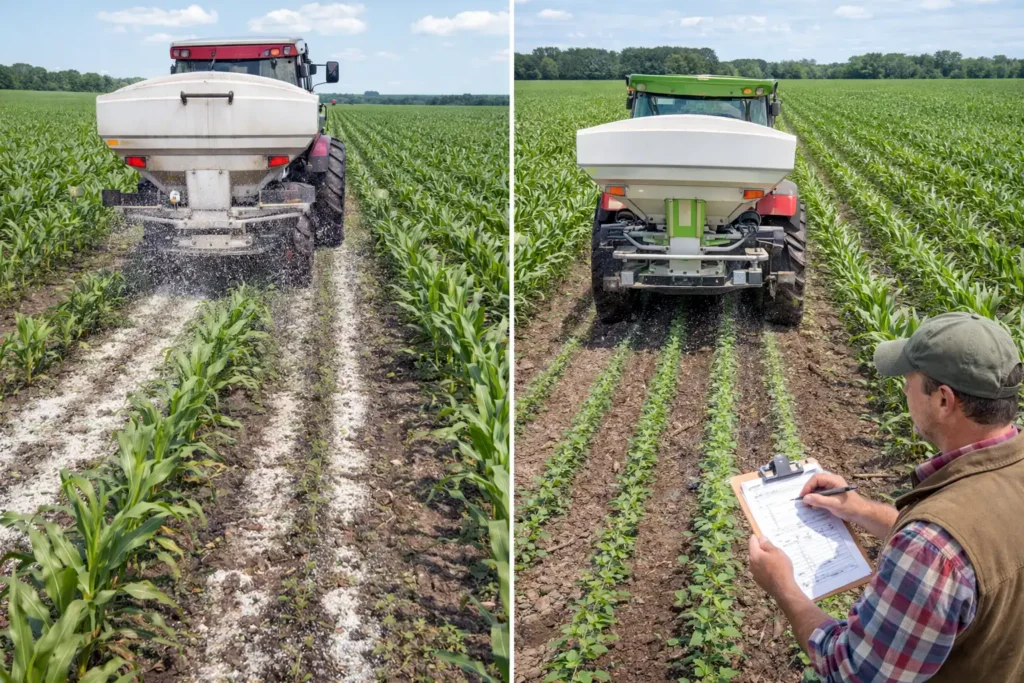
How do you choose profitable crops and rotations?
A profitable rotation matches climate, soils, equipment, labor timing, and market access.
What crop mix fits your land and labor?
A crop fits when it matches:
- Planting and harvest windows you can hit on time
- Equipment and storage you already have
- Soil type, drainage, and water availability
- Labor capacity during peak weeks
Why rotations improve profit stability
Rotation breaks pest and disease cycles, spreads labor, and reduces rescue treatments. Rotation can also improve soil structure and water handling over time.
If pressure is high, keep your basics tight with pest and disease management and weed control practices.
How do you improve profitability with better agronomy?
Agronomy improves profit when it prevents expensive problems and protects yield potential.
Soil fertility: fix the limiting factor first.
Soil pH controls nutrient availability. Lime often pays when pH limits uptake, because fertilizer dollars waste in the wrong pH range.
Water management: protect the stress windows.
Water stress during key growth stages cuts yield fast. Drainage and irrigation decisions affect both yield and quality.
If water management is part of your system, use irrigation and water practices.
Weed control: stop loss early.
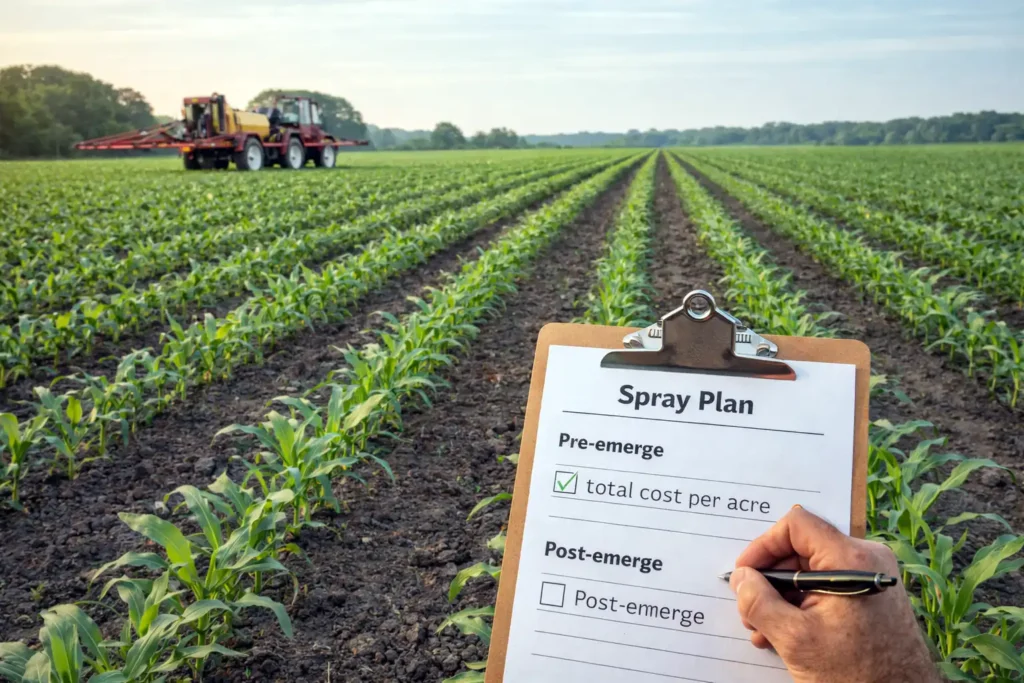
Weeds steal light, water, and nutrients. Early control usually costs less than rescue treatments and protects yield.
Harvest and storage: protect the check you already earned.
Quality discounts and shrink can erase margin late in the season. Check moisture targets, handling damage, and storage conditions.
What marketing choices protect profit?
Marketing protects profit when it prices grain above break-even and covers your risk.
Build targets from your break-even.
Set a profit target per acre. Convert it into a target price using expected yield. That gives you a real “sell line.”
Price in pieces, not all at once.
When price clears break-even plus your target margin, price a portion. Keep the remainder flexible for weather, basis, and carry.
Use storage only when the math works.
Storage can improve basis or capture carry, but it adds shrink, interest, and handling. Convert storage into a cost per bushel before you store.
How do you manage risk so one bad year does not wipe out profit?
Risk management keeps the farm alive long enough to benefit from the good years.
Protect cash flow first.
Match insurance and marketing tools to your fixed obligations and operating loan exposure.
Diversify where it actually reduces failure points.
Diversification can include crop mix, delivery windows, and markets. It can also mean spreading rented acres across soil types.
Safety protects profit.
Injury and equipment damage cost time and money. Use PPE for chemicals, dust, and grain work, and keep guarding in place on equipment.
For job-matched protection, use farm safety PPE.
What records do you need to track profitability field by field?
Good records turn guesswork into certainty.
Track per field:
- Acres planted and harvested
- Seed rate and hybrid/variety
- Products, rates, and dates
- Equipment passes and custom work
- Yield and moisture
- Storage location and shrink
- Sale date, price, basis, and premiums
- Notes on weather, pests, and failures
Then calculate net return per acre and rank fields from best to worst. Profit often improves when you fix the bottom fields or change what you do on them.
Example profitability calculation (use your own numbers)
This example shows the method, not a promise of results.
Expected yield: 170 bushels per acre
Expected price: $4.50 per bushel
Gross revenue: 170 × 4.50 = $765.00 per acre
Variable costs: $430.00 per acre
Fixed costs: $260.00 per acre
Total cost: $690.00 per acre
Net profit: 765 − 690 = $75.00 per acre
Break-even price: 690 ÷ 170 = $4.06 per bushel
This crop stays profitable above $4.06 if yield holds.
What mistakes cut profitability most often?
The same problems show up again and again:
- Skipping true overhead costs, then getting hit by machinery replacement
- Buying inputs without a defined field problem to solve
- Letting weeds get ahead, then paying more for less control
- Ignoring harvest loss and shrink
- Selling without targets, then dumping grain only when cash is tight
Troubleshooting: what do you fix first when profit is low?
Start with the biggest levers that move fastest.
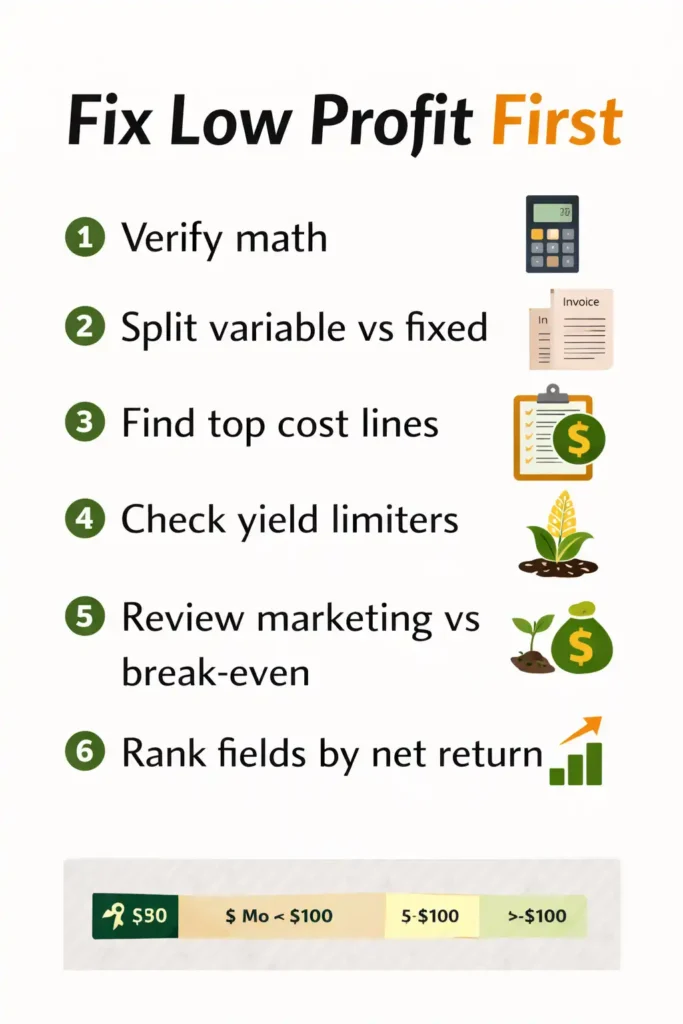
- Verify the math: confirm acres, yield, moisture, and sale price.
- Separate variable vs fixed: is the crop losing money, or is overhead too heavy?
- Find the top three cost lines: seed, fertility, and crop protection often lead.
- Check limiting factors: compaction, pH, drainage, and weed escapes.
- Compare marketing to break-even: a good crop can lose money on price.
- Rank fields by net return: fix the bottom fields or change the plan.
Practical checklist to improve profit this season
- Build a field-level budget before you buy major inputs.
- Calculate break-even price and yield for each crop.
- Match crop choice to your timing and labor capacity.
- Fix pH, drainage, and compaction before chasing minor yield tweaks.
- Use a weed plan that prevents escapes.
- Protect quality at harvest and in storage.
- Price a portion when margin clears your target.
- Track net return per acre by field after the crop sells.