Can You Plant Onions in the Fall? 5 Steps to Bigger Bulbs
Yes, onions grow well when planted in fall across USDA hardiness zones 4 through 10. Fall planting gives roots 4 to 6 weeks of warm soil before winter dormancy. This guide covers timing, onion types, planting steps, and winter protection for a strong fall onion crop.
Fall-planted onions root before winter, go dormant in cold weather, and resume growth in early spring. They produce larger bulbs and mature up to a month earlier than spring-planted onions. Zones 6 and warmer get the best results. Colder zones (4 and 5) need mulch or low tunnels for protection.
Contents
- 1 What Are Fall-Planted Onions
- 2 When to Plant Onions in the Fall
- 3 How to Choose the Right Onion Type
- 4 How to Plant Onions in the Fall (Step-by-Step)
- 5 How to Protect Fall-Planted Onions Over Winter
- 6 Common Mistakes to Avoid
- 7 When to Harvest Fall-Planted Onions
- 8 FAQs on Planting Onions in the Fall
- 9 Conclusion
What Are Fall-Planted Onions
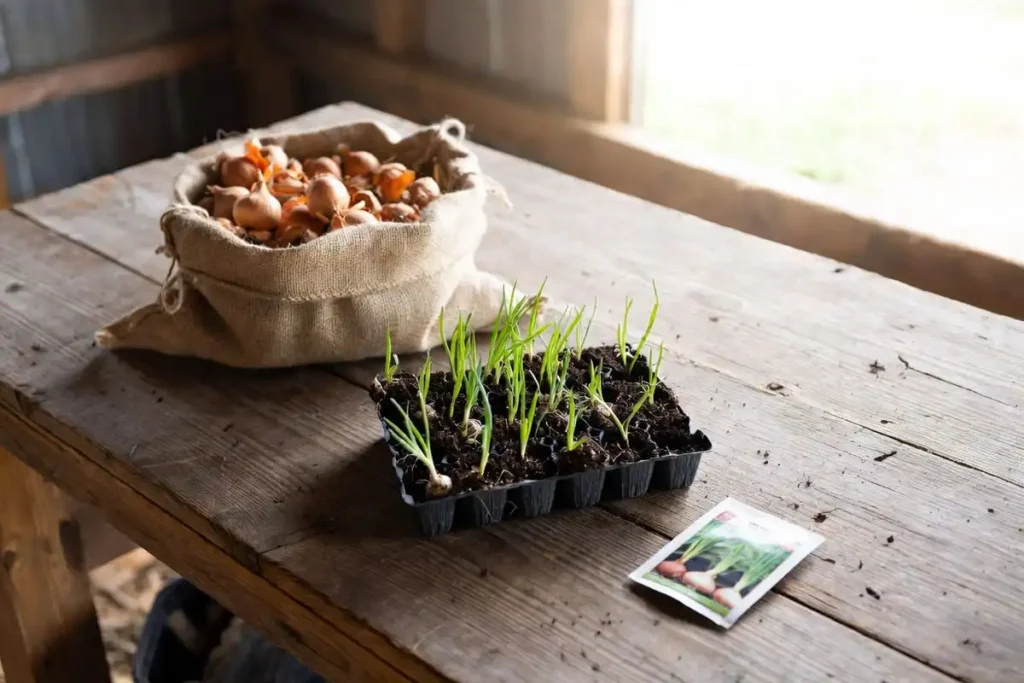
Fall-planted onions go into the ground during autumn instead of spring. Onions are biennials. They use the first season to store energy in the bulb.
When planted in fall, sets or seedlings push roots into warm soil before freeze-up. Once temperatures drop, the plants go dormant until spring. This head start produces larger bulbs and earlier harvests than spring planting.
You can fall-plant onion sets (small dried bulbs), transplants (young seedlings), or direct-sown seeds. Sets establish fastest. Seeds need earlier sowing, usually late summer, depending on your zone.
When to Plant Onions in the Fall
Timing depends on your USDA zone and first frost date. Onions need 4 to 6 weeks of soil temperatures above 40°F to root before the ground freezes.
Zones 8 to 10: Plant October through December. Texas A&M AgriLife Extension recommends seeding short-day onions from October 1 through November 15 in Texas.
Zones 6 to 7: Plant sets or transplants in September through mid-October.
Zones 4 to 5: Plant late August through September. Use bolt-resistant varieties and plan for winter protection.
If you keep a seasonal crop planting calendar, mark your fall onion window 4 to 6 weeks before your average first frost.
How to Choose the Right Onion Type
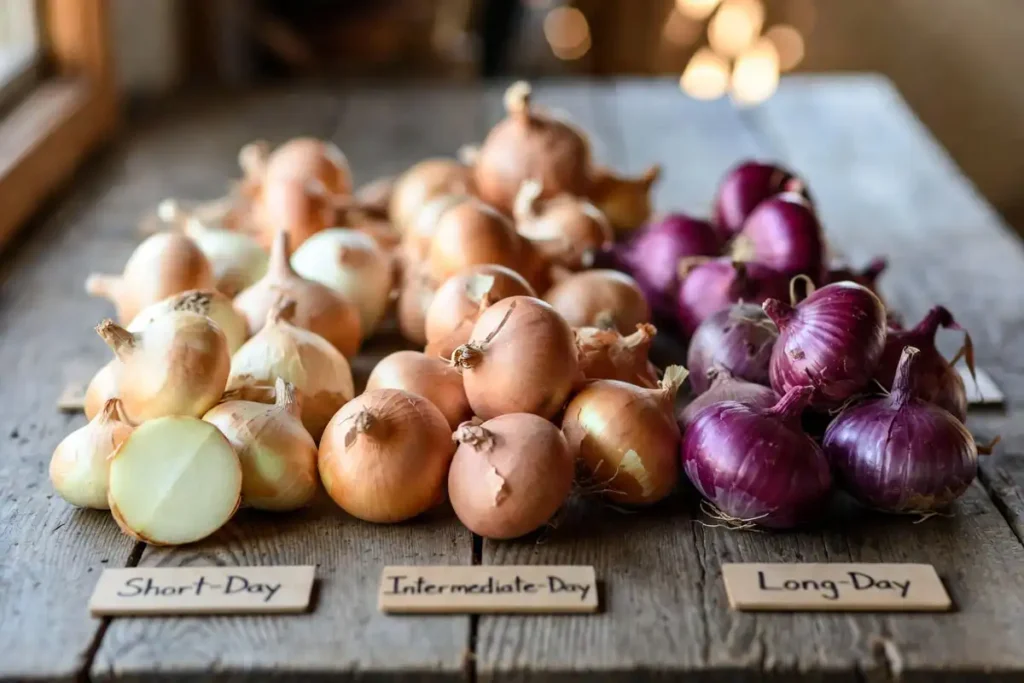
Onion varieties fall into three groups based on the daylight hours they need to form bulbs. The wrong type for your latitude leads to small bulbs or bolting.
Short-day onions bulb at 10 to 12 hours of daylight. They suit southern zones 8 to 10. Common picks include White Bermuda and Texas 1015.
Intermediate-day onions form bulbs at 12 to 14 hours. These grow in the widest range (zones 5 to 8) and are the safest choice for fall planting. Candy and Super Star are reliable varieties.
Long-day onions need 14 to 16 hours and suit northern zones. For fall planting in cold areas, pick bolt-resistant types like Walla Walla or Bridger.
I covered starting onions from seed in an earlier article. Seeds give more variety options than sets.
Bolt resistance matters. Onions bolt when they experience repeated warm-cold swings. Fall-planted crops face this risk. Always pick varieties labeled bolt-resistant.
How to Plant Onions in the Fall (Step-by-Step)
Step 1: Prepare the soil. Onions need loose, well-drained soil rich in organic matter. The University of Maryland Extension notes onions prefer soil pH between 6.0 and 6.8. Work 1 to 2 inches of finished compost into the top 6 inches of your bed.
Step 2: Fertilize before planting. Onions are heavy feeders. A soil test confirms what your bed needs. Apply a balanced fertilizer (10-10-10) at 2 to 3 pounds per 100 square feet and mix into the top 3 to 4 inches.
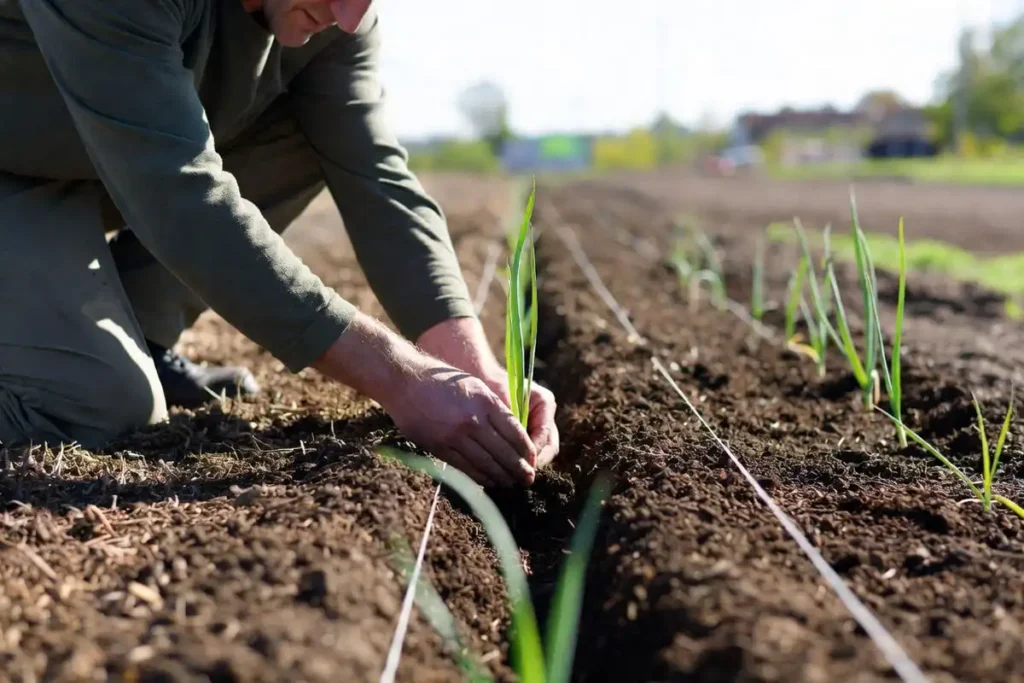
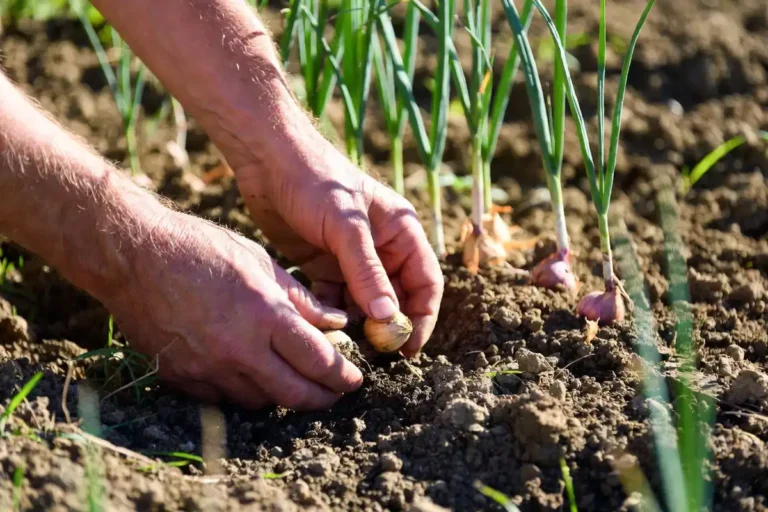
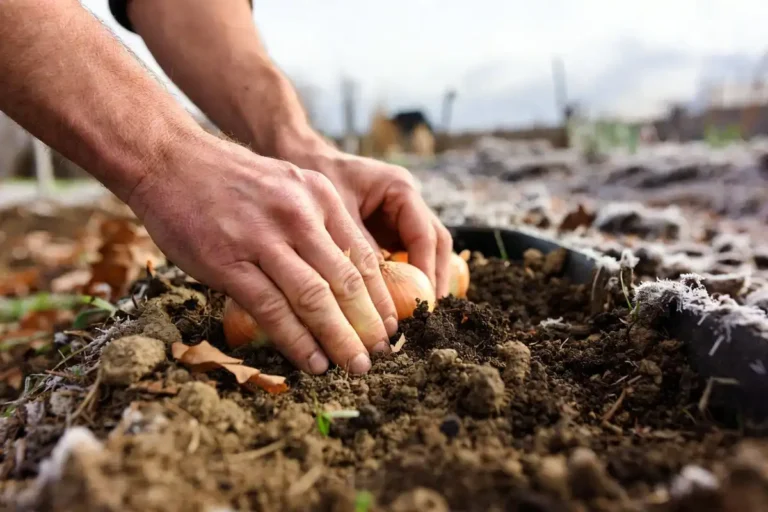
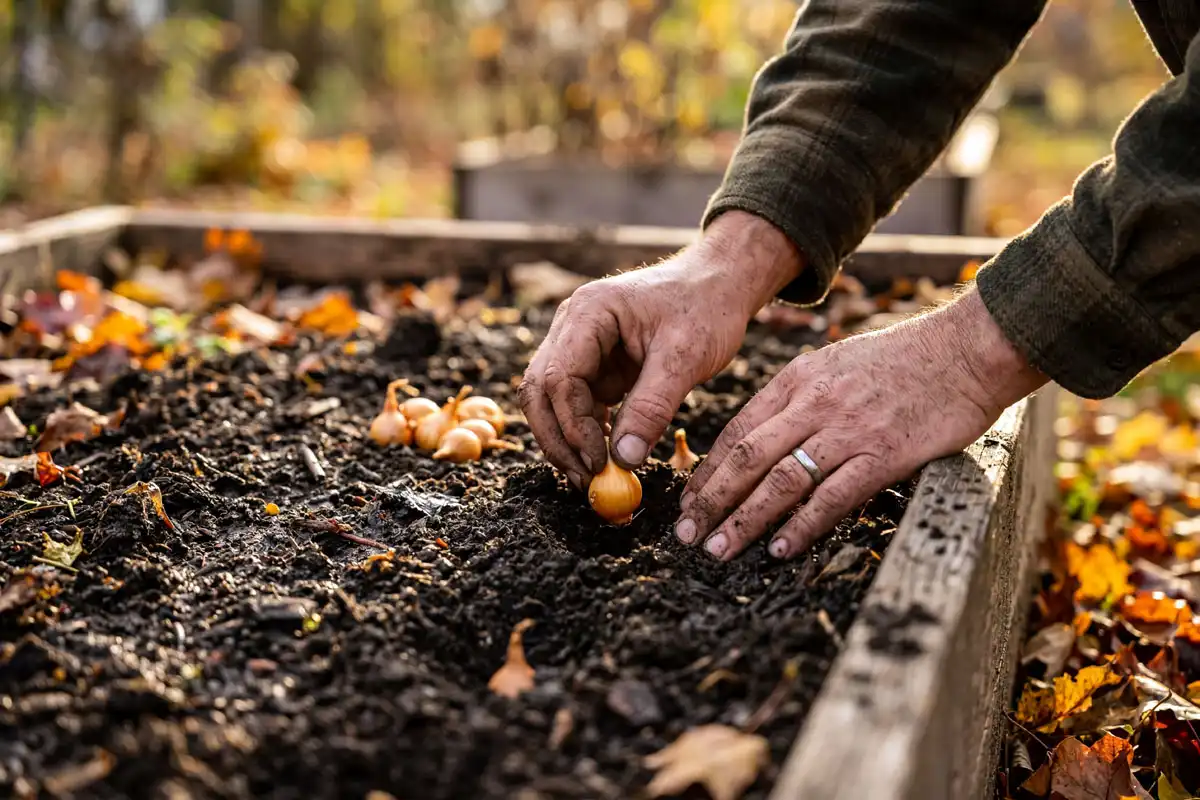
Step 3: Plant at the right depth. Place sets pointed end up, 1 inch deep and 4 to 6 inches apart. Space rows 12 inches apart. For transplants, set 3/4 inch deep and 3 inches apart. For seeds, sow 1/4 inch deep and thin to 4-inch spacing once seedlings reach 6 inches.
Step 4: Water thoroughly. Soak the bed right after planting. Keep soil moist (not waterlogged) during the first 4 to 6 weeks. Water once a week if rain falls short of 1 inch.
Step 5: Mulch before hard frost. Once onions establish (3 to 4 weeks after planting), spread 3 to 4 inches of straw or shredded leaves over the bed. I discussed the value of mulching in farming in a separate guide. For fall onions, mulch insulates roots, prevents frost heaving, and holds moisture.
How to Protect Fall-Planted Onions Over Winter
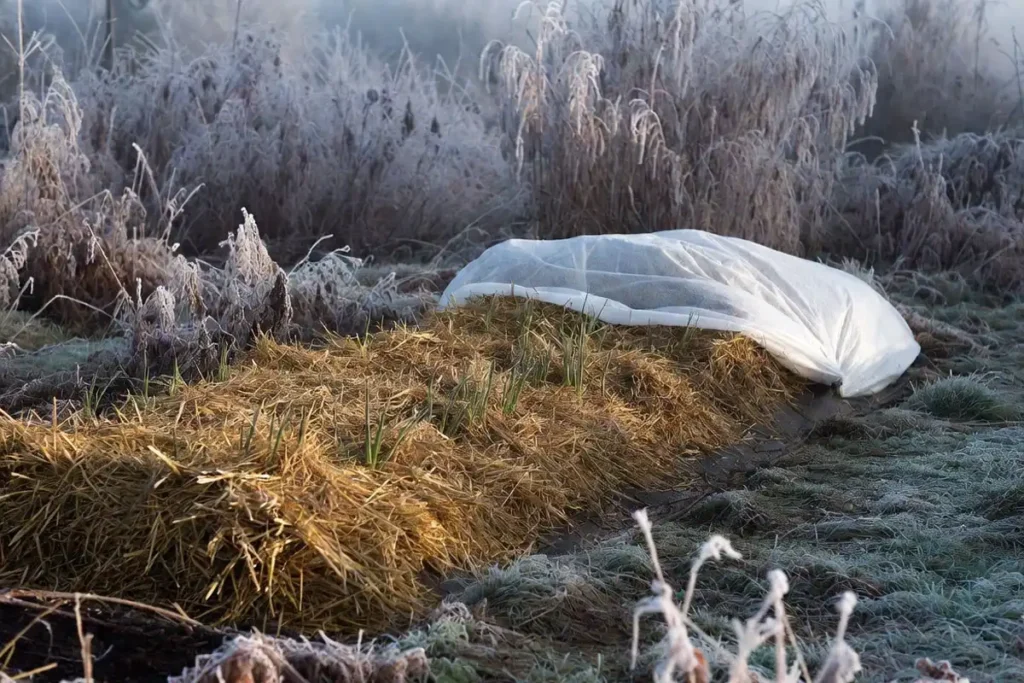
Protection depends on how cold your winters get.
Mulch is the simplest option. Apply 3 to 4 inches of straw after the first hard frost. Pull it back in early spring when new green shoots appear.
Row cover adds 4 to 8°F of frost protection. Lay floating fabric over the bed and anchor the edges with soil or stones.
Low tunnels work best in zones 5 and colder. Build PVC hoops over the bed and cover with 6-mil plastic sheeting. Adding row cover underneath the plastic increases warmth further.
In zones 8 to 10, mulch alone is enough. Some southern growers skip protection entirely.
Common Mistakes to Avoid
Planting too early in warm zones. Large top growth before winter triggers bolting in spring.
Using oversized sets. Sets larger than 3/4 inch bolt more often. Choose sets no wider than a dime.
Wrong day-length variety. A short-day onion in zone 5 bulbs too early. A long-day onion in zone 9 may not bulb at all.
Skipping mulch in cold zones. Freeze-thaw cycles push bulbs out of the ground and kill roots.
Overwatering dormant onions. Stop watering once the ground freezes. Wet frozen soil rots roots.
When to Harvest Fall-Planted Onions
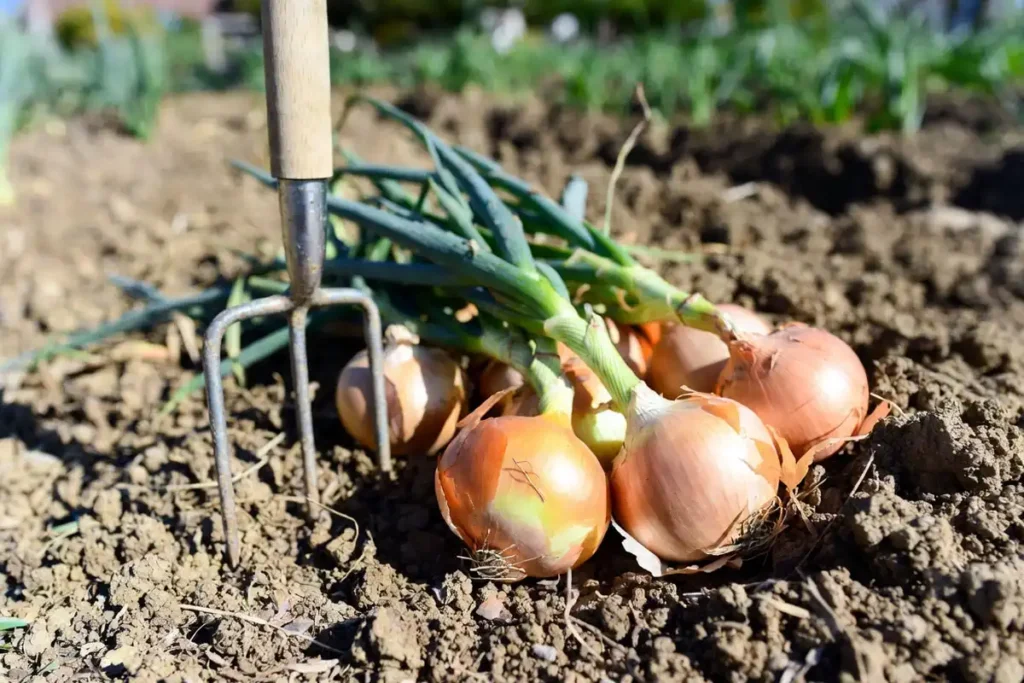
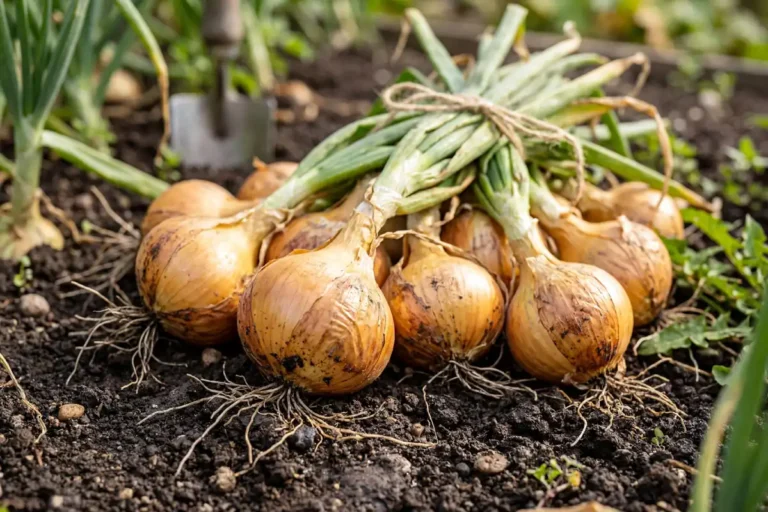
Expect harvest from late May through July. When about half the tops flop over, the bulbs are done sizing up. Stop watering at that point.
Loosen the soil with a fork and lift gently. Cure in a warm (75 to 90°F), ventilated spot for 2 to 4 weeks until skins turn papery. Well-cured onions store 3 to 6 months. I shared more tips in my guide on how to increase crop yield.
FAQs on Planting Onions in the Fall

Do onions survive winter in the ground?
Onions overwinter in USDA zones 4 through 10 with proper mulch and the right variety. Established roots handle temperatures down to 20°F. Colder zones need straw mulch or low tunnels.
What is the best onion variety for fall planting?
It depends on latitude. Short-day types suit southern zones. Intermediate-day varieties (Candy, Super Star) fit zones 5 to 8. Long-day types (Walla Walla) work in northern zones with protection.
Can I plant onion seeds in the fall instead of sets?
Seeds work well in warm zones 8 to 10. Sow 8 to 10 weeks before first frost. In colder zones, sets establish faster and carry less winterkill risk.
How deep do you plant onion sets in fall?
Plant sets 1 inch deep, pointed tip up, 4 to 6 inches apart. Avoid planting deeper than 1 inch. Buried shoulders slow bulb development in spring.
Will fall-planted onions bolt in spring?
Bolting happens from repeated warm-cold temperature swings. Reduce risk by choosing bolt-resistant varieties, using small sets under 3/4 inch, and avoiding too-early planting.
Conclusion
Fall onion planting gives your crop a head start that spring planting cannot match. The roots develop before winter, and the plants wake up early with strong growth once soil warms. Match the day-length type to your zone, plant at the right depth, and protect with mulch in cold climates. Whether you use sets, seeds, or transplants, fall-planted onions reward patience with larger bulbs and an earlier summer harvest.