How Peanuts Are Grown and Harvested: 7 Key Steps
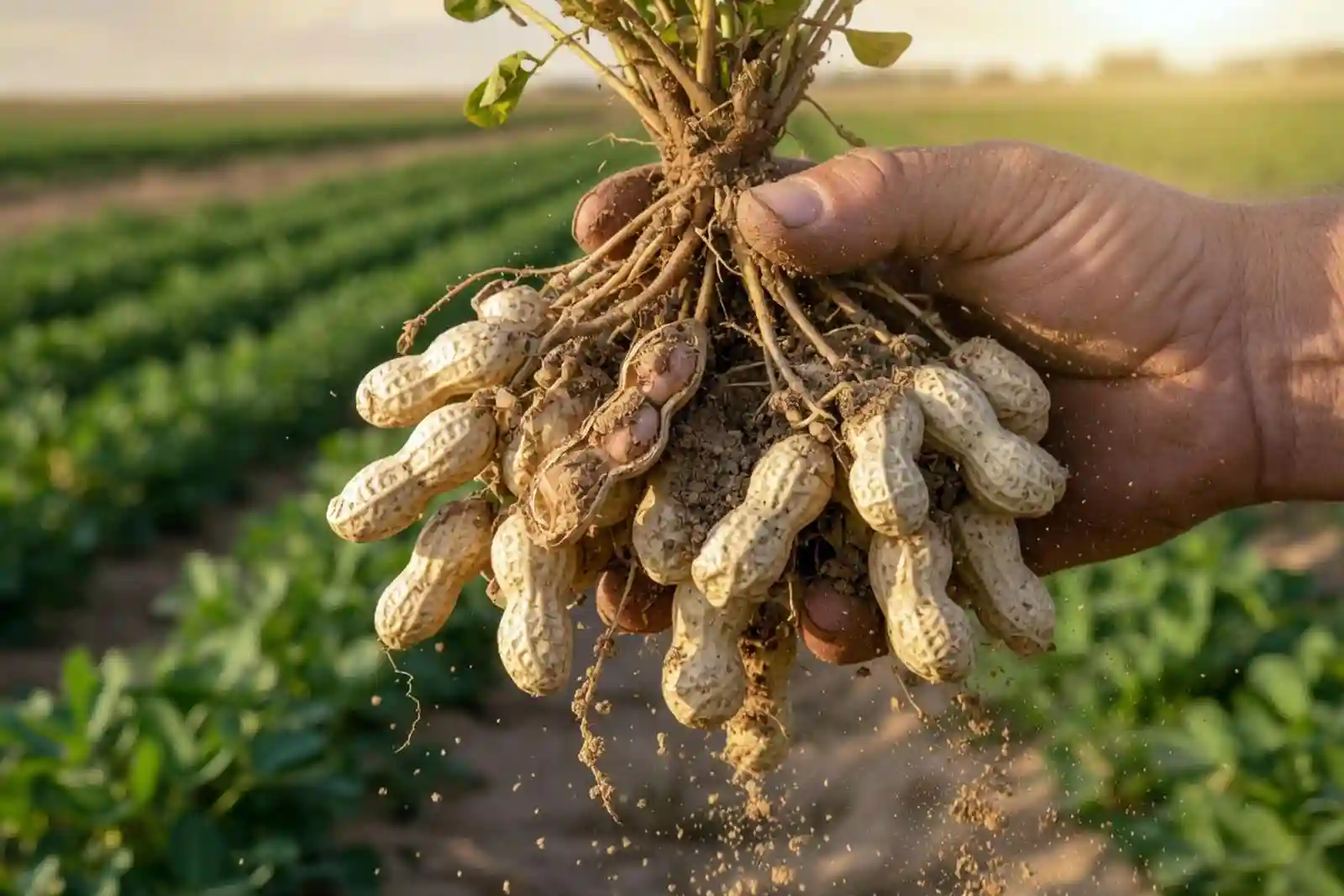
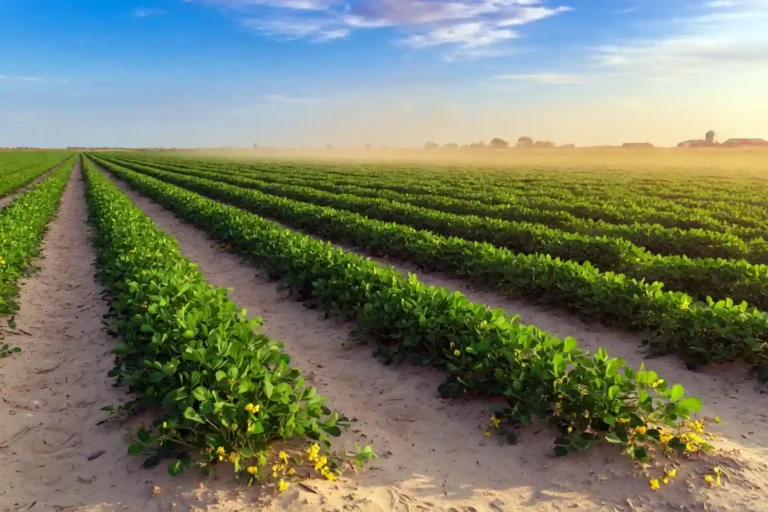
Peanuts grow underground as legumes after yellow flowers send pegs into the soil to form pods. Farmers plant in late spring, harvest in early fall by digging and inverting plants, then thresh once cured. This guide walks through every step from seed selection to safe storage.
Peanuts (Arachis hypogaea) grow on low bushy plants. After flowering, pegs push into the soil where pods develop. Farmers dig plants with an inverter, dry windrows 3-7 days, then thresh with a combine when kernel moisture reaches 18-24%.
Contents
What Are Peanuts and How Do They Grow?
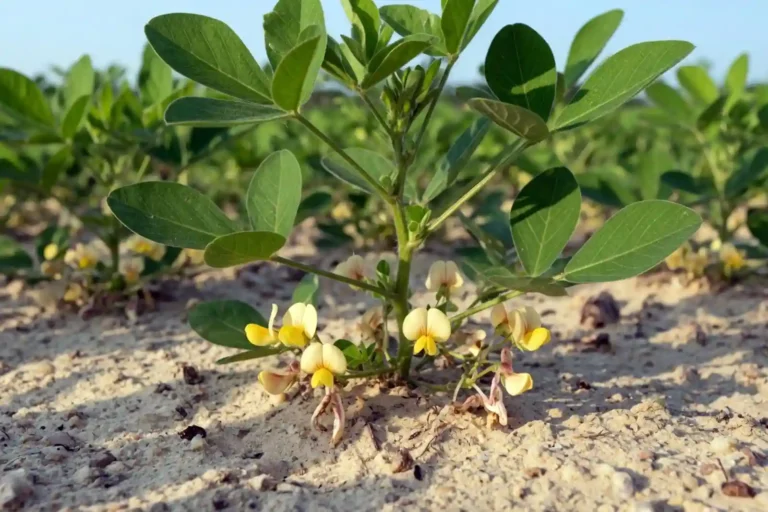
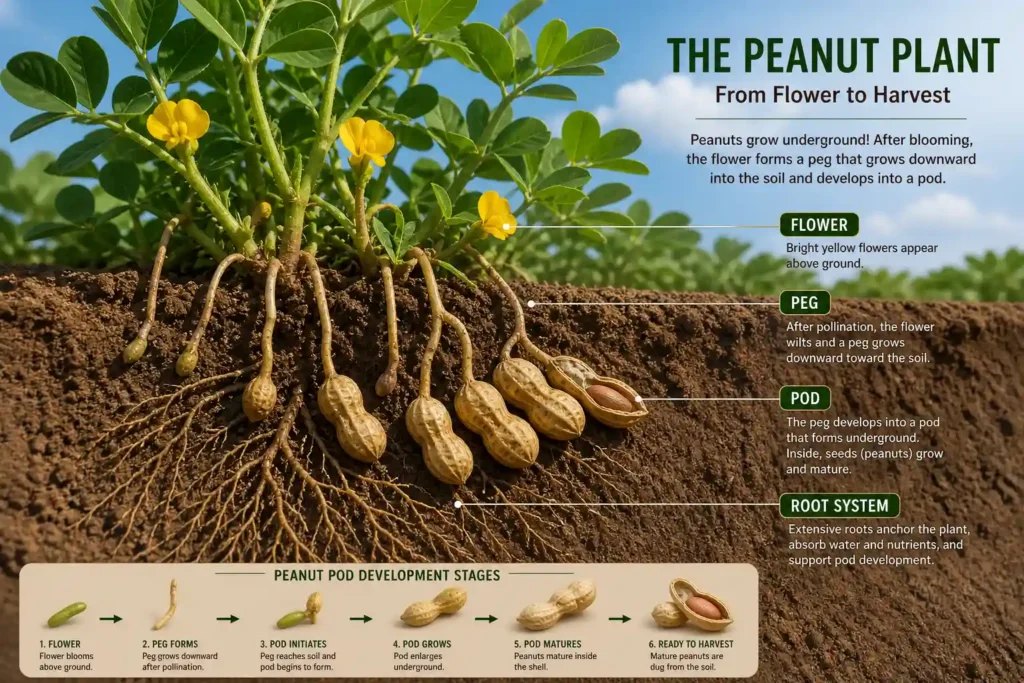
Peanuts are legumes, not tree nuts. The plant produces self-pollinating yellow flowers above ground. After fertilization, a stalk called a peg elongates downward and pushes into the soil. The pod and kernels then develop underground. This pegging behavior sets peanuts apart from soybeans or any other legume I plant.
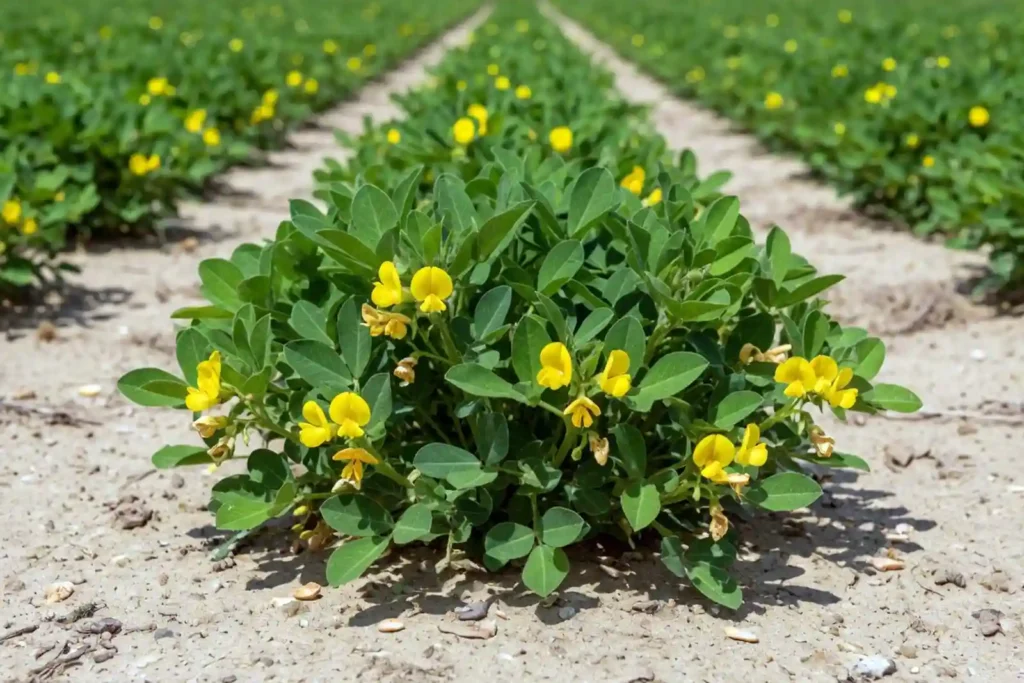
The bush form sits 12-18 inches tall. Each healthy plant produces 25-50 pods at maturity. For a closer look at the plant’s growth habit, the question of whether peanuts grow on a bush gets a clear yes from any farmer who has walked a field at harvest.
When to Plant Peanuts
Plant peanuts after the last frost, when soil temperature at 4 inches reads 65°F or warmer for three straight days. In Georgia, Alabama, and Florida, that window opens in late April. Texas and the Carolinas plant from late April into mid-May. The crop needs 140-160 frost-free days from seed to dig.
Where Do Peanuts Grow Best?
Peanuts thrive in sandy loam soil with a pH of 5.8 to 6.2. Heavy clay traps pods and turns harvest into a mess. Georgia produces about half the US crop, with Alabama, Florida, Texas, and the Carolinas filling out most of the rest. The detailed regions where peanuts grow naturally line up with these warm, sandy belts.
How to Grow Peanuts Step-by-Step
1. Prepare the Soil
Run a soil test six months before planting. Lime to a pH near 6.0. Peanuts demand calcium in the pegging zone, so apply gypsum at 500-1,000 pounds per acre at early bloom. A healthy soil base supports yield more than any rescue input later. Tips to improve soil fertility naturally apply well to peanut ground.
2. Pick the Right Variety
Four market types lead the US:
- Runner: ~80% of US production, used for peanut butter
- Virginia: large kernels, in-shell snacks
- Spanish: smaller, higher oil, candy market
- Valencia: sweet, often boiled
3. Plant the Seed
Drop seed 1.5-2 inches deep, 3-4 inches apart, in rows spaced 30-36 inches. A seeding rate of 6 plants per foot of row works for runners. Inoculate seed with Bradyrhizobium so nitrogen-fixing nodules form on the roots.
4. Manage Weeds Early
The first 6 weeks set the yield ceiling. Apply a pre-emerge herbicide and follow with timely cultivation or post-emerge spray. Weeds at pegging block pods from reaching soil.
5. Water at Pegging and Pod Fill
Pegging starts 40-50 days after planting. The crop uses 1.5-2 inches of water per week from pegging through pod fill. Dry soil at pegging hardens the surface and keeps pegs from entering. Irrigation pays here when rain falls short.
6. Scout for Pests and Disease
Watch for early leaf spot, late leaf spot, white mold (Sclerotium rolfsii), and tomato spotted wilt virus (TSWV). Lesser cornstalk borer hits drought-stressed fields hard. The University of Georgia Extension publishes a strong peanut disease calendar that I lean on.
How to Harvest Peanuts
Check Maturity First
Use the hull-scrape method 130-150 days after planting. Pull 200 pods, scrape the outer hull with a pressure washer, and count how many shells turn black or dark brown. When 70-75% of pods reach the black/brown stage, the field is ready.
Dig and Invert
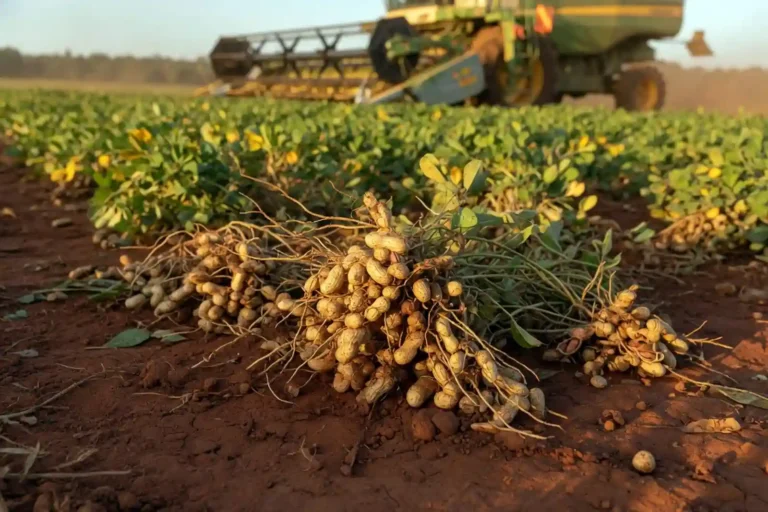
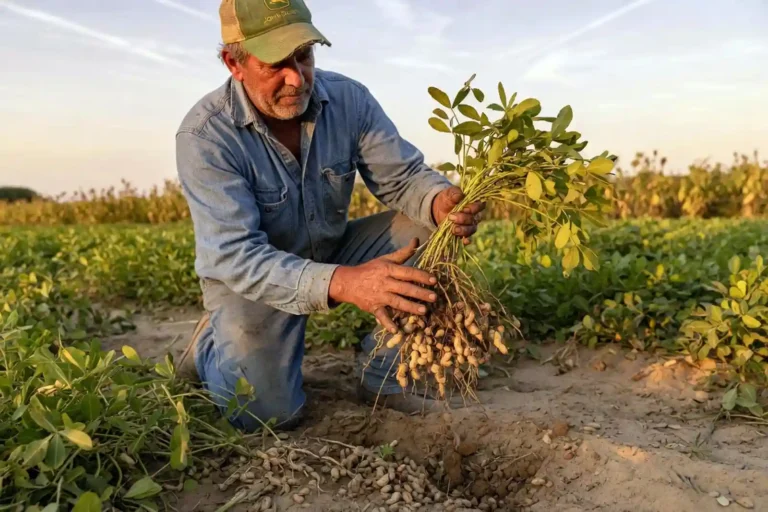
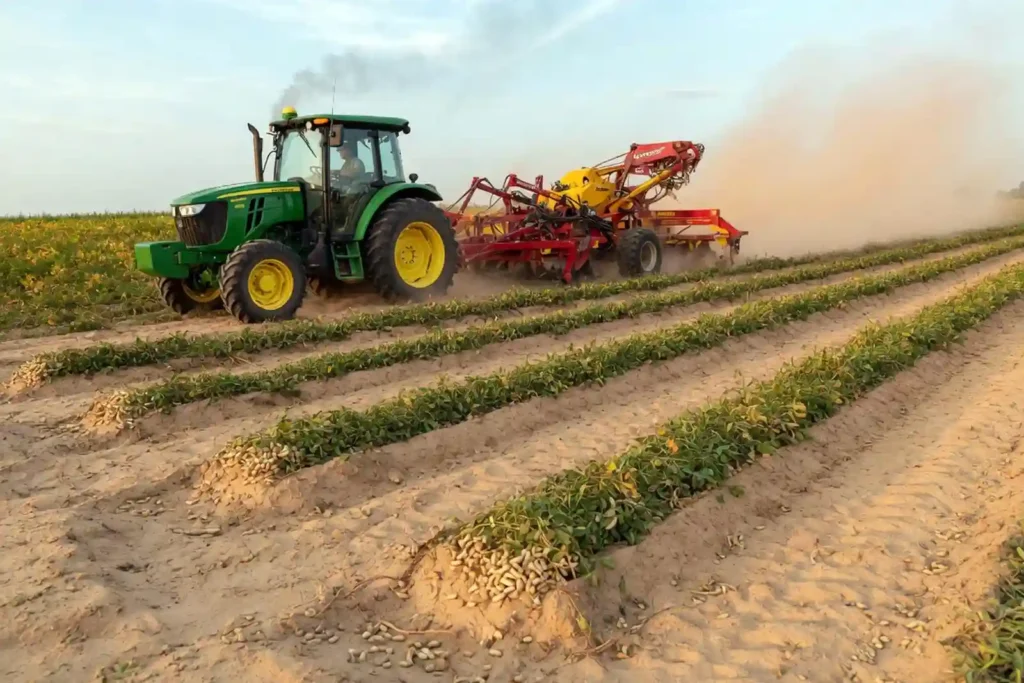
A peanut digger pulls plants from the soil and lays them upside down in windrows so pods face the sun. Pod moisture sits around 35-50% at this stage.
Cure in the Windrow
Plants dry in the field for 3-7 days. The kernels need to drop to 18-24% moisture before threshing. Rain delays the cure and raises aflatoxin risk.
Thresh with a Combine
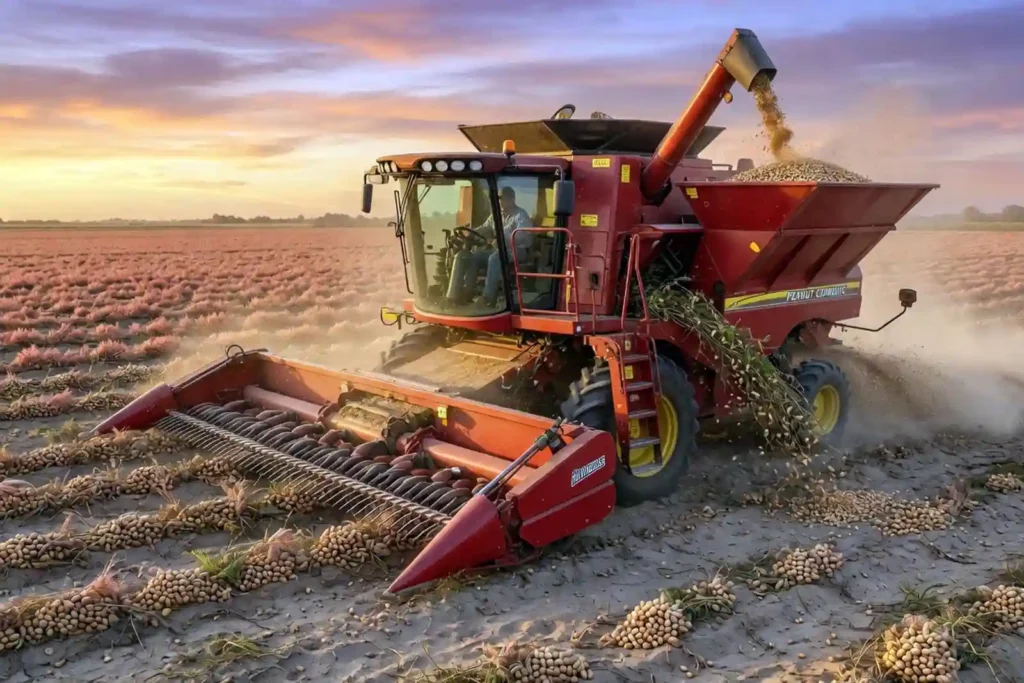
A peanut combine picks the inverted vines, separates pods, and dumps clean peanuts into a wagon. Run the cylinder slow enough to keep splits low.
Dry to Storage Moisture
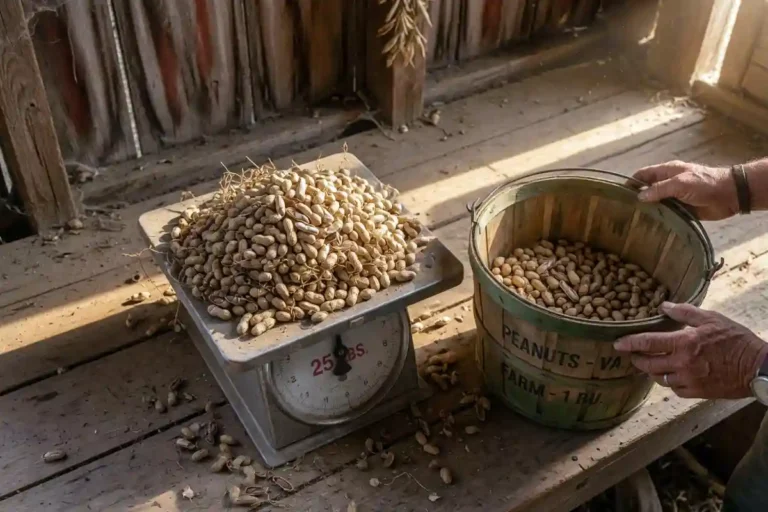
Truck loads to a buying point or on-farm dryer. Dry kernels to 10% moisture for safe storage. Solid post-harvest handling prevents loss between dig and delivery.
Common Problems and Troubleshooting
| Problem | Likely Cause | Fix |
|---|---|---|
| Empty pods | Calcium shortage at pegging | Apply gypsum at early bloom |
| Pegs dry on top of soil | Drought, hard surface | Irrigate, lighter cultivation |
| White mold on stems | Wet, warm soil | Rotate crops, apply fungicide |
| Splits at thresh | Cylinder too fast | Slow down, check moisture |
Mistakes to Avoid
- Skipping rhizobia inoculant on new ground
- Planting into cold soil under 65°F
- Ignoring calcium at bloom
- Digging too early or too late, both cut yield
- Storing wet peanuts and inviting aflatoxin
Safety Notes
Aflatoxin from Aspergillus flavus develops in poorly dried peanuts and threatens human and livestock health. Keep moisture below 10% in storage. Wear gloves, goggles, and a respirator when handling fungicides and herbicides. Watch for snakes during dig in southern fields. The FDA aflatoxin guidance sets a 20 ppb action level for peanuts in food.
FAQs on How Peanuts Are Grown and Harvested

How long does it take peanuts to grow from planting to harvest?
Do peanuts need a lot of water?
Can you grow peanuts in a home garden?
Why are peanuts dug instead of picked?
What is the average yield per acre for peanuts?
Conclusion
Peanuts reward steady management from soil prep through storage. Build a sandy loam base near pH 6.0, plant into warm soil, feed calcium at bloom, and water through pegging. At harvest, dig at 70-75% black hulls, cure 3-7 days, thresh at 18-24% moisture, and dry to 10% for safe storage.