When to Plant Garlic and Onions for Bigger Bulbs Every Year
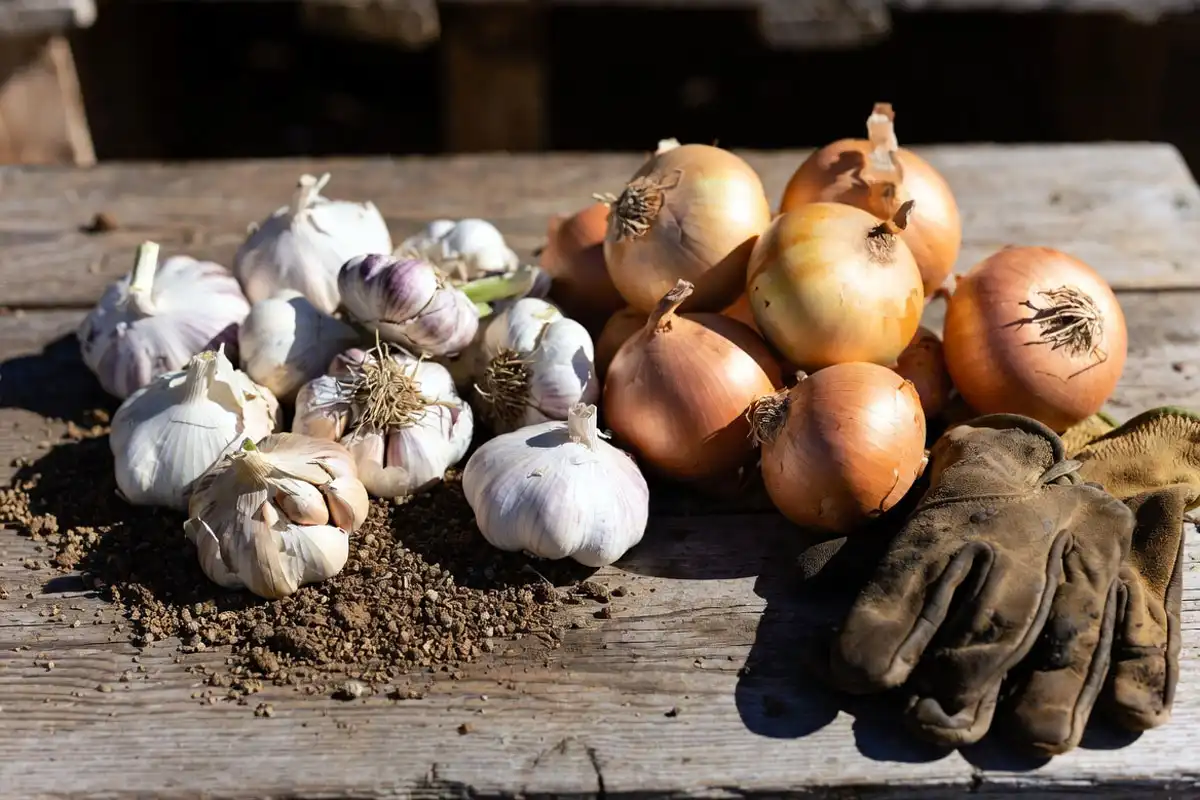
Garlic goes into the ground in fall, 4 to 6 weeks before the soil freezes, and onions follow in early spring or fall depending on your climate zone. This guide covers exact planting windows by USDA hardiness zone, soil prep, spacing, variety selection, and harvest timing for both crops.
Plant garlic between September and November, depending on your zone. Plant onions from late winter through early spring in cold climates, or in fall through winter in warm climates. Both crops need cool weather, full sun, and well-drained soil with a pH of 6.0 to 6.5.
Contents
- 1 When Do You Plant Garlic?
- 2 When Do You Plant Onions?
- 3 Where Do Garlic and Onions Grow Best?
- 4 How to Plant Garlic
- 5 How to Plant Onions
- 6 Which Garlic and Onion Varieties Perform Best?
- 7 Common Mistakes to Avoid
- 8 How to Know When Garlic and Onions Are Ready to Harvest
- 9 Troubleshooting Garlic and Onion Problems
- 10 FAQs on Plant Garlic and Onions
- 11 Final Thoughts
When Do You Plant Garlic?
Garlic is a fall-planted crop across most of the United States. Each clove needs 4 to 8 weeks of cold soil temperatures below 40°F to form a proper bulb. This cold requirement is called vernalization.
Here is a general planting schedule by USDA hardiness zone:
- Zones 0 to 3: Plant in early to mid-September.
- Zones 4 to 6: Plant from mid-September through late October.
- Zones 7 to 8: Plant from October through November.
- Zones 9 to 10: Plant from November through January. Refrigerate cloves for 6 to 8 weeks before planting to simulate cold exposure.
The goal is to get cloves into the ground after the first light frost but before the soil freezes solid. This gives roots enough time to establish without pushing up green shoots that winter can damage.
I keep a crop planting calendar pinned to my shed wall. It helps me track these windows every year, especially when fall weather acts unpredictable here in Kansas.
Learn more: Plant Onions in the Winter: What Smart Growers Know
When Do You Plant Onions?
Onions are cool-season crops, but their planting window varies more than garlic. The key factor is day length, which triggers bulb formation.
Short-day onions form bulbs when daylight reaches 10 to 12 hours. These grow in southern states (zones 7 to 10) and go into the ground in fall, from September through December.
Long-day onions form bulbs at 14 to 16 hours of daylight. These grow in northern states (zones 3 to 6) and get planted in early spring, from March through April.
Intermediate-day onions need 12 to 14 hours and work in the middle of the country (zones 5 to 7). Plant these from late February through March.
If you start onions from seed, begin them indoors 8 to 12 weeks before your last frost date. Transplants and sets go directly into the garden 2 to 4 weeks before the last expected frost.
I wrote a separate piece on growing onions from seed that walks through the indoor starting process.
Where Do Garlic and Onions Grow Best?
Both crops belong to the Allium family and share similar site requirements.
Sunlight: Full sun, at least 6 to 8 hours of direct light per day.
Soil: Loose, well-drained, loamy soil rich in organic matter. Heavy clay or waterlogged ground causes bulb rot. A soil pH between 6.0 and 6.5 supports healthy root development. The Clemson Cooperative Extension confirms that both crops perform poorly in compacted or acidic soil.
Drainage: Raised beds work well for garlic and onions because they improve drainage and warm up faster in spring. If your garden soil drains slowly, I suggest running a soil test before planting to check pH and nutrient levels.
How to Plant Garlic
Follow these steps to plant garlic cloves correctly.
Step 1: Prepare the soil. Loosen the bed to 8 inches deep. Mix in 2 to 3 inches of compost. Garlic is a heavy feeder and responds well to soil that has been amended for fertility.
Step 2: Separate the cloves. Break each garlic head into individual cloves. Leave the papery skin on each clove. Use the largest cloves for planting because larger cloves produce larger bulbs.
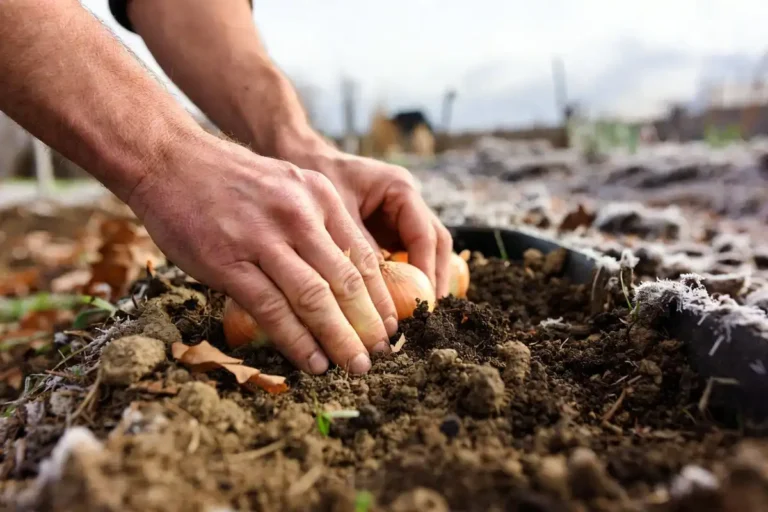
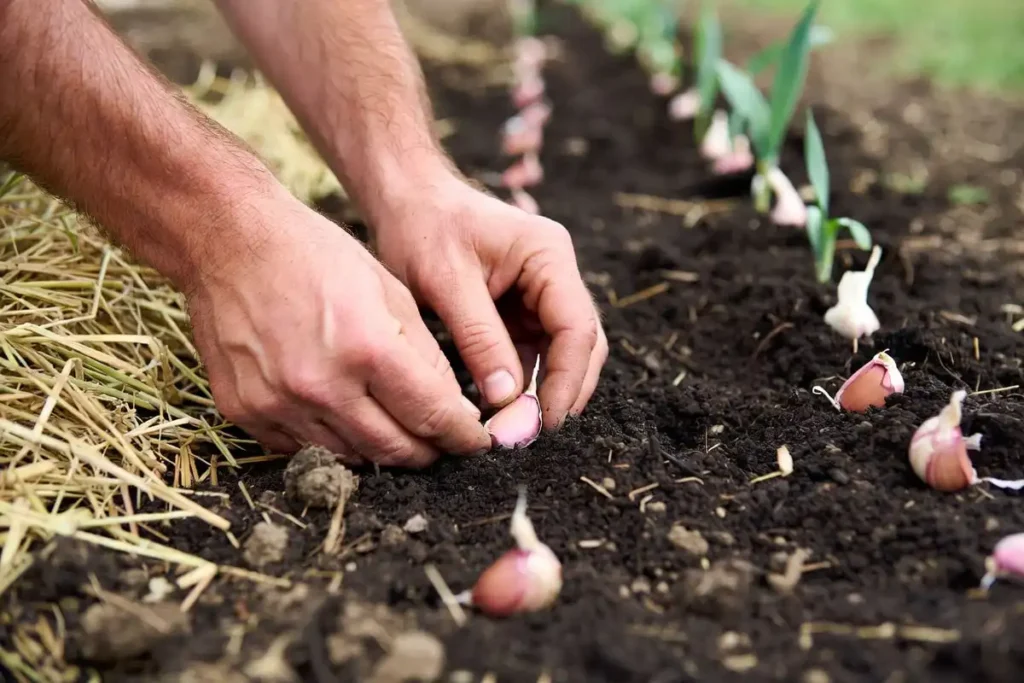
Step 3: Plant cloves point-side up. Set each clove 2 to 3 inches deep with the pointed end facing the sky. Space cloves 4 to 6 inches apart in rows 12 inches apart.
Step 4: Mulch the bed. Apply 3 to 4 inches of straw or shredded leaf mulch after planting. Mulch insulates cloves from freeze-thaw cycles and suppresses weeds. I go into more detail on mulching techniques in a separate article.
Step 5: Water lightly. Give the bed one good soak after planting. Cloves need moisture to start rooting, but excess water causes rot.
How to Plant Onions
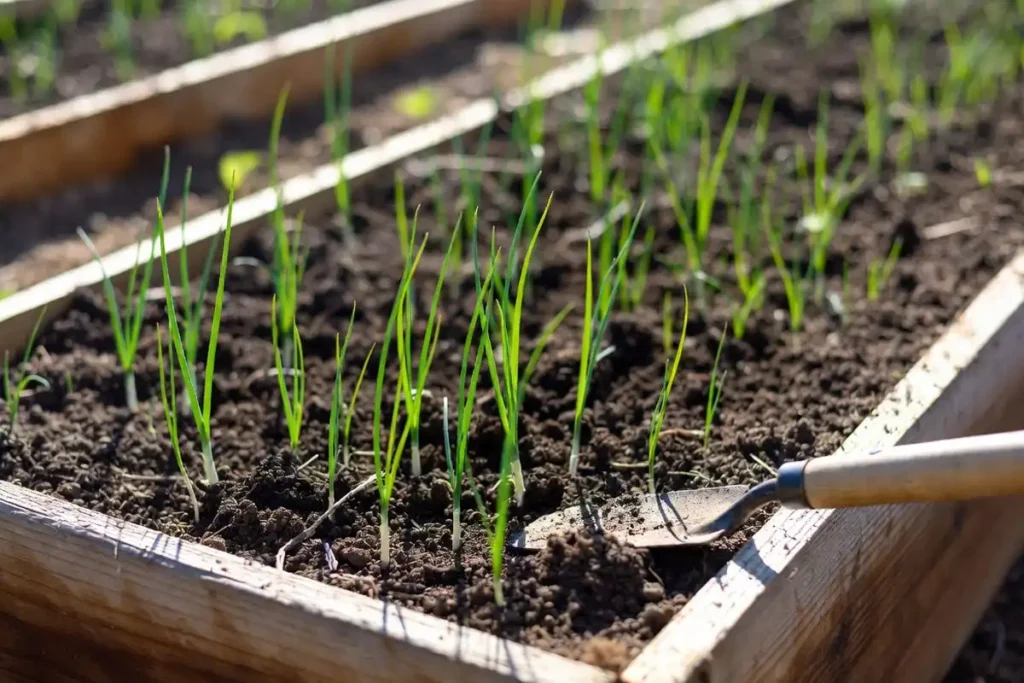
Onions grow from seeds, transplants, or sets. Each method has a different timeline.
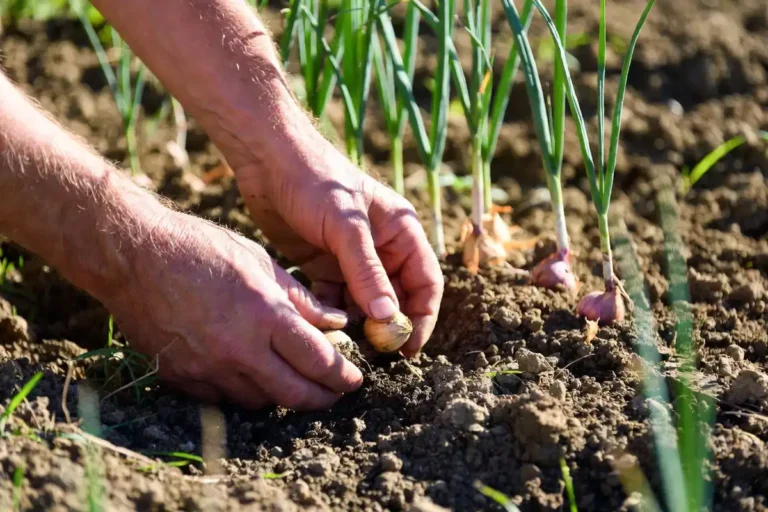
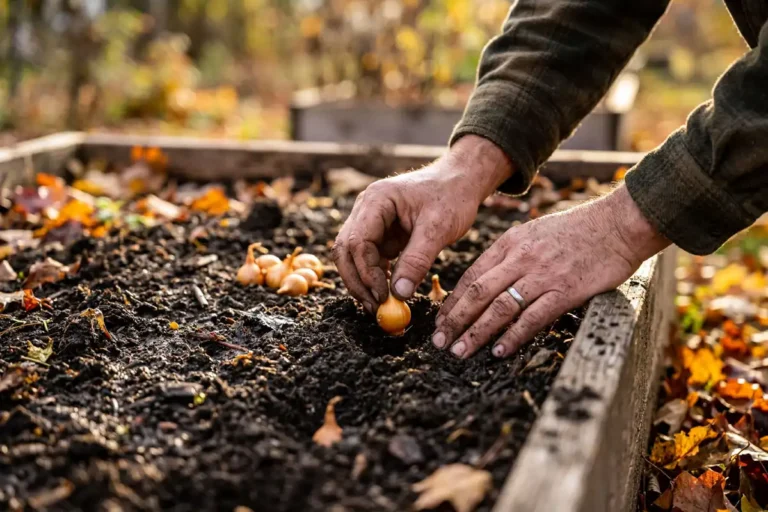
From sets (small bulbs): Push each set into the soil so the tip sits at the surface. Space 4 inches apart in rows 12 inches apart. Sets produce bulbs in the shortest time but offer fewer variety options.
From transplants (seedlings): Plant transplants 1 inch deep and 4 inches apart. Choose seedlings about the thickness of a pencil. Transplants that are too thick tend to bolt and send up a flower stalk instead of forming a bulb.
From seed: Direct-sow seeds 1/2 inch deep in rows. Thin seedlings to 4 inches apart once they reach 3 to 4 inches tall. Thinned seedlings work as green onions. I compared direct sowing and transplanting methods in another guide if you want a deeper look at both approaches.
Which Garlic and Onion Varieties Perform Best?
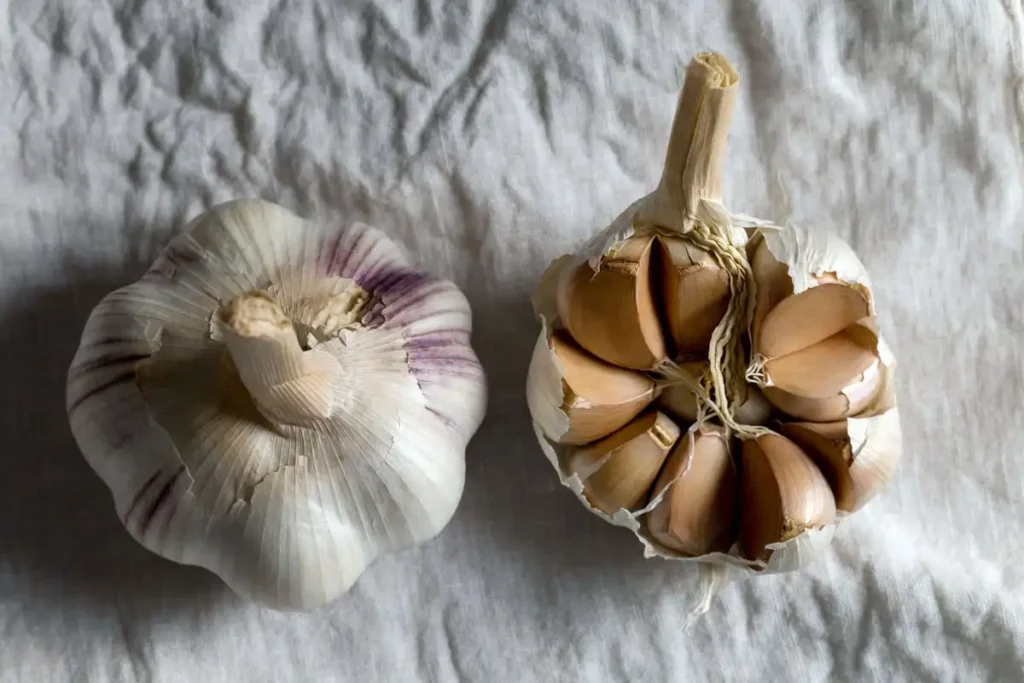
Choosing the right variety for your climate determines your harvest size and storage life.
Garlic Varieties
Hardneck garlic produces fewer but larger cloves, stores for about 4 to 6 months, and grows best in zones 2 through 7. Hardneck types include rocambole, porcelain, and purple stripe. Popular picks: Music, German Extra Hardy, and Chesnok Red.
Softneck garlic stores longer (up to 9 months), produces more cloves per bulb, and grows well in zones 5 through 10. This is the type sold in grocery stores. Popular picks: Inchelium Red, California Early, and Silverskin.
Elephant garlic is technically a leek relative. It produces large, mild-flavored cloves and grows in zones 5 through 9.
Onion Varieties
Short-day: Texas Grano 1015Y, Yellow Granex (Vidalia type), Red Burgundy. Best for southern growers.
Long-day: Walla Walla, Copra, Red Wethersfield. Best for northern growers.
Intermediate-day: Candy, Cabernet, Super Star. Flexible across the middle zones.
The LSU AgCenter recommends choosing onion transplants with a stem diameter smaller than a pencil to reduce bolting risk.
Common Mistakes to Avoid
Planting garlic too early. Cloves planted in warm soil push up leafy growth that gets killed by frost. Wait until after your first light freeze.
Using the wrong onion type for your latitude. A long-day onion planted in Texas will not form a bulb. Always match the day-length type to your region.
Planting too shallow. Garlic cloves less than 2 inches deep suffer winter damage and heave out of the ground. Onion sets planted too deep delay sprouting.
Skipping mulch on garlic. Without mulch, freeze-thaw cycles push cloves to the surface and expose roots.
Overwatering. Both crops rot in waterlogged soil. Water when the top inch of soil dries, and stop watering 2 to 3 weeks before harvest.
How to Know When Garlic and Onions Are Ready to Harvest
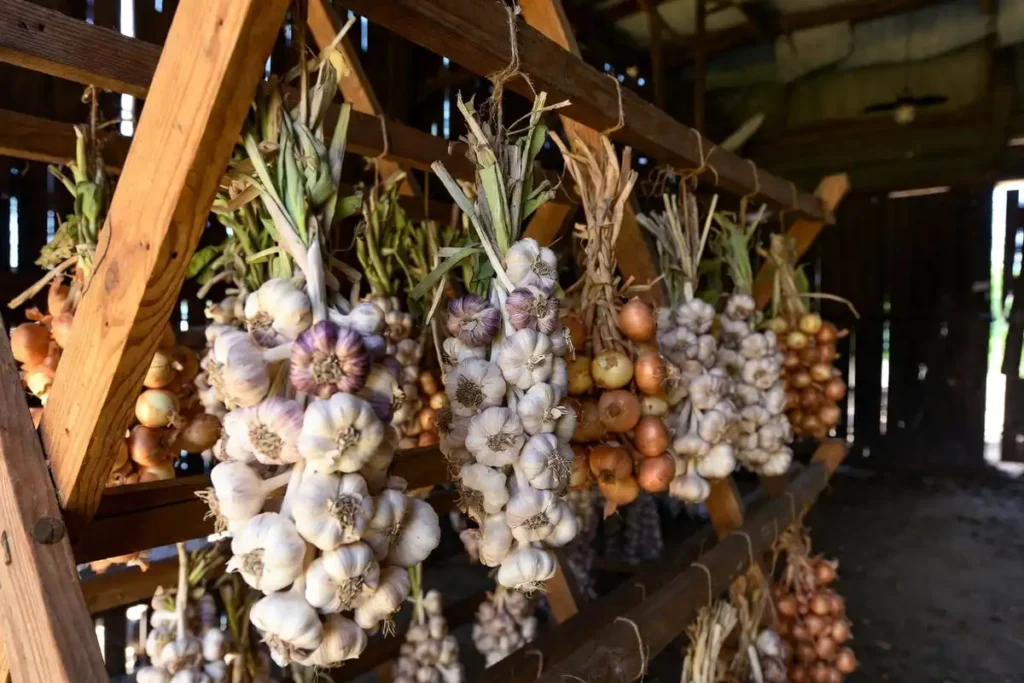
Garlic is ready when the lower 3 to 4 leaves turn brown but the upper leaves stay green. This typically happens in June or July, about 7 to 8 months after fall planting. Dig one test bulb to check clove separation before pulling the full crop.
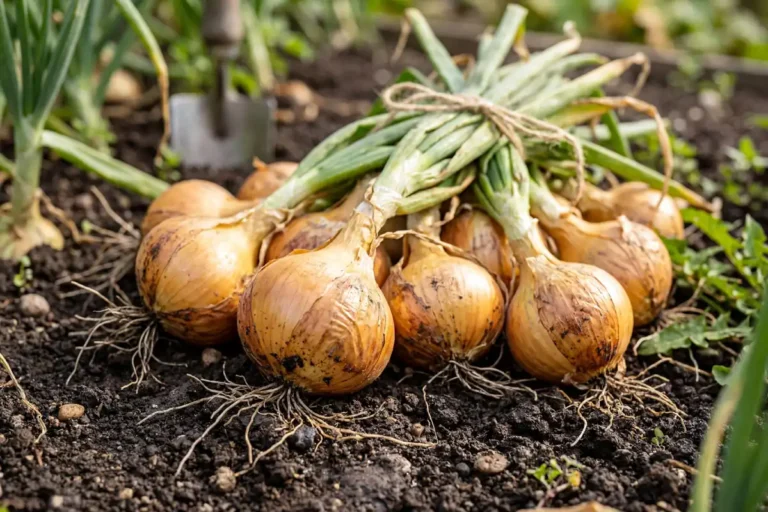
Onions signal harvest time when 50% to 75% of the tops fall over naturally. Stop watering at that point and let the bulbs sit in the ground for 7 to 10 days. Then pull and cure in a warm, shaded area with airflow for 2 to 3 weeks.
Troubleshooting Garlic and Onion Problems
Garlic cloves not sprouting: The soil may be too wet or the cloves were planted upside down. Always orient the flat (basal) end down and the pointed end up.
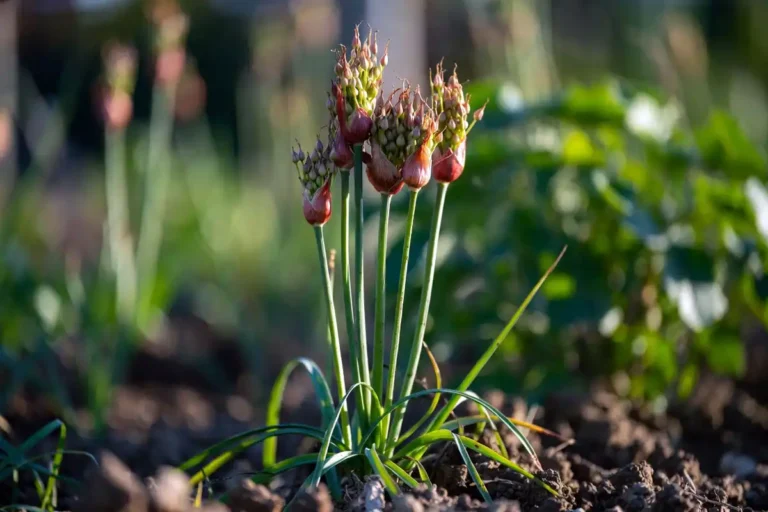
Onions bolting (flowering): This happens when transplants are too large at planting time, or when a cold snap hits after warm spring growth. Use pencil-thick transplants and avoid heavy nitrogen late in the season.
Small bulbs at harvest: Late planting, overcrowding, or poor fertility reduces bulb size. Follow recommended spacing, and side-dress with a balanced fertilizer in early spring.
Yellow or wilting leaves mid-season: Check for onion root maggots or white rot fungus. Remove affected plants to prevent spread.
FAQs on Plant Garlic and Onions

Can you plant garlic and onions together in the same bed?
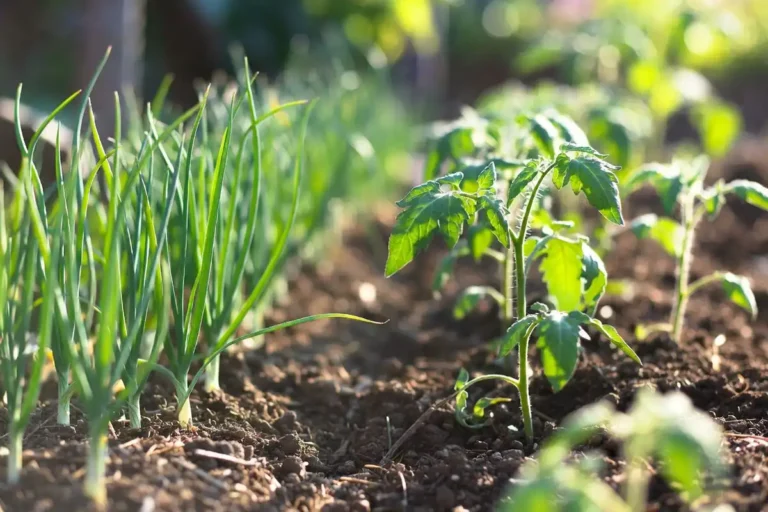
Yes. Both crops share similar soil, sun, and water needs. Space them 4 to 6 inches apart and avoid overcrowding so air circulates around the plants.
Is it too late to plant garlic in spring?
Spring-planted garlic produces smaller bulbs because cloves skip the vernalization period. Fall planting gives garlic the cold exposure it needs to form full-sized bulbs with separated cloves.
How deep do you plant garlic cloves?
Plant each clove 2 to 3 inches deep with the pointed tip facing up. In colder zones, go closer to 3 inches for better frost protection.
Do onions need fertilizer?
Onions benefit from a balanced fertilizer at planting and side-dressing every 2 to 3 weeks through early spring. Stop fertilizing 3 to 4 weeks before harvest to help bulbs firm up.
How long does it take garlic to grow from clove to harvest?
Fall-planted garlic takes about 7 to 9 months to mature. Cloves planted in October typically produce harvest-ready bulbs by June or July.
Final Thoughts
Garlic and onions reward patience and good timing. Plant garlic in fall before the ground freezes, and plant onions based on your day-length zone and last frost date. Prepare loose, fertile soil with proper drainage.
Space cloves and sets correctly, mulch garlic beds, and water without overdoing it. These two Allium crops store well, cost little to grow, and produce a harvest that lasts for months in the kitchen.