Can You Plant Garlic with Potatoes? What Smart Farmers Know
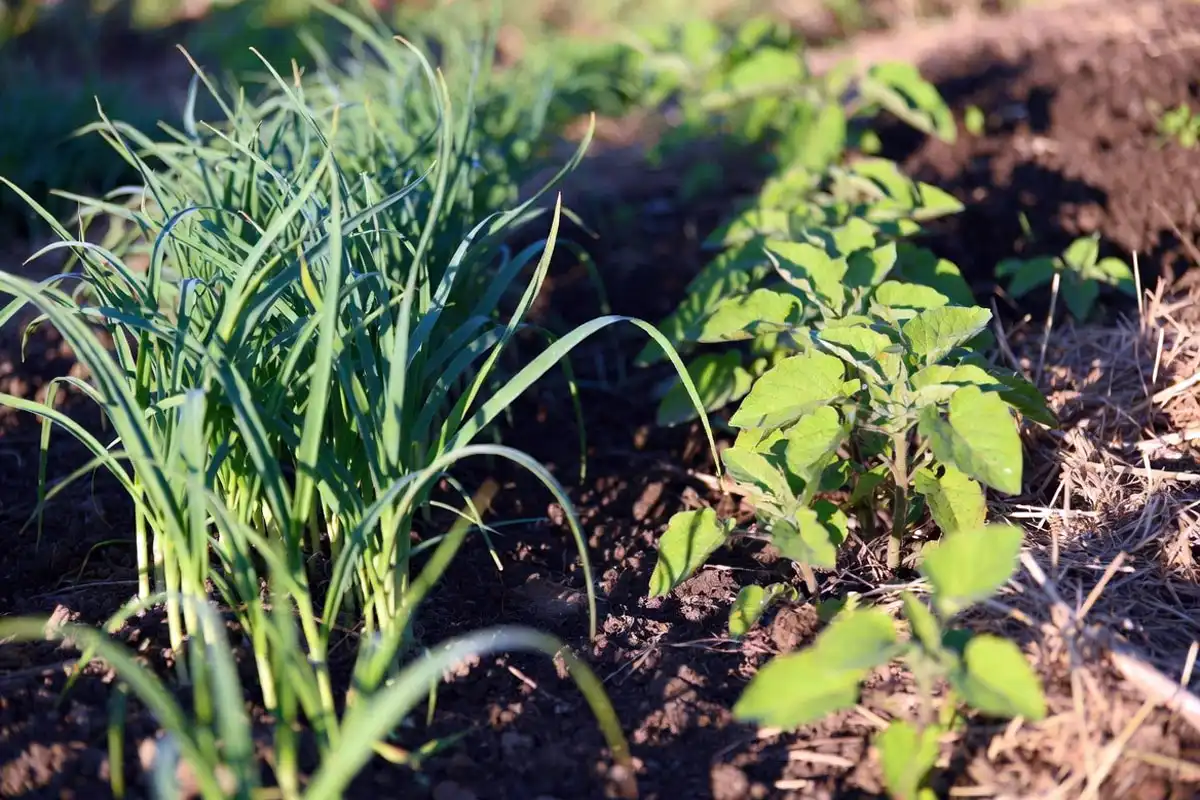
Yes, you can plant garlic and potatoes together in the same bed. Garlic releases sulfur compounds into the soil that help reduce fungal infections and repel common potato pests like aphids and Colorado potato beetles. This guide covers the benefits, planting steps, spacing, timing, and mistakes to avoid when pairing these two crops.
Garlic is one of the best companion plants for potatoes. It acts as a natural fungicide against late blight (Phytophthora infestans) and potato scab. Plant garlic cloves 4-6 inches from potato rows or in a ring around each potato hill. Both crops prefer full sun, well-drained soil, and similar cool-season growing conditions.
Contents
- 1 Why Garlic and Potatoes Grow Well Together
- 2 How Garlic Reduces Late Blight in Potatoes
- 3 When to Plant Garlic with Potatoes
- 4 How to Plant Garlic with Potatoes (Step by Step)
- 5 Spacing and Layout Options
- 6 What Not to Plant Near Garlic and Potatoes
- 7 Common Mistakes to Avoid
- 8 FAQs about Plant Garlic with Potatoes
- 9 Conclusion
Why Garlic and Potatoes Grow Well Together
Garlic belongs to the Allium family (Amaryllidaceae). Potatoes belong to the Solanaceae family. Because they come from different plant families, they do not share the same diseases or compete for the same nutrients in harmful ways.
Garlic accumulates sulfur in the soil. This sulfur acts as a natural fungicide that protects nearby plants from soil-borne pathogens. For potatoes, this means lower risk of late blight and potato scab, two of the most common fungal problems potato growers face.
The strong scent of garlic also confuses and repels insects. Aphids, Colorado potato beetles, and Japanese beetles avoid areas where garlic grows. This reduces the need for chemical sprays, which supports organic pest management practices on small farms and home gardens.
A 2021 study published in the EKB Journal Management System (Egypt) tested potato-garlic intercropping at different ratios. Researchers found that all potato-garlic combinations outperformed unsprayed monoculture potato plots for late blight control. The 1:1 ratio (one potato plant to one garlic plant) produced the lowest disease severity and highest tuber yield.
Know more: Plant Corn Next to Potatoes – What Smart Growers Know
How Garlic Reduces Late Blight in Potatoes
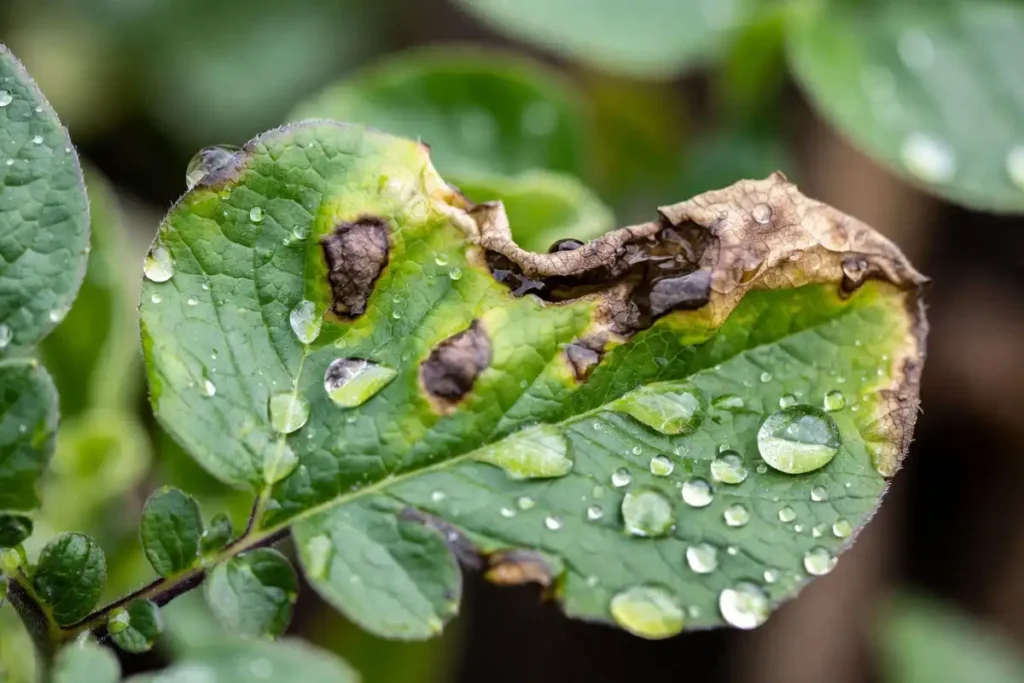
Late blight is caused by the oomycete Phytophthora infestans. It thrives in humid, cool conditions between 50-80°F. The pathogen spreads through airborne spores and can destroy an entire potato crop within weeks.
Garlic disrupts this cycle in two ways. First, the sulfur compounds released by garlic roots create an antifungal zone in the surrounding soil. Second, garlic foliage planted between potato rows acts as a physical barrier that slows spore movement from plant to plant.
Oregon State University’s Extension Service notes that companion planting uses natural plant interactions to deter pests and reduce disease pressure. Garlic is one of the most effective companions because of its potent sulfur chemistry.
If late blight is a recurring issue on your farm, I covered additional prevention methods in my article on common crop diseases that affect field crops.
When to Plant Garlic with Potatoes
Timing depends on your climate and which crop goes in first.
Fall-planted garlic (recommended): Plant garlic cloves in October or November, about 4-6 weeks before your first hard frost. The cloves develop roots through fall and winter, then produce strong shoots in early spring. When you plant potatoes in spring, the garlic is already established and provides immediate pest protection.
Spring-planted garlic: If you missed the fall window, plant garlic cloves in early spring as soon as the soil is workable. Plant them at the same time you set your seed potatoes into the ground. Spring-planted garlic produces smaller bulbs than fall-planted garlic, but it still delivers pest-deterrent benefits.
I wrote a separate guide on when to plant garlic and onions that covers regional timing in more detail. For potato timing specifically, check my article on when to plant potatoes based on your USDA zone.
How to Plant Garlic with Potatoes (Step by Step)
Step 1: Prepare the Soil
Both garlic and potatoes prefer loose, well-drained soil with a pH between 6.0 and 7.0. Work in 2-3 inches of aged compost before planting. Avoid fresh manure, which increases scab risk on potatoes.
Step 2: Set Your Potato Rows
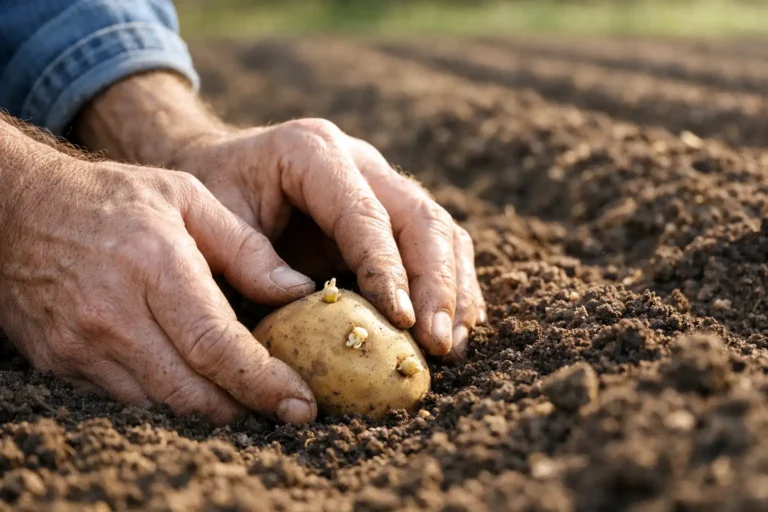
Dig trenches 4-6 inches deep and space rows 30-36 inches apart. Place seed potato pieces 12 inches apart within each row, with eyes facing up.
Step 3: Plant Garlic Between Potato Rows
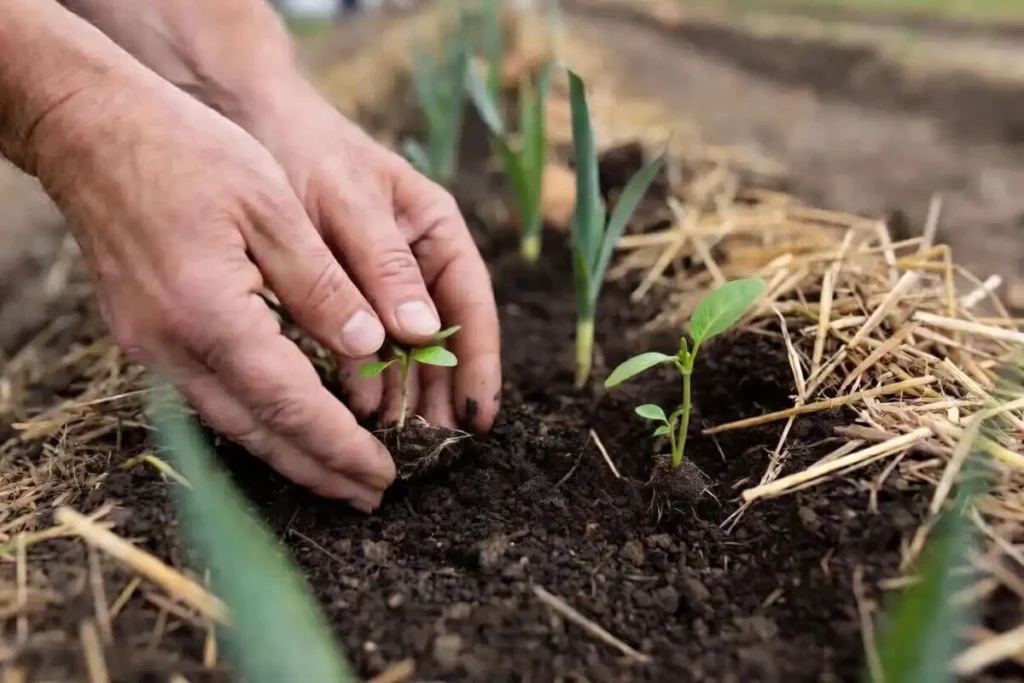
Plant garlic cloves 2 inches deep with the pointed end facing up. Space cloves 4-6 inches apart. Position garlic rows 6-8 inches from your potato trenches. You can also plant garlic in a ring around each potato hill, spacing cloves evenly about 6 inches from the center of the hill.
Step 4: Mulch the Bed
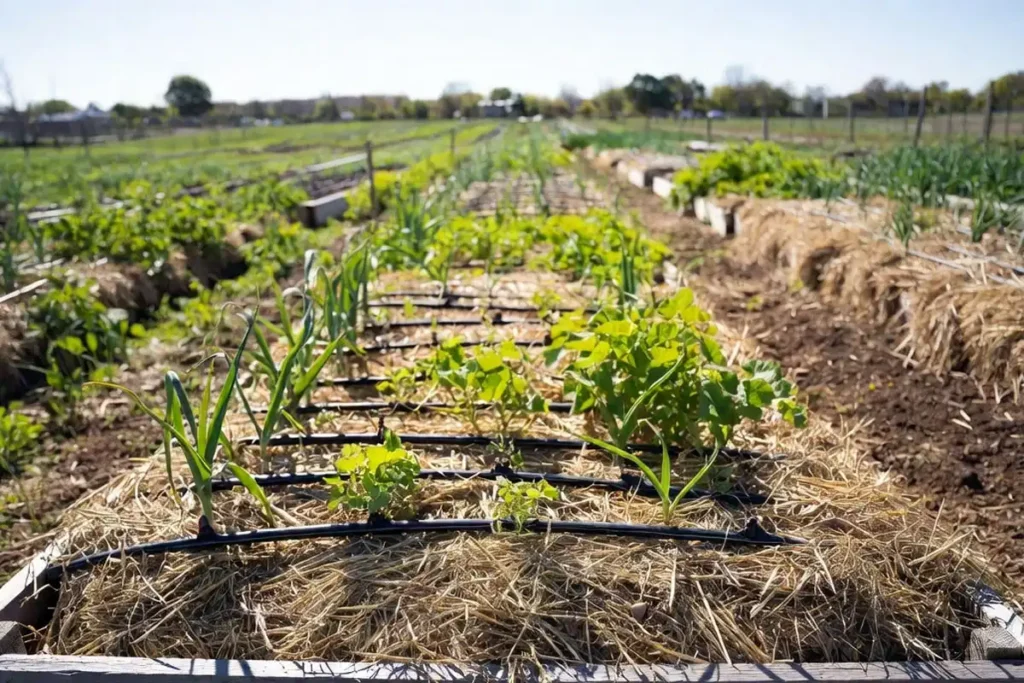
Apply 3-4 inches of straw or shredded leaf mulch over the entire bed. Mulch conserves moisture, suppresses weeds, and helps regulate soil temperature for both crops.
Step 5: Hill Potatoes Carefully
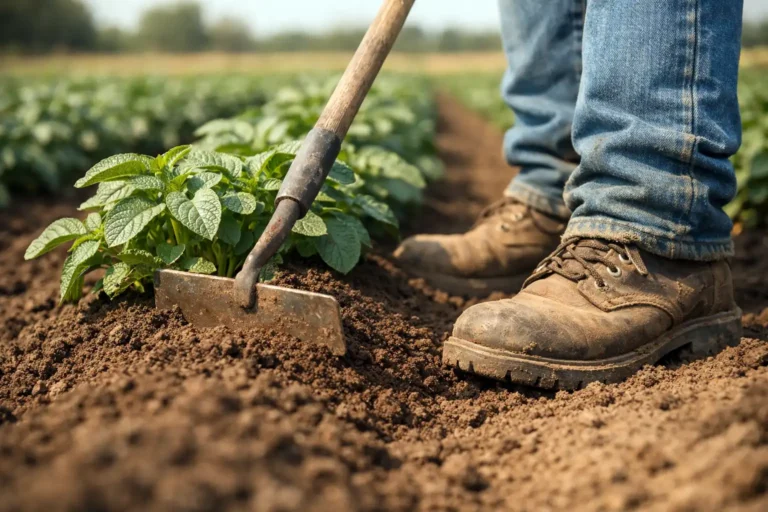
As potato stems grow, hill soil around them to cover developing tubers. When hilling potatoes, take care not to bury nearby garlic plants. If garlic is planted between rows rather than within hills, hilling is easier and less likely to damage garlic.
Step 6: Water Consistently
Both crops need about 1 inch of water per week during the growing season. Avoid overhead irrigation when possible. Drip irrigation or soaker hoses keep foliage dry and reduce late blight risk. The eOrganic program recommends minimizing leaf wetness as a primary strategy for late blight prevention.
Step 7: Harvest on Separate Schedules
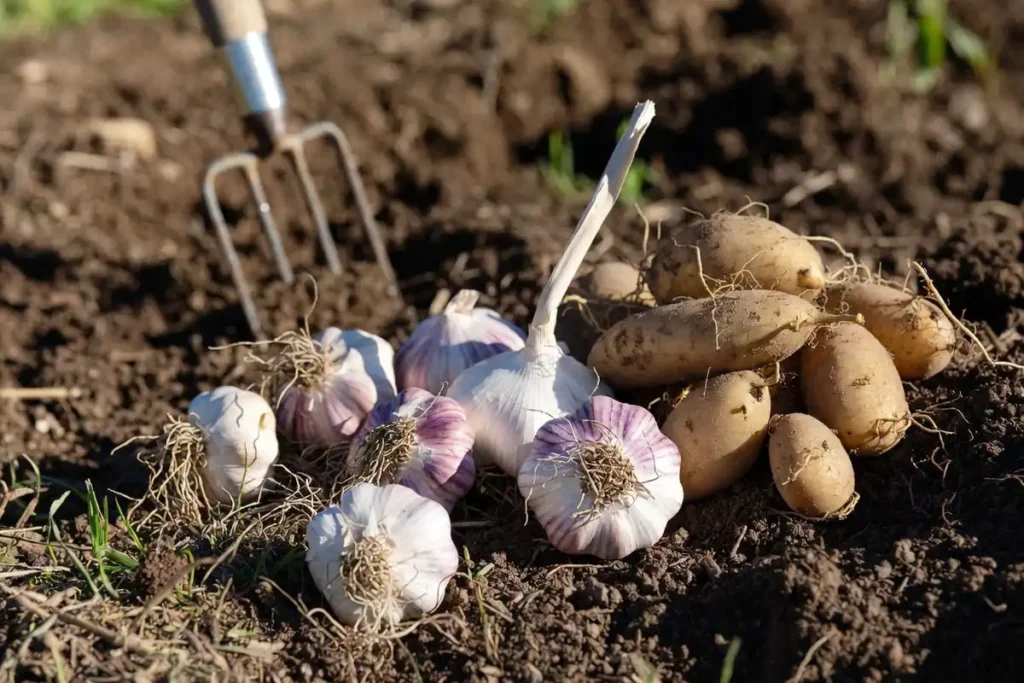
Garlic is ready when the lower leaves turn brown and dry. This happens in mid to late summer for fall-planted garlic. Potatoes are ready when the vines yellow and die back. In most cases, garlic matures a few weeks before potatoes, so you can harvest garlic first without disturbing the potato crop.
Spacing and Layout Options
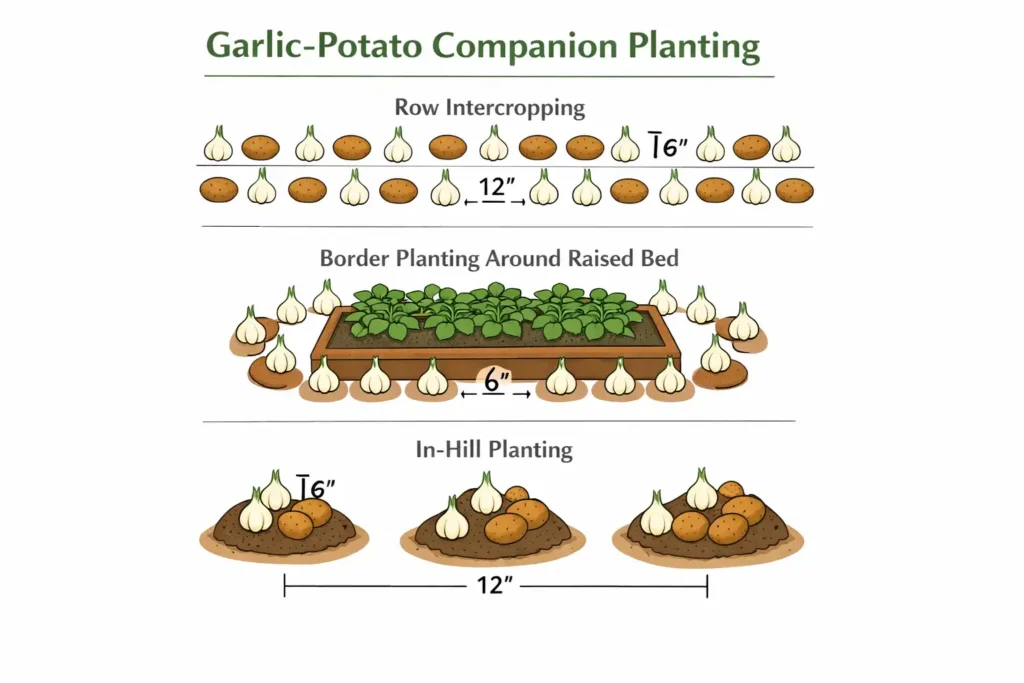
There are three common layouts for garlic-potato companion planting:
Row intercropping: Alternate rows of garlic and potatoes. Keep garlic rows at least 6 inches from potato rows. This works well for larger plots and makes hilling straightforward.
Border planting: Plant a ring of garlic around the outside edge of a raised bed or potato patch. This creates a scent barrier that deters pests from entering the bed.
In-hill planting: Tuck 3-4 garlic cloves around each potato hill, spacing them 6 inches from the center. This concentrates the sulfur compounds close to each potato plant for maximum protection.
What Not to Plant Near Garlic and Potatoes
Garlic inhibits the growth of legumes. Keep beans, peas, and lentils away from your garlic-potato bed. The sulfur compounds that protect potatoes interfere with nitrogen-fixing bacteria on legume roots.
Avoid planting tomatoes next to potatoes. Both belong to the Solanaceae family and share the same diseases, including late blight and early blight. Placing them together increases the chance of cross-infection.
Asparagus, sage, and parsley also perform poorly near garlic. These plants are sensitive to the allelopathic effects of allium root exudates.
Common Mistakes to Avoid
Planting garlic too close to potatoes. Keep at least 6 inches of space between garlic cloves and potato plants. Closer spacing leads to root competition and makes hilling difficult.
Skipping crop rotation. Do not plant garlic or potatoes in the same bed year after year. Rotate both crops to a new location each season to prevent pest and disease buildup. Wait at least 3 years before replanting either crop in the same spot.
Overwatering. Waterlogged soil rots garlic bulbs and promotes potato scab. Water deeply but infrequently. Let the top inch of soil dry between waterings.
Forgetting to remove volunteer potatoes. If you harvested potatoes the previous season, missed tubers sprout in spring. These volunteers compete aggressively with garlic. Pull them as soon as they appear.
Using the same bed for all alliums. Onions, leeks, and garlic share some pests like onion maggots. Avoid concentrating all allium crops in one area of your garden.
FAQs about Plant Garlic with Potatoes

Does garlic repel Colorado potato beetles?
Garlic’s sulfur compounds and strong aroma deter Colorado potato beetles. Planting garlic between potato rows reduces beetle activity, though it may not eliminate beetles completely in heavy infestations.
Can I plant garlic and potatoes in a raised bed?
Raised beds work well for garlic-potato companion planting. Use border planting around the edges of the bed and place potatoes in the center. Ensure the bed is at least 12 inches deep for proper tuber development.
Should I plant hardneck or softneck garlic with potatoes?
Either type works for companion planting. Hardneck garlic produces larger cloves and tolerates cold winters. Softneck garlic stores longer after harvest. Choose based on your climate and storage needs.
Will hilling potatoes damage nearby garlic?
Hilling can bury or disturb garlic planted too close to potato rows. Keep garlic at least 6 inches from potato hills, or plant garlic between rows rather than within hills to avoid damage during hilling.
Can I plant onions with potatoes instead of garlic?
Onions also belong to the Allium family and provide similar pest-deterrent benefits. Scallions and green onions work especially well because their smaller size fits easily between potato rows without competing for space.
Conclusion
Garlic and potatoes make a strong companion pairing. Garlic’s sulfur compounds fight late blight, repel beetles and aphids, and reduce the need for chemical treatments. Plant garlic cloves 6 inches from potato rows, mulch the bed, and water with drip irrigation for the best results. Rotate both crops to a new location each year to keep the soil healthy.