When to Plant Spring Wheat: Essential Guide for Every Region
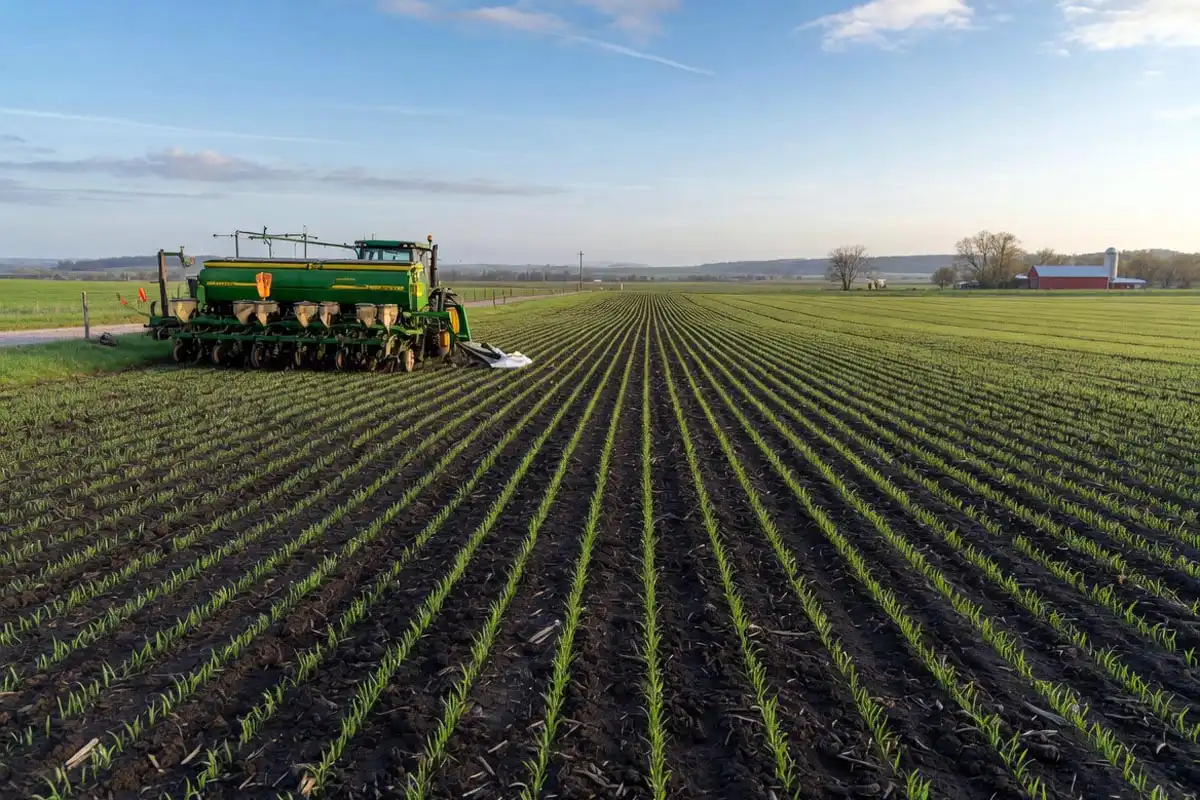
To plant spring wheat successfully, timing matters more than almost anything else. Spring wheat goes into the ground from late March through early May, as soon as soil temperature reaches 34 to 40°F at a 2-inch depth. This guide covers planting windows by region, soil preparation, seeding rates, depth, fertilization, and the common mistakes that reduce yield.
Plant spring wheat when the 3-day average soil temperature at 2 inches deep hits 34 to 40°F. In most northern U.S. states, that window falls between late March and late April. Each day of delay past the ideal date reduces yield by about 1 to 1.5%.
Contents
What Is Spring Wheat?
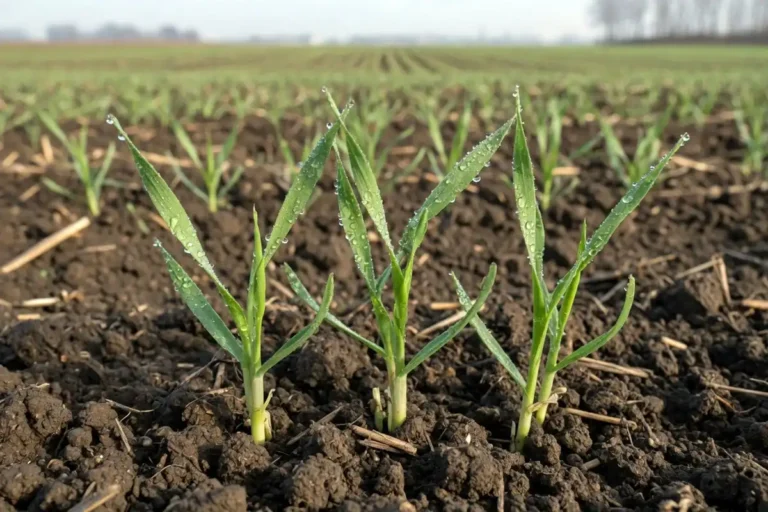
Spring wheat is a cool-season cereal grain planted in early spring and harvested in late summer. It does not need vernalization (a cold period) to flower, unlike winter wheat.
Hard red spring wheat (HRSW) is the most common class in the U.S. It produces high-protein flour for bread and pizza dough. Other classes include hard white spring, soft white spring, and durum for pasta.
North Dakota, Montana, Minnesota, South Dakota, and Washington grow the largest share of U.S. spring wheat. The USDA National Agricultural Statistics Service tracks planted acreage each year.
When to Plant Spring Wheat by Region
The goal is to get the crop in early so it matures before summer heat stresses grain fill.
Northern Great Plains (ND, MT, SD): Mid-April through early May. South Dakota State University recommends seeding during the first three weeks of April. Planting after May 10 risks heat damage.
Upper Midwest (MN, WI): Late March through mid-April. Last recommended dates fall in early to mid-May.
Pacific Northwest (WA, OR, ID): Late March through April. Timing shifts with elevation and irrigation.
Canadian Prairies (AB, SK, MB): Early to late May. Growers who seed by the second week of May retain close to 100% yield potential.
Mark your spring wheat window on a crop planting calendar so it lines up with other field operations.
What Soil Temperature Triggers Planting?
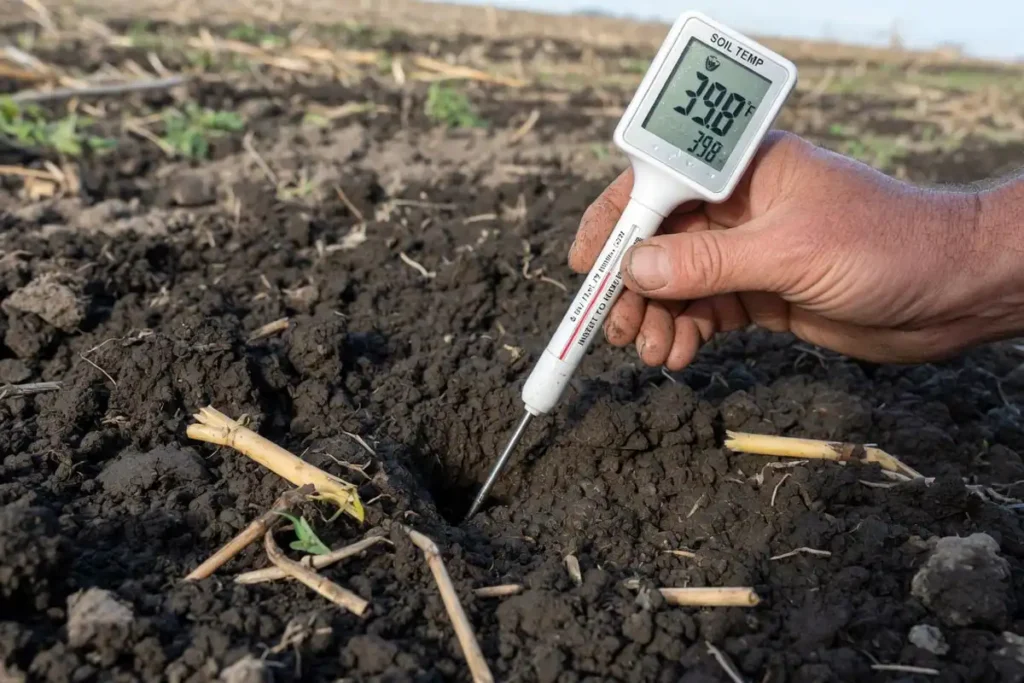
Soil temperature is the real trigger, not the calendar.
Spring wheat germinates at 34 to 36°F. Most extension programs recommend a 3-day average of 40°F for reliable emergence. The SDSU Extension advises using a 3-day average because shallow soil can swing 15°F or more in a single day.
Cold, wet soil after planting slows emergence and increases seedling disease risk. A fungicide-insecticide seed treatment helps protect seed during cold starts.
Fields with heavy residue warm slower than tilled fields. If you compare tillage and no-till systems, account for the delayed warming that comes with more residue.
How to Prepare and Plant
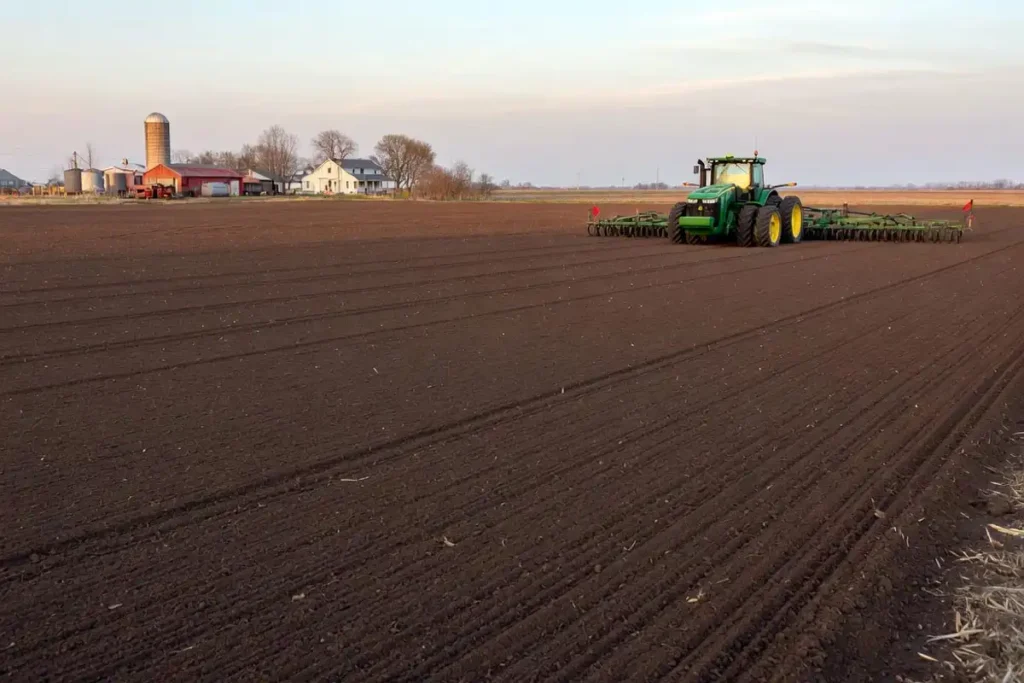
A firm, level seedbed gives spring wheat the best start.
Test your soil. Check nitrogen, phosphorus, potassium, and pH before planting. Wheat grows best in well-drained loam or clay loam with pH between 6.0 and 7.5. I covered this in my soil testing guide.
Address fertility early. Nitrogen is the most limiting nutrient. Montana State University recommends 3.3 lb total N per bushel of expected yield. Band phosphate and potash before seeding. Understanding NPK ratios helps balance all three macronutrients.
Spread residue evenly. Uneven residue causes depth problems and cold pockets where emergence stalls.
Seeding depth: 1 to 2 inches. Shallower than 1 inch gives poor seed-to-soil contact. Deeper than 3 inches reduces emergence because spring wheat does not elongate its coleoptile as aggressively as winter wheat.
Seeding rate: Target 1.2 to 1.4 million seeds per acre (28 to 32 seeds per square foot). Expect 10 to 20% stand loss. Increase the rate by 1% per day when planting late, up to 1.6 million seeds per acre. Always calibrate the drill with current seed lot information.
How to Choose a Variety
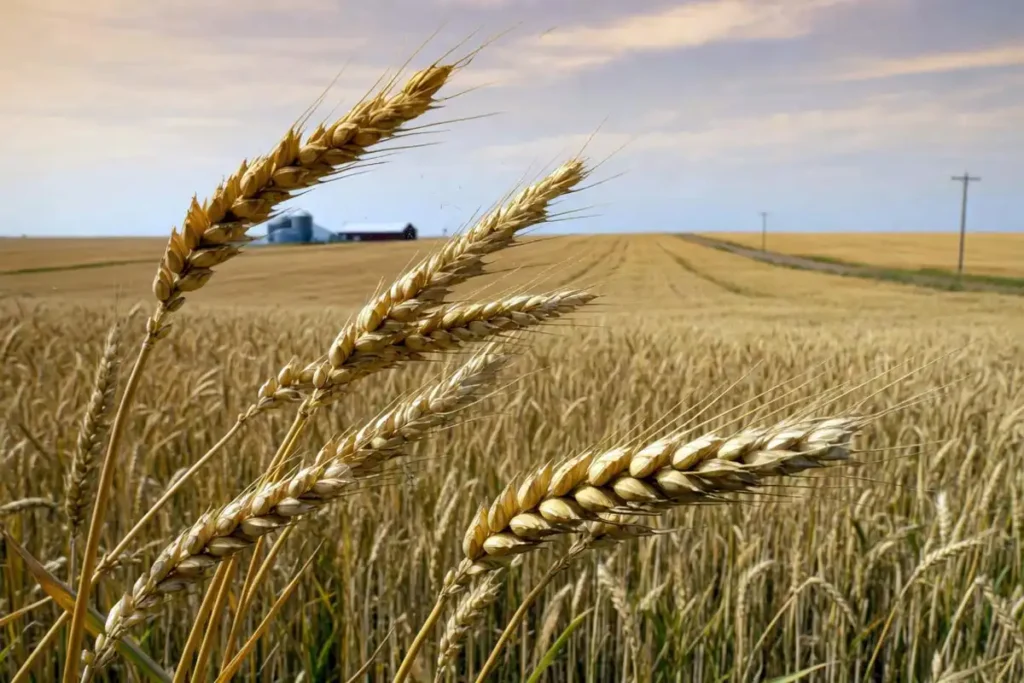
Pick varieties tested across multiple locations and years in your region. Yield potential is the first factor. After that, evaluate protein, test weight, and lodging resistance.
Disease resistance matters where Fusarium head blight (scab), leaf rust, or tan spot are common. I covered key pathogens in my common crop diseases article.
Earlier maturing varieties help the crop finish grain fill before peak summer heat. Plant at least two varieties with different maturities to spread risk.
What Pests and Diseases Affect Spring Wheat?
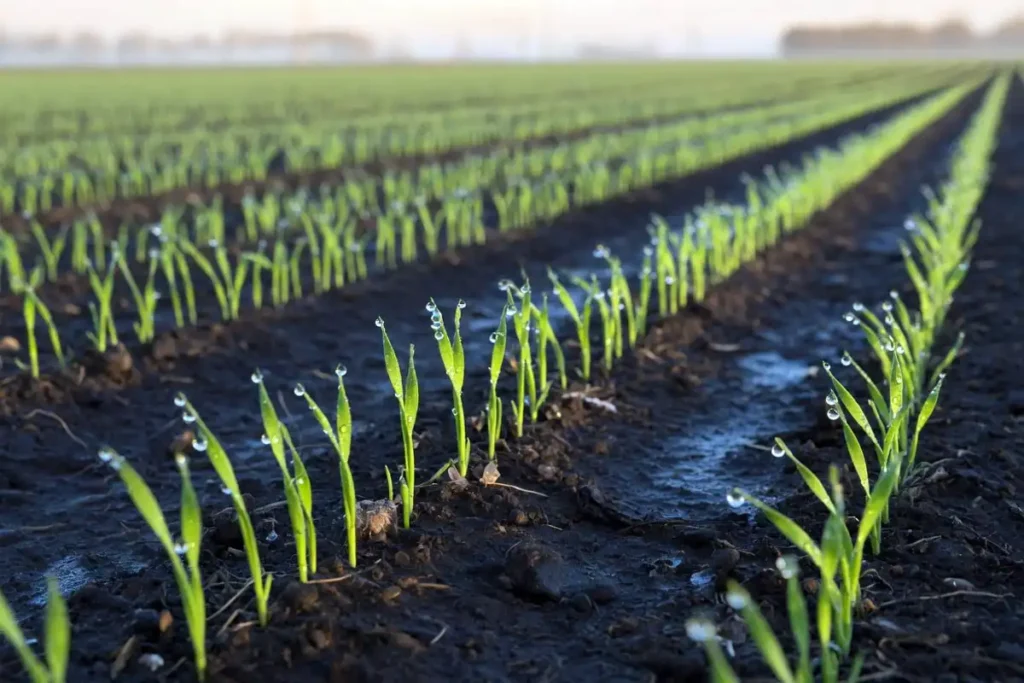
Insects: Wireworms, wheat stem sawfly, aphids, and cutworms. Use seed treatment with an insecticide if wireworms are expected.
Diseases: Fusarium head blight, leaf rust, tan spot, and septoria leaf blotch reduce yield and quality. Avoid planting wheat on wheat stubble. A sound crop rotation breaks disease cycles.
Weeds: Broadleaf and grassy weeds compete for moisture and nutrients. A targeted weed control plan at the right growth stage protects yield.
Mistakes to Avoid
Planting too late. North Dakota State University research shows about 1% yield loss per day past the ideal date. A two-week delay costs 10 to 14%.
Planting too deep. Anything below 3 inches delays emergence and weakens seedlings.
Skipping seed treatment. Cold soil favors seedling diseases. Treatment costs a few dollars per acre and protects the stand.
Skipping the soil test. Guessing at fertilizer rates leads to overspending or underfertilizing.
Planting wheat after wheat. Consecutive wheat crops increase scab and tan spot. Rotate with soybeans, canola, or peas.
FAQs on Planting Spring Wheat

Can you plant spring wheat in the fall?
No. Spring wheat lacks winter hardiness and will not survive freezing temperatures. Only winter wheat varieties suit fall planting because they need vernalization to produce grain.
How late is too late to plant spring wheat?
Planting after mid-May in most northern states reduces yield significantly. Hot weather during grain fill causes the biggest losses. Each day past ideal costs about 1 to 1.5%.
How long does spring wheat take to mature?
Spring wheat matures in 90 to 120 days from planting to harvest. Early maturing varieties finish closer to 90 days. Cool, wet seasons extend the timeline.
Does spring wheat need irrigation?
Spring wheat grows well on dryland farms with 12 or more inches of growing-season rainfall. Irrigation increases yield in drier areas, especially during tillering and grain fill.
What is the difference between spring wheat and winter wheat?
Winter wheat is planted in fall and goes dormant over winter. Spring wheat is planted in spring and harvested in late summer. Winter wheat generally yields more, but spring wheat fits regions with severe winters.
Final Notes
Timing is everything with spring wheat. Get into the field as soon as soil temperature holds above 34 to 40°F at 2 inches deep. Choose a tested variety, calibrate the drill, and protect the stand with seed treatment. Early planting gives the crop its best chance to fill grain before summer heat arrives.