How Late Can You Plant Winter Wheat Without Losing Yield
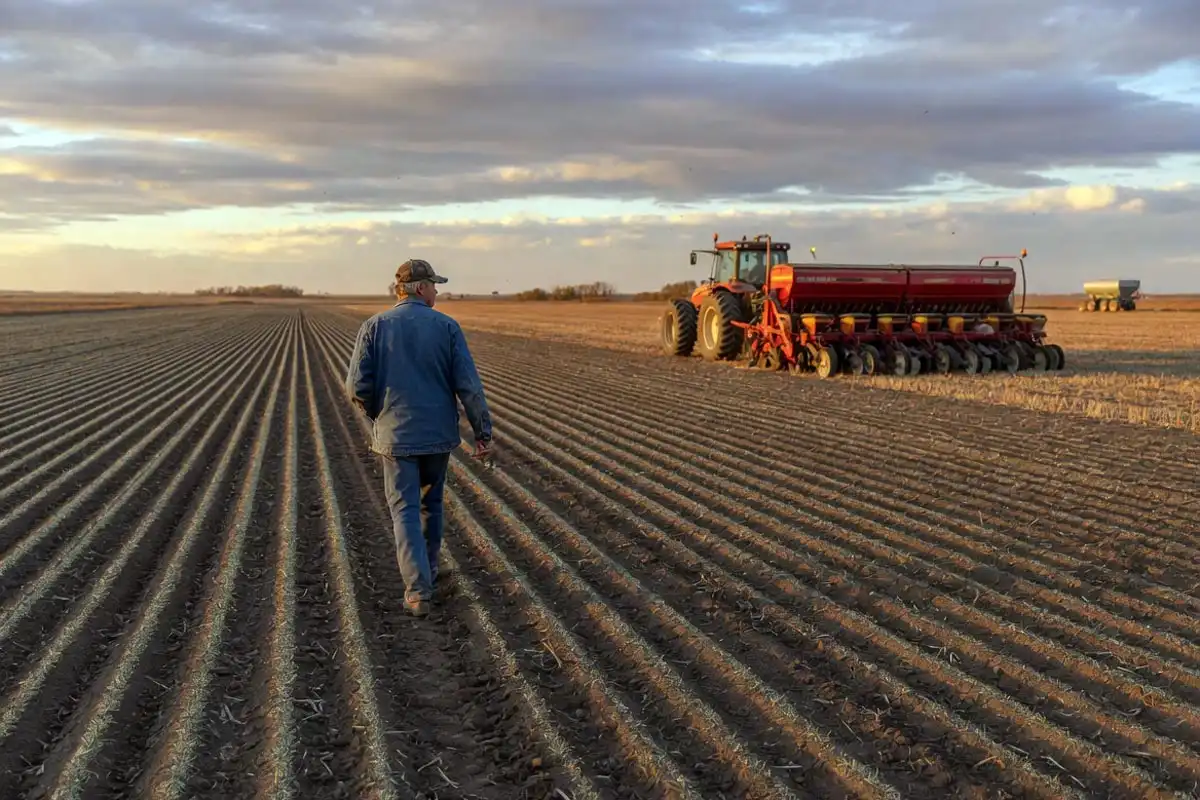
In most U.S. regions, you can still plant winter wheat late into November, but yield tends to decline by roughly 1 bushel per acre for every day beyond the ideal window. This guide covers regional deadlines, seeding adjustments, and step-by-step tips for making late-planted wheat work.
Growers in the Central Plains plant winter wheat as late as early November and still harvest grain. The Northern Plains face a tighter window, with mid-October as the practical cutoff. In the Southeast, planting extends into late November. The key is soil moisture, temperature, and enough cold days for vernalization before spring.
Contents
When Is the Ideal Planting Window?
The ideal window varies by latitude and climate. Most extension programs tie recommended dates to the Hessian fly-free date for each county.
- Northern Plains (Montana, Dakotas, Minnesota): Early September through early October.
- Central Plains (Kansas, Nebraska, Colorado): Late September through mid-October.
- Southern Plains (Oklahoma, Texas): Early October through late October.
- Great Lakes (Michigan, Ohio, Indiana): Late September through mid-October.
- Southeast (Virginia, North Carolina, Georgia): Mid-October through mid-November.
Kansas State University Extension data shows about 90% of Kansas wheat goes into the ground by October 25. If you use a crop planting calendar, these windows line up with the shift to cooler soil temperatures.
How Late Can You Plant Winter Wheat by Region?
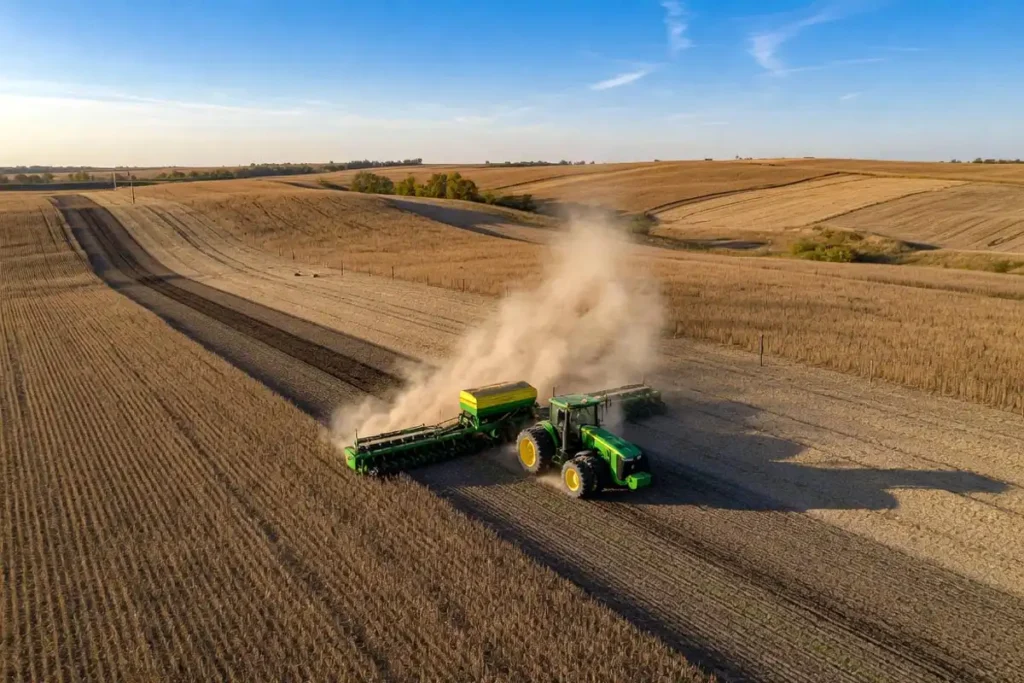
What counts as “late” in Minnesota is still early in Georgia. Here is what research shows.
Central Plains: Growers plant into early November. A Kansas State study showed late October and early November dryland wheat yielded 20 to 25 bushels per acre below September-planted fields.
Great Lakes: Michigan State University research found mid-October planting caused 14-20% yield decline. After mid-October, losses jumped to 33-46%. Michigan crop insurance sets October 25 as the final planting date.
Northern Plains: South Dakota State University found wheat planted November 1 stayed dormant until spring and produced the lowest yields. Mid-October is the practical outer limit.
Southeast and Southern Plains: Warmer falls give more flexibility. Planting extends into late November. The risk shifts from winterkill to insufficient vernalization if winter stays too mild.
University of Nebraska-Lincoln trials tested planting from October through April. October produced 100% yield, November dropped to 77%, December hit 59%, and January fell to 57%. April-planted wheat failed entirely because it never vernalized.
Why Does Late Planting Reduce Yield?
Three problems overlap in late-planted fields.
Less fall tillering. Fall-formed tillers produce up to 70% of grain yield in a normal year. Late planting cuts the time for tiller development before cold weather arrives.
Weaker roots. Small, shallow root systems increase winterkill risk. Freeze-thaw cycles push seedlings out of the ground through a process called heaving.
Shorter, hotter grain fill. Each monthly planting delay shortens the grain-fill period by about 1.7 days and raises the average temperature during fill by 1.5°F. Hotter conditions produce lighter kernels and lower test weight.
Understanding how NPK fertilizer supports crop growth helps when compensating for these setbacks.
What Is Vernalization and Why Does It Matter?
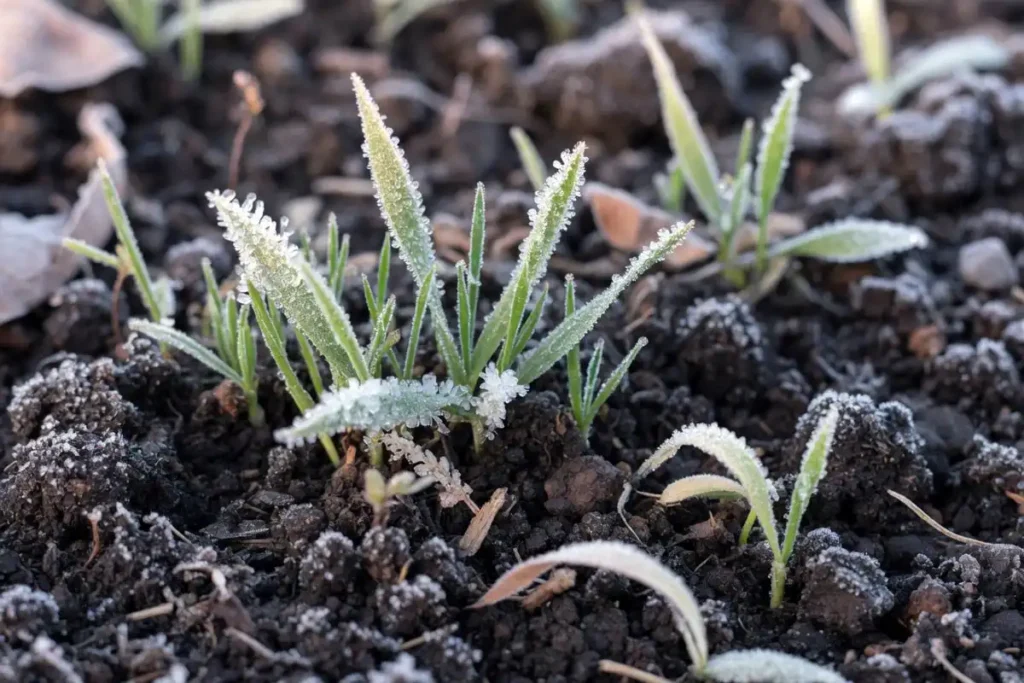
Vernalization is the cold period winter wheat needs before it switches from leaf growth to grain production. Without it, the plant produces no heads.
Winter wheat needs 30 to 75 days of temperatures between 34°F and 50°F. The optimum range is 40°F to 50°F. Ohio State University research found one cultivar needed 40 days at 52°F, but 70 days at 34°F. Temperatures above 64°F do not contribute.
The seed does not need to emerge for vernalization to begin. Once it absorbs enough water, the process starts underground. Wheat drilled into moist soil in November often vernalizes below ground and emerges the following spring.
For late plantings, choose varieties with shorter vernalization requirements. Semi-winter types need 2 to 4 weeks of cold. Strong winter types need 4 to 6 weeks or more.
How to Plant Winter Wheat Late: Step by Step
Step 1: Test your soil. Soil pH between 6.0 and 7.0 gives the best establishment. Low pH or phosphorus increases winterkill risk. I covered sampling basics in my piece on soil testing for farming.
Step 2: Pick the right variety. Choose a cultivar rated for good winter hardiness and a shorter vernalization window. Check your state university variety trial results.
Step 3: Increase seeding rate. Late wheat produces fewer tillers, so more plants per acre fill the gap.
- Ideal window: 1.2 to 1.6 million seeds per acre.
- 2-3 weeks late: 1.6 to 2.0 million seeds per acre.
- 4+ weeks late: 2.0 to 2.2 million seeds per acre.
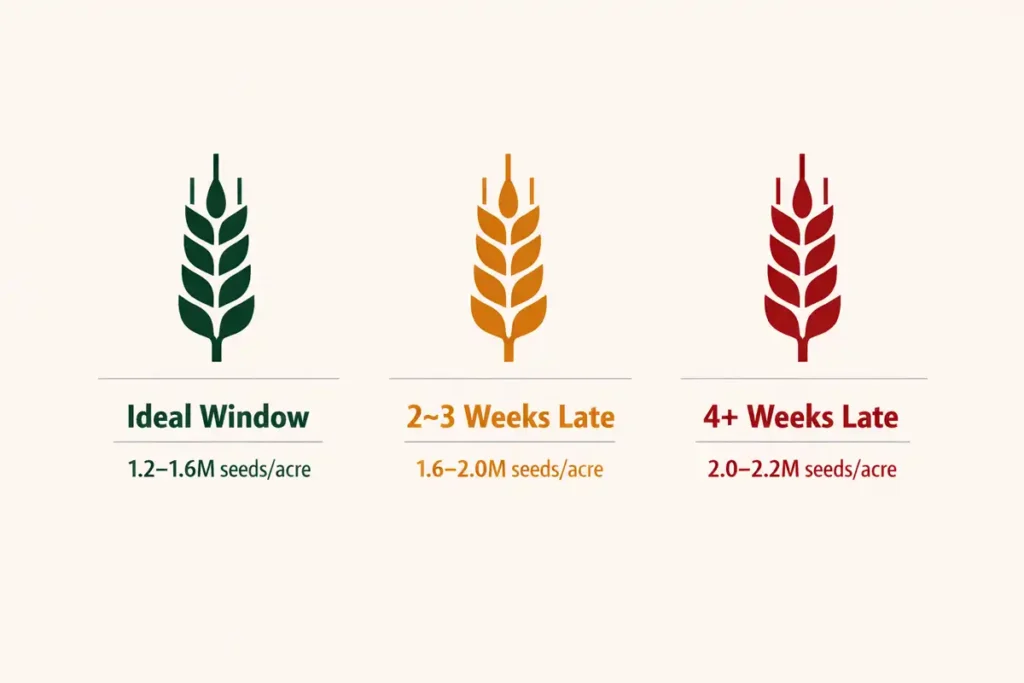
Penn State Extension recommends boosting seeding rate 10% for each week past the fly-free date.
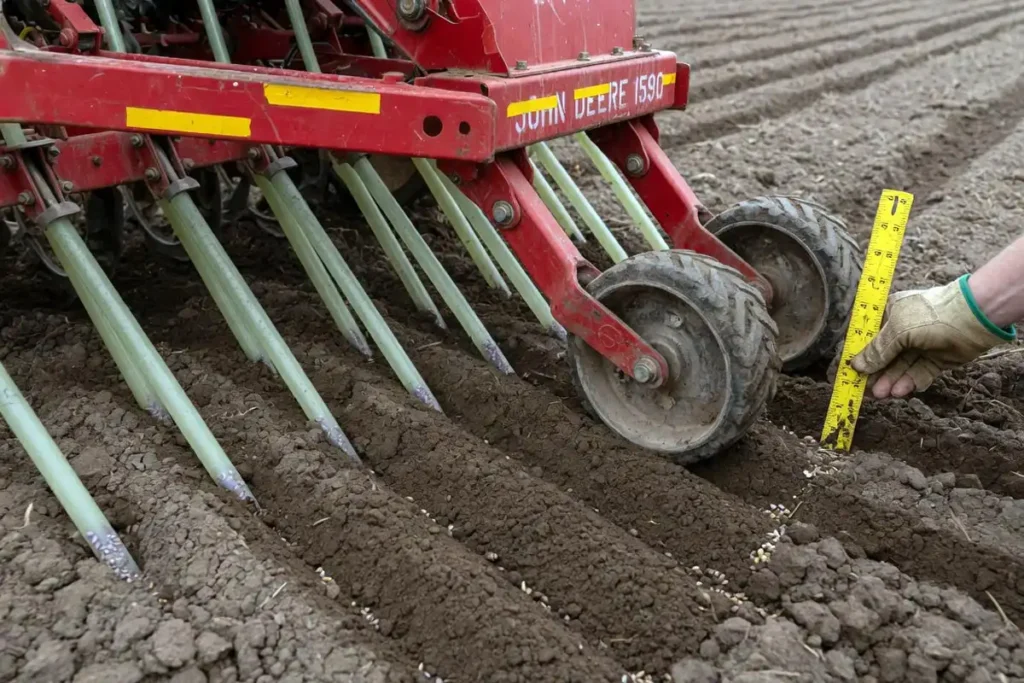
Step 4: Narrow row spacing. Switch from 10-15 inch rows to 5-8 inches. Narrow spacing distributes plants more evenly heading into winter.
Step 5: Plant 1 to 1.5 inches deep. Shallow placement speeds emergence. The one exception: if topsoil is dry, drill deeper to reach moisture.
Step 6: Apply starter fertilizer. Place 20 to 30 pounds per acre of phosphorus with the seed. Keep nitrogen with the seed below 15-20 pounds per acre to avoid burn. Plan an early spring topdress of 40-80 pounds nitrogen per acre in late February to push tiller development.
Step 7: Use treated seed. Fungicide seed treatments protect against soil-borne diseases in cold, wet seedbeds. The longer seed sits before emerging, the more this matters.
A sound crop rotation plan also reduces disease risk, especially after corn or another cereal.
What Mistakes Should You Avoid?
Planting too deep. Every extra half inch costs emergence time the crop does not have.
Skipping the seeding rate bump. Timely-planting rates leave stand gaps and fewer grain heads.
Ignoring soil moisture. In dryland areas, waiting for rain before drilling often beats planting into dust.
Heavy residue without adjusting. Thick stubble reduces seed-to-soil contact. Add 15% to your seeding rate in no-till fields. I discussed planting tradeoffs in my piece on direct sowing vs transplanting.
Missing crop insurance deadlines. Many states set final planting dates for coverage. Check with your local Farm Service Agency before planting past the cutoff.
Late wheat also works as a cover crop. Even if grain yield is uncertain, the root system holds soil and benefits the next crop.
FAQs on Planting Winter Wheat

Can you plant winter wheat in November?
Yes. November-planted wheat germinates, vernalizes, and produces grain in most regions. Expect 20-40% lower yields than early October plantings. Increase seeding rate and add starter phosphorus.
What happens if winter wheat does not emerge before winter?
Un-emerged wheat vernalizes underground as long as the seed absorbed water. The crop emerges in spring, tillers, and sets grain. Yields run lower but the stand often survives.
What soil temperature is too cold for germination?
Winter wheat germinates at soil temperatures as low as 40°F, though emergence slows below 50°F. The ideal range is 54°F to 77°F. Below 40°F, germination stalls until spring.
How much does late planting cut winter wheat yield?
Michigan State research measured 14-20% decline for mid-October planting and 33-46% after mid-October. Nebraska trials showed November at 77%, December at 59%, and January at 57% of full yield.
Conclusion
Late-planted winter wheat produces grain, protects soil, and keeps a field in rotation when fall harvest runs long. The yield hit is real, and it gets steeper the later you go. But with higher seeding rates, starter fertilizer, narrow rows, and the right variety, you can close the gap. I have planted wheat into early November on my own farm in Kansas and harvested a crop worth keeping. The crop is forgiving if you give it what it needs.