Can You Plant Onions in the Winter? What Smart Growers Know
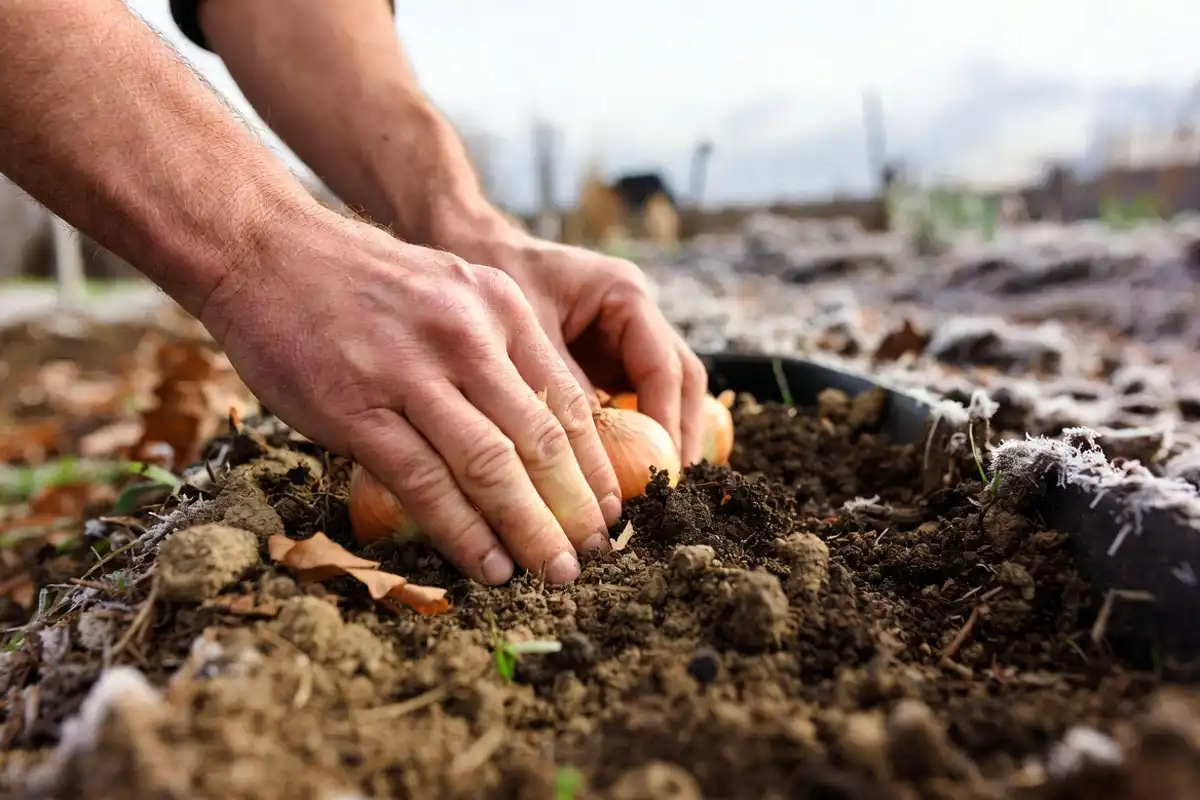
Yes, onions grow in winter when gardeners plant the right variety at the right time for their USDA hardiness zone. This guide covers winter onion types, planting timing by region, frost protection, and common mistakes that cause bolting or crop loss.
Winter onion planting works in USDA Zones 6 through 10. Southern growers (Zones 7 to 10) plant short-day sets from October through December. Northern growers (Zones 6 and colder) plant in late summer or early fall and protect seedlings with mulch or low tunnels for a spring harvest.
Contents
- 1 What Are Winter Onions
- 2 When to Plant Onions in Winter
- 3 Which Varieties Work for Winter Planting
- 4 How to Plant Onions in Winter (Step-by-Step)
- 5 How to Protect Winter Onions from Frost
- 6 Common Mistakes to Avoid
- 7 When to Harvest Overwintered Onions
- 8 FAQs on Planting Onion in the Winter
- 9 Final Thoughts
What Are Winter Onions
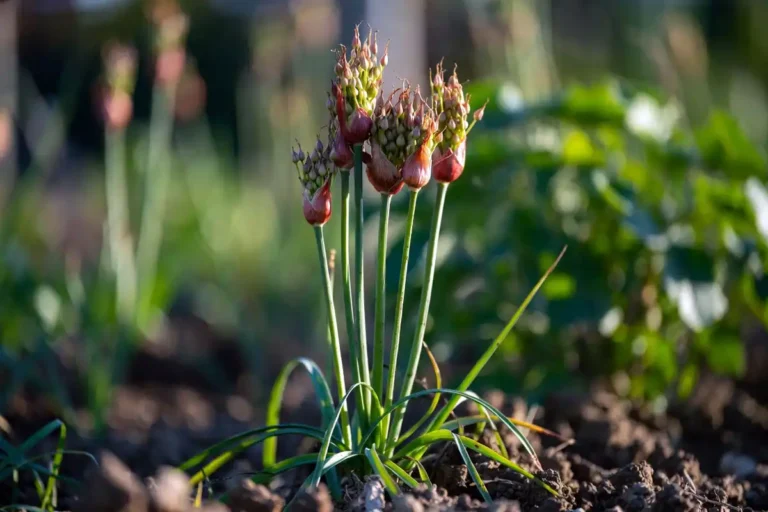
Winter onions are Allium cepa varieties that tolerate freezing soil and develop bulbs through cold months. These include multiplier onions, Egyptian walking onions, and bolt-resistant overwintering cultivars.
Onions are biennials. They grow foliage and a bulb in year one, then flower in year two. Winter planting uses this cycle on purpose. You plant in fall, let roots establish before the ground freezes, and harvest full-size bulbs the following spring or early summer.
When to Plant Onions in Winter
Timing depends on your climate zone. Getting it right prevents bolting and gives roots time to anchor before hard frost.
Southern regions (Zones 7 to 10): Plant short-day sets or transplants from October through December. Bulbs form as days lengthen from February through April. Harvest arrives by late spring.
Mid-latitude regions (Zones 5 to 6): Plant in September or October, at least 2 to 3 weeks before the first hard freeze. Seedlings need to reach pencil-width thickness before dormancy. Too small and they freeze out. Too large and they bolt in spring.
Northern regions (Zones 3 to 4): Start seeds indoors in August. Transplant into cold frames or low tunnels by September. Mulch heavily before the first freeze.
I put together a crop planting calendar that helps pin down dates by zone.
Which Varieties Work for Winter Planting
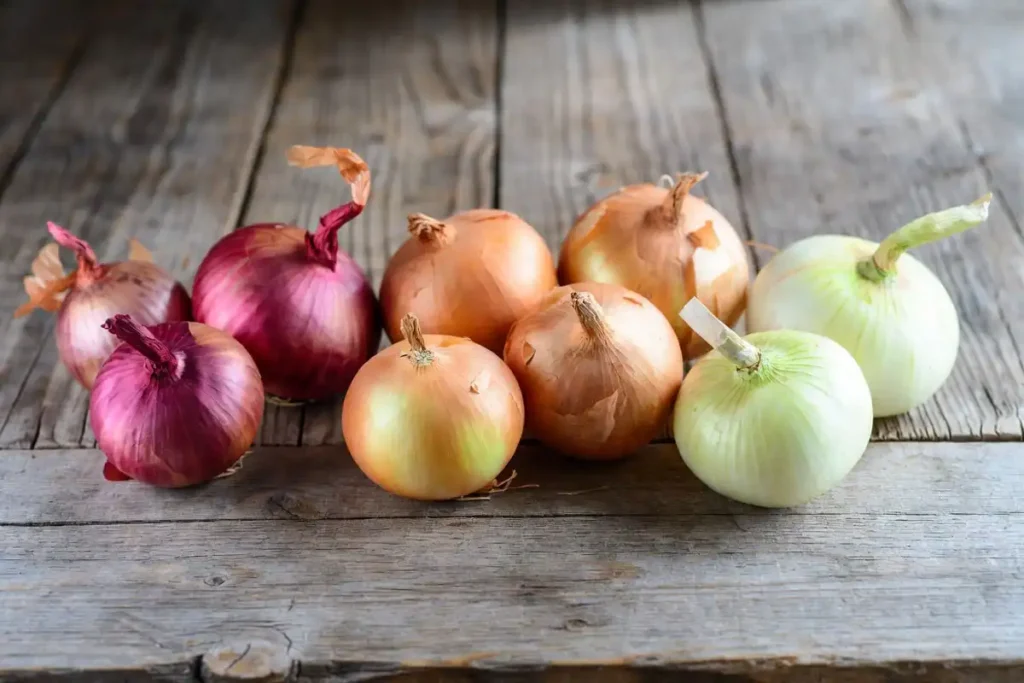
Onions respond to photoperiodism. Day length triggers bulb formation. Planting the wrong type for your latitude produces undersized bulbs or none at all.
Short-day onions need 10 to 12 hours of daylight to bulb. They suit southern states (latitudes 25 to 35 degrees north). Popular picks: Texas Super Sweet, Red Creole, and Granex (the Vidalia type).
Intermediate-day onions bulb with 12 to 14 hours of daylight. They fit mid-latitude states (latitudes 32 to 42 degrees). Candy Hybrid and Super Star are reliable choices.
Long-day onions require 14 to 16 hours and fit northern states (latitudes 37 to 47 degrees). For overwintering, choose bolt-resistant varieties like Bridger, Walla Walla, or Forum.
Multiplier and walking onions tolerate deep cold and return year after year. These suit gardeners wanting a low-maintenance perennial crop.
If you are growing onions from seed, pick bolt-resistant cultivars. Seed-started onions take longer to establish than sets.
How to Plant Onions in Winter (Step-by-Step)
Step 1: Prepare the Soil
Onions prefer a pH of 6.0 to 6.8 and loose, well-drained ground. Amend with finished compost and work the top 6 to 8 inches until crumbly. If unsure about your soil, run a soil test first. The University of Maryland Extension recommends well-drained soil with moderate organic matter for onion production.
Step 2: Choose Sets, Seeds, or Transplants
Onion sets are the easiest option. They establish faster and tolerate cold better than seeds. Pick sets smaller than a dime in diameter to reduce bolting risk. Seeds work but need an 8 to 10 week indoor head start so seedlings reach pencil-width before the freeze.
Step 3: Plant at the Right Depth
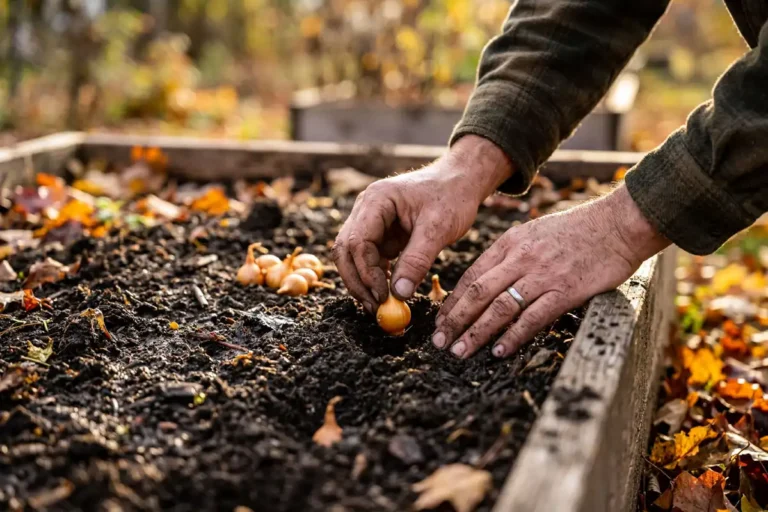
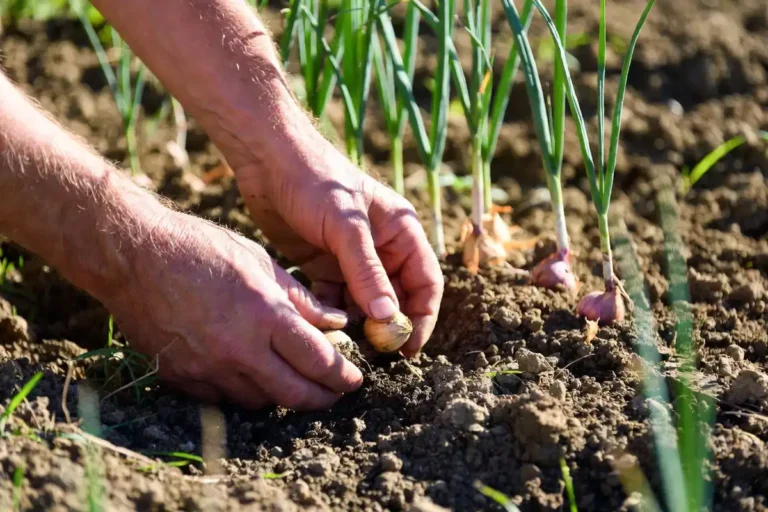
Plant sets pointed end up, 1 to 2 inches deep. Space bulbing onions 4 to 6 inches apart in rows 12 inches apart. Seeds go a quarter-inch deep. NC State Extension recommends half to three-quarter inch depth for larger-scale planting.
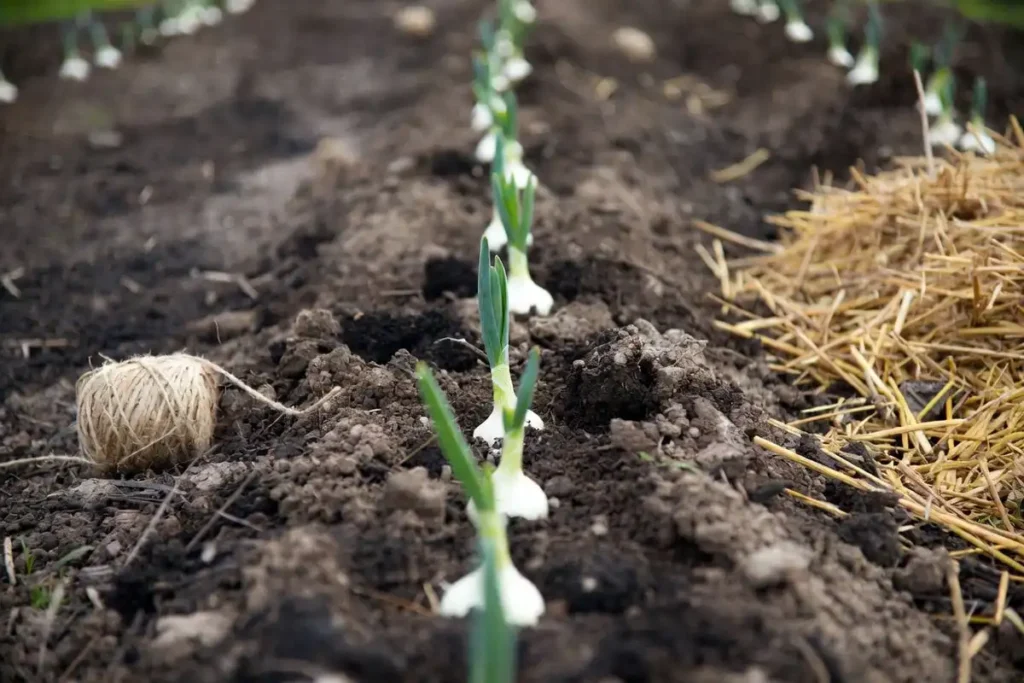
Step 4: Water and Mulch
Water thoroughly after planting. Keep soil moist but not soggy. Apply 2 to 4 inches of straw or shredded leaves once plants establish. Mulch insulates roots and prevents freeze-thaw heaving. I wrote more on mulching techniques in a separate guide.
Step 5: Monitor Through Winter
Check plants monthly. Tops may yellow and go dormant in cold zones. That is normal. Pull back heavy mulch in late winter so new growth gets sunlight, but keep a light layer for frost protection.
How to Protect Winter Onions from Frost
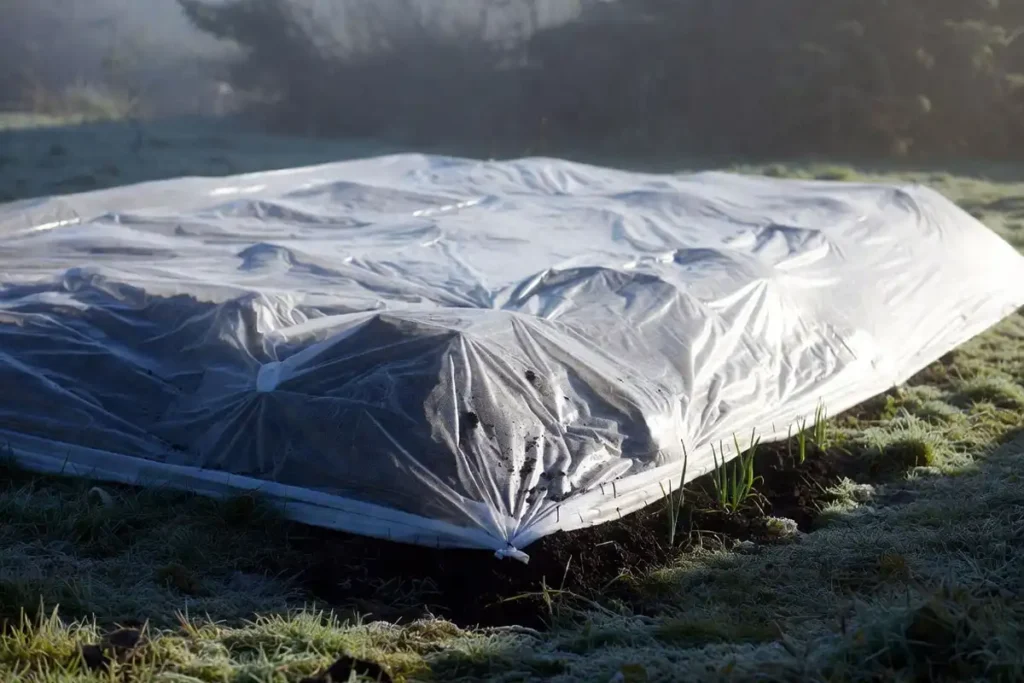
Established onion roots tolerate soil temperatures down to about 20 degrees F (-6 degrees C). Foliage handles light frost but suffers below that.
Mulch: 3 to 4 inches in mild zones, up to 6 inches in cold zones. Straw or shredded leaves work well.
Row cover: Adds 2 to 8 degrees of frost protection depending on fabric weight. Drape directly over the bed.
Low tunnels or cold frames: Extend the growing range by one to two zones. These suit Zone 5 and colder growers.
Common Mistakes to Avoid
Wrong day-length variety. A short-day onion in a long-day zone produces tiny bulbs. Match your latitude to the correct type.
Planting too early. Oversized plants going into winter bolt in spring. Target pencil-width stems at dormancy.
Planting too late. Sets need 2 to 3 weeks of unfrozen soil to root. Seeds need longer.
Overwatering. Wet winter soil causes rot. Water only when the top inch dries out.
Skipping mulch. Freeze-thaw cycles heave sets out of the ground. Exposed roots die fast.
When to Harvest Overwintered Onions
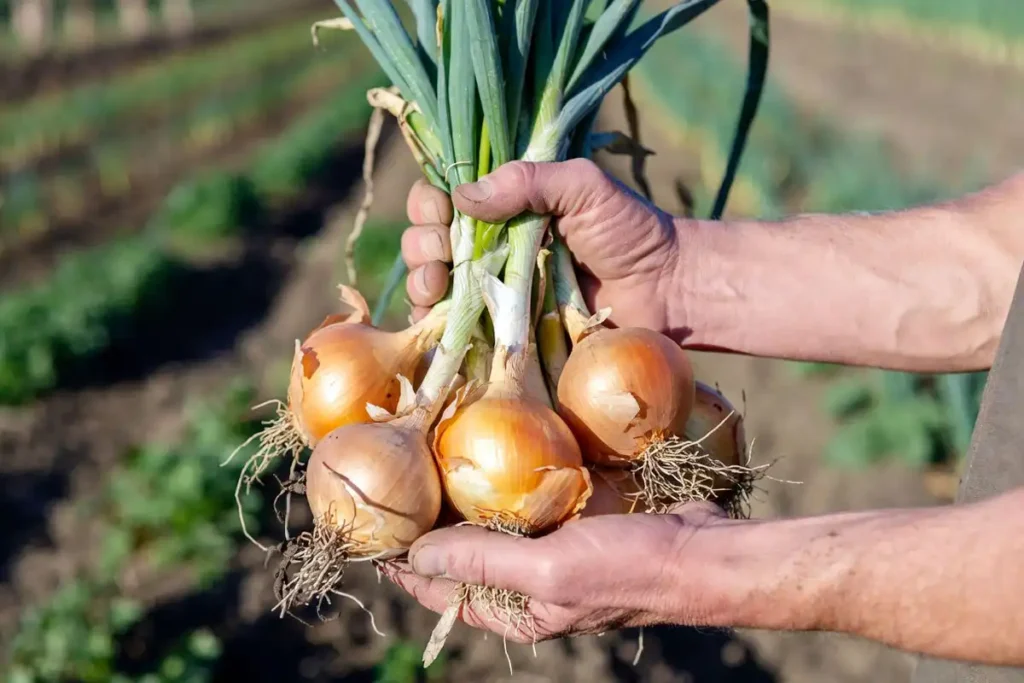
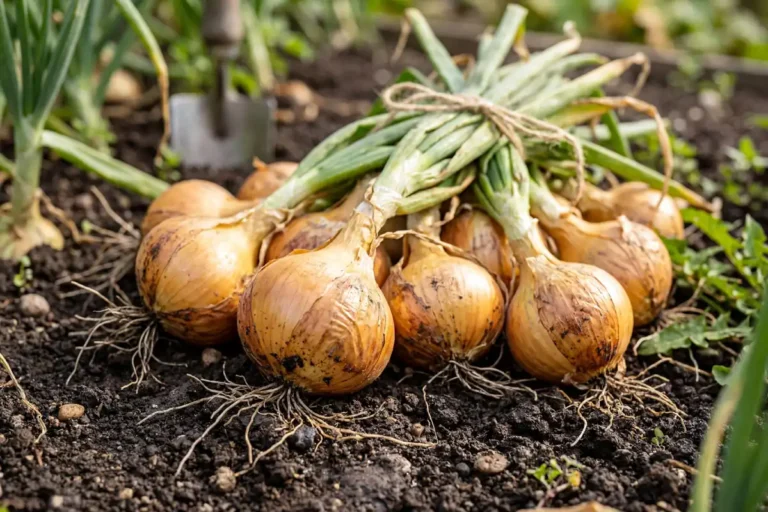
Expect harvest from late April through June. When two-thirds of tops yellow and flop, the bulbs are ready. Stop watering and let them cure in the ground a few days if weather is dry.
Pull gently to avoid bruising. Cure in a warm, ventilated area for 1 to 2 weeks. Overwintered onions store 1 to 3 months, shorter than summer types because of higher water content.
If flower stalks appear, harvest immediately. Bolted onions decline fast but are still edible for a few days. My guide on knowing when to harvest covers more timing details.
FAQs on Planting Onion in the Winter

Can I plant onion sets in frozen ground?
No. Sets need unfrozen soil to root. Plant at least 2 to 3 weeks before your first hard freeze so roots anchor before the ground locks up.
Do winter onions need fertilizer during cold months?
Not during dormancy. Apply a nitrogen-rich fertilizer in early spring when new green growth appears. Feeding during winter is unnecessary because onions are not actively growing.
Will snow damage my overwintered onions?
Snow acts as insulation and often helps rather than hurts. A snow layer buffers soil temperatures and protects roots. Remove heavy ice buildup from row covers or low tunnels to prevent structural collapse.
Can I plant onions and tomatoes together after winter?
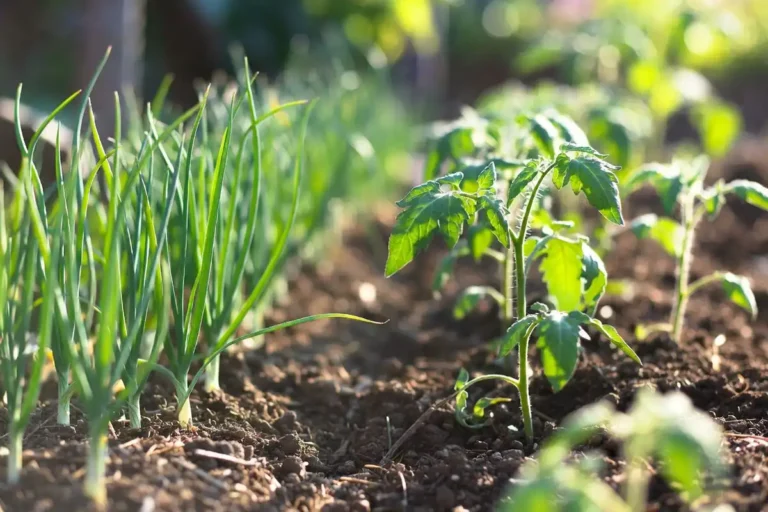
Onions and tomatoes grow well as neighbors in spring beds. Onions deter certain tomato pests. I covered companion planting details in my article on planting onions and tomatoes together.
How deep should I mulch winter onions?
Apply 3 to 4 inches in mild zones (7 to 10) and up to 6 inches in cold zones (4 to 6). Pull mulch back slightly in spring so new shoots receive sunlight without obstruction.
Final Thoughts
Winter onion planting works in most of the United States when you match the right variety to your latitude and time the planting correctly. Southern gardeners plant from October to December. Northern gardeners plant in late summer or early fall with frost protection.
Focus on soil drainage, proper mulching, and the correct day-length variety for your zone. Give your sets or seeds enough time to root before the freeze, and pull back mulch as spring warmth returns. With these steps, you harvest larger, earlier onions than a spring-only planting can provide.