Can You Grow Peanuts in Michigan? 4 Easy Methods to Try
Yes, you can grow peanuts in Michigan, but only with short-season varieties and the right setup. This guide covers which peanut types fit Michigan’s climate, the planting and soil rules I follow on my Kansas farm, harvest timing, and the common problems Michigan growers run into each season.
Peanuts grow in southern Michigan if you pick Valencia or Spanish types, plant after soil hits 65°F, and use raised beds or black plastic to warm the soil. Northern Michigan needs containers or a high tunnel to finish the crop before frost.
Most Michigan gardeners get tripped up by season length, not soil. Knowing the climate peanuts need to grow is the first step before you ever shell a seed.
Contents
- 1 What Are the Best Peanut Varieties for Michigan?
- 2 When to Plant Peanuts in Michigan
- 3 Where Peanuts Grow Best in Michigan
- 4 How to Plant Peanuts in Michigan (Step-by-Step)
- 5 How to Grow Peanuts in Containers (Backup Plan)
- 6 Common Problems Michigan Growers Face
- 7 Common Mistakes to Avoid
- 8 Safety Notes for Peanut Growers
- 9 FAQs about Growing Peanuts in Michigan
- 10 Last Notes
What Are the Best Peanut Varieties for Michigan?
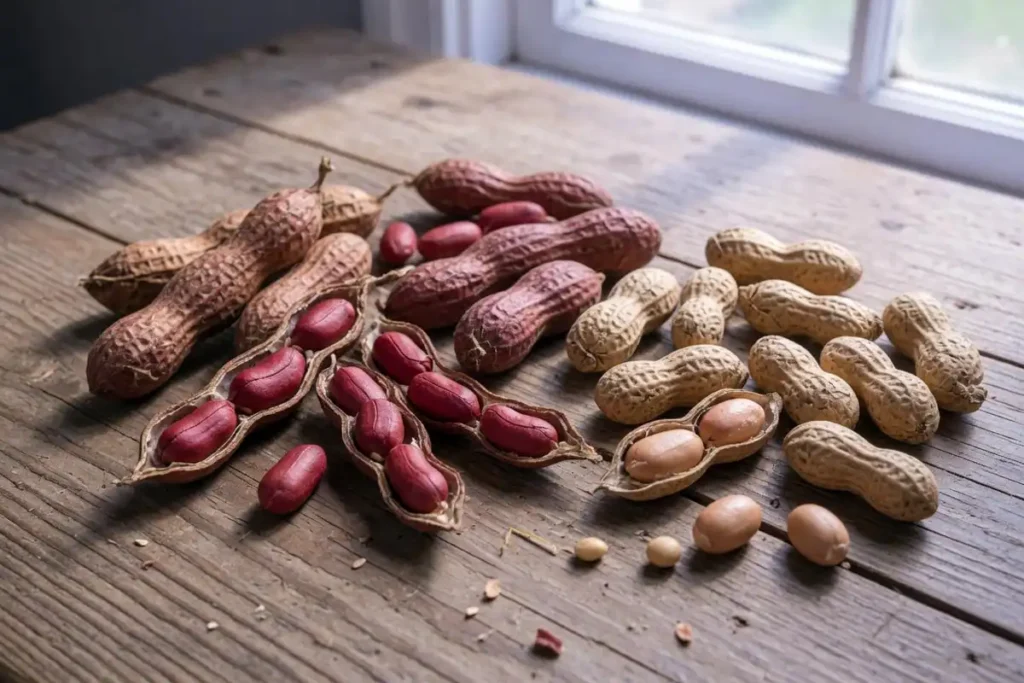
Peanuts come in four market types: Valencia, Spanish, Runner, and Virginia. For Michigan, only the first two finish in time.
- Valencia peanuts mature in 90 to 110 days. They handle cooler nights better than Runners and produce 3 to 4 nuts per shell.
- Spanish peanuts mature in 100 to 120 days. They have small, round seeds and tolerate Michigan’s variable summers.
- Runner and Virginia types need 140 to 160 frost-free days. Most of Michigan does not give you that, so skip them.
According to research from North Carolina State Extension, variety choice drives yield more than fertilizer in short seasons.
When to Plant Peanuts in Michigan
Plant peanuts after the last spring frost, once soil temperature at 4 inches reads 65°F for three straight days. In southern Michigan (Zones 6a–6b), that lands around late May to early June. In northern Michigan (Zones 4b–5b), wait until mid-June.
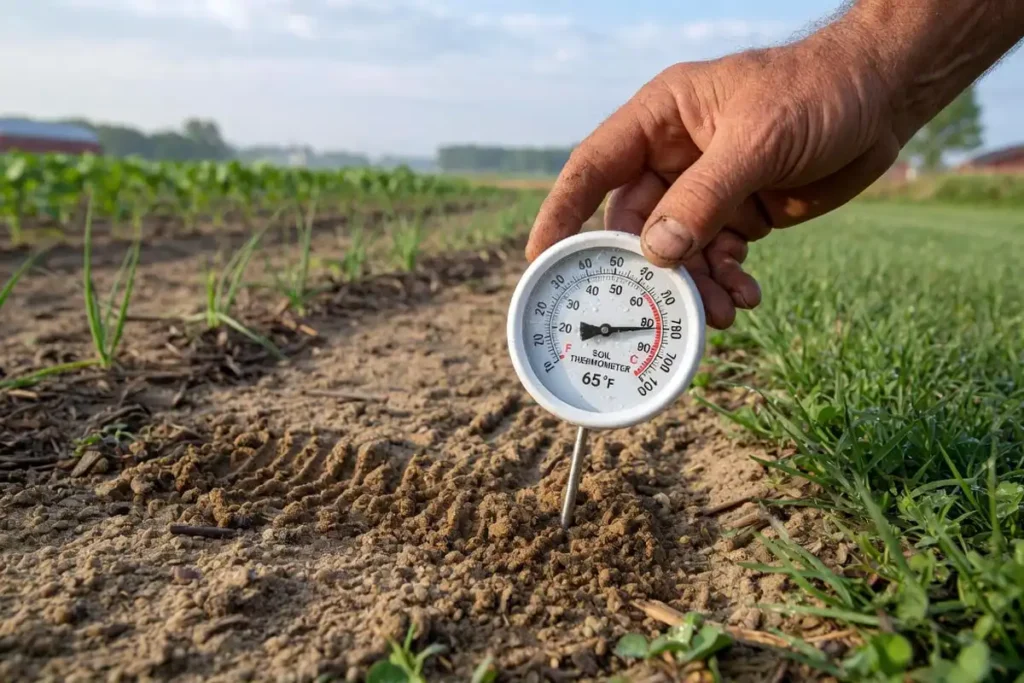
Cold soil rots seeds fast. I check my soil thermometer before I commit. The rules I use for the right window for planting peanuts hold true here too: warm soil first, calendar second.
Where Peanuts Grow Best in Michigan
Peanuts prefer sandy loam with good drainage and full sun. Michigan’s Lower Peninsula has plenty of sandy soils, especially in the western and central counties. Heavy clay or low spots will not work without amending.
Site checklist:
- South-facing slope or open, sunny field
- Sandy or sandy loam soil, pH 5.8 to 6.2
- Six or more hours of direct sun daily
- Good drainage with no standing water after rain
The USDA Plant Hardiness Zone Map shows most growable peanut zones sit in the southern third of the state.
How to Plant Peanuts in Michigan (Step-by-Step)
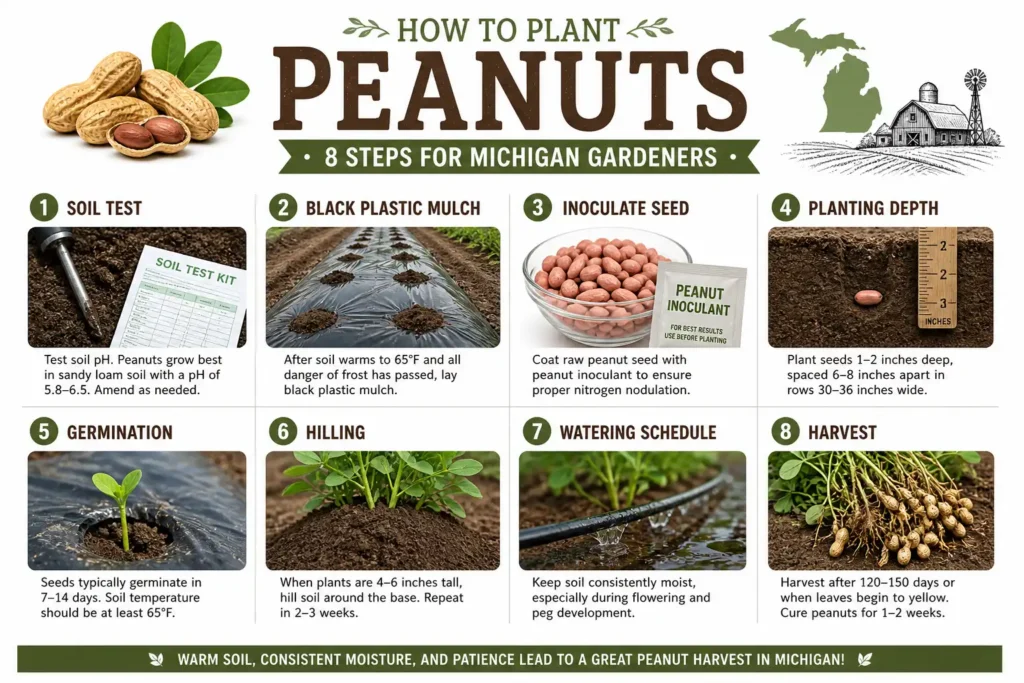
Here is the workflow I would run for a Michigan backyard plot or small market row.
1. Test and amend the soil. Aim for pH 5.8 to 6.2. Add gypsum (calcium) before bloom; peanuts pull calcium directly into the pegs.
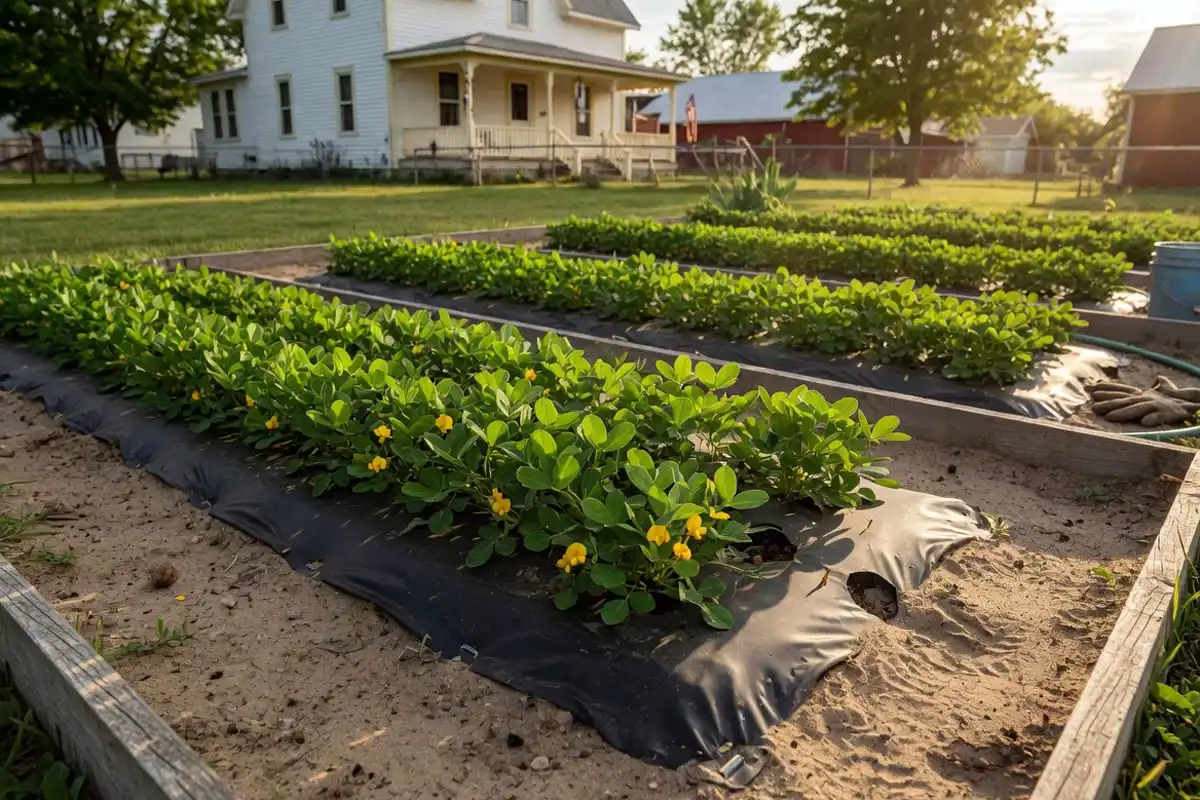
2. Warm the soil. Lay black plastic over the bed two to three weeks before planting. This raises soil temperature by 5 to 10°F and shaves a week off germination.
3. Use raw, in-shell seed. Shell the pods just before planting. Do not use roasted grocery peanuts. Inoculate with rhizobia bacteria for nitrogen fixation.
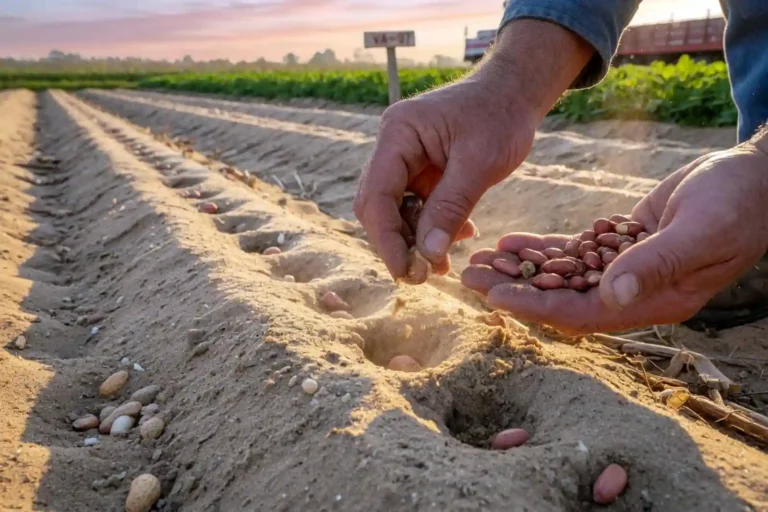
4. Plant 1 to 2 inches deep. Space seeds 6 inches apart in rows 24 to 30 inches wide. Water lightly after planting.
5. Watch germination. Seedlings emerge in 7 to 14 days at proper soil temperature. If you see gaps, follow standard advice on germinating peanut seeds and replant within 10 days.
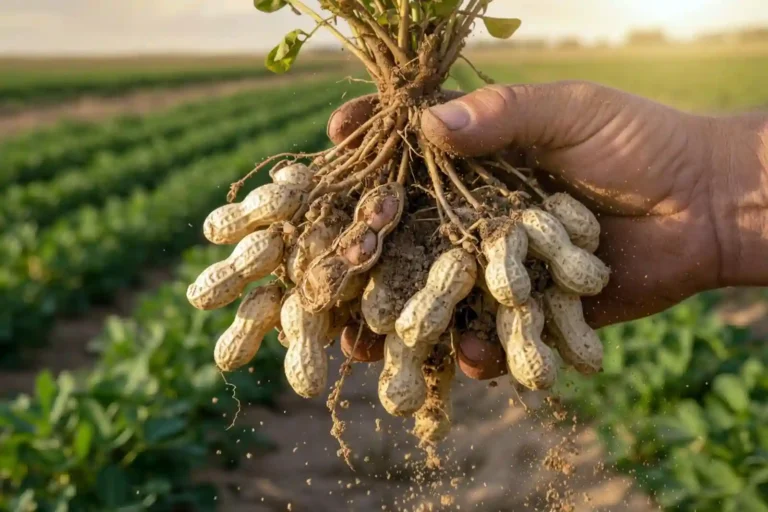
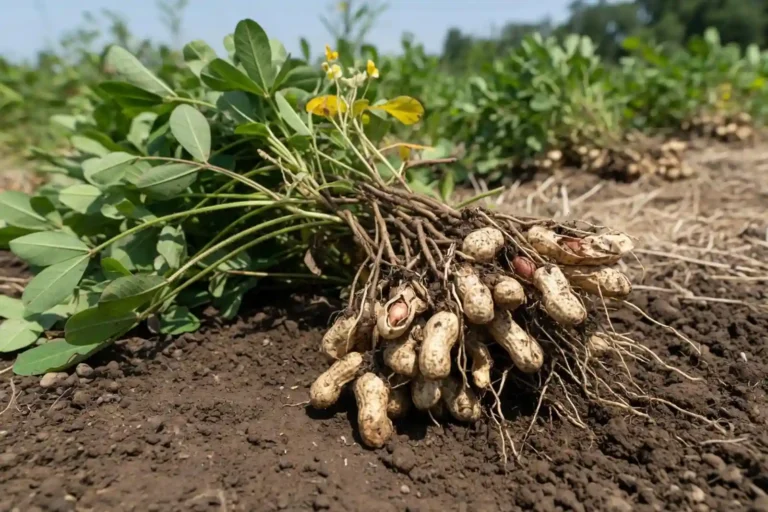
6. Hill the rows. Once plants reach 12 inches and start flowering, mound loose soil around the base. The pegs (flower stems) push down into this soil to form pods.
7. Water 1 inch per week. Cut back water in the last 2 weeks before harvest to firm up the shells.
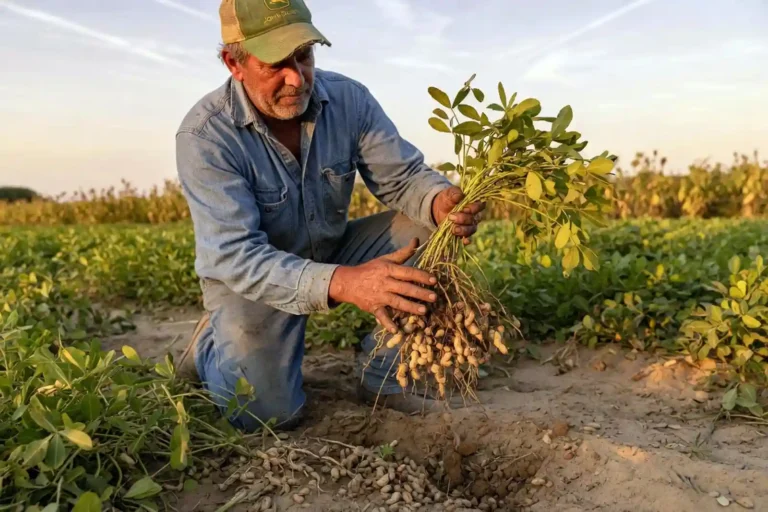
8. Harvest before frost. In Michigan, that usually means late September to early October.
How to Grow Peanuts in Containers (Backup Plan)
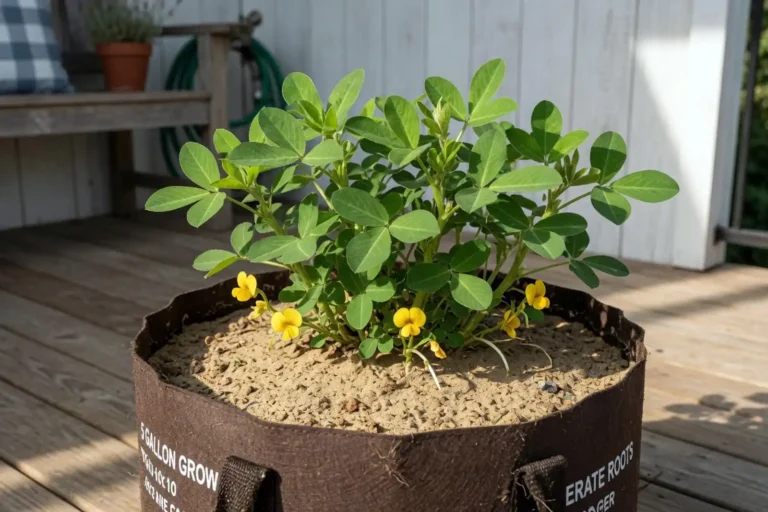
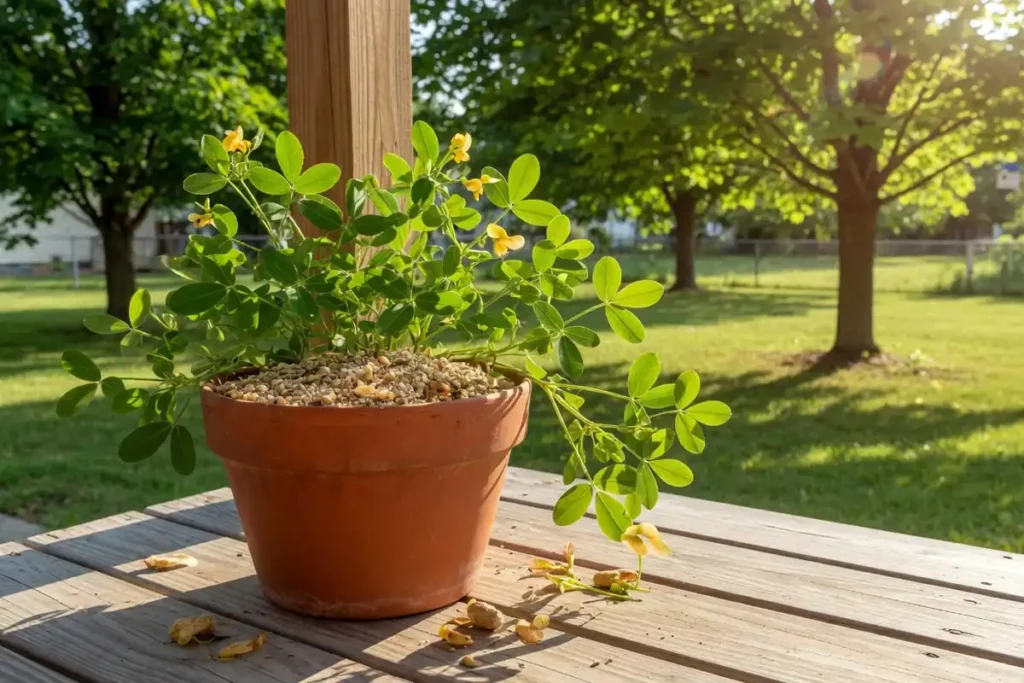
If you live in Zone 5 or colder, container growing is the safer route. Use a 5-gallon pot, 12 inches deep, with sandy potting mix. Plant 2 seeds per pot. Move pots to a sunny porch or unheated greenhouse during cool nights. The full method I follow for growing peanuts in containers works the same way in Michigan.
Common Problems Michigan Growers Face
Peanuts in Michigan run into a tight set of issues:
- Cool, wet springs delay germination and rot seed. Black plastic or row cover fixes this.
- Short season risk. A frost in mid-September ends the crop. Pick 90 to 100 day varieties.
- Wet fall harvest. Pods need to dry on the vine for 2 to 3 weeks after pulling. Wet weather rots them. Use a covered porch or fan-dry indoors.
- Wildlife pressure. Squirrels, raccoons, and deer dig pods. A simple fence helps.
Common Mistakes to Avoid
I see the same errors every year from new peanut growers up north:
- Planting before soil hits 65°F.
- Choosing Virginia or Runner varieties for a 130-day season.
- Skipping calcium at flowering, which causes empty pods.
- Hand-watering too late in the season and softening shells.
- Forgetting to hill the plants once flowers appear.
Safety Notes for Peanut Growers
Peanuts carry food allergy risk. Wash hands and tools after handling raw nuts if anyone in your household has a peanut allergy. Cure pods in dry, ventilated air for 2 to 3 weeks before storage; damp peanuts can grow Aspergillus mold and produce aflatoxin, which is toxic. The CDC notes aflatoxin contamination as a real concern with poorly stored peanuts.
FAQs about Growing Peanuts in Michigan

Can peanut plants survive frost in Michigan?
How long do peanuts take to grow in Michigan?
Do you need a greenhouse to grow peanuts in Michigan?
What is the best peanut variety for Michigan gardens?
When should I harvest peanuts in Michigan?
Last Notes
Growing peanuts in Michigan works if you match the variety to your frost-free window, warm the soil before planting, and harvest before the first fall frost. Stick with Valencia or Spanish types, use raised beds or black plastic, and you will pull a real crop, even in a state most folks call too cold for peanuts.