
When Do You Plant Wheat: Essential Planting Guide for 2026
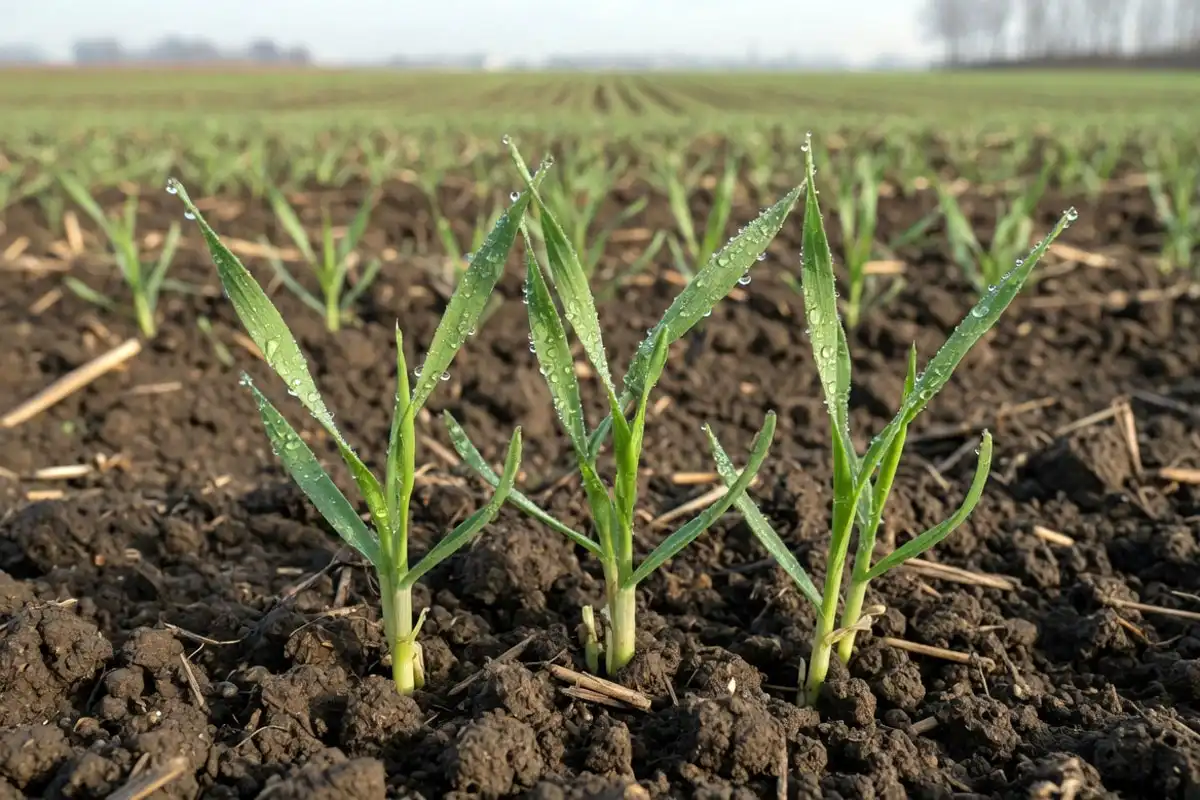
Wheat planting depends on the type you grow. Winter wheat goes into the ground in fall, typically mid-September through mid-October. Spring wheat is planted in late March to April once soil warms above 40°F. This guide covers planting windows for both types, soil prep, seeding depth, and common mistakes so you can time your planting right.
Plant winter wheat 6 to 8 weeks before your first expected fall frost, when soil temperature drops below 80°F. Plant spring wheat in late March through April, when soil reaches 40°F at 2 inches deep. Timing varies by region and wheat class.
Contents
- 1 What Are the Two Types of Wheat
- 2 When to Plant Winter Wheat by Region
- 3 When to Plant Spring Wheat
- 4 How Soil Temperature Affects Germination
- 5 How to Prepare Soil for Wheat
- 6 What Seeding Depth and Rate to Use
- 7 What Is Vernalization
- 8 Common Mistakes to Avoid
- 9 How to Reduce Winterkill Risk
- 10 FAQs about Wheat Planting
- 11 Conclusion
What Are the Two Types of Wheat
Wheat splits into two types based on planting season: winter and spring.
Winter wheat is planted in fall. It germinates, grows a few leaves, then goes dormant through winter. Cold exposure triggers grain production the next summer. Harvest runs late May through July.
Spring wheat is planted in early spring and harvested the same year in late summer. It skips the cold requirement entirely. Northern states with harsh winters favor spring wheat.
Hard red winter, soft red winter, hard red spring, and durum are the main classes. The USDA reports wheat grows in 42 of 50 U.S. states.
When to Plant Winter Wheat by Region
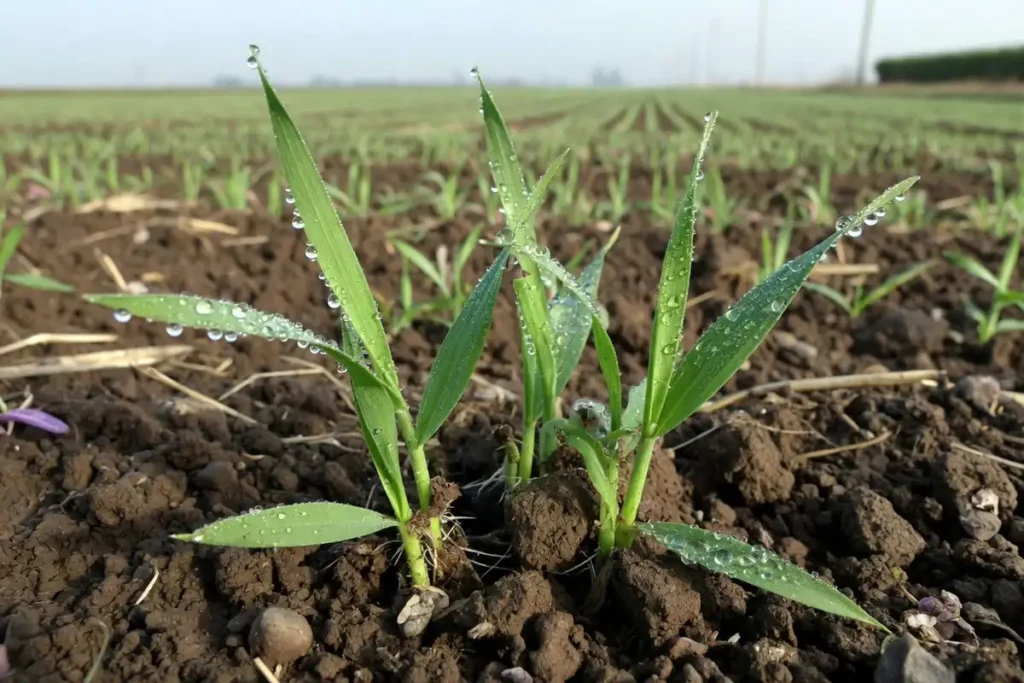
The goal is 6 to 8 weeks of growth before the ground freezes. That builds enough root and tiller development to survive winter.
Northern Plains (Montana, Dakotas, Minnesota): Early September through early October. South Dakota State University recommends September 10 to October 10 for best yields.
Central Plains (Kansas, Nebraska, Oklahoma): Late September through mid-October. Soil temperature at planting needs to fall between 54°F and 77°F for proper germination.
Southeast (Virginia, North Carolina, Georgia): Mid-October through November. Planting too early here creates excessive fall growth that attracts pests.
Pacific Northwest (Washington, Oregon): Late September through October.
If you track your growing season with a crop planting calendar, you can line up wheat alongside other field operations.
When to Plant Spring Wheat
Spring wheat planting starts when soil reaches 40°F at a 2-inch depth. That usually means late March to April.
Delayed planting cuts yield fast. North Dakota State University data shows 1% yield loss per day past the optimum date. The Manitoba Crop Alliance reports growers who seed by mid-May retain close to 100% yield potential. Planting in the third week of May drops yield to 85-90%.
Spring wheat tillers less than winter wheat, so seed at a higher rate: 1.3 to 1.4 million plants per acre.
How Soil Temperature Affects Germination
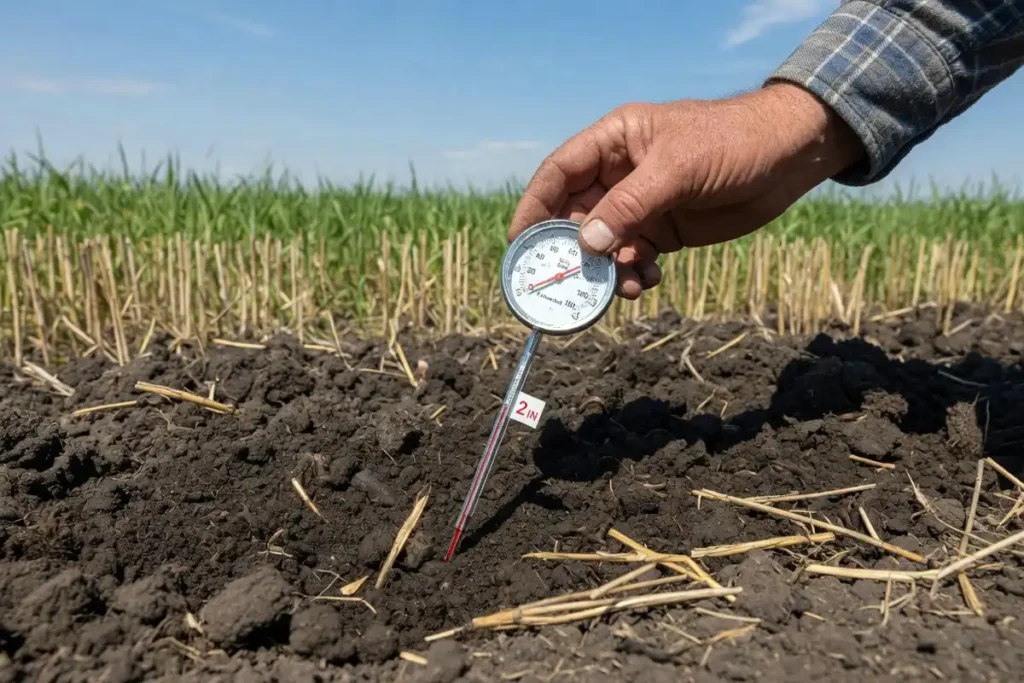
A soil thermometer at 2-inch depth is your best planting indicator.
Winter wheat germinates between 54°F and 77°F. Seeds in soil above 80°F sit dormant until it cools. Hot soil also shortens the coleoptile, which limits safe planting depth.
Spring wheat germinates at 40°F but slowly. Warmer soil speeds things up. In good conditions, wheat emerges 5 to 7 days after planting. Cold or dry soil stretches that to 2-3 weeks.
A pre-plant soil test also reveals pH. Wheat prefers 5.5 to 7.5.
How to Prepare Soil for Wheat
Wheat performs best in well-drained, loamy soil with a firm seedbed.
Test first. Check pH, phosphorus, potassium, and nitrogen. Winter wheat typically needs 30-50 lbs of nitrogen and 20-40 lbs of phosphorus per acre at planting.
Manage residue. Spread it evenly. Thick clumps block seed-to-soil contact. Many growers use no-till to maintain soil structure and trap snow for winter insulation.
Firm the seedbed. Wheat drilled into loose soil struggles with poor contact. This is a leading cause of winterkill. A pass with a cultipacker helps.
Rotate crops. Planting wheat after soybeans or sunflowers reduces disease carryover. Wheat after wheat increases risk of tan spot and Septoria. A solid crop rotation plan breaks those cycles.
What Seeding Depth and Rate to Use
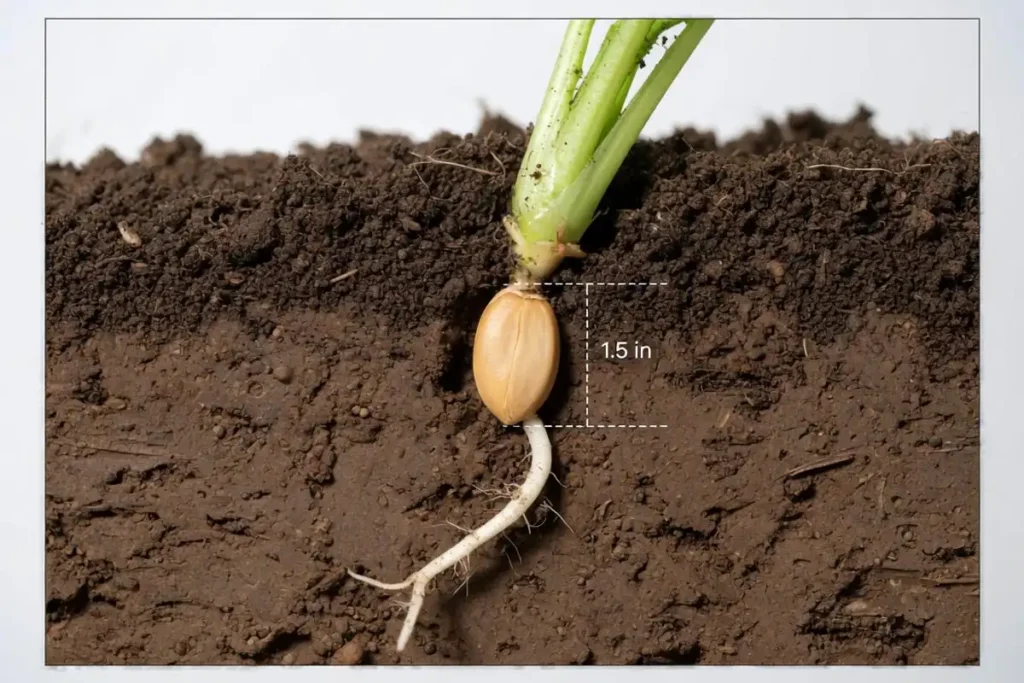
Depth: 1 to 1.5 inches for most conditions. Shallower than 1 inch exposes crowns to cold. Deeper than 2 inches risks failed emergence, especially with semi-dwarf varieties.
Winter wheat rate: 900,000 to 1,000,000 plants per acre (21-23 plants per square foot), per University of Minnesota Extension. Increase to 23-25 per square foot if planting late.
Spring wheat rate: 1.3 to 1.4 million plants per acre.
Use a grain drill at 5-6 mph for uniform placement. Slow down on rough ground.
What Is Vernalization
Vernalization is winter wheat’s requirement for cold exposure to trigger grain production. Without it, the plant never forms seed heads.
The crop needs 6 to 8 weeks below 48°F. The best range is 40°F to 50°F. The plant needs to be biologically active for the process to work.
Seeds do not need to emerge for vernalization to start. As long as the seed has germinated and absorbed moisture, the process begins underground. Late-planted wheat that never shows above ground before winter can still vernalize, though yields drop.
Common Mistakes to Avoid
Planting too early. Warm soil pushes lush fall growth. Overgrown plants attract Hessian flies and lose cold hardiness.
Planting too late. Weak roots and few tillers increase winterkill risk. Increase seeding rate 10-20% for each week past the optimal date.
Planting too deep or too shallow. Stay in the 1 to 1.5 inch range. Outside that window, you risk either crown exposure or failed emergence.
Skipping the soil test. Guessing at fertilizer wastes money. If you want to improve soil fertility naturally, combine organic amendments with targeted fertilizer.
Ignoring the Hessian fly-free date. Many state extension services publish this date. Planting after it reduces fly damage to young stands.
How to Reduce Winterkill Risk
Seed into standing stubble. Stubble traps snow, and snow insulates crowns. South Dakota research shows soil under stubble stays 5 to 7°F warmer than bare ground.
Pick winter-hardy varieties. Check your state’s variety trial data.
Limit fall nitrogen. Too much pushes soft growth that freezes easily. Apply most nitrogen as a spring top-dress. Smart yield management after winter depends heavily on spring nitrogen timing.
FAQs about Wheat Planting

Can you plant wheat in the spring instead of fall?
Yes. Spring wheat varieties are planted from late March through April. They do not require vernalization and complete their full life cycle in one growing season. Spring wheat works best in northern regions with severe winters.
How long does wheat take to germinate after planting?
Wheat germinates in 5 to 7 days under favorable soil moisture and temperature. Cold or dry conditions slow emergence to 2 to 3 weeks. Deeper planting also delays the time from seeding to emergence.
What happens if you plant winter wheat too late?
Late-planted winter wheat produces fewer tillers and weaker root systems before dormancy. This increases winterkill risk and reduces yield potential. Increase seeding rate by 10-20% for each week past the optimal date.
Does winter wheat need to emerge before winter to produce grain?
No. As long as the seed has germinated and absorbed moisture, vernalization can occur underground. The crop will emerge in spring, though yields from unemerged winter wheat are typically lower than from well-established stands.
What soil pH does wheat prefer?
Wheat grows best in soil with a pH between 5.5 and 7.5. Strongly acidic soil below 5.5 limits nutrient uptake, especially phosphorus. A soil test confirms your field’s pH before planting.
Conclusion
Wheat planting timing comes down to matching your wheat type to the right soil temperature and calendar window. Winter wheat goes in 6 to 8 weeks before your first fall frost. Spring wheat goes in as soon as soil hits 40°F in spring. Prepare a firm seedbed, plant at 1 to 1.5 inches deep, and choose varieties suited to your region. Pay attention to seeding rates, soil conditions, and local extension recommendations. Get the timing right, and the crop takes care of the rest.
