When Do You Plant Winter Wheat: A Farmer’s Complete Guide
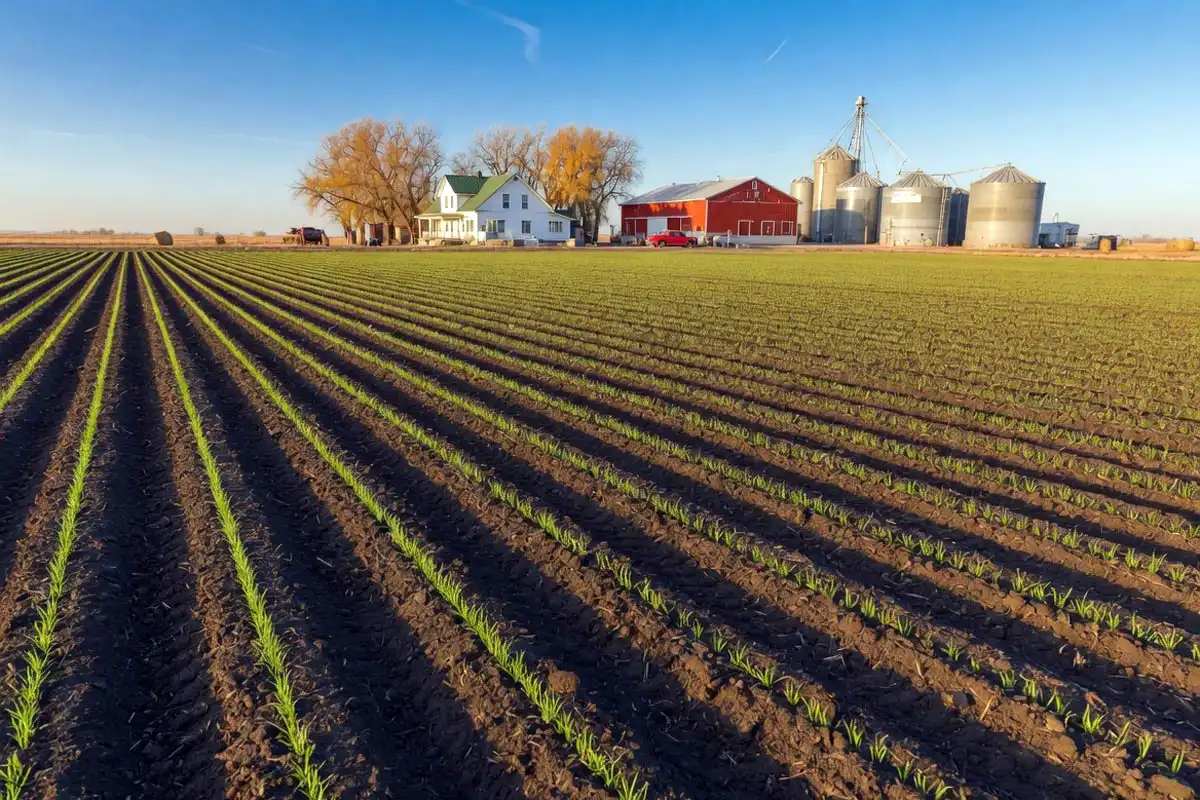
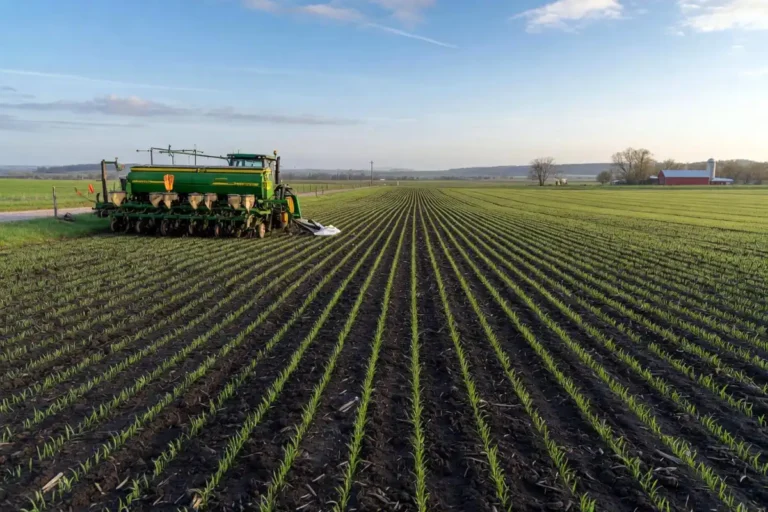
Farmers plant winter wheat in the fall, from September through November, depending on region and climate. This guide covers planting dates by state, soil temperature targets, seeding depth, rate recommendations, and winterkill prevention.
Plant winter wheat 6 to 8 weeks before the first hard frost. Northern states target early to mid-September. Central Plains states aim for mid-September to early October. Southern states plant in late October through early November. Soil temperature at seeding depth needs to fall between 54°F and 77°F for germination.
Contents
What Is Winter Wheat?
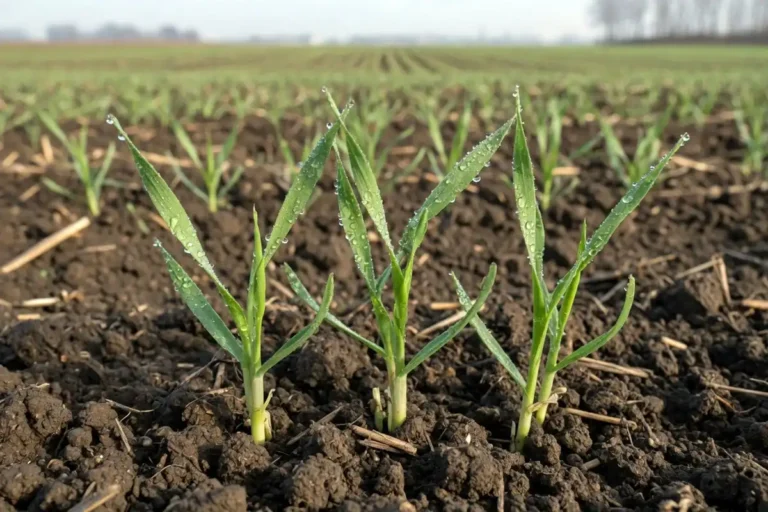
Winter wheat is a cool-season cereal grain planted in autumn. The crop germinates, develops a few tillers, then goes dormant through winter. Growth resumes in spring, and harvest runs from late May through July.
Winter wheat requires vernalization to produce grain. That means 30 to 60 days of cold exposure between 32°F and 50°F. Without it, the plant does not flower or head out.
Hard red winter wheat accounts for about 40% of total U.S. wheat production. Soft red winter adds another 15% to 20%. Winter wheat also works as a cover crop that holds topsoil, reduces erosion, and suppresses weeds through the off-season.
When Is the Best Time to Plant Winter Wheat?
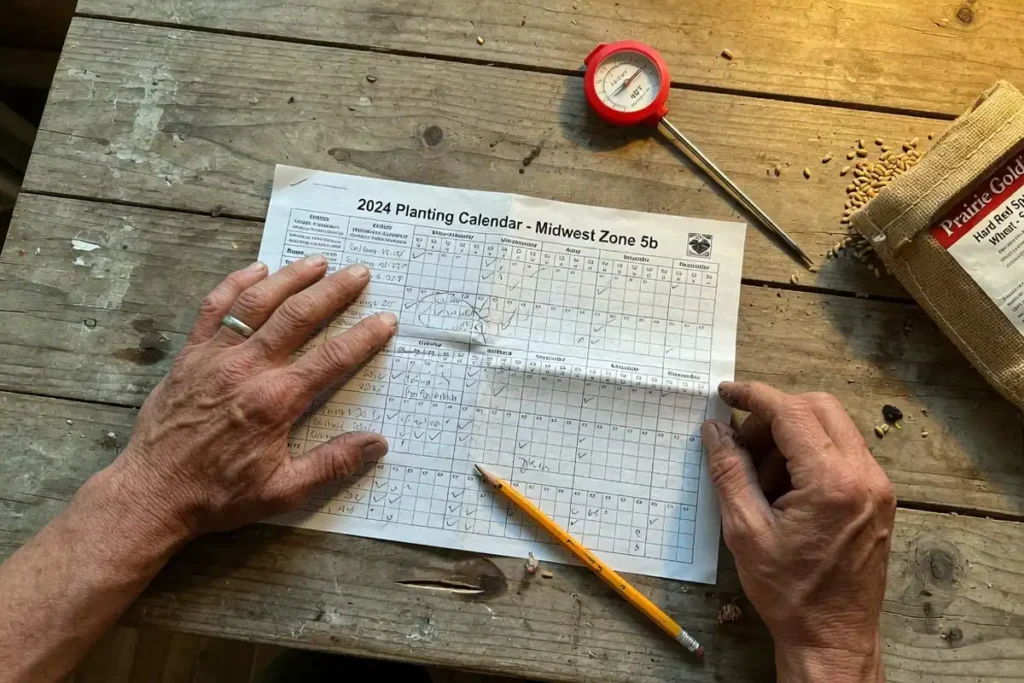
Planting timing depends on your region and local frost dates. The goal is 6 to 8 weeks of growth before the ground freezes, enough for seedlings to develop 2 to 3 tillers before dormancy.
Northern Plains (Montana, North Dakota, South Dakota): Early to mid-September. SDSU Extension recommends September 10 through October 10.
Central Plains (Kansas, Nebraska, Oklahoma): Mid-September to early October. Nebraska Extension reports recommended dates range from September 1 in the northwest to October 1 in the southeast.
Midwest (Ohio, Indiana, Michigan, Missouri): Late September through mid-October. Michigan State University notes the best yields come when seedlings emerge within 2 weeks of the fly-free date.
Southern States (Texas, Arkansas, Georgia): Late October through early November. Warmer falls allow later planting. Wait for soil to cool below 77°F before seeding.
Pacific Northwest (Washington, Oregon, Idaho): Early September through mid-October.
If you are building a yearly schedule, I covered seasonal timing in more detail in our crop planting calendar article.
Where Does Winter Wheat Grow Best?
Winter wheat grows in 42 of the 50 U.S. states. Production concentrates in the central and southern Great Plains and the Pacific Northwest. Kansas, Washington, and Oklahoma lead in output.
The crop performs best in well-drained loam and silt loam soils. Soil pH between 6.0 and 7.0 supports strong nutrient uptake. Penn State Extension warns that winterkill increases when pH drops below 6.0 or phosphate runs low. A soil test before planting confirms what amendments the field needs.
Winter wheat fits well into a crop rotation. Rotating with soybeans or another broadleaf crop reduces Fusarium head blight and take-all disease. Planting wheat after wheat or corn increases disease pressure.
How to Plant Winter Wheat (Step-by-Step)
Step 1: Prepare a Firm Seedbed
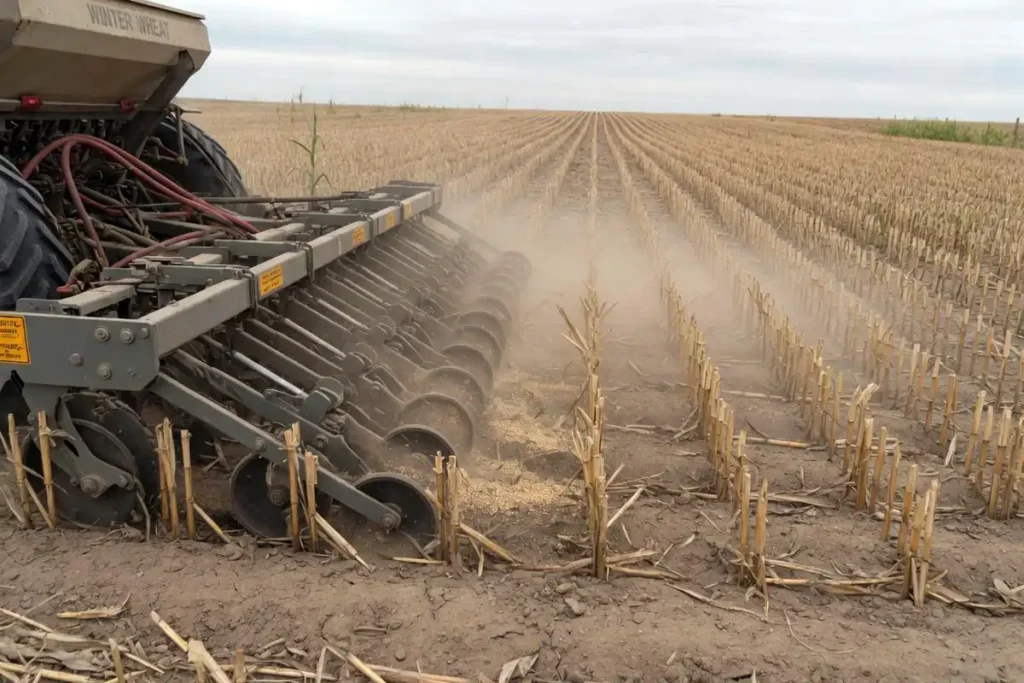
No-till or minimal tillage into standing crop stubble works best. Stubble traps snow, and snow insulates crowns against extreme cold. South Dakota research shows soil under stubble stays 5°F to 7°F warmer than bare ground. If you till, finish at least 2 weeks before planting so the soil settles.
Step 2: Check Soil Temperature
Use a soil thermometer at 2-inch depth in the morning. Winter wheat germinates best between 54°F and 77°F. Seeds in soil above 90°F sit dormant until it cools. Take readings for 2 to 3 consecutive days before planting.
Step 3: Set the Seeding Depth
Plant seeds 1 to 1.5 inches deep. Seeding shallower than 1 inch puts crowns at higher risk for winterkill. Seeding deeper than 2 inches delays emergence and produces weak seedlings. In dry conditions on coarse soils, push depth to 2 inches to reach moisture.
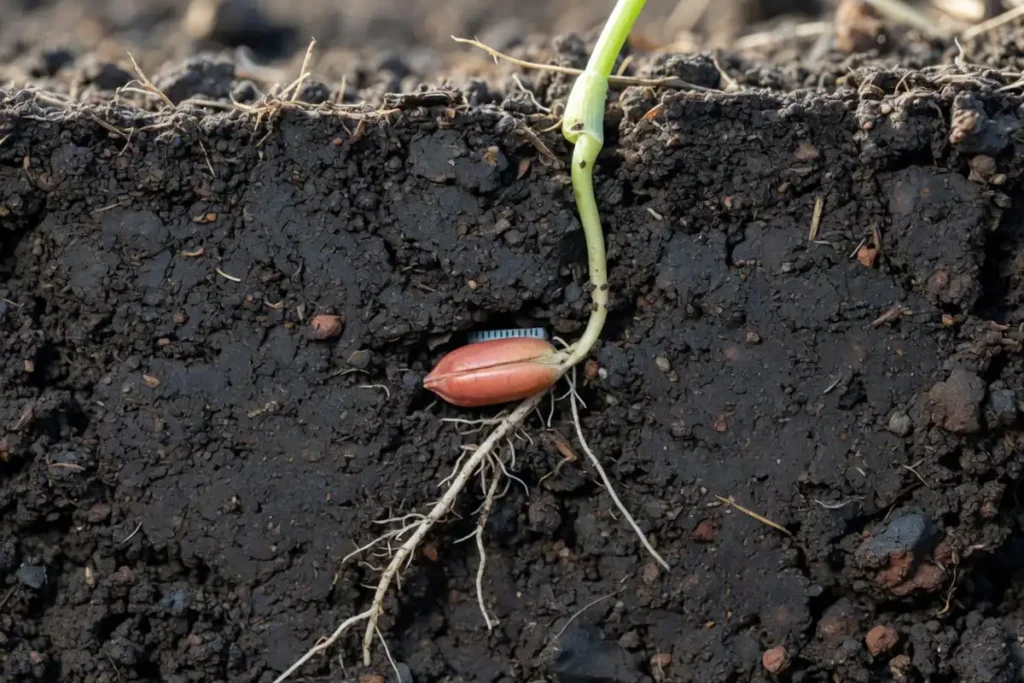
Step 4: Calculate Seeding Rate
Target 900,000 to 1.5 million plants per acre depending on your region. In western Kansas, rates run 40 to 60 lb per acre. In eastern Kansas and the Midwest, rates increase to 90 to 120 lb per acre.
Increase seeding rate by 10% for each week past the recommended date. Under no-till with heavy residue, add another 15%.
Step 5: Apply Starter Fertilizer
Apply up to 20 lb of nitrogen per acre at planting with recommended phosphorus and potassium from your soil test. Keep in-furrow fertilizer below 15 lb of nitrogen per acre to avoid seed burn. Save the bulk of nitrogen for a spring top-dress.
Step 6: Monitor Emergence
Walk the field at 7 to 10 days after planting. Even emergence signals good seed-to-soil contact. The crop needs 2 to 3 tillers before winter dormancy for the best yield potential.
What Happens If You Plant Too Early or Too Late?
Too early: Excessive fall growth depletes soil moisture. Plants develop too many tillers that compete and become disease-prone. Early planting also creates a “green bridge” that lets pests like wheat streak mosaic virus spread from volunteer wheat to new seedlings.
Too late: Fewer fall tillers form. Tillers produce up to 70% of grain yield, so fewer tillers means lower yields. A Kansas State University study found that November 1 planting returned 77% of optimal yield, December 1 returned 59%, and January 1 returned 57%.
If you plant late, increase seeding rate and choose a winter-hardy variety. I covered more strategies to increase crop yield in a separate guide.
How Do You Prevent Winterkill?
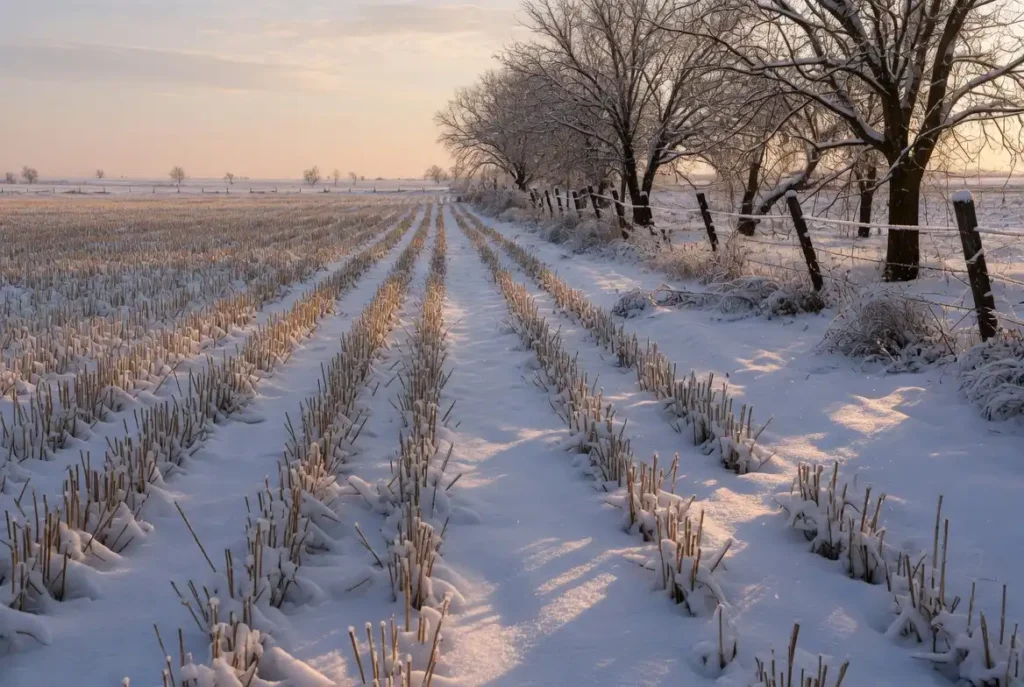
Plant into standing stubble. Three inches of snow cover provides sufficient insulation. Stubble catches and holds that snow.
Choose winter-hardy varieties. Cold hardiness is genetically controlled. Check your state university’s variety trial data before selecting seed.
Keep soil pH above 6.0. Low pH reduces phosphorus availability, and phosphorus-starved plants are weaker going into winter.
Limit fall nitrogen. Too much nitrogen pushes soft growth that freezes easily.
Plant at the correct depth. The 1 to 1.5 inch depth keeps crowns where soil temperature stays more stable.
FAQs on Planting Winter Wheat

How long does winter wheat take to germinate?
Winter wheat germinates in 5 to 7 days under favorable moisture and soil temperature conditions. Cold or dry soil stretches germination to 2 to 3 weeks. Consistent soil moisture at the 1 to 1.5 inch seeding depth speeds up the process.
Does winter wheat need a lot of water at planting?
Winter wheat needs adequate soil moisture for the seed to absorb water (imbibe) and germinate. Kansas State University notes that soil moisture content around 35% to 45% supports proper germination. Fall rainfall typically supplies enough moisture in most wheat-growing regions.
Can you plant winter wheat in the spring?
Spring planting of winter wheat produces poor results. The crop requires 30 to 60 days of cold exposure (vernalization) to trigger flowering. Spring-planted winter wheat often fails to head out. Farmers who miss the fall window plant spring wheat varieties instead.
What is the Hessian fly-free date?
The Hessian fly-free date marks the point in fall when adult Hessian flies stop laying eggs. Planting after this date reduces the risk of fly damage to young seedlings. Each state extension office publishes local fly-free dates by county.
How do you know if winter wheat survived the winter?
Check fields in early spring as temperatures warm above 40°F. Healthy plants show green tissue at the crown and new leaf growth within 10 to 14 days of warm weather. Dig up a few plants and examine the crown. White, firm crowns indicate live plants. Brown, mushy crowns signal winterkill.
Conclusion
Winter wheat planting timing hinges on your region, soil temperature, and local frost dates. Northern growers start in September. Southern growers wait until late October or November. The consistent rule is to give the crop 6 to 8 weeks of growth before dormancy.
A firm seedbed, correct seeding depth of 1 to 1.5 inches, and the right seeding rate set the foundation for a strong stand. Pair that with a winter-hardy variety, proper fertility, and standing stubble for snow cover, and your winter wheat has what it needs to survive dormancy and produce a solid yield come spring.