Can You Plant Winter Wheat in the Spring? 8 Facts Farmers Must Know

Yes, you can plant winter wheat in the spring, but it rarely produces a grain crop without vernalization. This guide covers what happens when winter wheat skips winter, when spring planting works, how to use it as forage or cover, and the mistakes to avoid on your field.
Winter wheat planted in spring usually stays in the grass stage and fails to head out, because it needs 4 to 8 weeks of cold (32°F to 50°F) to trigger flowering. Spring-planted winter wheat works best as forage, a cover crop, or green manure, not as a grain crop. For grain, plant spring wheat instead.
If you want a refresher on the right wheat planting window, I covered that separately, and I also have a post on timing winter wheat planting in the fall.
Contents
- 1 What Happens When You Plant Winter Wheat in Spring
- 2 When Does Spring Planting Winter Wheat Work?
- 3 Where This Practice Fits
- 4 How to Plant Winter Wheat in Spring: Step by Step
- 5 Using Winter Wheat as Spring Forage or Cover Crop
- 6 Troubleshooting: Why Your Spring-Planted Winter Wheat Is Failing
- 7 Mistakes to Avoid
- 8 Safety Notes
- 9 FAQs about Planting Winter Wheat in the Spring
- 10 Conclusion
What Happens When You Plant Winter Wheat in Spring
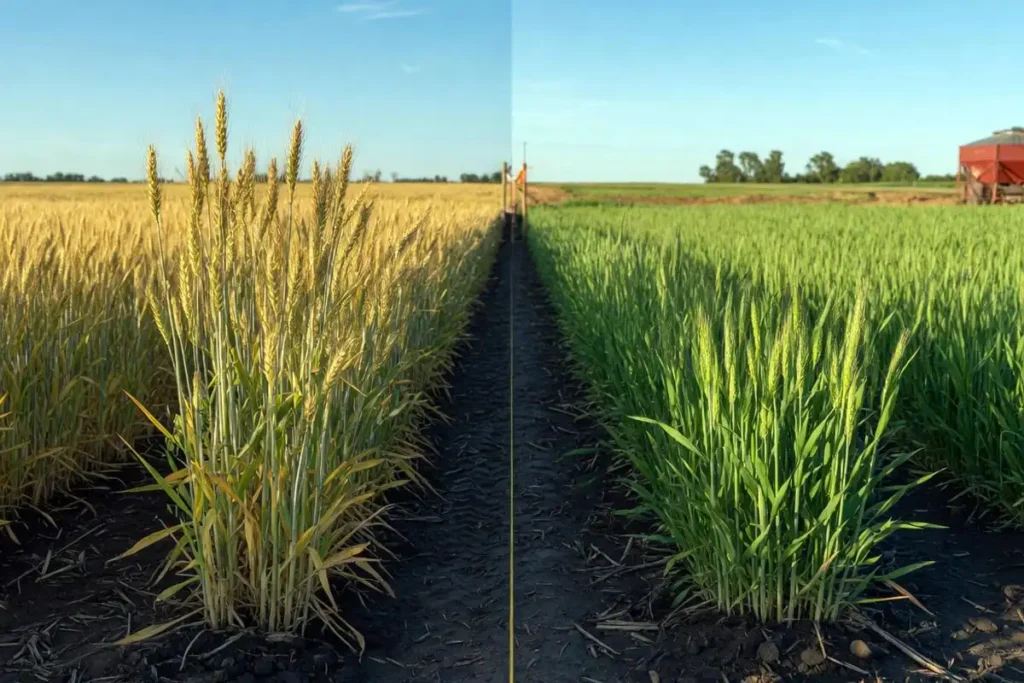
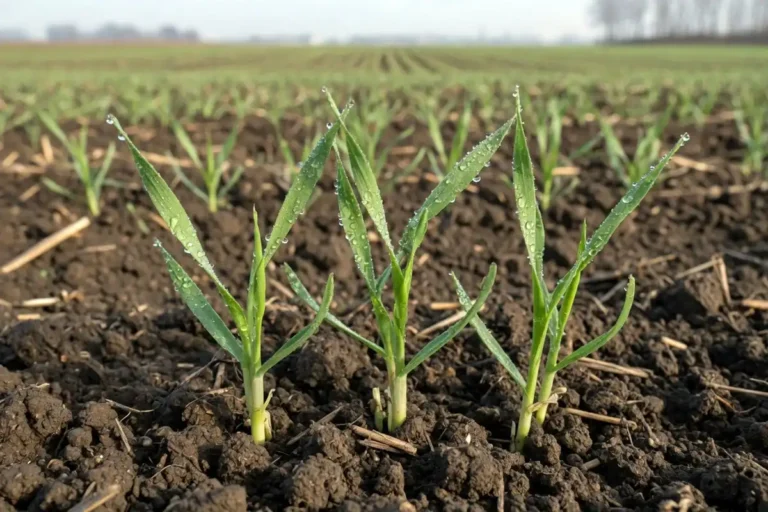
Winter wheat (Triticum aestivum) needs a cold period called vernalization before it will produce a seed head. Without enough cold, the plant keeps making leaves and tillers, but it never switches into the reproductive stage.
On my Kansas fields, spring-planted winter wheat stays short and green all season. It looks like a thick lawn. By July, spring wheat in the next field is heading out, and the winter wheat is still a grass stand.
Most winter varieties need 4 to 8 weeks at 32°F to 50°F to vernalize, according to land grant research from programs like K-State Research and Extension. A few facultative varieties need less cold, which I cover below.
When Does Spring Planting Winter Wheat Work?
Spring planting winter wheat works in three cases:
- Forage for cattle, sheep, or goats
- Cover crop to protect soil and build organic matter
- Facultative varieties bred for short vernalization
It does not work when your goal is a bushel count. Fall planting remains the only reliable path to a winter wheat grain harvest in most of the United States.
Where This Practice Fits
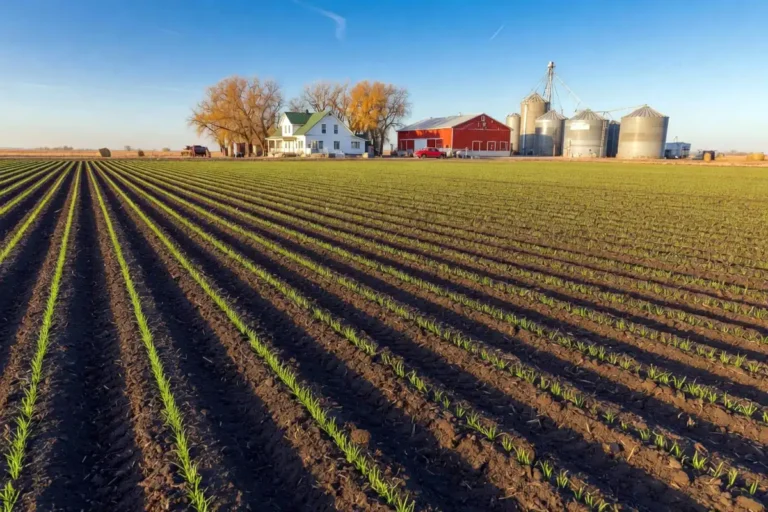
Spring-planted winter wheat fits northern and transition zones where winterkill wiped out the fall stand. Farmers in the Dakotas, Montana, Minnesota, and parts of Canada sometimes drill winter wheat in March or April as emergency forage after a failed fall crop.
It also fits small farms running rotational grazing. The thick tillers give livestock weeks of grazing before the ground heats up. If you grow other field crops nearby, a good rotation plan keeps disease pressure low.
How to Plant Winter Wheat in Spring: Step by Step
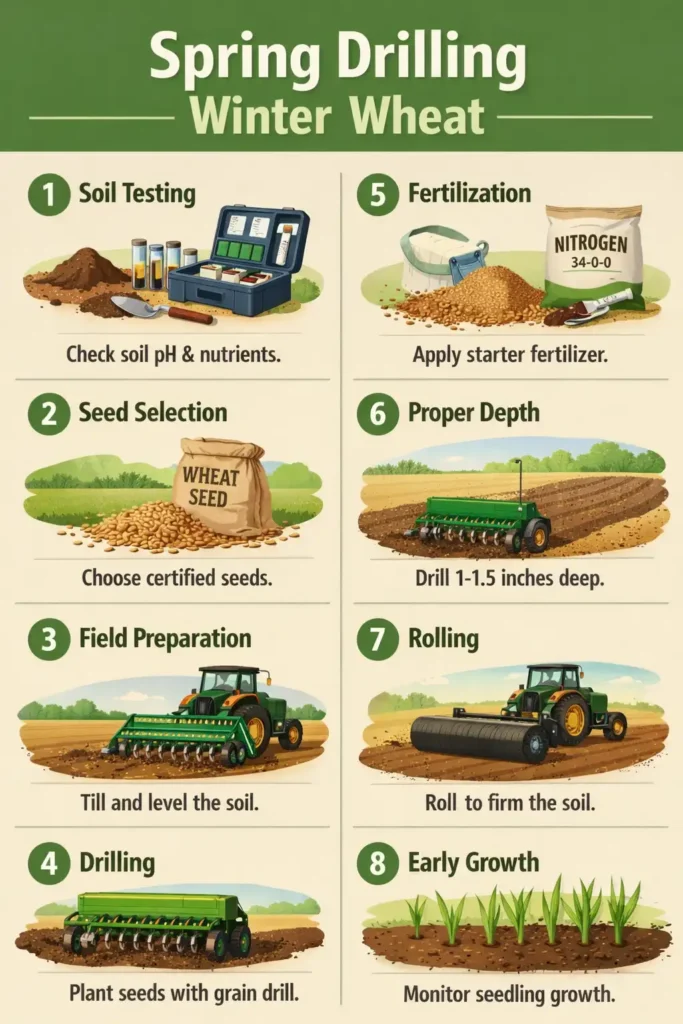
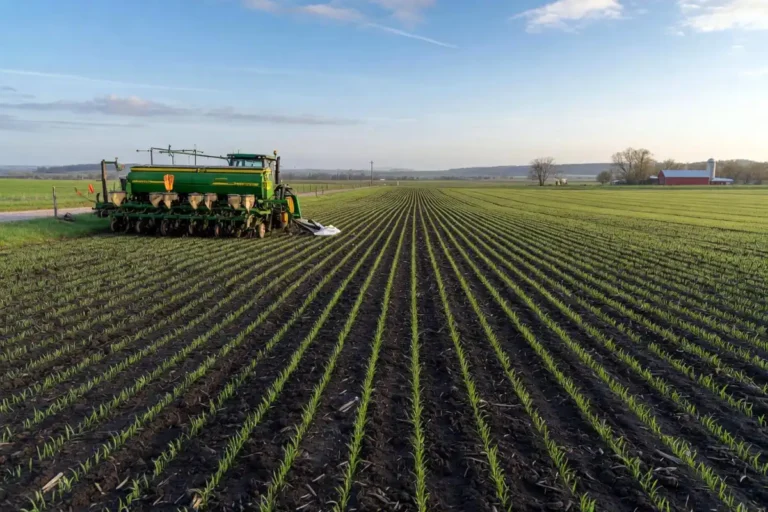
Here is the workflow I follow when I drill winter wheat in March or early April for forage or cover.
Step 1: Test the Soil
Run a soil test before drilling. Target pH between 6.0 and 7.0. Check nitrogen, phosphorus, and potassium levels.
Step 2: Pick the Right Variety
Choose a facultative variety if you want any chance of grain. For forage only, any winter wheat variety works. Avoid varieties with strong vernalization requirements if you want fast tillering.
Step 3: Prepare the Seedbed
Work the top 2 inches of soil until it is loose and clod-free. A smooth seedbed gives even emergence.
Step 4: Drill at the Right Depth
Plant 1 to 1.5 inches deep. Go deeper in dry conditions, shallower in wet soil.
Step 5: Use a Higher Seeding Rate
Spring-planted winter wheat tillers less than fall-planted wheat. Raise your seeding rate to 120 to 150 pounds per acre, depending on row spacing and goal.
Step 6: Apply Starter Nitrogen
Add 30 to 50 pounds of nitrogen per acre at planting. Spring-seeded stands need a quick nitrogen boost.
Step 7: Watch Emergence
Winter wheat germinates in 7 to 10 days in soils above 50°F. Scout for thin spots and gaps.
Step 8: Manage for the End Goal
For forage, graze when plants reach 6 to 8 inches. For cover, terminate before the next cash crop. For grain on facultative types, manage like spring wheat and accept lower yields.
Using Winter Wheat as Spring Forage or Cover Crop
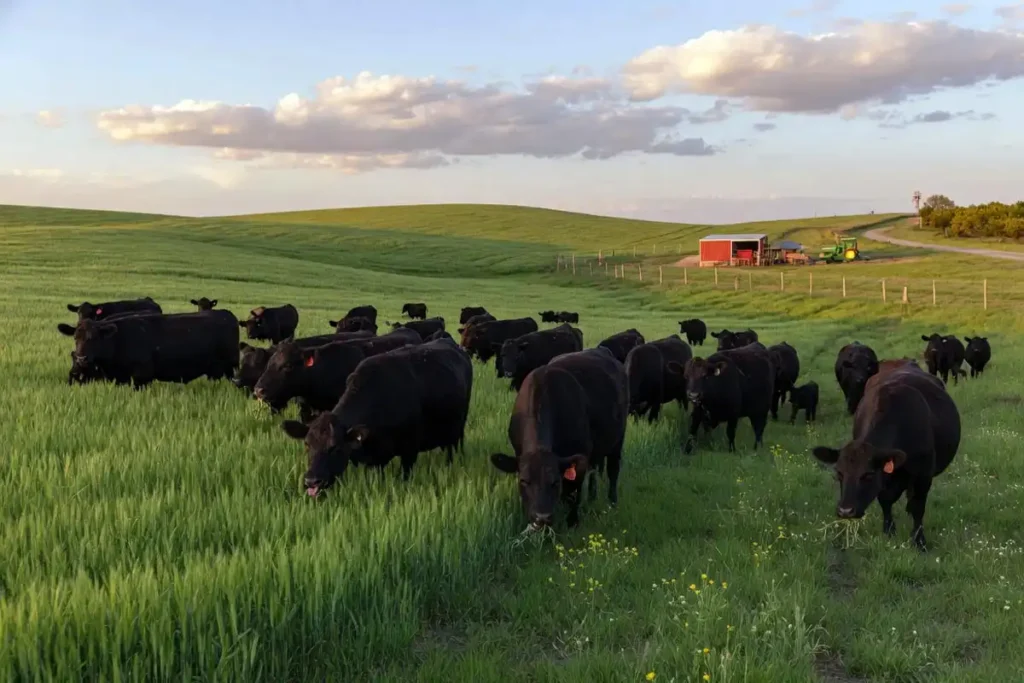
Winter wheat drilled in spring produces strong tillers and deep roots. Cattle and sheep graze it well from May through July.
As a cover crop, it holds soil, suppresses weeds, and feeds soil biology. It fits no-till systems and interseeded mixes with clover or vetch. For a broader view, my cover crop basics guide explains termination and residue handling.
Troubleshooting: Why Your Spring-Planted Winter Wheat Is Failing
Plants Stay Short and Will Not Head
This is normal. The plant never vernalized. Use it for forage or terminate it.
Thin Stand
Raise the seeding rate next time. Check drill calibration and depth.
Yellow Leaves
This signals nitrogen shortage or poor drainage. Top-dress 20 to 30 pounds of nitrogen per acre.
Heavy Weed Pressure
Spring-seeded winter wheat tillers slower than spring wheat, so weeds move in. Time your planting right after a tillage pass.
Mistakes to Avoid
- Expecting grain yield: Spring-planted winter wheat almost never produces a marketable grain crop.
- Using fall seeding rates: Raise the rate by 20 to 30 percent for spring planting.
- Skipping nitrogen: Cold soils hold nitrogen tight, so starter fertilizer matters.
- Planting too late: After mid-April in most of the Midwest, spring wheat performs better.
- Ignoring local frost dates: Check a planting calendar for your region before drilling.
Safety Notes
Clean your drill before switching from treated seed to cover crop seed. Wear gloves when handling treated wheat seed, since fungicide and insecticide coatings are toxic to humans, pets, and livestock. Never graze fields planted with treated seed that was not meant for forage use, per USDA NRCS guidance on seed treatments.
FAQs about Planting Winter Wheat in the Spring

How late can you plant winter wheat?
In most of the United States, winter wheat should be planted from mid-September to mid-November. Planting past early December risks winterkill and poor tillering before dormancy.
Will winter wheat grow if planted in April?
Yes, winter wheat grows fine in April, but it stays in the vegetative stage and rarely produces grain. It makes a good forage or cover crop instead.
What is the difference between winter wheat and spring wheat?
Winter wheat needs cold vernalization to flower and is planted in fall. Spring wheat is planted in spring, does not need vernalization, and matures in 100 to 120 days.
Can I use spring-planted winter wheat as hay?
Yes, winter wheat planted in spring makes solid hay or haylage. Cut it at the boot stage for the best protein and digestibility for cattle and sheep.
Does winter wheat come back every year?
No, winter wheat is an annual crop. It germinates in fall, overwinters, produces grain the next summer, and then dies.
Conclusion
Winter wheat planted in spring will grow, but it will not deliver a grain harvest in almost any situation. The plant needs weeks of cold to trigger heading, and a March or April start skips that window. Use it for forage, hay, or cover, and save your grain acres for spring wheat. Match the seed to the job, and your field will pay you back.