Can You Plant Wheat Berries? A Complete 7-Step Farmer’s Guide
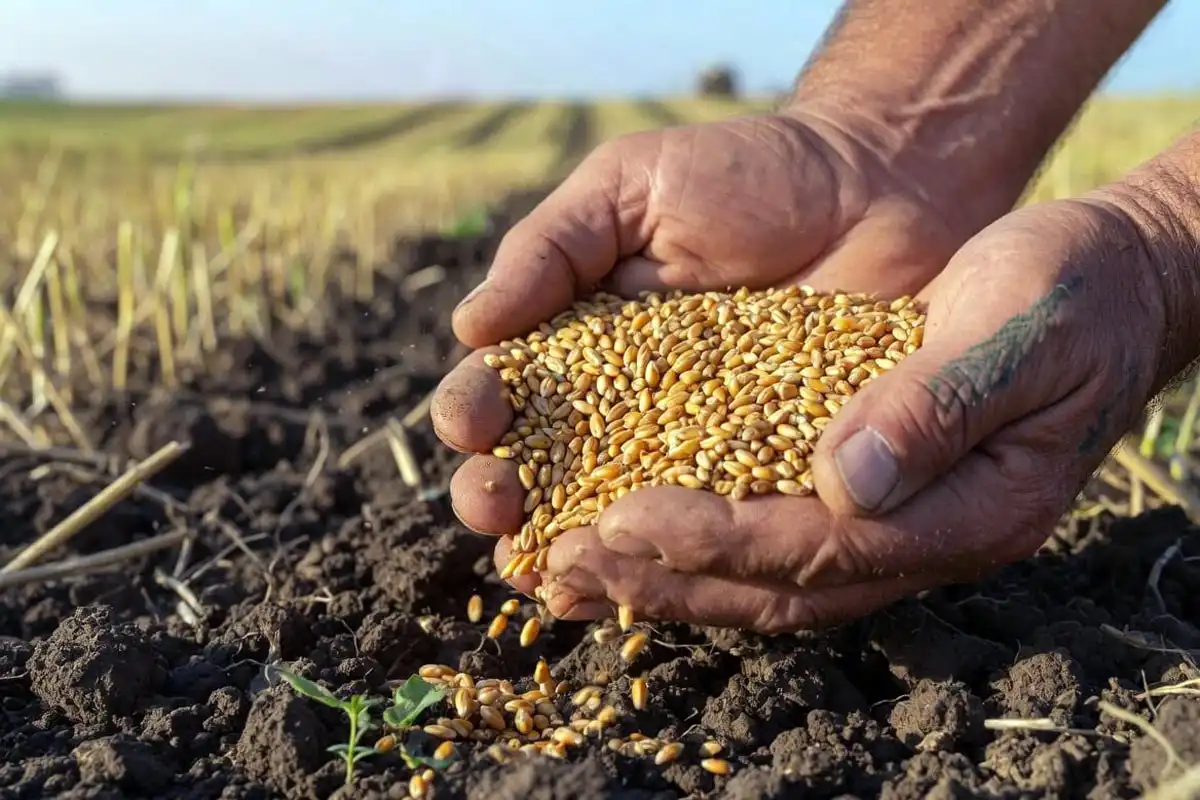
Yes, wheat berries sprout and grow into wheat plants when you sow them in prepared soil at the right depth and season. This guide covers what wheat berries are, when and where to plant them, a full step-by-step sowing method, troubleshooting, common mistakes, and safety notes for your farm or backyard plot.
You can plant wheat berries as long as they are raw, untreated, and whole. Sow winter wheat berries 1 to 1.5 inches deep in fall, or spring wheat berries in early spring. Expect germination in 7 to 10 days at soil temperatures between 54°F and 77°F.
I have grown wheat on our Topeka plot for years, and I get this question from gardening friends every fall. Before we dig in, you may also like my notes on choosing the right wheat planting window and the basics of testing your soil before seeding.
Contents
- 1 What Are Wheat Berries?
- 2 Can You Actually Plant Grocery Store Wheat Berries?
- 3 When to Plant Wheat Berries
- 4 Where to Plant Wheat Berries
- 5 How to Plant Wheat Berries Step by Step
- 6 Troubleshooting Common Wheat Berry Problems
- 7 Mistakes to Avoid
- 8 Safety Notes
- 9 FAQs about Planting Wheat Berries
- 10 Conclusion
What Are Wheat Berries?
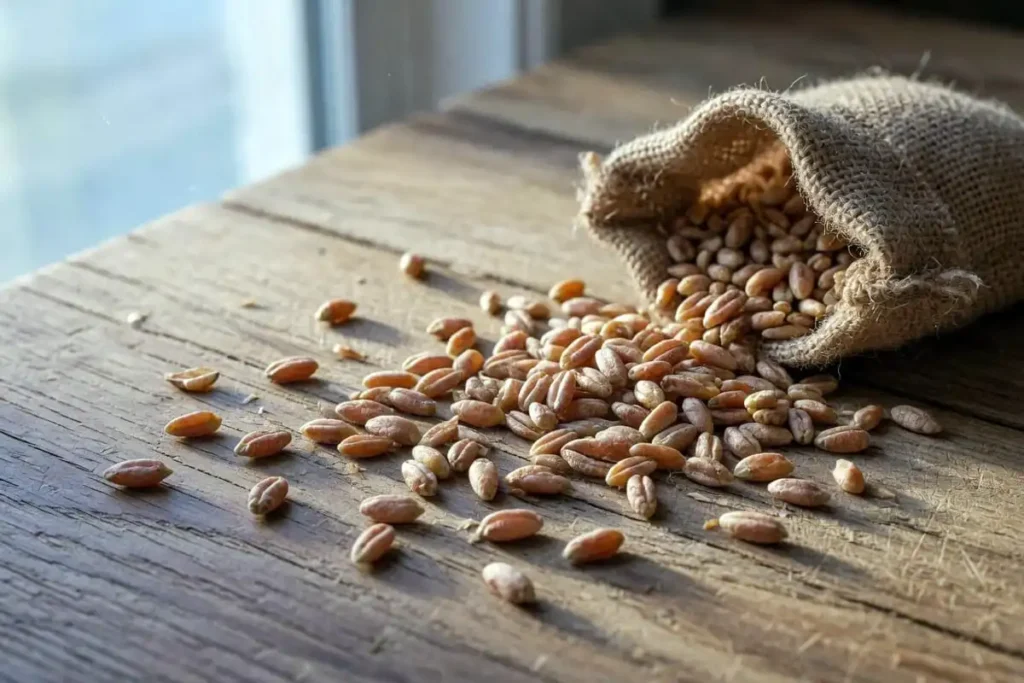
Wheat berries are the whole, unprocessed kernels of the wheat plant (Triticum aestivum). Each berry contains the bran, germ, and endosperm. Farmers call them wheat seed when used for planting and wheat grain when used for food or milling.
A single wheat berry is one complete seed. If the embryo inside is alive, it will germinate.
Can You Actually Plant Grocery Store Wheat Berries?
Yes, most raw, organic wheat berries from grocery stores or bulk bins germinate. They work because they are not heat-treated or hulled beyond processing. Rates vary from 70% to 95% depending on storage age and moisture.
Avoid these types:
- Roasted or toasted berries: Heat kills the germ.
- Cracked wheat or bulgur: The seed coat is broken.
- Treated seed wheat: Pink or blue dye means fungicide coating. Safe to plant, not safe to eat.
Quick germination test: Place 10 berries on a damp paper towel for 5 days. Count sprouts. If 7 or more sprout, the batch is worth planting.
When to Plant Wheat Berries
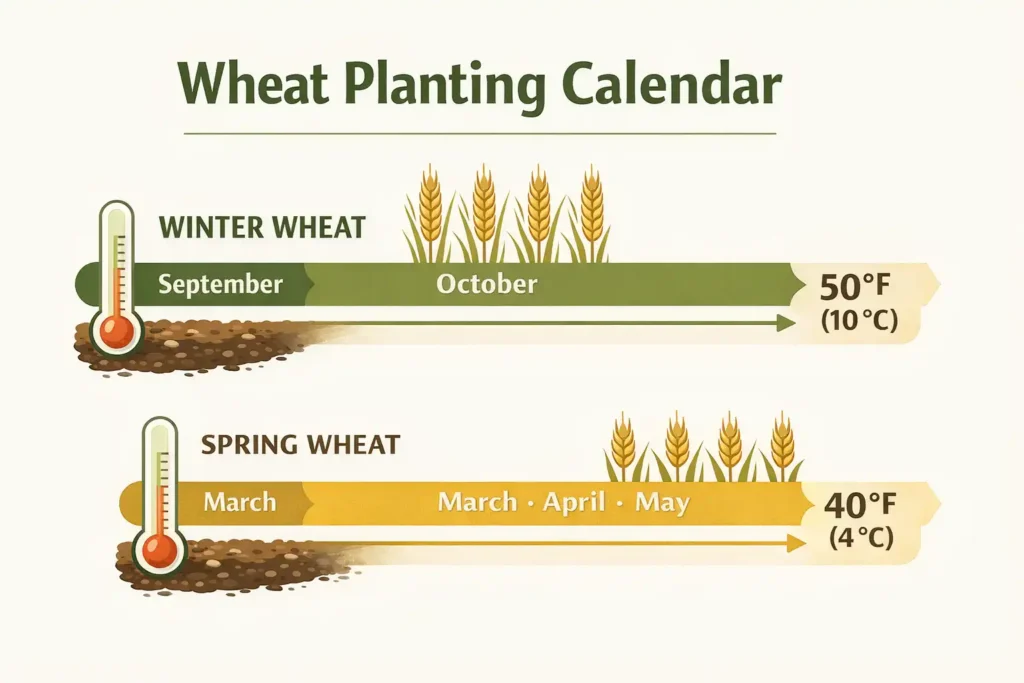
Timing depends on the wheat type. I covered the full calendar in my article on winter wheat planting dates, but here is the short version.
Winter Wheat Berries
Plant winter wheat from mid-September to late October in most of the United States. The seedlings need 4 to 6 weeks to establish before the first hard freeze. Soil temperature should sit near 54°F at seeding depth.
Spring Wheat Berries
Sow spring wheat from mid-March to early May when soil reaches 40°F and the field is workable. Spring wheat skips vernalization and matures in about 100 to 120 days.
According to the USDA National Agricultural Statistics Service, winter wheat accounts for roughly 70% of total U.S. wheat production, which is why fall planting is the norm on most farms.
Where to Plant Wheat Berries
Wheat grows best in full sun with 6 to 8 hours of daily light. Choose a site with:
- Soil type: Well-drained loam or clay loam.
- Soil pH: 6.0 to 7.5.
- Drainage: No standing water after heavy rain.
- Rotation: Avoid fields that grew wheat or barley last season.
Backyard growers can use raised beds or a tilled garden row. One pound of wheat berries covers about 100 square feet.
How to Plant Wheat Berries Step by Step
Here is the workflow I follow on our Kansas plot.
Step 1: Prepare the Seedbed
Till or broadfork the top 4 to 6 inches of soil. Remove weeds, rocks, and crop residue. A firm, fine seedbed improves seed-to-soil contact.
Step 2: Test and Amend the Soil
Run a soil test for pH, nitrogen, phosphorus, and potassium. Add lime if pH sits below 6.0. Apply 20 to 40 pounds of nitrogen per acre at planting if levels are low.
Step 3: Measure Your Seed
Use these rates:
- Broadcast by hand: 2 to 3 pounds per 1,000 square feet.
- Drilled rows: 90 to 120 pounds per acre.
- Small garden: 1 pound covers 100 square feet.
Step 4: Sow the Berries
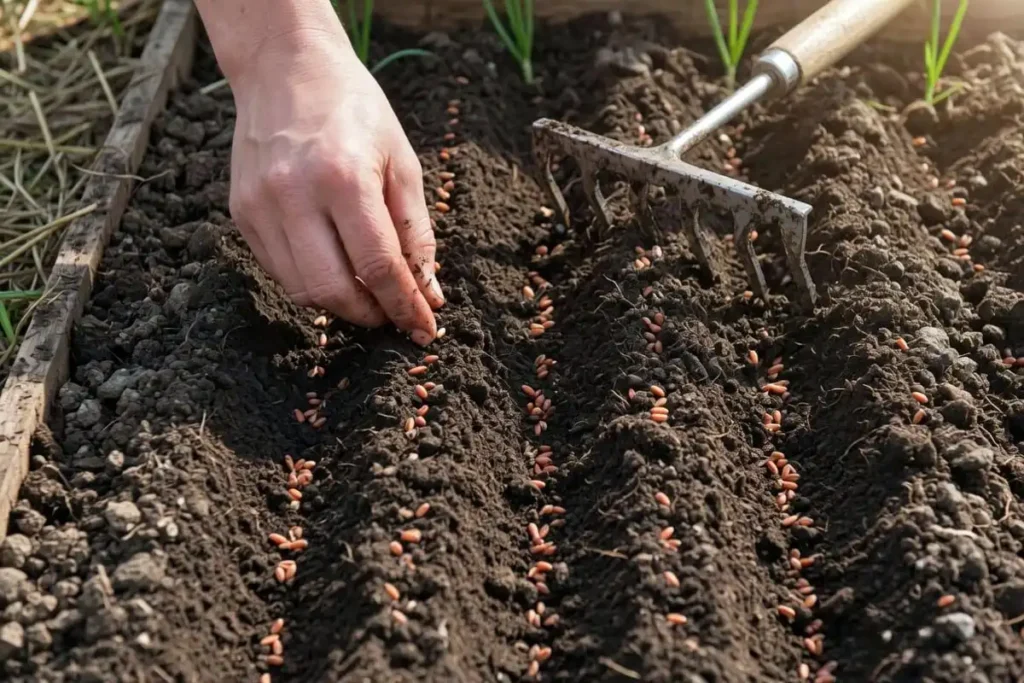
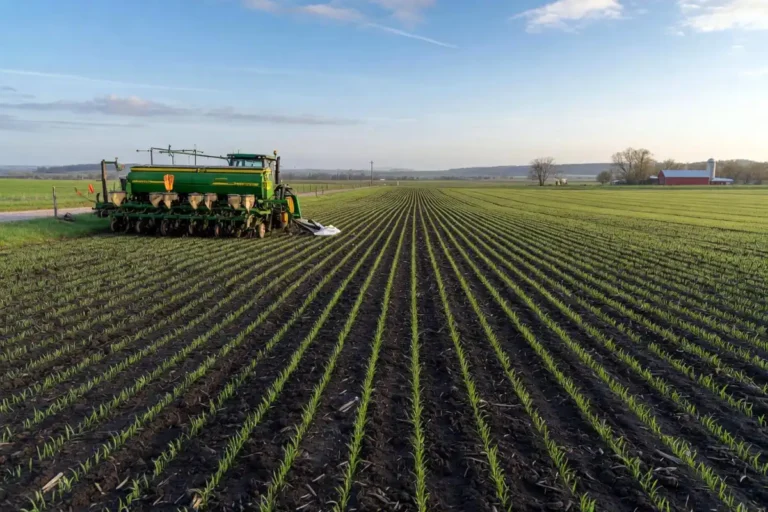
Plant wheat berries 1 to 1.5 inches deep. For rows, space them 6 to 8 inches apart. For broadcast seeding, scatter evenly then rake the soil to cover.
Step 5: Firm and Water
Press the soil lightly with a roller or the back of a rake. Water gently until the top 2 inches are moist. Research from Kansas State University Research and Extension shows that firm seedbeds improve winter wheat stand establishment by up to 20%.
Step 6: Monitor Germination
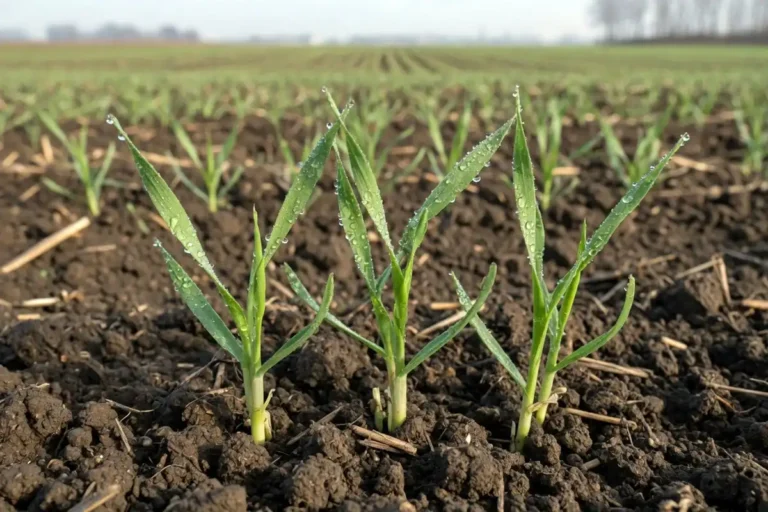
Seedlings emerge in 7 to 10 days. Look for two to three leaves before winter sets in for fall plantings. Tillering (side shoots) begins at the 3-leaf stage.
Step 7: Care Through the Season
Keep soil moist during germination and heading. Remove broadleaf weeds by hand or hoe. Top-dress with nitrogen in early spring for winter wheat.
Troubleshooting Common Wheat Berry Problems
Poor germination? Check seed age, depth, and soil moisture. Berries planted deeper than 2 inches struggle to emerge.
Yellow seedlings? Likely nitrogen shortage or waterlogged soil. Side-dress with urea and improve drainage.
Patchy stand? Birds may eat shallow berries. Rake deeper next time or cover with straw mulch.
Lodging (fallen stalks)? Too much nitrogen or dense seeding. Cut rates by 15% next season.
Rust or powdery mildew? Rotate fields and choose resistant varieties next cycle.
Mistakes to Avoid
- Planting roasted wheat berries. Check the label. Raw only.
- Sowing winter wheat too early. Aphids and Hessian flies damage early stands.
- Skipping the germination test. Old berries waste seedbed space.
- Overwatering seedlings. Wheat rots in soggy soil.
- Ignoring crop rotation. Back-to-back wheat builds disease pressure.
I wrote about rotation planning in my guide on building a crop rotation plan, which helps prevent soilborne issues.
Safety Notes
Do not plant seed treated with fungicide in a garden where children or pets dig. The pink or blue coating is toxic if eaten. Store treated seed separately from food-grade berries. Wear gloves when handling treated wheat.
Food-grade wheat berries from grocery bulk bins are safe for both planting and eating. Label your bags clearly to avoid mix-ups.
FAQs about Planting Wheat Berries

How long do wheat berries take to grow?
Winter wheat matures in 8 to 9 months from fall planting. Spring wheat matures in 100 to 120 days after sowing in early spring.
Can I plant wheat berries in a pot?
Yes, wheat grows in pots at least 8 inches deep. Fill with loamy soil, sow 10 to 15 berries, and keep the pot in full sun with regular watering.
Will wheat berries grow if I just scatter them?
Scattered berries germinate but suffer higher losses from birds and drying. Rake them into the soil 1 inch deep for a stronger stand.
How many wheat berries should I plant per square foot?
Plant about 20 to 25 wheat berries per square foot for a dense home stand. Thin to the healthiest seedlings if crowding appears at the 3-leaf stage.
Do wheat berries need to be soaked before planting?
No, wheat berries do not need soaking. Dry seed germinates well in moist soil within 7 to 10 days at proper planting depth.
Conclusion
Planting wheat berries works, and it works reliably when you start with raw seed, time the season correctly, and prepare a firm seedbed. Run a germination test, sow at 1 to 1.5 inches deep, and keep an eye on moisture during the first two weeks. Whether you want a backyard grain patch or a field rotation, wheat berries give you a straightforward path from kernel to harvest.